
Selecting the right size for a hanging TV console requires balancing the physical dimensions of your television, the structural capacity of your wall, and the overall proportions of your living room. A well-proportioned floating console does more than just hold your media devices; it anchors the room visually, conceals unsightly cables, and preserves precious floor space. By taking precise measurements and understanding how visual weight distributes across your wall, you can create a clean, modern entertainment zone that feels custom-built for your home.
Unlike traditional floor-standing units, a hanging console relies entirely on wall anchors and brackets, making physical dimensions and weight distribution critical safety factors. Choosing the wrong size can lead to an unbalanced look, strained wall mounts, or cramped walkways. To avoid these issues, the selection process must begin with accurate measurements of both your electronic equipment and the surrounding architectural features.
Measuring Your Wall and TV for the Perfect Fit
Before browsing online marketplaces or visiting furniture showrooms, you must establish the physical boundaries of your installation zone. Begin by measuring the total available width of the wall where the console will hang. Be sure to subtract the space required for adjacent features such as doorways, window curtains, light switches, air conditioning conduits, and nearby furniture. In compact living rooms or typical Singapore HDB layouts, even a few centimeters of overlap with a walkway or a door frame can disrupt the flow of the room.
Products mentioned in this guide
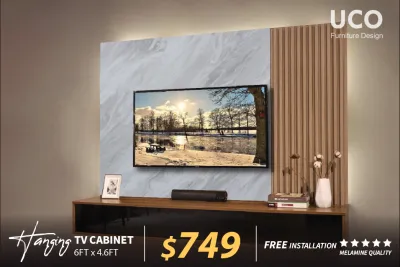
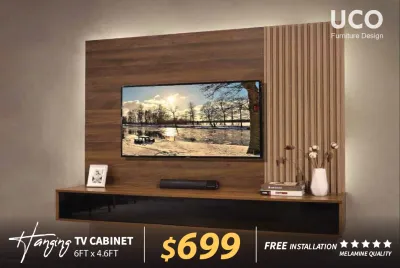
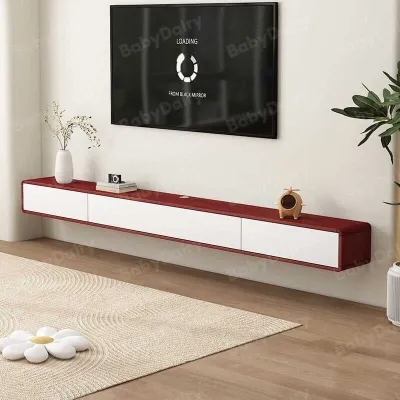
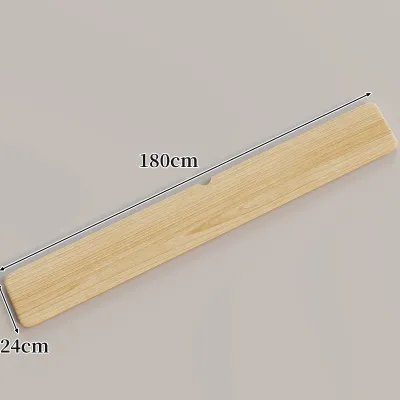
![[CozyNest ]Arc-shaped Marble Solid Wood Wall Mounted Cabinet Kabinet Tv Almari / Rak Gantung Rock Panel TV Cabinet](https://img.lazcdn.com/g/p/9a46ef486b7ef2f22387f932200408ad.jpg_webp_400x400q80.jpg_.webp)
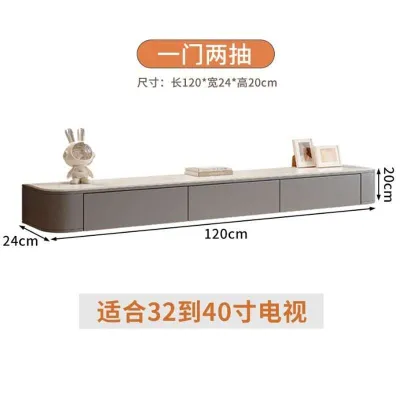
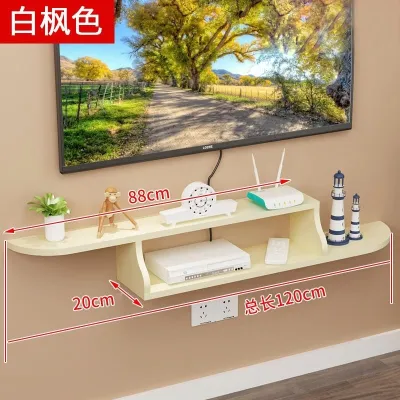
Prices are valid at publication and may change. Please refer to the product page for the latest price.
Next, measure the exact physical dimensions of your television. It is a common mistake to rely solely on the advertised screen size, which is a diagonal measurement of the screen itself and excludes the outer bezel. Use a tape measure to record the actual width, height, and depth of the TV frame. If you plan to place the TV directly on top of the floating console rather than mounting it to the wall, you must also measure the depth and width of the TV stand to ensure it fits securely on the console surface.
Determining the vertical placement is the final step in the measurement process. Sit on your primary sofa or armchair and identify your natural eye-level line, which typically sits between 90 to 110 centimeters from the floor. The center of your TV screen should ideally align with this eye-level line to prevent neck strain. Once you establish the TV position, you can determine the mounting height of the hanging console, ensuring there is a balanced gap between the bottom of the TV and the top of the unit.
Determining the Ideal Width and Depth
To achieve a balanced and aesthetically pleasing look, your hanging TV console should always be wider than your television. A console that is the same width as or narrower than the TV creates a top-heavy, unstable appearance that disrupts the visual harmony of the room. As a general guideline, aim for a console that extends at least 10 to 15 percent beyond each side of the television frame. This extra width creates a stable visual base and provides space for small decorative items or a soundbar without crowding the screen.

The depth of your hanging console is equally important for both functionality and room traffic. Standard floating consoles typically range from 30 to 45 centimeters in depth. To choose the right depth, measure your deepest media device—such as a gaming console, cable box, or audio receiver—and add at least 5 centimeters to account for the cables and connectors plugging into the back. If the console is installed in a high-traffic walkway, opt for a shallower design to prevent household members from bumping into the corners.
Visual proportion also depends heavily on the overall scale of your living room. In a spacious, open-concept home, a short console can look lost on a large wall, even if it is technically wider than the TV. In this scenario, opting for a longer modular console that spans a significant portion of the wall can help ground the space. Conversely, in a smaller room, a streamlined console with a slim profile will keep the area feeling light, airy, and uncluttered.
Checking Wall Structural Support and Clearance
Because a hanging TV console does not touch the floor, its entire weight—along with the weight of any devices placed inside or on top of it—is supported by your wall. Before purchasing, verify the construction material of your wall. Solid concrete or brick walls, which are standard in many local apartments, offer excellent load-bearing capacity when paired with high-quality masonry plugs. If you are mounting the console onto a drywall or partition wall, you must locate the internal wooden or metal studs and secure the mounting brackets directly into them.
Always consult the manufacturer’s specifications to verify the maximum weight capacity of the console and its recommended mounting hardware. Never attempt to mount a heavy solid-wood console onto a standard partition wall without professional reinforcement. If you are unsure about the structural integrity of your wall or the installation process, budgeting for professional installation—which typically ranges from S$80 to S$150 in Singapore—is a worthwhile investment to ensure long-term safety.
Bottom clearance is another practical factor that influences the usability of the space beneath your console. Leaving a gap of 15 to 25 centimeters between the bottom of the console and the floor creates a spacious, floating effect and allows robot vacuums to pass underneath without getting stuck. This clearance also makes manual sweeping and mopping much easier. However, ensure the console is not mounted so high that it forces the TV into an uncomfortable viewing position.
Proper cable management planning must be integrated into your sizing decisions. Identify the locations of your wall power outlets and media ports before finalizing the console’s position. Many hanging consoles feature built-in cable routing holes, grommets, or recessed back panels designed to hide wires. Choosing a console size and position that completely covers your wall outlets will allow you to achieve a clean, wire-free aesthetic without the need for visible plastic trunking.
Common Sizing Mistakes to Avoid
The most frequent mistake homeowners make is choosing a console that is too small for their television. Even if a compact console fits your wall space perfectly, pairing it with a large screen will make the entire setup look cramped and poorly planned. If your wall space is limited, it is often better to wall-mount the TV and use a very slim, minimalist floating shelf underneath rather than squeezing in an undersized cabinet.
Another common oversight is ignoring the ventilation requirements of modern electronic devices. Gaming consoles, media players, and internet routers generate significant heat during operation. If you choose a shallow console with closed wooden doors and no ventilation cutouts, your devices may overheat, potentially shortening their lifespan. Ensure the console depth allows for adequate airflow around your electronics, or opt for designs with slatted doors or open shelving.
Finally, do not forget to account for the physical clearance required to operate the console’s doors and drawers. If your living room layout requires placing an armchair, coffee table, or side table close to the TV wall, ensure there is enough clearance for cabinet doors to swing open fully and drawers to extend without obstruction. Measuring these clearance zones beforehand prevents daily frustration and protects your furniture from accidental scratches and dents.
Frequently Asked Questions (FAQ)
Can a hanging TV console hold a large TV directly on its surface?
Whether a hanging console can support a television directly on its top surface depends entirely on the unit’s structural design and how securely it is anchored to the wall. When a TV is wall-mounted separately, the console only needs to support lightweight media accessories. If the TV must sit on the console, the downward force is concentrated on the console’s top panel and mounting brackets. Always check the manufacturer’s specified top-load weight limit and ensure your wall type can support the combined weight of the console, the TV, and all internal components.
How much extra width should the console have compared to the TV?
For ideal visual balance, a hanging TV console should extend approximately 10 to 20 centimeters beyond the left and right edges of your television screen. This extra width prevents the television from looking wider than its support base, creating a grounded and cohesive look. If your wall space allows, a wider console is generally more visually pleasing than one that barely clears the edges of the TV. However, you should adjust this margin based on your room’s layout, ensuring the console does not crowd nearby doorways or architectural features.

Community discussion
Share your experience or ask a question. Comments are reviewed before publication.