
Selecting the perfect seating for a compact culinary space requires a careful balance of ergonomics, comfort, and spatial efficiency. To choose the right size foldable wooden chair or bar stool for a small Singapore kitchen, you must match the stool’s seat height to your counter height (typically leaving a 25 to 30 cm clearance gap), verify the depth of your counter overhang to ensure it can tuck away, and measure your surrounding walkway clearances to keep traffic flowing. In many local homes, such as HDB flats and high-rise condominiums, the kitchen serves as a multi-functional hub where space is heavily optimized. A well-fitted foldable wooden chair provides a warm, natural aesthetic while offering the flexibility to disappear when meal prep begins.
Measure Your Kitchen Counter and Walkway Clearances
Before browsing online marketplaces or visiting local furniture showrooms, you must establish a precise map of your kitchen’s physical dimensions. Start by measuring the exact height from the floor to the underside of your kitchen counter or island overhang. Many homeowners mistakenly measure only to the top surface of the counter, which can lead to purchasing a stool that leaves too little room for your thighs once the counter thickness is factored in. Knowing the exact clearance height under the counter edge is the foundation of a comfortable seating setup.
Next, evaluate the depth of your counter overhang. This is the horizontal distance from the front edge of the counter to the support wall or cabinet base beneath it. If your goal is to slide the stools completely out of sight when they are unfolded but not in use, the depth of the stool must be less than or equal to this overhang depth. A shallow overhang means the stools will protrude into the room, which can disrupt the visual flow and physical movement in a tight kitchen.
Products mentioned in this guide

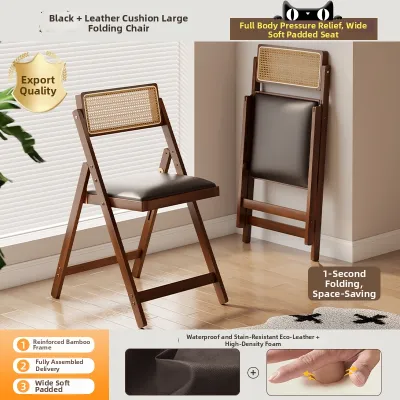
Prices are valid at publication and may change. Please refer to the product page for the latest price.
Walkway clearance is perhaps the most critical factor in compact Singaporean layouts, such as galley kitchens or open-concept living-dining areas. When a person is seated, the stool is pushed back, occupying a larger footprint than when it is tucked away. You should aim to maintain at least 90 to 100 centimeters of open walkway space behind the occupied stool. This ensures that other family members can comfortably walk past to reach the refrigerator, sink, or service yard without forcing the seated person to stand up or squeeze forward.
Finally, inspect the under-counter area for physical obstructions that might interfere with the stool’s placement. Look for protruding baseboards, decorative molding, counter footrests, or integrated under-counter appliances like built-in ovens and washing machines. These elements can significantly reduce the usable legroom or prevent the stool’s base from sliding fully under the counter, forcing you to position the seating further out into the active walkway.
Match the Stool Height to Your Counter Type
Achieving ergonomic comfort depends entirely on matching your seating height to the specific classification of your kitchen counter. In residential design, counters generally fall into two primary categories: standard kitchen counters and raised bar counters. Standard kitchen counters typically stand around 85 to 90 centimeters high from the floor, requiring counter-height stools with a seat height of approximately 60 to 65 centimeters. Raised bar counters or kitchen islands often stand taller, at about 100 to 105 centimeters, which necessitates bar-height stools with a seat height of roughly 75 to 80 centimeters.

The core principle of comfortable seating is the clearance gap between the top of the stool seat and the underside of the counter. To allow for comfortable leg movement, easy entry and exit, and the ability to cross your legs, you should aim for a clearance gap of 25 to 30 centimeters. If the gap is too small, your thighs will feel pressed against the under-counter surface; if it is too large, you will find yourself hunching over the counter, leading to back and neck strain during longer meals.
For taller bar-height seating, a built-in footrest is an essential feature rather than a minor detail. When sitting on a higher stool, your feet will naturally hang above the floor, which can restrict blood circulation and cause leg fatigue over time. A sturdy footrest integrated into the stool’s frame provides crucial support, improves posture, and enhances overall sitting stability. When selecting a foldable wooden chair, ensure the footrest is positioned at a height that feels natural and comfortable for your body.
Additionally, consider the overall height of the stool, including the backrest, when it is in its folded and unfolded states. While a high backrest offers superior lumbar support, it may strike the edge of the counter and prevent the stool from sliding underneath when not in use. If you plan to store the stools under the counter overhang while they are unfolded, a low-profile backrest or a backless design may be more practical for maximizing floor space.
Evaluate the Folding Mechanism and Storage Footprint of Your Foldable Wooden Chair
The primary benefit of a foldable wooden chair is its ability to shrink its footprint when storage is required, making the folding mechanism a vital point of evaluation. Folding designs generally fall into two categories: flat-folding models and partial-collapse models. Flat-folding stools collapse into a completely linear profile, often measuring just 5 to 10 centimeters in thickness. This ultra-slim profile is ideal for small kitchens, as it allows you to store the stools in incredibly tight spaces that would otherwise go unused.
Before making a purchase, measure the folded dimensions—specifically the height, width, and depth—and compare them directly to your designated storage zones. In a compact HDB or condo kitchen, creative storage spots are essential. You might plan to slide the folded stools into the narrow gap between your refrigerator and the kitchen wall, tuck them inside a utility closet, or store them in the service yard. Some homeowners even install sturdy, decorative wall hooks to hang the wooden chairs flat against the wall, turning them into a functional design element when not in use.
The engineering of the folding hinges and locking mechanisms directly impacts both safety and daily usability. Inspect the hardware to ensure the hinges operate smoothly without sticking or requiring excessive force. High-quality folding chairs often feature locking pins or safety latches that secure the frame in the open position, preventing the stool from accidentally collapsing if someone shifts their weight. Avoid mechanisms with exposed, tight scissor joints that pose a pinch hazard to fingers during folding and unfolding.
Weight is another critical factor when dealing with solid wood furniture. While wood offers excellent stability and aesthetic warmth, it is inherently heavier than plastic or lightweight aluminum. A foldable wooden chair typically weighs between 4 and 7 kilograms, depending on the wood species and frame thickness. Ensure this weight is manageable for everyone in your household who will be responsible for unfolding, moving, and storing the chairs on a daily basis.
Check Seat Dimensions and Structural Specifications
While space-saving is the priority in a small kitchen, the stool must still function as a comfortable and safe seat. Seat width and depth represent a direct trade-off between spatial efficiency and personal comfort. Compact folding stools often feature smaller, rounded seats measuring around 30 to 35 centimeters in diameter, which minimizes the physical space they occupy. However, if you plan to use the stools for working from home, hosting long dinners, or enjoying extended conversations, a wider seat of 40 centimeters or more will provide significantly better pelvic support and comfort.
Never assume the structural strength of a stool based solely on the fact that it is made of wood. Different wood species and construction methods yield vastly different load-bearing capacities. Always verify the manufacturer’s official weight capacity, which should be clearly stated on the product label or specification sheet. A reliable folding stool should comfortably support at least 100 to 120 kilograms. Checking these specifications ensures the safety of your family and guests and prevents premature structural failure.
Examine the joinery at critical stress points, such as where the legs cross and where the hinges connect to the wooden frame. High-quality wooden stools utilize robust joinery methods, including metal brackets, reinforced pins, and through-bolts with locking nuts. Beware of models that rely entirely on simple wood screws driven directly into soft timber, as these screws can loosen over time under the constant mechanical stress of folding and unfolding, leading to a wobbly and unsafe frame.
Finally, understand that the name of a wood type does not automatically guarantee durability or resistance to kitchen hazards. Kitchen environments are prone to high humidity from cooking, water splashes near the sink, and accidental food spills. Instead of focusing only on the wood species, look for a protective, water-resistant finish such as a polyurethane coating or a specialized wood sealant. Always check the manufacturer’s care instructions to ensure the finish can withstand regular wiping with a damp cloth and mild soap without degrading.
Common Sizing and Placement Mistakes to Avoid
Avoiding common pitfalls during the selection process can save you from the hassle of returning furniture or living with a cramped, impractical kitchen layout.
- Ignoring the counter overhang depth: Purchasing stools without checking the overhang depth often results in seats that stick out into the kitchen walkway. This creates a constant physical obstacle, disrupting the flow of traffic in narrow HDB galley kitchens.
- Choosing stools with an excessive leg splay: To provide stability, some folding stools feature legs that flare outward significantly at the base. While this prevents tipping, the wide footprint can easily trip family members walking through narrow kitchen pathways.
- Assuming all foldable stools collapse flat: Some models only fold partially, retaining a bulky, angled shape even when closed. This prevents them from fitting into narrow gaps between cabinets or appliances, defeating the purpose of buying foldable furniture.
- Neglecting floor protection: Hard wooden legs can easily scratch kitchen floor tiles, luxury vinyl tiles (LVT), or laminate flooring when moved daily. Always check the bottom of the stool legs and install high-quality felt or rubber protective pads to preserve your kitchen floors.
Frequently Asked Questions (FAQ)
Can I use a counter-height stool at a bar-height counter?
Using a counter-height stool at a bar-height counter is not recommended due to the significant ergonomic mismatch. A counter-height stool generally features a seat height of 60 to 65 centimeters, while a bar-height counter stands at 100 to 105 centimeters. This setup leaves an excessive gap of 35 to 45 centimeters, forcing you to reach upward awkwardly to use the counter surface. This unnatural posture strains your shoulders, neck, and back, and can also pose a safety risk as you stretch to reach your food or drinks.
How do I maintain the folding hinges on a wooden stool?
To maintain the folding hinges and ensure smooth operation, regularly wipe the joints with a dry or slightly damp microfiber cloth to remove kitchen grease, dust, and moisture. Periodically check all screws, bolts, and connecting hardware, tightening any that have loosened from regular use. Always consult the manufacturer’s care guide before applying any mechanical lubricants or oils to the hinges, as improper products can stain the surrounding wood finish or attract airborne kitchen dust, which can clog the mechanism over time.
Community discussion
Share your experience or ask a question. Comments are reviewed before publication.