
Finding the right foldable bag organizer shelf for a standard Housing & Development Board (HDB) built-in wardrobe requires balancing the physical limits of your closet with the dimensions of your handbag collection. Because HDB wardrobes are often custom-built to fit specific bedroom layouts, their internal configurations can vary significantly. Choosing the correct size involves measuring the exact net usable space, accounting for structural obstructions like hinges and sliding tracks, and matching these limits to the height and depth of your bags. By selecting an organizer that accommodates both your storage needs and the wardrobe’s operational clearances, you can maximize vertical space without risking damage to your bags or the wardrobe itself.
Measure Your Wardrobe's Usable Internal Space
To find an organizer that fits seamlessly, you must first establish the absolute physical boundaries of your wardrobe’s interior. Built-in wardrobes in Singapore apartments often feature subtle structural variations due to wall alignment or minor settling over time. Start by measuring the internal width, depth, and height of the designated shelf or compartment at three distinct points: the front, the middle, and the back. Wood panels can sometimes bow slightly under load, and taking multiple measurements ensures you base your purchase on the narrowest dimension rather than the widest.
Next, identify any internal hardware that projects into the usable cabinet space. Standard hinged doors utilize concealed cup hinges that protrude from the side panels, while sliding doors rely on top and bottom tracks that consume several centimeters of depth. Take note of hanging rods, shelf support brackets, and integrated LED lighting fixtures or wire casings. Subtract the depth and width of these obstructions from your initial measurements to calculate the true net usable space.
Products mentioned in this guide
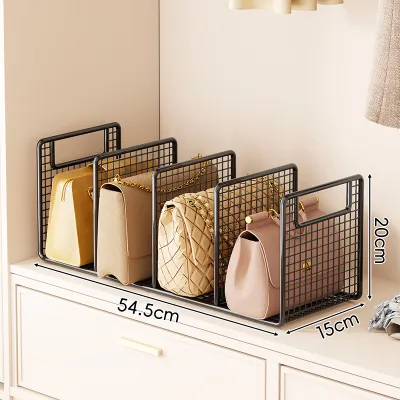
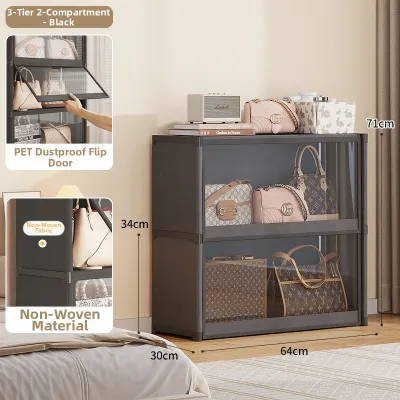
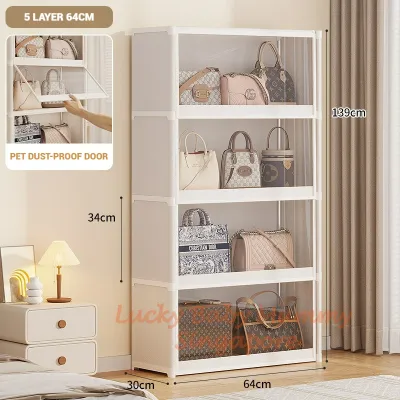
![[SG Stock]Hanging Foldable Organizer 3 Layer Anti-Dust Shelf Holder Handbag Purse Large Storage Rack hanger satchel handbag transparent storage hanging rack](https://img.lazcdn.com/g/p/55664b08c83393d08d90bcd840a38333.jpg_400x400q80.jpg_.webp)
![[Local Seller] Removable bag storage box partition adjustable bag storage rack Handbag organizer closet bag storage rack extendable](https://img.lazcdn.com/g/p/f828139566d9b1b55f7bcdea4ee1175e.jpg_400x400q80.jpg_.webp)
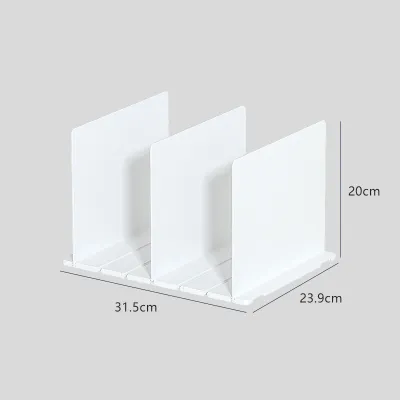
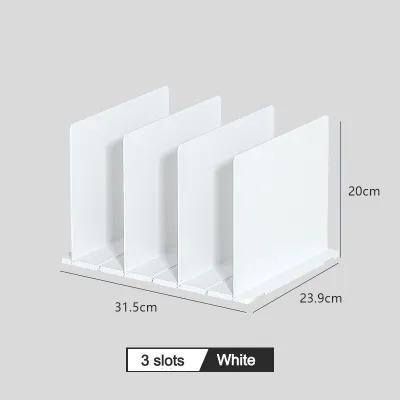
Prices are valid at publication and may change. Please refer to the product page for the latest price.
Using these net dimensions prevents the common frustration of buying an organizer that fits on paper but jams against a hinge during installation. Forcing a tight shelf into a wooden cabinet can scrape the laminate finish or put undue pressure on the wardrobe joints. Always record the minimum clearance figures and keep a margin of at least one to two centimeters on all sides to allow for smooth placement and removal.
Match Shelf Dimensions to Your Bag Collection
An organizer is only effective if it comfortably accommodates your specific collection of handbags, backpacks, or clutches. Begin by grouping your bags by size and identifying the largest or most structured items you plan to store. Measure the maximum width, depth, and height of these primary bags when they are fully packed or stuffed with tissue, as empty bags can sag and give inaccurate size readings.

Once you have these measurements, compare them to the individual tier heights of the foldable organizer. The total expanded height of the shelf unit must fit comfortably within your wardrobe’s vertical compartment while leaving enough overhead space to lift the bags out. If you own tall tote bags or structured top-handle bags, look for organizers with adjustable tier heights or open-top configurations that do not restrict vertical clearance.
The depth of the organizer shelf must also align with both your bags and the wardrobe depth. If the shelf is too shallow, longer bags may overhang the edge, causing them to bend, crease, or rub against the wardrobe door. Conversely, if the shelf is too deep, it may prevent the wardrobe door from closing completely, potentially crushing delicate leather or damaging metal hardware over time.
Evaluate the Folding Mechanism and Operational Clearance
Foldable bag organizers come in various structural designs, including upward-folding accordion styles, downward-collapsing frames, and side-folding fabric or plastic units. Selecting the right mechanism depends heavily on how much operational clearance you have inside the wardrobe. You must evaluate not just the final assembled dimensions, but also the space required to deploy, adjust, or collapse the shelf within the cabinet.
Upward-folding and tension-based designs often require vertical clearance to expand fully, which can be challenging if you are installing the unit on a lower shelf beneath hanging clothes. Downward-folding or collapsible models might require horizontal clearance to lock the side supports into place. Ensure that you can comfortably reach the locking mechanisms and hinges without hitting adjacent shelves, hanging garments, or the wardrobe ceiling.
Additionally, consider the folded profile of the organizer when it is not in use. A high-quality foldable shelf should collapse into a slim, compact shape that minimizes dead space. This allows you to store the organizer flat against a side panel or on a top shelf when your bag collection changes, keeping your wardrobe flexible and adaptable to your seasonal storage needs.
Verify Weight Capacity and Mounting Requirements
Before finalizing your choice, you must ensure the organizer and the wardrobe shelf can safely support the collective weight of your bags. Leather handbags, metal chains, and heavy hardware can add up to a significant load, especially when multiple bags are stored on a single multi-tier unit. Check the manufacturer’s specified weight limit per tier and compare it to the estimated weight of your loaded bags.
The mounting or placement method of the organizer must also be compatible with your wardrobe’s construction materials. Many HDB built-in wardrobes use medium-density fibreboard (MDF) or plywood with laminate finishes. If the organizer relies on tension rods, ensure the side panels are sturdy enough to withstand the outward pressure without bowing. For hanging organizers that attach to a closet rod, verify that the rod itself is securely anchored and rated for the additional weight.
If the organizer requires screw-in brackets or adhesive mounts, inspect the wardrobe’s back and side panels first. Many built-in wardrobes feature thin, hollow backing boards that cannot support heavy-duty anchors or screws. If you suspect the panels are fragile or if the total weight of your collection exceeds standard limits, stop the installation and consult a professional carpenter to reinforce the shelving structure.
Common Sizing and Installation Mistakes to Avoid
One of the most frequent mistakes when choosing a bag organizer is overlooking the door swing arc of hinged wardrobe doors or the overlapping panels of sliding doors. A shelf that fits perfectly inside the cabinet frame may still block the door from closing if the bags protrude even slightly. For sliding doors, ensure the organizer sits entirely behind the front track line so the door can glide smoothly without scraping against your bags.
Another common oversight is failing to leave adequate finger clearance around the stored bags. If the organizer tiers are too tight, you will struggle to slide your hands in to retrieve or replace a bag, which can lead to scratched leather or bent handles. Aim for a clearance of at least three to five centimeters above the tallest bag on each tier to allow for comfortable, daily access.
Finally, avoid using aggressive wall anchors or high-strength adhesives on delicate laminate or veneer surfaces. These mounting methods can cause permanent damage, peeling, or cracking if you ever decide to remove or reposition the organizer. Stick to freestanding, self-supporting foldable shelves or gentle tension-based systems that do not compromise the integrity of your built-in furniture.
Frequently Asked Questions (FAQ)
Can I use a foldable bag organizer in a wardrobe with sliding doors?
Yes, but you must pay extra attention to the depth of the sliding door tracks. Sliding doors require strict depth adherence because any protrusion will prevent the door panels from bypassing each other. Measure the distance from the back wall of the wardrobe to the inner edge of the sliding track, and ensure your organizer and stored bags stay well within this limit to avoid friction and damage.
What should I do if my wardrobe depth is shallower than my bags?
If your wardrobe depth is limited, consider storing your bags sideways or angled rather than facing forward. Alternatively, look for shallower, single-tier organizers or modular units that can be arranged horizontally across a wider shelf. Never force a deep bag into a shallow space, as the constant pressure from the closed wardrobe door can permanently warp the bag’s structure and damage its zippers or clasps.
Community discussion
Share your experience or ask a question. Comments are reviewed before publication.