
Selecting the right floating TV console requires balancing the physical dimensions of your television, the scale of your living room wall, and the practical storage needs of your media setup. In typical apartments where space optimization is key, an incorrectly sized console can quickly make a living area feel cramped or visually disjointed. To achieve a balanced look, your console should ideally extend 10 to 20 cm beyond the outer edges of your television on both sides, while leaving sufficient clear wall space on either end to prevent a crowded appearance.
Matching Console Width to Your TV Size
A primary rule of interior design is that your TV console must be wider than your television. When a console is the same width as or narrower than the screen, it creates an awkward, top-heavy look that disrupts the visual harmony of the room. Aiming for a console that is roughly 20% to 30% wider than the actual physical width of your television ensures a stable and grounded aesthetic.
To get this right, you must measure the actual physical width of your TV rather than relying on the diagonal screen size advertised by manufacturers. For example, a 65-inch television refers to the diagonal screen measurement; its actual horizontal width is typically around 145 cm. Purchasing a 150 cm console for a 65-inch TV leaves only 2.5 cm of clearance on each side, which looks cramped and leaves no room for decorative balance.
Products mentioned in this guide
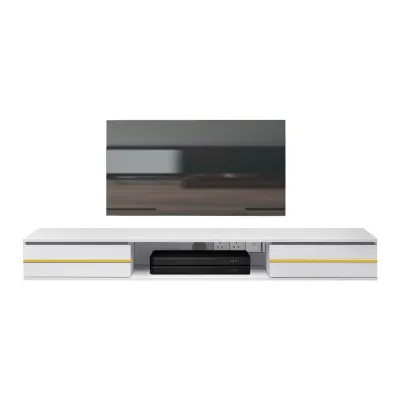
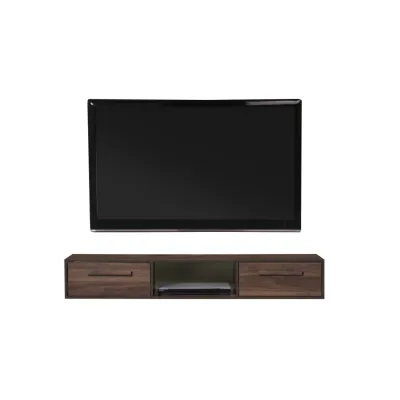
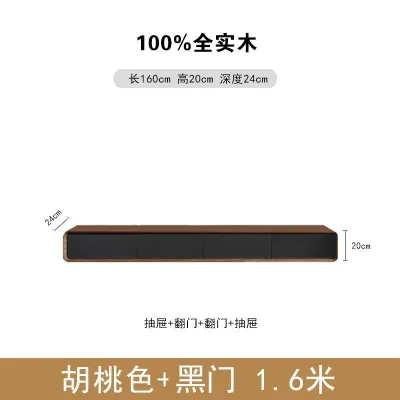
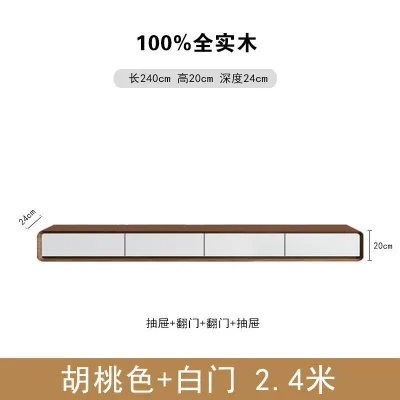
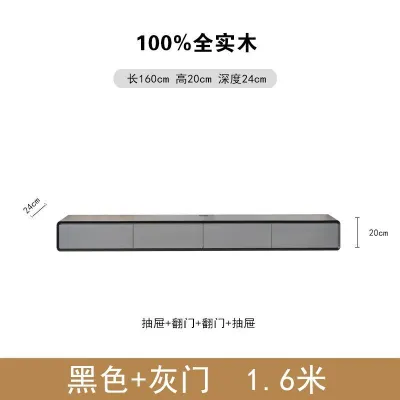
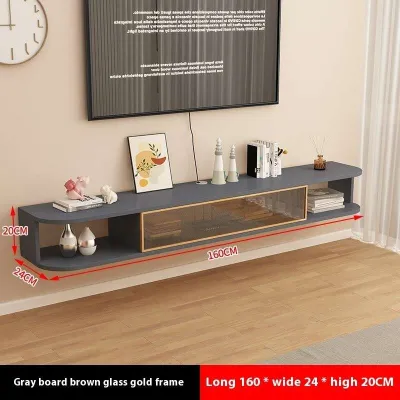
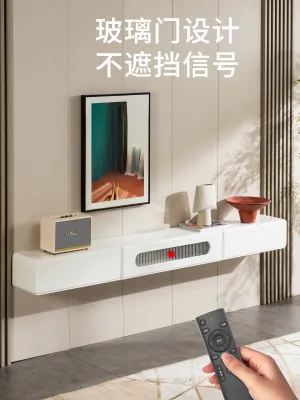
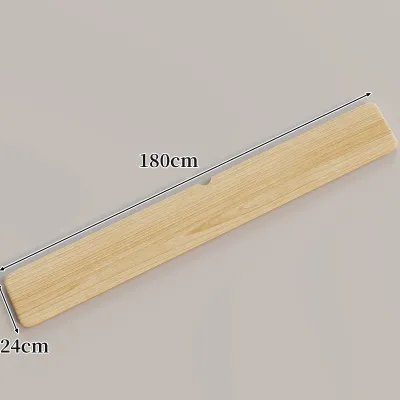
Prices are valid at publication and may change. Please refer to the product page for the latest price.
Additionally, consider how bezel thickness and external accessories affect your space requirements. If you plan to place a soundbar, gaming controllers, or decorative items on the console surface, you will need extra width to accommodate these items without blocking the screen. If your TV is wall-mounted slightly above the console, you still want to maintain these proportions to keep the entire setup looking cohesive.
Proportioning the Console to Your Wall Space
While matching the console to your TV is crucial, you must also ensure the unit fits the scale of your wall. Start by measuring the total usable wall width, taking care to subtract space occupied by adjacent doors, windows, walkways, light switches, or household shelter doors. This gives you the true canvas you have to work with.

Leaving adequate visual margins on both sides of the floating console is essential for maintaining an airy, modern feel. A floating console that stretches too close to a corner or a doorway can make the room feel restricted and disrupt foot traffic. As a general guideline, try to leave at least 30 to 50 cm of open wall space on either side of the console to give the piece breathing room.
The strategy changes slightly depending on your wall size. For compact walls, choosing a console that closely matches the minimum recommended width for your TV keeps the layout clean and functional. On large feature walls, such as those with custom fluted panels or stone laminates, a much longer console helps anchor the massive space, preventing the television setup from looking lost or undersized.
Determining the Right Depth and Height
The depth of your floating TV console directly impacts both its storage capacity and how much physical space it occupies in your living room. Standard floating units typically range from 30 cm to 45 cm in depth. Before purchasing, measure the depth of your AV receivers, gaming consoles, and media players to ensure they can sit fully inside or on top of the unit without overhanging.
Do not forget to account for cable clearance when measuring your devices. HDMI cables, power plugs, and adapters often stick out an extra 5 to 8 cm from the back of your media equipment. Choosing a console with built-in cable routing channels or an open back design allows these cables to run smoothly without forcing you to push your devices forward against the glass or cabinet doors.
Mounting height is equally critical for a comfortable viewing experience. The ideal height is determined by your seated eye level when sitting on your sofa, which typically places the center of the TV screen about 100 to 110 cm from the floor. Once your TV position is set, mount your floating console so its top surface sits roughly 10 to 15 cm below the bottom of the TV, ensuring a clean separation while keeping media accessories within easy reach.
Checking Wall Compatibility and Weight Capacity
Because floating TV consoles do not touch the floor, they rely entirely on your wall structure for support. Solid concrete or brick walls, common in many main living areas, offer excellent structural integrity and can support heavier consoles when installed with high-quality masonry wall plugs. However, partition walls or drywalls require careful handling, as you must secure the mounting brackets directly into the wooden or metal studs behind the plaster.
Always check the manufacturer’s specifications for the maximum weight capacity of both the console frame and the included mounting brackets. These limits vary significantly based on the materials used, the joinery, and the mounting system. Never exceed these stated limits, as doing so risks structural failure, wall damage, or the console pulling away from the wall entirely.
When calculating the load, remember to factor in the combined weight of everything the wall mount must support. This includes the weight of the console itself, any media devices, books, heavy decor, and the television if it is resting on top of the unit. If you are unsure of your wall type, cannot locate the studs, or find the manufacturer’s mounting instructions unclear, stop the installation and consult a qualified professional installer to ensure a safe setup.
Common Sizing Mistakes to Avoid
One of the most frequent errors is assuming that a TV’s diagonal screen size translates directly to the console length. Always use a physical measuring tape to verify the actual horizontal width of your TV before selecting your furniture. This simple step prevents the hassle of returning an undersized console.
Another common oversight is ignoring the location of wall power outlets and internet ports. A floating console should ideally cover these outlets to keep cords hidden, but you must verify that the back of the console has appropriate cutouts so plugs can remain inserted without being crushed against the wall.
Finally, failing to plan for floor clearance can make daily maintenance difficult. If you use a robot vacuum, ensure the space beneath the console is high enough for the device to navigate freely. Keeping these practical details in mind ensures your floating TV console is both beautiful and highly functional.
Frequently Asked Questions (FAQ)
How much clearance should I leave below a floating TV console?
A standard floor clearance of 15 to 30 cm is generally recommended for floating TV consoles. This height range creates a strong sense of visual lightness, making your living room feel more spacious while keeping the unit at a comfortable height for storage access.
This clearance also provides practical benefits for home maintenance. It allows standard robot vacuums, mops, and brooms to slide underneath easily without getting stuck. If you plan to install under-cabinet LED strip lighting to create a soft ambient glow, a clearance of at least 20 cm ensures the light diffuses beautifully across the floor.

Community discussion
Share your experience or ask a question. Comments are reviewed before publication.