
Getting the perfect fit for a dust cover sheet requires more than just knowing your mattress size. To choose the right size, you must measure the physical outer dimensions of your bed frame—including any extra width from side rails—and calculate the vertical drop length from the top of the frame base to the floor, subtracting 1 to 2 cm to prevent the fabric from dragging. By taking these precise measurements, you ensure your cover protects against dust build-up while maintaining a clean, tailored appearance in your bedroom.
In Singapore’s warm, humid climate, dust mites and allergens can accumulate quickly under the bed, making a well-fitting cover an important addition to your bedding setup. However, an improperly sized cover can slip off, bunch up, or drag on the floor, collecting dirt instead of keeping it away. Understanding how to measure your specific frame and select the right attachment style is key to achieving both functional dust protection and a neat aesthetic.
Clarifying the Product: Dust Cover Sheet vs. Bed Skirt
Before purchasing, it is essential to distinguish between a traditional bed skirt and a modern wrap-around dust cover sheet. A traditional bed skirt, also known as a dust ruffle, is designed to sit flat on top of a box spring or mattress base, with fabric hanging down to cover the lower frame. This style relies on the weight of the mattress to hold it in place, making it best suited for classic ensemble beds.
Products mentioned in this guide


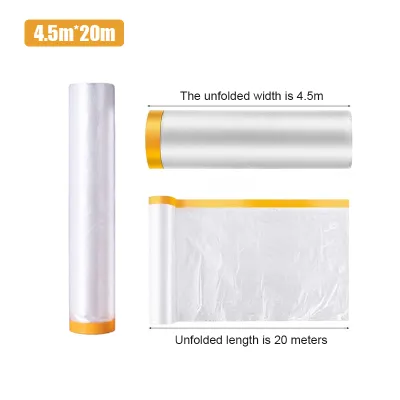
![[2-3 Days Delivery] 4.5m x 20m Plastic Dust Cover Protective Plastic Sheet Disposable Furniture Dustproof Cover Protective Cover Plastic Cover Plastic Film for Home Improvement CNY Gift Present](https://img.lazcdn.com/g/p/37fceab8fc43d4b3b58593d55aae9bcb.jpg_400x400q80.jpg_.webp)

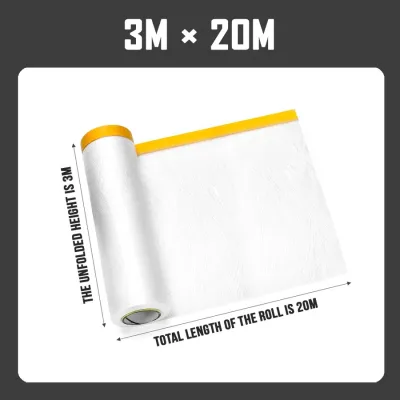
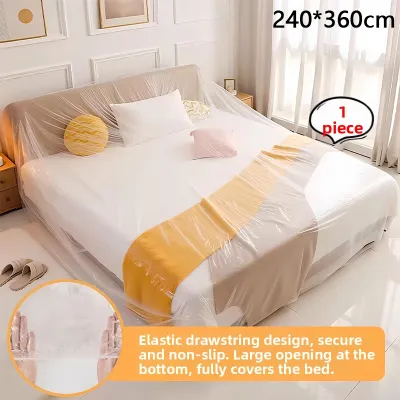
Prices are valid at publication and may change. Please refer to the product page for the latest price.
In contrast, a wrap-around dust cover sheet is designed to encase the outer perimeter of the bed frame itself. These covers often feature elasticized edges, adjustable bands, or adhesive strips that grip the frame directly. Because they do not require a box spring, they are highly popular for modern platform beds and minimalist frames.
Sizing rules and measurement points differ significantly between these two styles. For a traditional bed skirt, the dimensions of the mattress top are your primary guide. For a wrap-around frame cover, you must account for the physical thickness of the frame’s outer rails. Purchasing a standard bed skirt for a thick wooden platform bed will often result in a cover that cannot stretch around the frame or bunches up awkwardly at the corners.
Standard Bed Frame Dimensions in Singapore
While mattresses in Singapore follow standardized size categories, actual bed frames vary widely in their physical footprint. The frame’s outer dimensions frequently extend beyond the mattress edges to accommodate side panels, integrated headboards, or decorative trim, making physical verification of your frame essential.

Single and Super Single Bed Frames
In Singapore, a standard Single mattress measures approximately 91 cm in width and 190 cm in length. A Super Single mattress is slightly wider, measuring approximately 107 cm by 190 cm. These smaller sizes are highly common in children’s rooms, guest rooms, and compact apartments.
However, the actual bed frame footprint is rarely identical to these mattress measurements. Wooden, upholstered, or metal frames typically add 2 to 5 cm of border width and length to support the mattress securely.
When choosing a wrap-around dust cover sheet for these smaller frames, even a small discrepancy of 3 cm can prevent an elasticized cover from fitting over the corners. If your frame has a thick upholstered border, you must add these extra centimeters to your measurement totals to avoid an overly tight fit that constantly slips off.
Queen and King Bed Frames
Standard Queen mattresses in Singapore measure approximately 152 cm x 190 cm, while King mattresses measure approximately 182 cm x 190 cm. These larger setups require more robust bed frames, which often translate to wider profiles.
King-size frames, in particular, frequently feature wide side rails, center support beams, and heavy corner posts that add significant bulk to the overall footprint. This extra bulk means a standard King-size dust cover sheet designed only for mattress dimensions may fail to cover the frame completely.
Heavier bases also impact how the fabric drapes. If the cover is not wide enough, the fabric will pull tightly across the corners, creating an unsightly gap at the bottom or putting excessive tension on the seams, which can lead to tearing over time.
How to Measure Your Bed Frame for a Perfect Fit
Relying on the mattress size label is one of the most common mistakes when shopping for bed accessories. Physical measurement of the frame and floor clearance is mandatory to ensure the dust cover sheet looks neat and functions correctly.
Measuring the Length, Width, and Overhang
To begin, remove the mattress entirely to expose the bed frame. Use a metal measuring tape for accuracy, as fabric tapes can stretch over long distances and lead to incorrect calculations.
Measure the outer width from the outermost edge of the left side rail to the outermost edge of the right side rail. Repeat this process for the length, measuring from the headboard or top edge of the frame to the footboard or bottom edge.
Pay close attention to any decorative trim, protruding legs, or extended headboard bases. If your bed frame has a footboard that rises above the mattress base, a standard continuous cover will not fit properly; you will need to look for a cover with split corners or a tailored three-sided design that leaves the footboard clear.
Calculating the Correct Drop Length
The drop length is the vertical distance from the point where the dust cover sheet attaches to the frame down to the floor. This measurement dictates how the fabric hangs and is crucial for effective dust prevention.
Measure from the top of the mattress support slats, the platform base, or the box spring down to the floor. Ensure the measuring tape is held perfectly vertical during this step.
Once you have this total vertical measurement, subtract 1 to 2 cm. This slight reduction prevents the hem of the fabric from pooling on the floor. Pooling fabric not only looks untidy but also traps dust, pet hair, and dirt, defeating the hygienic purpose of the cover. It can also interfere with vacuuming or robot vacuum cleaners common in Singapore homes.
Accounting for Floor Clearance and Obstacles
Before finalizing your drop length, inspect the floor area around and under your bed. Take note of uneven flooring, thick area rugs, or low-profile bed legs that might affect how the cover hangs.
If you have a thick rug partially under the bed, the drop length on the sides over the rug will need to be slightly shorter than at the foot of the bed if the rug does not extend fully.
Many Singapore homes utilize beds with built-in under-bed storage drawers or hydraulic lift mechanisms to maximize space. If your frame features these elements, a standard continuous drop cover will block access. In such scenarios, you must opt for a cover with split corners, zippered side panels, or individual side valances that can be lifted independently.
Matching the Attachment Style to Your Bed Frame
Selecting the right attachment style is just as important as getting the dimensions right. The structure of your bed frame determines which installation method will keep the dust cover sheet secure and easy to maintain.
Platform beds, which feature a solid flat base or closely spaced slats, do not use a box spring. A traditional bed skirt designed to be sandwiched between a box spring and mattress will constantly slide around on a smooth platform base. For platform beds, wrap-around elastic covers or fitted sheets designed specifically for the frame base are highly recommended. These covers hug the perimeter of the platform, staying secure even when you change the bedsheets.
Different attachment methods offer distinct advantages depending on your frame type:
- Velcro Strips: This method uses adhesive Velcro tape applied directly to the bed frame, with the matching Velcro sewn onto the dust cover. This is excellent for heavy wooden or upholstered frames because it allows you to attach and remove the cover without lifting the heavy mattress. However, check the adhesive's compatibility with your frame's finish to avoid peeling paint or varnish.
- Elastic Bands: Some modern dust covers feature a continuous elastic band that wraps around the entire perimeter of the bed base. This style is highly adjustable and easy to install on lightweight metal frames or simple platform bases. The trade-off is that over time, low-quality elastic can stretch out, causing the cover to sag.
- Traditional Tuck-in: This style features a large fabric deck that sits flat under the mattress. While highly stable once the mattress is in place, it requires significant physical effort to lift and adjust, especially on heavy King-size beds.
Singapore’s tropical climate features high humidity levels year-round, which can lead to mold, mildew, and musty odors if airflow is restricted under the bed. When selecting a dust cover sheet, prioritize breathable, washable fabrics such as lightweight cotton blends, linen, or specialized microfiber. Avoid heavy, non-porous synthetic materials that trap moisture underneath the bed frame. Always check the manufacturer’s care instructions for washing and drying temperatures, as natural fibers like cotton can shrink during hot washes, completely altering your carefully measured dimensions.
Because a dust cover’s primary job is to keep dust from settling under the bed, the cover itself will accumulate dust over time. Choose an attachment style that is easy to remove. If a cover is difficult to detach, you are less likely to wash it regularly, leading to allergen build-up. A Velcro or elasticized wrap-around style is generally much easier to maintain than a traditional tuck-in style that requires removing a heavy mattress.
Common Sizing and Installation Mistakes to Avoid
To ensure a successful purchase, keep these frequent errors in mind:
- Relying solely on mattress size labels: A "Queen" mattress from one brand might sit on a frame that is several centimeters wider than a "Queen" frame from another. Always measure the actual frame perimeter, not just the mattress.
- Ignoring the thickness of the mattress support base: If you measure the drop length from the bottom of the mattress rather than the top of the frame base where the cover actually sits, your drop length will be too short. This leaves the under-bed area and frame legs exposed.
- Forgetting to measure the space between bed legs: Some bed frames have inset legs or central support posts. If your dust cover sheet does not have tailored corners or flexible fabric panels, the material will bunch up awkwardly around the legs, preventing the cover from hanging straight.
- Buying a one-piece cover for beds with central support bars or storage: If your bed frame has integrated drawers or a central support bar that extends to the floor, a standard one-piece cover will drape over these elements, blocking access to storage and creating tension points that can tear the fabric. Always verify your frame's structural design before purchasing.
Frequently Asked Questions (FAQ)
These answers address common practical challenges faced after purchasing a dust cover sheet for your bed frame.
Can I use a standard dust cover on a bed with built-in drawers?
A standard, one-piece dust cover sheet will block access to under-bed storage drawers. If you have a storage bed, look for a specialized cover featuring split corners, Velcro-attached side panels, or individual valance panels. These designs allow you to lift or detach specific sections to access the drawers without removing the entire cover.
How do I stop the dust cover from slipping off a platform bed?
To prevent a dust cover from sliding on a smooth platform bed, you can apply heavy-duty, frame-safe Velcro tape along the frame edge. Alternatively, placing a non-slip rug pad or silicone gripper pad between the mattress base and the frame can hold the cover’s fabric deck firmly in place. Choosing a cover with a thick, high-tension elasticized hem designed specifically for platform frames also ensures a secure grip.
Community discussion
Share your experience or ask a question. Comments are reviewed before publication.