
Finding the ideal display shelf rack for your home or office requires balancing three critical elements: your available floor or wall footprint, the depth needed for your items, and the clearance required for comfortable movement. Choosing the wrong size can lead to cramped walkways, blocked doors, or a piece of furniture that visually overwhelms your room. By taking precise measurements of your space and understanding how shelf dimensions interact with your room’s layout, you can select a rack that is both highly functional and visually balanced.
Measure Your Available Space and Access Points
Before browsing online catalogs or visiting a furniture showroom, you must establish the absolute maximum dimensions your space can accommodate. This process begins with a tape measure, a notepad, and a keen eye for architectural details that are easy to overlook.
Start by measuring the exact width, height, and depth of the target wall or floor area. For width, measure along the floor where the base of the rack will sit, as well as higher up the wall to account for any unevenness. For height, measure from the floor to the ceiling, or to the lowest overhead obstacle. For depth, measure outward from the wall to see how far the rack will project into the room.
Products mentioned in this guide
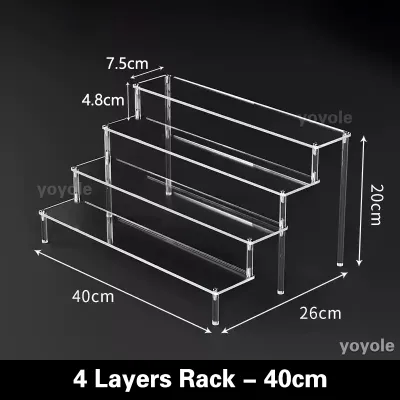


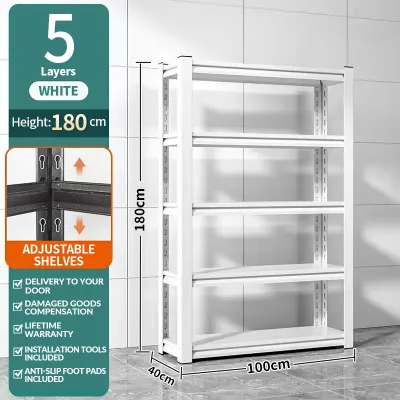
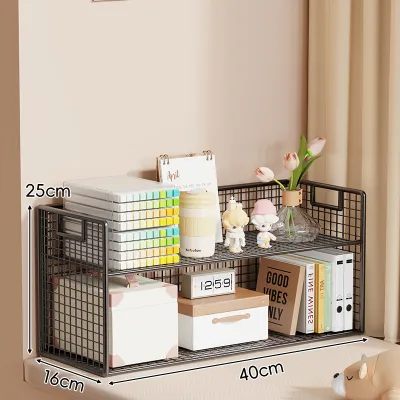
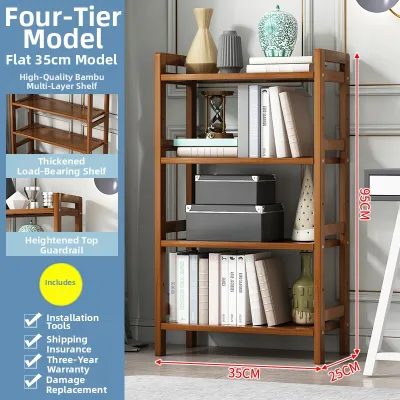
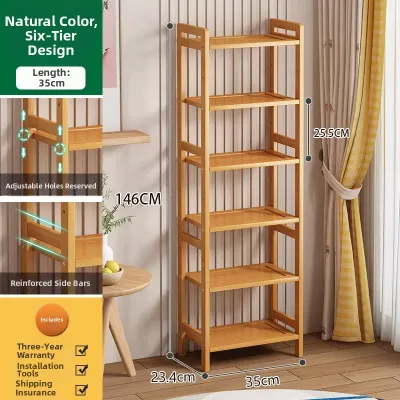
Prices are valid at publication and may change. Please refer to the product page for the latest price.
However, a blank wall is rarely completely clear. You must account for fixed architectural features that prevent a shelf from sitting flush. Look out for skirting boards, which can push the base of a freestanding rack forward by 1 to 2 cm. Note the locations of power outlets, light switches, and internet data ports, as blocking these can make daily tasks highly inconvenient. In typical Singapore apartments, you must also watch out for air conditioning trunking, window sills, and wall-mounted distribution board (DB) boxes. If your rack is too tall or deep, it may collide with these fixtures or block access to them entirely.
Next, plan the delivery route. A display shelf rack must physically fit through your building’s entryways before it can stand in your room. Measure the height and width of your front door, room doors, and any tight corridors or stairwells. If you live in a high-rise apartment or HDB flat, measure the interior dimensions of the lift, including the door opening width and the diagonal clearance inside the cabin. Many pre-assembled or heavy metal racks cannot clear tight lift doors, forcing delivery teams to use stairs or, worse, return the item.
Finally, check the swing radius of nearby doors, windows, and built-in cabinets. A new rack should never obstruct the path of a bedroom door, a wardrobe door, or a window crank. Open every door and window fully to ensure they have complete clearance from the proposed footprint of your new furniture.
Understand How Shelf Dimensions Affect Your Room
Every display shelf rack is defined by three primary dimensions: width, height, and depth. Each of these dimensions plays a distinct role in how much storage you gain and how the piece influences the visual scale of your room.

Width The horizontal span determines its overall display capacity and visual weight. Wide racks (typically over 120 cm) act as strong visual anchors. They work beautifully along large, uninterrupted walls, providing a sense of stability and plenty of surface area for books, plants, and decorative objects. However, a rack that is too wide for a short wall will feel cramped and crowded, leaving no room for other furniture or breathing space.
Height The vertical scale of a rack dictates how high your sightlines will go. Tall racks (ranging from 180 cm to near-ceiling heights) are excellent for maximizing storage on a minimal footprint. They draw the eye upward, which can make a room feel loftier if styled correctly. However, in rooms with standard or low ceilings, an excessively tall, solid rack can feel imposing and heavy. It can also block overhead light distribution, casting deep shadows across the lower half of your room.
Depth Depth is arguably the most critical dimension for maintaining open walkways. Standard display racks usually range from 30 cm to 45 cm in depth, which is ideal for storing larger items like storage boxes, binders, or deep baskets. For narrower spaces, shallow racks measuring 15 cm to 25 cm are far more appropriate. These slim profiles are perfect for displaying novels, small framed photos, and compact ornaments without encroaching on your living space.
Shelf Spacing and Tiers Beyond the external frame, look at the internal shelf spacing. Fixed-tier racks offer a clean, uniform look but limit what you can display. If you plan to store a mix of tall art books, standard novels, and tiny collectibles, look for racks with adjustable shelves. This flexibility allows you to customize the vertical clearance of each tier, preventing wasted vertical space and ensuring every item fits comfortably.
Match Rack Size to Your Room Layout and Traffic Flow
A display shelf rack should complement your daily routine, not disrupt it. Matching the rack’s physical dimensions to your specific room layout is essential for preserving natural traffic flow and maintaining visual harmony.
Small or Narrow Spaces In compact spaces, such as study rooms, narrow hallways, or cozy living rooms, floor space is at a premium. Here, you should prioritize shallow-depth or tall, narrow “tower” racks. To ensure that family members can walk past without bumping into corners, maintain a standard clearance of at least 60 to 90 cm of open floor space in front of the rack. If the rack is placed near a main walkway, a depth of 20 to 30 cm is the safest choice to keep the path clear and comfortable.
Large or Open Spaces In spacious living areas or open-plan offices, you have more freedom to experiment with larger dimensions. Wide, double-bay racks or deep, open-backed shelving units can serve as excellent room dividers. For instance, an open-backed display rack can separate a dining area from a living room without blocking natural light or making either space feel closed off. When using a rack as a divider, choose a model with a sturdy, wide base to ensure stability, as it will not be supported by a wall.
Visual Proportion Achieving visual balance is about avoiding extremes. Placing a massive, deep bookcase in a small bedroom will make the entire room feel like a closet, while placing a single, tiny, narrow rack on a massive living room wall will look awkward and unfinished. If you have a large wall but do not want a heavy piece of furniture, consider grouping two or three identical medium-sized racks side-by-side to create a balanced, modular look.
The Masking Tape Trick Before purchasing, use masking tape to outline the proposed rack’s footprint on your floor and wall. Walk around this taped area for a day or two to see how the physical presence affects your room’s flow and light.
Floor-Standing vs. Wall-Mounted Options for Tight Spaces
When floor space is limited, deciding between a floor-standing rack and a wall-mounted alternative is a major turning point in your spatial planning. Both options have distinct structural requirements and safety considerations.
Floor-Standing Racks Floor-standing display racks are the traditional choice. They excel at supporting heavy items like large book collections, ceramic pots, or heavy electronics because their weight is transferred directly to the floor. They also offer excellent flexibility, allowing you to rearrange your room layout whenever you wish without leaving holes in your walls. However, tall freestanding units (especially those over 120 cm) have a higher center of gravity. To prevent serious tipping hazards, these units must be anchored securely to the wall using anti-tip bracket kits, which are often included by the manufacturer.
Wall-Mounted Racks Wall-mounted options, such as floating shelves or wall-hung modular racks, are outstanding space-savers. By lifting your storage off the floor, they open up valuable floor space, making small rooms feel larger and making floor cleaning much easier. They also allow you to utilize awkward spaces, such as the area above a desk or a low sofa.
Installation Constraints and Wall Types Before choosing a wall-mounted rack, you must verify your wall type and its load-bearing capacity. In residential properties, walls are typically solid concrete or hollow drywall partition walls. Solid concrete walls offer exceptional load capacity but require a masonry drill, heavy-duty wall plugs, and concrete screws. Drywall partition walls require specialized hollow-wall anchors or toggle bolts, and shelves must ideally be screwed directly into the internal metal or wooden studs to prevent the drywall from tearing under load.
Always check the manufacturer’s weight limits, screw specifications, and installation instructions before mounting any shelf. If the instructions conflict with your wall type, if your wall material is unidentified, or if you are unsure of the wall’s load-bearing capacity, stop the installation and consult a qualified professional handyman or structural engineer. Never exceed the stated weight limits, as overloading a wall-mounted shelf can lead to catastrophic wall damage and physical injury.
Common Sizing and Clearance Mistakes to Avoid
Avoiding common sizing oversights will save you from the hassle of return shipping fees, awkward room layouts, or structural failures. Keep these frequent mistakes in mind as you make your final decision.
Ignoring Skirting Boards Many shoppers measure only the wall width and forget that skirting boards protrude at the base. If a display rack does not have a bottom cutout to accommodate skirting boards, it cannot sit flush against the wall. This creates a permanent gap behind the shelves, which not only collects dust but also makes anchoring the unit to the wall much more difficult and less stable.
Overlooking Ceiling Fixtures and Air-Con Units A tall rack might fit your wall height in theory, but it can cause major issues if it blocks air conditioning vents, ceiling fans, or light fixtures. Blocking an air-con unit disrupts airflow and can cause condensation issues, while placing a tall rack too close to a ceiling fan is an immediate safety hazard. Always leave at least 30 to 50 cm of clearance below ceiling-mounted fixtures.
Encroaching on High-Traffic Zones Choosing a rack that is too deep for a hallway or entry path can turn a peaceful home into an obstacle course. If you constantly have to turn sideways to walk past a display shelf, or if a door cannot open past 90 degrees, the rack is too deep. Ensure all high-traffic pathways maintain clear, unobstructed passage.
Disregarding Weight Capacity Limits A display rack’s dimensions do not automatically equal its weight capacity. A wide, thin wooden shelf may look spacious, but loading it with heavy textbooks can cause the shelf to sag, warp, or crack over time. Always verify the manufacturer’s maximum load rating per shelf tier. If you plan to store heavy items, look for reinforced metal frames, solid wood shelves, or units with central support legs.
Frequently Asked Questions (FAQ)
How much space should I leave between a display shelf rack and the wall?
If your display shelf rack has a solid back panel, it should sit as flush against the wall as possible to maximize stability and prevent items from falling behind it. To achieve this, look for racks with built-in skirting board cutouts. If you are using an open-back or wire display rack, leaving a small gap of 2 to 5 cm is acceptable to allow for ventilation and prevent the metal frame from scuffing your paintwork. However, regardless of the gap size, any tall freestanding rack must be anchored securely to the wall with anti-tip hardware to ensure safety.
Can I use a deep display rack in a narrow hallway?
It is highly recommended to avoid deep display racks (over 30 cm) in narrow hallways. Hallways are high-traffic transitional zones, and keeping them clear is vital for safety and ease of movement. You should maintain a clear walking path of at least 60 to 90 cm. If your hallway is narrow, opt for shallow wall-mounted shelving (15 to 20 cm deep) or a recessed wall niche instead of a bulky floor-standing unit. This keeps the walkway safe and visually open while still providing storage for small items.
Community discussion
Share your experience or ask a question. Comments are reviewed before publication.