
Choosing the right clothes stand for a small bedroom requires balancing physical footprint with actual hanging capacity. To prevent the room from feeling cramped, the ideal stand must fit within underutilized corners or narrow wall gaps while leaving enough clearance for walkways and door swings. By measuring your available floor area, accounting for hanger overhang, and matching the stand’s design to your layout, you can keep your daily wardrobe organized without sacrificing precious floor space.
Quick Rules for Matching Stand Size to Small Bedrooms
When space is tight, every centimeter counts. A practical starting point is to limit the depth of a freestanding clothes stand to no more than 40 to 45 centimeters. This depth aligns closely with standard clothes hangers, which typically measure around 40 to 43 centimeters wide. Choosing a stand with a base narrower than this hanger width means your clothes will overhang and brush against walls or block walkways, defeating the purpose of a compact footprint.
For general walkways, aim to preserve a clear path of at least 60 centimeters around the stand. If you only need to hang a few daily essentials—such as a work jacket, a handbag, and tomorrow’s outfit—a slim pole-style valet stand with a base diameter of 30 centimeters is often sufficient. However, if you plan to use the stand for seasonal overflow or heavy coats, you will need a wider horizontal rail stand, which requires a broader, heavier base to remain stable under a heavier load.
Products mentioned in this guide

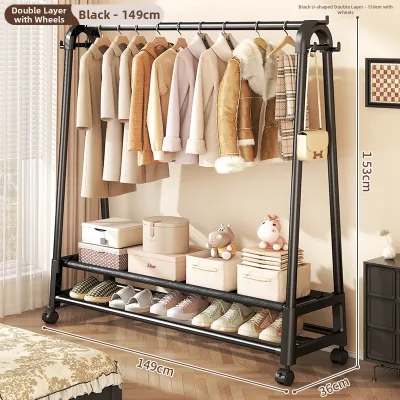
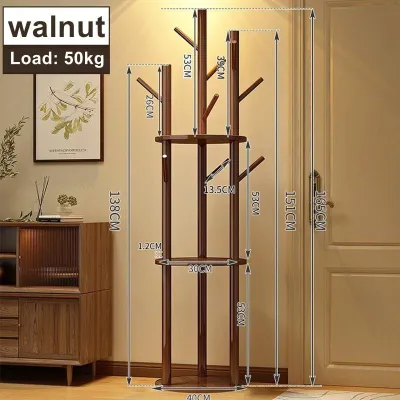

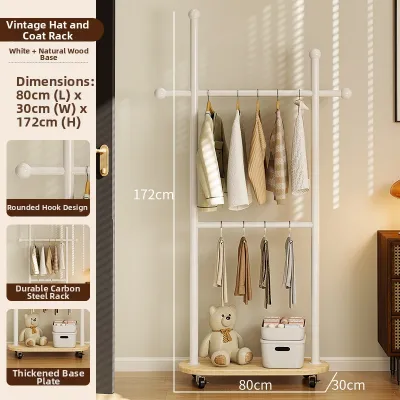
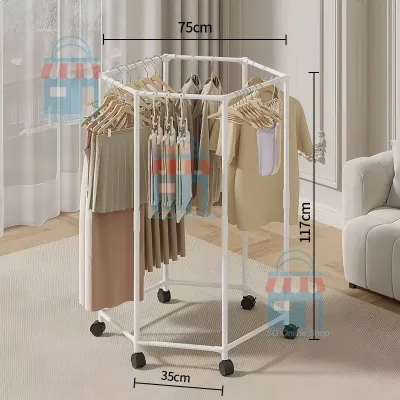

Prices are valid at publication and may change. Please refer to the product page for the latest price.
Measure Your Available Space and Required Clearances
Before purchasing any furniture, you must map out the exact zone where the clothes stand will sit. Begin by measuring the flat floor space, but do not stop at the floor level. You must account for the swing arcs of nearby wardrobe doors, bedroom entry doors, and even cabinet drawers. A clothes stand placed too close to a wardrobe can prevent the doors from opening fully, creating a daily annoyance.

Vertical clearance is equally critical, particularly in compact bedrooms with unique architectural features. If your bedroom has sloped ceilings, low window sills, or low-hanging ceiling fans, measure the height from the floor to the lowest obstruction. A standard clothes stand ranges from 150 to 180 centimeters in height. Ensure there is at least 30 centimeters of clearance between the top of the stand (and any garments hung on it) and any moving ceiling fan blades to prevent safety hazards.
Finally, evaluate the ergonomic flow of the room. Walkways should feel natural and unhindered. If you must squeeze past the clothes stand or turn sideways to walk between the bed and the wall, the stand is too large for that specific spot. Mark the proposed footprint on the floor using painter’s tape to visualize how much physical space the unit will occupy during daily movement.
Calculate Your Hanging Capacity and Stability Needs
To select the right size, you must translate your wardrobe needs into physical rail length. Different garments occupy different amounts of horizontal space. For example, lightweight shirts and blouses typically require about 3 to 5 centimeters of rail length each, whereas bulky winter coats, heavy jackets, or thick knitwear can easily consume 8 to 10 centimeters of space per item.
This garment volume directly impacts the stability requirements of the stand. A narrow, tall stand with a small base is highly susceptible to tipping if it is loaded with heavy items on one side. When evaluating a stand, check the manufacturer’s specified load capacity and look for designs that feature a low center of gravity, such as those with a heavy solid metal or stone base.
If your goal is simply to organize a daily rotation of clothes, a compact rack with a rail length of 50 to 60 centimeters is highly manageable. For long-term storage or larger wardrobe collections, you might be tempted to buy a longer rail. However, in a small bedroom, it is often wiser to use a double-tier rack—which utilizes vertical space by stacking two rails on top of each other—rather than extending the horizontal footprint across the room.
Match Clothes Stand Types to Your Bedroom Layout
Different bedroom layouts call for different styles of clothes stands. Selecting the right configuration allows you to maximize your floor plan without compromising on storage capacity.
Slim freestanding racks are highly versatile and can be tucked into narrow gaps between wardrobes or beside a chest of drawers. Because they stand on the floor, you must verify the base stability. Look for models with wide, flat feet or weighted circular bases to minimize tipping risks in high-traffic areas.
Wall-mounted and over-the-door options eliminate the floor footprint entirely, making them ideal when floor space is virtually non-existent. Before installing these, verify your wall material; drywall requires appropriate anchors, while solid masonry can support heavier loads. For over-the-door units, check that your door hinges are strong enough to support the added weight of both the rack and the clothing.
Folding or retractable stands are an excellent solution if you only need extra hanging space occasionally, such as when ironing or hosting guests. These units can be set up in minutes and folded flat to be stored under the bed or inside a wardrobe when not in use, keeping your bedroom clutter-free.
Corner units are perfect for maximizing underutilized corners in small bedrooms. A dedicated corner clothes stand features a triangular base that fits snugly into a 90-degree corner. This design utilizes dead space that would otherwise go unused, keeping the center of the room open and ensuring that natural light from windows is not blocked.
Common Sizing and Placement Mistakes to Avoid
One of the most frequent errors when choosing a clothes stand is ignoring hanger overhang. A rail might measure only 30 centimeters deep, but once you hang standard 42-centimeter hangers on it, the clothes will protrude significantly beyond the frame. Always add at least 10 to 15 centimeters to the stand’s physical depth measurement to account for this fabric overhang.
Another mistake is placing the stand where it blocks natural light sources, ventilation paths, or air conditioning vents. Blocking an air vent can disrupt the airflow in your bedroom, while placing a tall, fully loaded rack directly in front of a window will darken the space and make the room feel even smaller.
Overloading a narrow base is a serious structural hazard. Avoid hanging heavy bags or multiple winter coats on one side of a lightweight stand. Always distribute the weight evenly, placing heavier items closer to the center or bottom shelves if the stand includes them.
Lastly, do not forget to measure the delivery and assembly path. In apartment living, particularly in high-rise homes in Singapore, furniture must fit through lift doors, tight stairwells, and narrow bedroom doorways. If you purchase a pre-assembled or welded metal clothes stand, verify that its finished dimensions can easily clear these entry points before making your purchase.
Frequently Asked Questions (FAQ)
How much space should I leave between the clothes stand and the bed?
You should ideally leave a minimum clearance of 60 to 70 centimeters between the clothes stand and the edge of your bed. This distance provides enough room to walk comfortably, change your bedsheets, and access any under-bed storage drawers without bumping into the stand or knocking clothes off the hangers. If space is exceptionally tight, consider a wall-mounted rail placed higher up to keep the floor area next to the bed completely clear.
Are rolling clothes stands safe for small bedrooms with uneven floors?
Rolling clothes stands can be convenient, but they require caution on uneven floors. If you choose a wheeled model, ensure it features high-quality, lockable casters on at least two of the wheels to prevent the stand from drifting or tipping. For carpeted floors or uneven surfaces, a stationary stand with adjustable leveling feet is generally a safer and more stable choice, as it allows you to compensate for floor imperfections manually.
Community discussion
Share your experience or ask a question. Comments are reviewed before publication.