
Selecting the right ball bearing wheels for your furniture requires matching three critical specifications: the total weight capacity of the set, the wheel diameter for smooth rolling, and the exact mounting style. Getting these measurements right prevents damaged floors, unstable furniture, and premature wheel failure. By taking a few precise measurements and calculating your load requirements, you can easily find the perfect replacement wheels to restore or upgrade your mobile furniture.
Step 1: Calculate the Required Load Capacity
To find the minimum load rating each wheel must support, you need to calculate the total weight of the furniture piece when fully loaded. Start by estimating the weight of the empty furniture, then add the maximum expected weight of its contents. For example, a heavy storage cabinet or a mobile kitchen island in a Singapore apartment might hold heavy cookware, small appliances, or books that significantly increase the overall load.
Once you have the total estimated weight, apply a safety margin to account for uneven weight distribution. Weight is rarely distributed perfectly across all wheels, especially when moving the furniture over thresholds or uneven surfaces. A reliable formula is to divide the total weight by three instead of four (for a four-wheeled piece). This ensures that even if one wheel temporarily lifts off the ground or bears less weight, the remaining wheels can safely support the load.
Products mentioned in this guide
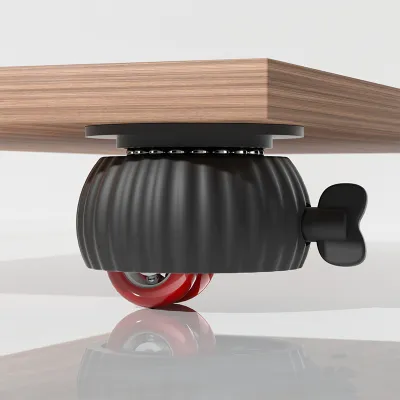
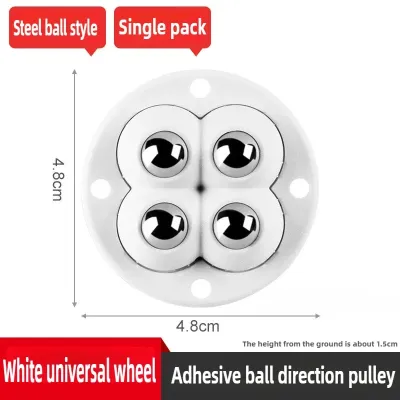
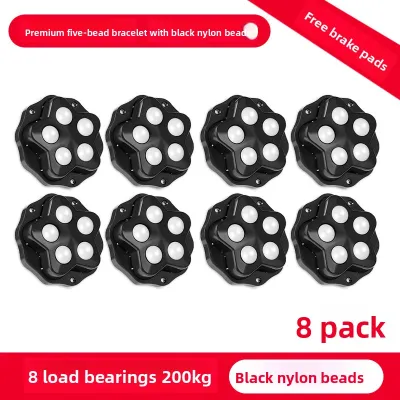


Prices are valid at publication and may change. Please refer to the product page for the latest price.
Always check the manufacturer’s specified load rating printed on the replacement packaging or product specification sheet. Do not assume that a larger wheel automatically supports more weight, as internal construction and materials vary. Verifying the official load rating per caster is the safest way to prevent structural failure.
Step 2: Measure the Wheel Diameter and Clearance
The diameter of your replacement wheels directly affects how easily your furniture rolls and how much it alters the height of the piece. To begin, measure the outer diameter of your existing wheels using a ruler or caliper. If you are adding wheels to a piece of furniture that did not have them before, assess the available clearance between the bottom of the furniture frame and the floor.

Larger wheel diameters generally offer smoother rolling, making it much easier to glide over tile grout lines, carpet edges, and sliding door tracks. If your furniture frequently moves across different flooring transitions, a larger wheel will reduce the effort required to push it. However, you must verify that the increased height does not interfere with the furniture’s usability, such as a desk sliding under a built-in study nook or a cabinet door clearing a rug.
Changing the wheel diameter can also shift the center of gravity of heavy furniture. Ensure that any increase in height does not make the piece top-heavy or prone to tipping. If you are replacing wheels on a filing cabinet or a drawer unit, check that the new height does not prevent drawers from opening smoothly or cause the unit to scrape against nearby fixtures.
Step 3: Identify the Correct Stem Type and Mount
To ensure a secure fit, the mounting interface of the new wheel must perfectly match the existing holes, sockets, or brackets on your furniture. The most common mounting styles are stem mounts and top plate mounts. Choosing the wrong mount type or size will make installation impossible without major modifications to the furniture base.
For stem mounts, you must distinguish between grip neck stems, grip ring stems, and threaded stems. Remove one of the existing wheels and measure both the exact diameter and the length of the stem. Threaded stems require you to match the thread pitch and size, which can be verified using a thread gauge or by testing the stem with matching nuts at a local hardware store.
For top plate mounts, the wheel is attached via a flat metal plate that screws directly into the furniture base. Measure the overall dimensions of the plate, the distance between the bolt holes (hole spacing), and the screw size required. Ensuring these dimensions align with your existing mounting holes prevents the need to drill new holes, which could weaken the wooden base of your furniture.
Step 4: Match the Wheel Material to Your Floor Type
While the term “ball bearing” refers to the internal steel balls that allow the wheel to swivel and roll smoothly, the outer tread material determines how the wheel interacts with your floor. Choosing the wrong material can lead to scratched floorboards, scuffed tiles, or loud rolling noises.
For hard surfaces like hardwood, laminate, or ceramic tiles common in Singapore homes, look for wheels with soft, non-marking outer treads. Polyurethane (PU) and soft rubber are excellent choices because they absorb vibrations, roll quietly, and protect delicate surfaces from scratches. Check the manufacturer’s product labels to confirm the material is rated for hard floors.
For carpeted areas, harder materials like nylon or hard plastic are often preferred because they glide more easily through carpet fibers. However, if your furniture transitions between carpeted rooms and hard floors, a versatile polyurethane wheel is usually the safest compromise. Always verify the floor compatibility guidelines provided by the wheel manufacturer to avoid accidental floor damage.
Frequently Asked Questions (FAQ)
Can I replace standard plastic casters with ball bearing wheels?
Yes, you can upgrade standard plastic casters to ball bearing wheels, provided the mounting interface matches the existing furniture base. Ball bearings significantly improve swivel smoothness and load handling, making heavy furniture much easier to maneuver. However, before upgrading, inspect the furniture’s structural joints and base material to ensure they are strong enough to handle the increased mobility and localized stress of the new wheels.
Do I need brakes on my furniture ball bearing wheels?
Whether you need brakes depends on the furniture’s function and placement. If the piece is located on slightly uneven floors, highly polished tiles, or requires stability during use—such as a mobile kitchen cart, a heavy workbench, or a study desk—at least two locking wheels are highly recommended. For maximum stability, choose dual-lock brakes, which stop both the wheel rotation and the swivel mechanism, preventing the furniture from shifting.
Community discussion
Share your experience or ask a question. Comments are reviewed before publication.