
Finding the right adjustable dining table requires balancing daily spatial efficiency with occasional hosting capacity. The ideal choice fits comfortably within your dining area when collapsed for everyday use, yet expands seamlessly to accommodate guests without blocking essential walkways. By measuring your room’s physical limits, understanding how different extension mechanisms operate, and checking chair compatibility, you can select a versatile piece that maximizes both floor space and seating comfort.
Measure Your Dining Area and Clearance Requirements
To find a table that fits your home, you must first establish the physical boundaries of your dining area. Start by measuring the length and width of the room using a standard measuring tape. Mark out two distinct footprints on your floor using masking tape: one representing the table’s fully collapsed state for daily meals, and another representing its maximum extended dimensions. This visual guide helps you see exactly how much floor space remains active when hosting guests.
Clearance is the most critical factor for comfortable movement and seating. As a general rule, aim for a minimum of 90 centimetres of clearance between the edge of the table and the nearest wall, cabinet, or household obstacle. This distance allows diners to pull out their chairs and sit down comfortably. If you need a primary walkway behind seated guests, increase this clearance to 120 centimetres so family members can pass by without forcing diners to tuck themselves in.
Products mentioned in this guide
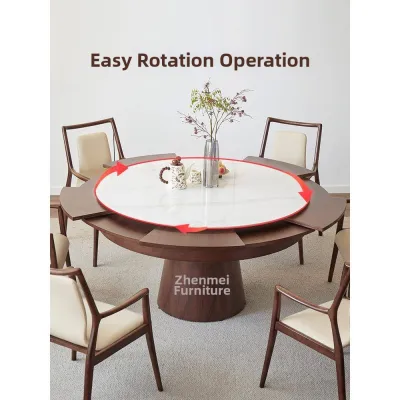
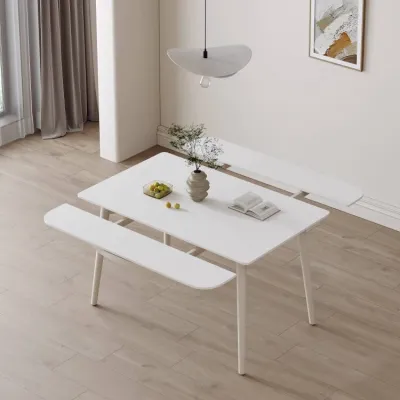
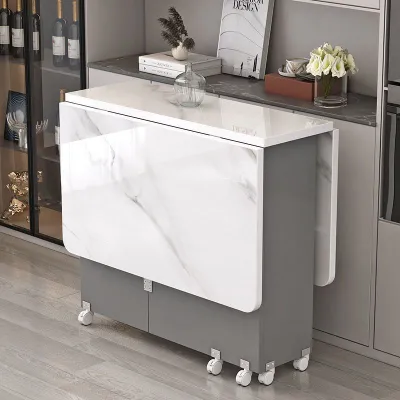
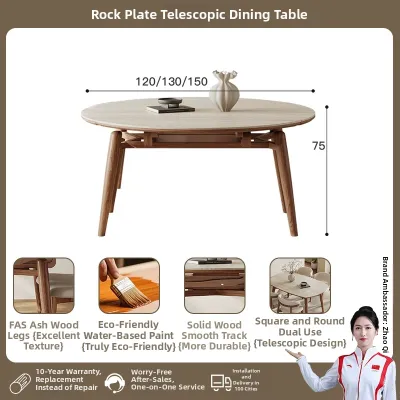
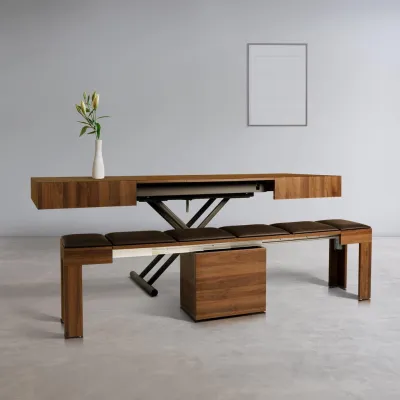
Prices are valid at publication and may change. Please refer to the product page for the latest price.
In Singapore, residential layouts like HDB flats and condominiums often feature compact dining zones, structural pillars, or nearby household shelter doors. You must ensure that the extended table does not block high-traffic pathways, entryways, or the swing radius of nearby doors. If your dining area sits adjacent to a kitchen entrance or a built-in sideboard, measure the clearance with those doors and drawers fully open to prevent physical collisions during busy meal times.
Understand Adjustable Table Mechanisms and Dimensions
The way a table expands directly influences its stability, storage requirements, and overall footprint. Common designs include drop-leaf, butterfly leaf, and telescopic sliding mechanisms. Drop-leaf tables feature hinged sections that hang down when not in use, making them highly compact but sometimes leaving the folded leaves visible. Butterfly leaf tables store the extension panels within a hidden compartment beneath the tabletop, which keeps the extra pieces out of sight and eliminates the need for external storage.

Telescopic sliding tables use internal runners to pull the table ends apart, allowing you to insert separate leaf panels into the center gap. When evaluating these options, always check the manufacturer’s specifications for the exact collapsed length, fully extended length, and height adjustability range. Some modern designs also function as height-adjustable tables, transitioning from a low coffee table height to a standard dining height of around 75 centimetres.
Structural stability is another vital consideration, especially when a table is fully extended to its maximum capacity. Examine the leg placement in both states; tables with legs positioned at the outer corners generally offer the most stable support and the most legroom. Conversely, pedestal bases or trestle designs can sometimes feel unstable if the extension extends too far past the central support, so you should verify the manufacturer’s weight distribution guidelines before purchasing.
Match Table Capacity to Your Household and Seating Needs
An adjustable table should cater perfectly to your household’s daily routine while remaining adaptable for social gatherings. Begin by identifying your baseline daily seating needs, which typically range from two to four people for most urban households. Next, determine your realistic hosting capacity. If you regularly host weekend dinners for six to eight guests, your table must be capable of expanding to accommodate those extra place settings without overcrowding the room.
To translate table dimensions into actual seating capacity, allocate approximately 60 to 70 centimetres of tabletop width per person. This spacing ensures that guests have enough elbow room to dine comfortably without bumping into their neighbors. For example, a collapsed table length of 120 centimetres comfortably seats four people, while extending the table to 180 centimetres allows you to seat six people, including two additional diners along the sides or at the table ends.
Your choice of dining chairs also plays a major role in how well the setup functions. Measure the distance between the table legs in the collapsed state to ensure your daily chairs can slide fully underneath the tabletop when not in use. If you plan to use folding or stackable chairs for guests, verify that their seat heights align with the table’s extended height, and check that the chair frames can fit comfortably alongside the table’s support legs.
Evaluate Space-Saving Features for Compact Homes
For homes where space is at a premium, look for adjustable tables that incorporate smart, built-in storage solutions. Some models feature dedicated internal compartments that house the extension leaves, saving you from finding closet space for bulky wooden panels. Other designs integrate hidden drawers or shelving units within the table frame, providing convenient storage for placemats, cutlery, or spare folding chairs.
Multi-functional furniture pieces can also serve dual purposes to free up valuable floor space. A console-to-dining table, for instance, sits flush against a living room wall as a slim entryway console during the day, then pulls out into a full-sized dining table when needed. If you opt for a multi-functional design, double-check the specific clearance requirements for both configurations to ensure you have enough room to transform the piece without moving other heavy furniture.
Mobility features can make a significant difference in how easily you adapt your living space. Tables equipped with lockable casters allow you to roll the piece against a wall when you need open floor space for other activities, and then lock it securely in place for dinner. If you choose a mobile table, inspect the caster locks to ensure they grip the floor firmly, preventing the table from sliding or shifting while your family is dining.
Common Sizing Mistakes to Avoid
One of the most frequent errors when buying an adjustable dining table is failing to measure the delivery pathway. Even if a table fits perfectly in your dining room, it must first pass through your building’s lift doors, narrow corridors, and your home’s main entryway. Always check the packaged dimensions provided by the retailer and compare them against your home’s entry points to avoid delivery day complications.
Another common pitfall is overestimating the usable seating space on an extended table. Thick corner legs, wide pedestal bases, or low-hanging support aprons can restrict where chairs can be placed, sometimes blocking guests from sitting comfortably at the ends of the table. Carefully review the underside design of the table to ensure that the structural supports do not interfere with your guests’ legroom or chair placement.
Finally, do not ignore the visual weight and proportion of the table relative to your dining area. A massive, dark-toned adjustable table might fit physically within a small room, but it can easily overwhelm the space visually, making the entire room feel cramped and dark. Consider lighter wood finishes, glass tops, or slim metal frames to maintain an airy, open feel in smaller dining zones.
Frequently Asked Questions (FAQ)
What is the standard clearance needed around an extended dining table?
To ensure comfortable movement, aim for a minimum clearance of 90 centimetres between the extended table edges and any walls or furniture. This distance provides enough space for guests to pull out their chairs and sit down easily. If the area behind the chairs serves as a primary walkway through the room, increase this clearance to 120 centimetres to allow others to walk past without disruption.
Can I use an adjustable dining table as a daily workspace?
Yes, many adjustable dining tables work well as daily workspaces, provided they offer a stable surface and comfortable legroom. Check the manufacturer’s height specifications to ensure the tabletop sits at an ergonomic working height, typically between 73 and 76 centimetres. Additionally, verify that the tabletop material has a durable finish that can withstand daily laptop use, and ensure your office chair fits comfortably beneath the table frame.
Community discussion
Share your experience or ask a question. Comments are reviewed before publication.