
Finding the perfect mattress firmness is a highly individual decision that directly impacts your daily sleep quality and long-term spinal health. When selecting a single mattress from Seahorse—a brand highly popular in Singapore for its supportive foam and spring options—you must balance your body weight with your primary sleeping posture. The right firmness level ensures that your spine remains in a neutral, relaxed position throughout the night, preventing chronic stiffness and morning aches.
By understanding how your physical build interacts with different mattress densities, you can confidently navigate the selection process. This guide breaks down the mechanics of mattress firmness, helping you identify the exact level of support your body requires for restful, pain-free sleep.
Understanding Mattress Firmness Scales
The mattress industry commonly uses a standard 1-to-10 scale to describe firmness, with 1 representing an ultra-soft, cloud-like feel and 10 representing an extremely rigid, board-like surface. Most consumer options fall between 3 and 8, categorized broadly into Soft, Medium, Medium-Firm, and Firm. It is crucial to remember that these ratings are subjective and can vary significantly between different manufacturers.
Products mentioned in this guide
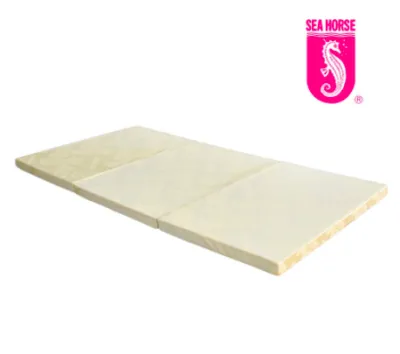
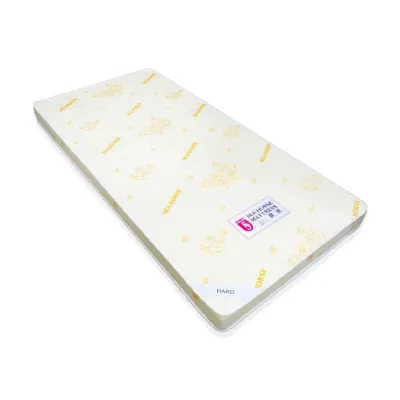

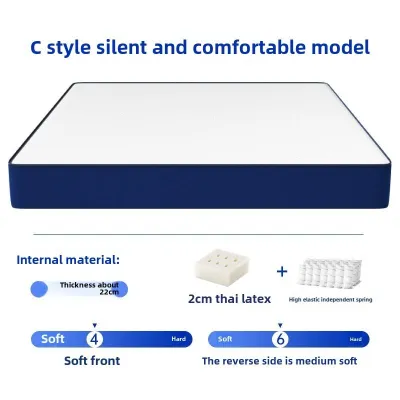
Prices are valid at publication and may change. Please refer to the product page for the latest price.
Seahorse single mattresses are historically known for their robust, high-density foam formulations, which many users perceive as firmer than equivalent ratings from other brands. Always review the specific tension ratings or material descriptions on the official product tag or specification sheet. A mattress that one brand labels as “medium” might feel considerably firmer when constructed with Seahorse’s signature high-density compressed foam.
Additionally, a standard single mattress in Singapore measures 91 cm in width and 190 cm in length. Because of this relatively narrow sleep surface, edge support is a critical factor to consider. A mattress with weak edges may make you feel as though you are rolling off when sleeping near the side, whereas a firm, well-supported edge maximizes the usable sleeping area of your single bed.
Matching Firmness to Your Sleeping Position
Biomechanics play a primary role in determining your ideal mattress feel. The ultimate goal of any mattress is to support the natural curvature of your spine, keeping your head, neck, shoulders, hips, and knees in alignment. When you lie down, your body weight is distributed unevenly, creating specific pressure points depending on your posture.

Side Sleepers
Sleeping on your side is highly common, but it presents unique challenges for spinal alignment. In this position, your shoulders and hips bear the brunt of your body weight, protruding deeper into the mattress surface than your waist or legs. If your mattress is too firm, these high-pressure zones cannot sink in, forcing your spine to curve unnaturally.
An unyielding sleep surface can lead to morning shoulder stiffness, hip pain, or tingling arms due to restricted blood flow. Side sleepers generally benefit from a softer to medium mattress firmness. This softer surface contours to the natural curves of the body, cushioning the shoulders and hips while filling the gap at the waist to maintain a straight, horizontal spinal alignment.
Back and Stomach Sleepers
If you primarily sleep on your back, your body requires a different balance of support and cushioning. Back sleepers need a medium to medium-firm surface that supports the natural “S” curve of the lower spine. If the mattress is too soft, the heavy pelvic region will sink too deeply, causing the spine to bow downward and straining the lower back muscles.
Stomach sleepers face the greatest risk of spinal strain because sleeping on the stomach naturally coaxes the lower back into an exaggerated arch. To prevent this, stomach sleepers require a firm to extra-firm mattress. A solid surface keeps the pelvis and hips elevated in line with the shoulders, preventing the lower back from hyperextending.
For combination sleepers who shift between multiple positions during the night, a medium-firm mattress is typically the most versatile compromise. It offers enough surface give for occasional side sleeping while maintaining the structural integrity needed to support back or stomach postures.
Adjusting for Your Body Weight
Your body weight is the physical force that interacts with the mattress’s comfort and support layers. A mattress will feel completely different to a person weighing 50 kg compared to someone weighing 110 kg because of how deeply each individual compresses the materials.
Lightweight Sleepers (Under 60 kg)
If you weigh under 60 kg, your body does not exert enough downward force to compress the deeper support layers of a firm mattress. As a result, a mattress rated as “medium-firm” by a manufacturer might feel like an unyielding “firm” to you.
To ensure you receive adequate pressure relief and body contouring, you should generally lean toward softer or medium options. These models allow lighter individuals to experience the intended cushioning without feeling like they are sleeping on top of a rigid board.
Average Weight Sleepers (60 kg to 100 kg)
Sleepers within this weight bracket typically experience a mattress’s firmness exactly as the manufacturer intended. A standard medium to medium-firm Seahorse single mattress will provide this group with an ideal balance of surface comfort and deep structural support.
Within this range, your sleeping position should be the primary deciding factor. The physical compression of the foam or springs will remain highly predictable, allowing you to choose based on your alignment needs.
Heavier Sleepers (Over 100 kg)
Individuals weighing over 100 kg exert substantial force on a mattress, causing standard materials to compress deeply. If a mattress is too soft, a heavier sleeper will sink right through the comfort layers and rest directly on the rigid base, leading to severe pressure points and spinal misalignment.
If you fall into this category, you require a firmer mattress or a model built with highly robust support cores, such as high-density compressed foam or thick-gauge pocketed coils. It is highly recommended to check the manufacturer’s maximum weight capacity and density specifications for your chosen Seahorse model to ensure the mattress can withstand daily compression without sagging prematurely.
The Decision Matrix: Combining Weight and Posture
To simplify your search, you can cross-reference your weight category and primary sleeping position to identify a reliable starting point. The following matrix outlines how these two variables interact to point you toward the most suitable firmness level within the Seahorse single mattress range.
| Weight Category | Sleep Position | Recommended Firmness | Support Strategy |
|---|---|---|---|
| Lightweight (Under 60 kg) | Side | Soft to Medium | Prioritize plush comfort layers to cushion joints. |
| Lightweight (Under 60 kg) | Back / Stomach | Medium | Select balanced foam that prevents pelvic sinkage. |
| Average Weight (60 to 100 kg) | Side | Medium | Choose contouring materials to relieve shoulder pressure. |
| Average Weight (60 to 100 kg) | Back | Medium-Firm | Opt for a supportive core with moderate surface padding. |
| Average Weight (60 to 100 kg) | Stomach | Firm | Select a rigid surface to keep the pelvis aligned. |
| Heavier Weight (Over 100 kg) | Side | Medium-Firm to Firm | Look for thick comfort layers over a high-density core. |
| Heavier Weight (Over 100 kg) | Back / Stomach | Firm to Extra Firm | Require maximum density foam or heavy-duty coils. |
While this matrix serves as an excellent diagnostic starting point, it is not an absolute rule. Personal comfort preferences, previous injuries, and specific health conditions must also be considered.
For example, if you are an average-weight side sleeper but suffer from chronic shoulder joint pain, you might want to skew slightly softer than the standard recommendation to maximize pressure relief. Conversely, if you have been advised by a physical therapist to seek rigid orthopedic support, a firmer option may be necessary regardless of your sleep position.
How to Test and Verify Your Choice Before Buying
Because buying a mattress is a long-term investment in your physical well-being, you should never rely solely on theoretical guidelines. Take practical steps to verify your choice before completing your purchase.
If possible, visit a physical showroom in Singapore to test the models in person. When testing, do not simply sit on the edge of the bed or lie down for a few seconds. Lie down in your actual, preferred sleeping position for at least 10 to 15 minutes to allow your muscles to relax and give you a realistic sense of how the mattress supports your body over time.
Pay close attention to the product label, specification sheet, or official online description. Look for details regarding the exact materials used, such as high-density polyurethane foam, memory foam, or pocketed spring coils. High-density foam cores generally offer excellent longevity and firm support, which is a hallmark of many Seahorse designs, while pocketed coils provide superior motion isolation and contouring.
Always verify the retailer’s or manufacturer’s current trial period, return policy, and warranty terms before buying. Because policies can change, confirm whether they allow exchanges if the firmness is not a good fit after a few weeks of use, and check the specific terms regarding permanent sagging or indentations.
If you find that your new mattress is slightly firmer than expected after the initial break-in period, remember that you do not have to replace the entire bed immediately. Adding a high-quality mattress topper made of memory foam or latex is a low-risk, reversible way to soften the sleep surface while preserving the excellent structural support underneath.
Frequently Asked Questions (FAQ)
Can I adjust the firmness of my mattress after purchase?
Yes, you can easily modify the surface feel of your mattress. Adding a plush mattress topper, such as one made of memory foam or natural latex, is an effective way to make an overly firm mattress feel softer and more pressure-relieving. However, making a soft mattress feel firmer is much more difficult; this usually requires replacing the mattress entirely or checking if your specific Seahorse model is double-sided, allowing you to flip it over to a firmer side.
Is a firmer mattress always better for back support?
No, a common misconception is that an extremely firm mattress is always best for back health. True orthopedic support requires the mattress to conform to the natural curves of your body while keeping your spine aligned. An overly rigid mattress can create gaps under your lower back and put excessive pressure on your shoulders and hips. If you suffer from persistent back pain, you should consult a qualified healthcare professional for personalized advice rather than relying solely on mattress firmness.
Community discussion
Share your experience or ask a question. Comments are reviewed before publication.