
To select the right capacity for a rotating shoe cabinet, you must balance your household’s total active footwear count with the physical clearance of your entryway. A standard individual typically owns between 6 and 10 pairs of frequently worn shoes, meaning a family of four will require a cabinet that accommodates at least 24 to 40 pairs. However, because a shoe cabinet rotating design spins on a central axis, its physical footprint is dynamic rather than static. Choosing the perfect model requires calculating your household’s actual storage baseline and verifying that your foyer has enough clearance for the unit’s full rotation diameter.
Calculate Your Household's Shoe Storage Needs
To avoid purchasing a cabinet that is either overflowing or unnecessarily bulky, start by establishing a realistic baseline of your household’s footwear. For a standard adult, a practical baseline consists of everyday shoes, including work footwear, casual sneakers, and daily sandals or slippers. Children typically require fewer pairs, but their shoes are replaced more frequently, so allocating three to four slots per child is a safe estimate. Summing these numbers gives you the core capacity your cabinet must handle on a daily basis.
Next, adjust this baseline by identifying bulky or specialized footwear that requires more physical space. Items such as heavy hiking boots, sports cleats, high heels, and platform shoes do not pack as tightly as flat sandals. If your household participates in multiple outdoor activities or sports, these specialized shoes will occupy the space of one and a half to two standard pairs. Failing to account for this extra volume will leave you with a cabinet that technically has enough slots but cannot physically close or rotate.
Products mentioned in this guide
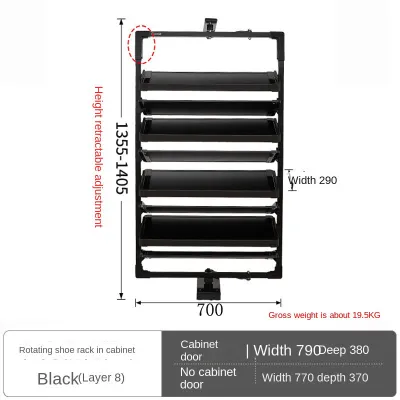
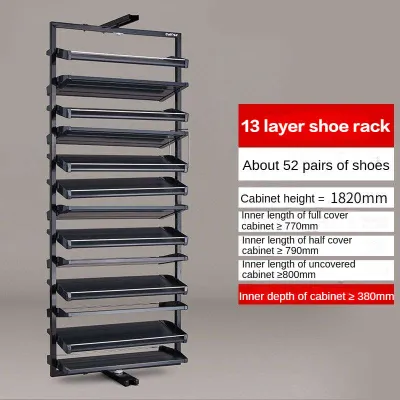
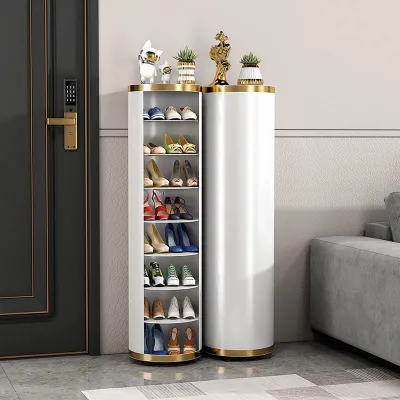
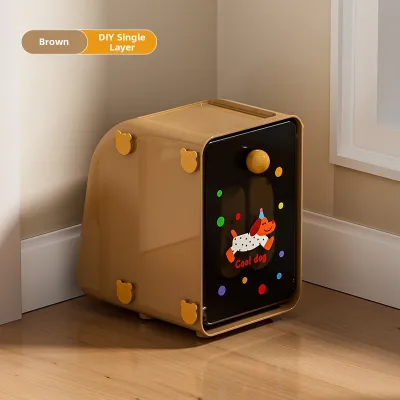
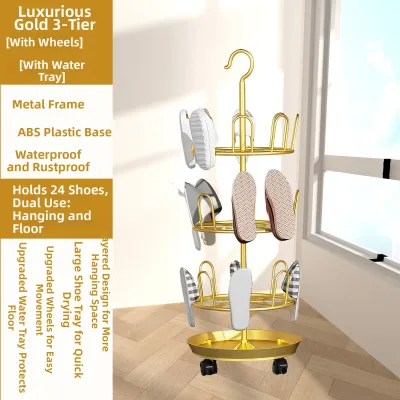
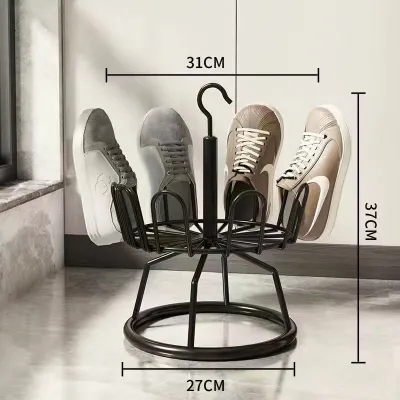
Prices are valid at publication and may change. Please refer to the product page for the latest price.
Finally, differentiate between active daily storage and long-term archival storage. The entryway is prime real estate and should be reserved exclusively for shoes worn multiple times a week. Off-season footwear, formal shoes worn only for special occasions, and duplicate pairs are better suited for bedroom closets, under-bed storage, or secondary cabinets. Keeping your rotating entryway cabinet dedicated to active pairs prevents you from needing an excessively large unit that overwhelms your foyer.
How To Choose a Shoe Cabinet Rotating Model by Capacity Tier
Small Households (1 to 2 People)
For single professionals or couples living in compact apartments, a rotating cabinet with a capacity of 12 to 20 pairs is generally ideal. These models typically feature a slim profile and fewer tiers, making them exceptionally well-suited for tight entryways or small foyers. A minimalist household can easily organize their daily work shoes, casual trainers, and home slippers within this range without encroaching on valuable floor space.

Medium Households (3 to 4 People)
A medium-sized household of three to four people typically needs a cabinet that can hold between 20 and 36 pairs of shoes. This capacity tier strikes a balance between providing dedicated shelves for each family member and maintaining a manageable furniture footprint. It allows parents to store their professional and casual footwear while leaving designated lower tiers for children’s school shoes and play sneakers, ensuring the foyer remains tidy.
Large Households (5 or More People)
For multi-generational families or households with five or more members, a capacity of 36 to 50+ pairs is necessary. To achieve this volume, you will need to look at multi-tier, dual-sided, or wider rotating models. Because these larger units hold significant weight, it is vital to check the manufacturer’s load capacity specifications and ensure the rotating mechanism is built with heavy-duty ball bearings.
When choosing a high-capacity model, pay close attention to structural stability and anchoring requirements. High-capacity rotating cabinets are tall and can become top-heavy if loaded incorrectly, making wall-anchoring hardware a critical safety feature. Always verify the exact pair counts and shelf adjustability on the manufacturer’s specifications, as internal layouts and partition designs significantly affect the actual usable capacity for different shoe sizes.
Measure Floor Space and Rotation Clearance
Unlike traditional rectangular shoe racks that sit flush against a wall, a rotating cabinet operates on a circular motion path. This means you must differentiate between the static footprint—the width and depth when the cabinet is stationary—and its dynamic swing radius. The most critical measurement to obtain is the full rotation diameter, which represents the maximum circular space the cabinet occupies as it spins. If your available space is smaller than this diameter, the corners of the cabinet will scrape against adjacent walls or furniture.
When measuring your designated installation spot, look closely for architectural features that might prevent a flush placement or block the rotation. Skirting boards, baseboards, electrical outlets, and protruding door frames can easily subtract several centimetres from your available floor area. If the cabinet cannot sit flat against the wall because of a baseboard, its entire rotational axis shifts forward, potentially blocking pathways or door swings that you thought were safe.
Ceiling height is another crucial factor, especially for tall, column-style rotating cabinets. Measure the distance from the floor to the lowest point of your ceiling, keeping an eye out for overhead obstacles. Ensure that the tallest tier of the cabinet clears not only the ceiling itself but also any ceiling fans, decorative light fixtures, or structural beams. A clearance gap of at least five to ten centimetres above the cabinet is recommended to allow for comfortable assembly and smooth rotation.
Finally, evaluate the daily traffic flow around the cabinet’s location. The entryway is a high-traffic zone where family members gather to put on or take off shoes. Ensure there is adequate walking clearance in the hallway when the cabinet is fully rotated or left partially open. If the cabinet’s dynamic swing blocks the main path, it will create a bottleneck, making the space feel cramped and inconvenient during busy morning rushes.
Common Sizing and Placement Mistakes to Avoid
One of the most frequent errors buyers make is measuring only the static width and depth of the cabinet while ignoring the extra clearance needed to spin the unit comfortably. This oversight often results in a cabinet that fits perfectly in its designated corner but cannot be rotated to access the shoes on the back tiers. Always prioritize the dynamic rotation diameter over the static dimensions when planning your layout.
Another common mistake is placing the rotating cabinet too close to an inward-opening door. If the door’s swing path overlaps with the cabinet’s rotation zone, you risk constant collisions that can scratch the furniture’s finish or damage the door itself. Additionally, this placement can trap the user between the open door and the rotating cabinet, creating an awkward and unsafe bottleneck in the entryway.
Weight distribution is also frequently overlooked, leading to mechanical strain and safety hazards. Overloading the bottom shelves with heavy items can cause the rotating mechanism to jam or wear out prematurely, but loading too many heavy shoes on the upper tiers creates a severe tipping hazard. To maintain smooth rotation and stability, distribute weight evenly, place heavier footwear on the lower-middle tiers, and always install the manufacturer’s recommended anti-tip wall anchors.
Lastly, buyers often ignore internal shelf height limitations, assuming a high-capacity cabinet can hold any type of shoe. Standard rotating shelves are designed for flat shoes and sneakers; without adjustable or removable shelves, tall footwear like ankle boots, high heels, or high-top trainers will not fit. Check the internal vertical clearance between tiers before purchasing to ensure your specific shoe collection can be accommodated.
Frequently Asked Questions (FAQ)
Can a rotating shoe cabinet fit in a narrow apartment corridor?
In tight apartment settings, such as Singapore HDB flats, placing furniture in common corridors requires careful compliance with local safety rules. According to the Singapore Civil Defence Force (SCDF) fire safety guidelines, a clear escape path of at least 1.2 metres must be maintained along common corridors. If your rotating cabinet’s dynamic swing radius reduces the corridor width below this limit, it constitutes a safety hazard and is prohibited. For narrow indoor entryways, choose a slim-profile model with a small rotation diameter to keep internal pathways clear.
How do I store tall boots in a rotating shoe cabinet?
To store tall boots, ankle boots, or high heels, you must select a rotating cabinet that features adjustable or removable shelves. Before purchasing, check the manufacturer’s specifications for the maximum internal vertical clearance between tiers. Removing a single shelf partition typically doubles the vertical space of a tier, allowing you to store taller boots comfortably without bending the shafts or damaging the shoe’s structure.
Community discussion
Share your experience or ask a question. Comments are reviewed before publication.