
Choosing the right replacement wheels for your furniture is a critical step in protecting your home’s flooring and ensuring the safety of your household items. Whether you are upgrading a home office chair, a kitchen utility cart, or a heavy living room sideboard, the right set of wheels for moving these items can prevent costly damage and make daily transitions effortless. Making an incorrect choice, however, can lead to scratched hardwood, torn carpets, or unstable furniture that poses a tipping hazard. To find the perfect fit, you must evaluate the wheel material, the weight capacity it must support, and the specific mounting mechanism required to attach it to your furniture. By taking precise measurements and matching the wheel characteristics to your specific floor type, you can restore smooth, quiet mobility to any piece of furniture.
Signs Your Furniture Wheels Need Replacing
Before purchasing new wheels for moving your furniture, it is essential to diagnose the exact issues affecting your current setup. Over time, constant friction, weight stress, and environmental factors like humidity can degrade even high-quality casters, leading to structural failure or floor damage.
One of the most obvious indicators of failing wheels is visible physical wear on the wheel tread itself. Inspect the wheels closely for flat spots, which often develop when a wheel gets stuck and is dragged across the floor instead of rolling. You should also look for deep cracks, missing chunks of rubber or plastic, or a visibly bent axle. A bent axle prevents the wheel from rotating smoothly along its intended path, forcing the furniture to wobble or tilt.
Products mentioned in this guide
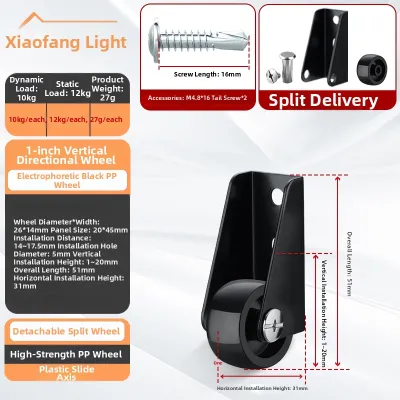
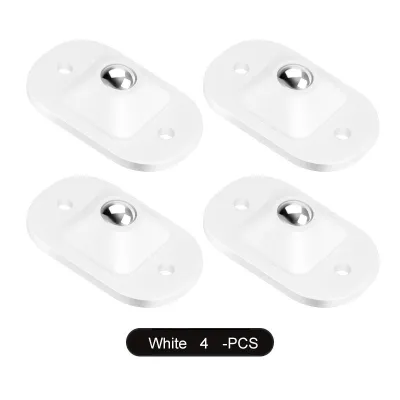

![[SG Seller]No Drill Self Adhesive Swivel Caster Wheel with ke Heavy Duty Sticky Furniture Moving Roller](https://img.lazcdn.com/g/p/3f1afc8d2f9a680a5d5c8514e0b5e099.jpg_400x400q80.jpg_.webp)
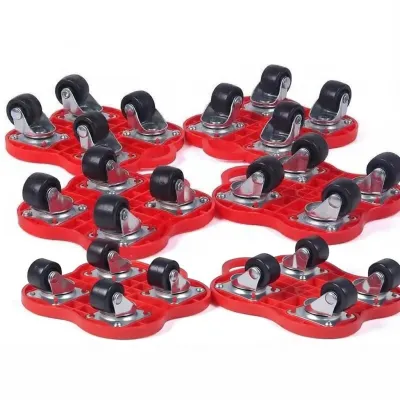
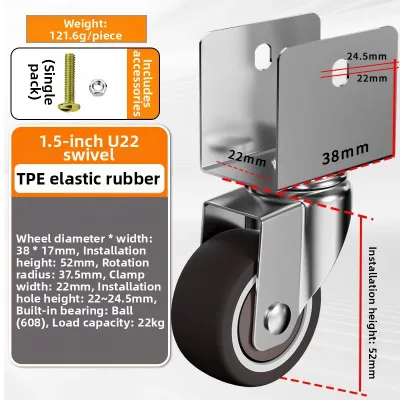
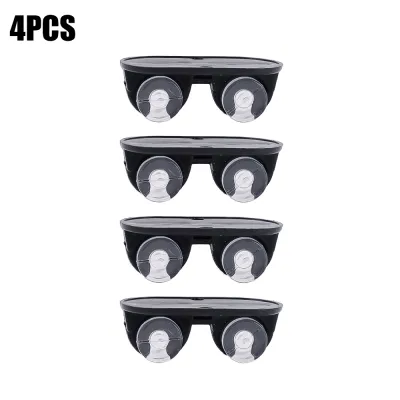
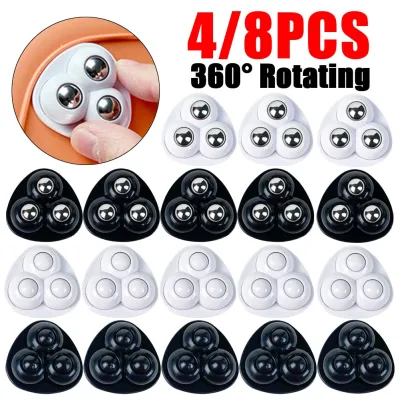
Prices are valid at publication and may change. Please refer to the product page for the latest price.
Movement issues are another clear sign that your casters have reached the end of their lifespan. If your office chair or kitchen cart squeaks loudly, sticks when you try to change directions, or constantly drifts to one side, the internal bearings may be worn out or clogged with hair, dust, and debris. When a piece of furniture requires excessive physical force to push, the wheels are no longer doing their job and are putting unnecessary strain on both you and the furniture frame.
Perhaps the most urgent warning sign is visible damage to your flooring. If you notice new scratches, dark scuffs, or deep dents appearing on your hardwood, laminate, or tiled floors after moving a piece of furniture, the wheels have likely lost their protective outer coating. Continuing to use damaged wheels will only worsen these floor defects, potentially leading to expensive floor repairs or refinishing projects.
Matching Wheel Material to Your Floor Type
Selecting the correct wheel material is the single most important decision you will make to protect your floors and ensure smooth rolling. Different flooring materials require distinct wheel characteristics to balance traction, protection, and ease of movement.

For hard floors such as ceramic tile, hardwood, laminate, or luxury vinyl, you should prioritize softer tread options. Wheels made from polyurethane, soft rubber, or thermoplastic rubber are ideal because they absorb shock, roll quietly, and grip the surface without scratching or leaving scuffs. Before finalizing your choice, verify your flooring manufacturer’s warranty requirements, as some warranties explicitly state which types of casters are approved for use on their surfaces.
Conversely, carpeted floors require a completely different approach. Soft rubber wheels tend to grip carpet fibers, creating high rolling resistance and making the furniture difficult to move. For carpet, harder and narrower wheels made from nylon or hard plastic are preferred. These materials allow the wheel to slice through the carpet pile rather than sinking into it, significantly reducing the effort required to push the furniture.
Always cross-reference the wheel specifications with your flooring manufacturer’s care guidelines to avoid costly mistakes. Avoid using hard plastic, cast iron, or metal wheels on delicate surfaces like soft wood or natural stone, as these materials can easily crush or gouge the floor. Remember that a material name alone does not guarantee performance; always check the manufacturer’s specific care instructions, finish details, and recommended use environments before purchasing.
Determining the Right Size and Load Capacity
To ensure your furniture remains stable and safe to move, you must carefully calculate the load requirements and choose the appropriate wheel size. Overloading a caster can cause the wheel to collapse, damage the furniture frame, or create a sudden tipping hazard.
To calculate the required load capacity for your replacement wheels, use a simple mathematical formula. First, determine the total weight of the furniture piece itself, then add the maximum weight of the items it will hold. Divide this total weight by the number of wheels you plan to install, and then apply a safety margin to account for uneven weight distribution. For example, if a cabinet and its contents weigh 120 kilograms and it uses four wheels, each wheel must support at least 30 kilograms; however, choosing wheels rated for 40 kilograms each provides a safe buffer for when the furniture is moved over uneven surfaces.
Wheel diameter also plays a crucial role in how easily your furniture moves. Larger wheels have a larger circumference, which allows them to roll easily over thresholds, tile grout lines, and thick rugs without getting stuck. Smaller wheels, on the other hand, keep the furniture’s center of gravity low, which is essential for maintaining stability on tall or top-heavy items like bookshelves and filing cabinets.
Finally, always check the physical clearance around the base of your furniture. Ensure that larger replacement wheels will not interfere with drawers, cabinet doors, baseboards, or the surrounding walls when they swivel. If you plan to move the furniture between rooms, verify that the added height from larger wheels will still allow the piece to pass through standard doorways and lift entrances.
Choosing Swivel, Fixed, and Braking Features
The way you intend to use your furniture should dictate whether you choose swivel, fixed, or braking casters. Selecting the right combination of these features will determine how easily you can maneuver the piece and how securely it stays in place when stationary.
Swivel casters rotate 360 degrees, allowing you to move furniture in any direction and navigate tight corners with ease. This makes them the perfect choice for office chairs, kitchen carts, and portable storage units that require high maneuverability. Fixed casters, also known as rigid casters, only move forward and backward in a straight line. Combining two fixed casters on one end of a cart and two swivel casters on the other end provides excellent straight-line tracking while still allowing you to steer the cart around obstacles.
Braking mechanisms are vital for any furniture that needs to remain stationary during use. A total-lock brake is the most secure option, as it locks both the wheel rotation and the swivel mechanism, preventing the furniture from shifting or pivoting. A directional-lock brake, by contrast, only stops the swivel mechanism, keeping the wheel locked in a straight line while still allowing it to roll forward and backward.
Assess your daily user needs to determine which locking features are necessary. For instance, a mobile kitchen island or a rolling worktable requires reliable total-lock brakes to prevent the unit from drifting while you are preparing food or working with tools. On slightly uneven floors, even a minor slope can cause unbraked furniture to roll away, making high-quality brakes an essential safety feature.
Verifying Mount Type and Stem Compatibility
Purchasing wheels with the wrong mounting style is one of the most common mistakes homeowners make. To prevent this, you must identify the exact mounting style of your existing wheels and take precise measurements before ordering replacements.
There are two primary mount styles: stem mounts and plate mounts. Stem mounts feature a metal rod that inserts directly into a socket or hole in the furniture leg, and they are commonly found on office chairs and lighter wooden furniture. Plate mounts feature a flat metal top plate with pre-drilled bolt holes, which is screwed or bolted directly to the flat underside of the furniture frame, making them ideal for heavier items.
If your furniture uses stem mounts, you must measure the stem dimensions with extreme accuracy. Do not rely on visual estimates, as even a millimeter of difference can prevent the stem from fitting securely. Use a pair of calipers or a specialized sizing wrench to measure both the diameter and the length of the stem. Common stem types include grip ring stems, threaded stems, and friction stems, each requiring a matching socket type to function safely.
If you find that the exact replacement wheel is no longer available, do not attempt to force an incompatible stem into the existing socket. Instead, consult the furniture manufacturer or a hardware specialist to find compatible adapters or conversion plates. Using an ill-fitting stem can damage the furniture leg, cause the wheel to fall out during movement, or lead to sudden structural failure.
Frequently Asked Questions (FAQ)
Can I use lubricant to fix squeaky furniture wheels?
Before applying any lubricant, always check the furniture and wheel manufacturer’s care instructions for approved lubricants and application methods. Some materials, such as certain plastics or rubbers, can degrade when exposed to petroleum-based lubricants. It is also important to recognize that lubrication only addresses dry or noisy bearings; it cannot fix physical damage such as cracked treads, heavy debris buildup, or bent axles. If the squeaking persists after cleaning and applying an approved lubricant, the wheel bearings may be permanently worn, indicating that a full replacement is necessary.
Do I need to replace all wheels at once if only one is broken?
While it may be tempting to replace only the single broken wheel, it is highly recommended to replace the entire set at once. Mixing old, worn wheels with a single new wheel often creates height mismatches, as the older wheels have likely lost some of their diameter due to wear. This height difference can cause the furniture to wobble, roll unevenly, or tilt. Furthermore, uneven height leads to poor weight distribution, placing excessive stress on the new wheel or the remaining old wheels, which can cause premature failure of the entire assembly and damage the furniture frame.

Community discussion
Share your experience or ask a question. Comments are reviewed before publication.