
Finding the perfect balance of comfort and support is the single most important step when shopping for a new queen mattress. Choosing the right firmness is not a matter of finding a universal “best” option, but rather identifying the specific level that matches your unique physical profile. The ideal mattress firmness is determined by the intersection of your primary sleeping position and your body weight. While a side sleeper of a lighter build requires a softer surface to cradle their shoulders and hips, a stomach sleeper needs a highly supportive, firm surface to keep their spine from bowing. Understanding how these two factors interact allows you to bypass generic marketing claims and target the exact support level your body needs for restorative sleep.
Why Mattress Firmness Matters for Your Sleep Quality
Your spine has natural curves that must be maintained while you sleep to prevent muscle strain and joint stiffness. When you lie down, your mattress should distribute your body weight evenly, keeping your head, neck, shoulders, hips, and knees in a neutral line. If your mattress fails to do this, your muscles remain tense throughout the night as they work to keep your body aligned, leading to chronic aches and poor sleep quality.
The mattress industry evaluates firmness on a standard scale from 1 to 10, where 1 represents an ultra-soft surface with virtually no resistance, and 10 represents an extra-firm surface comparable to sleeping on a carpeted floor. Most options on the market fall between a 3 (soft) and an 8 (firm).
Products mentioned in this guide
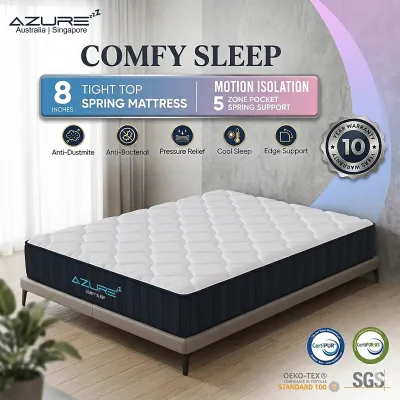
![[Same day delivery]Sleeplab Essential / Spring mattress/queen/single/8 inch/20cm thick](https://img.lazcdn.com/g/p/220c84ad478208b5816636e6b43a34b4.png_400x400q80.png_.webp)
![[Ready Stock] NEXT DAY DELIVERY + FREE GIFT 13 Inches Hotel Mattress 32cm | Pocket Springs Mattresses Cooling Features Spring Mattress | Re-create The Luxury Hotel Bed At Home | Single Super Single Queen King size](https://img.lazcdn.com/g/p/38cd4342c2634f8b4cd1c00962407424.jpg_400x400q80.jpg_.webp)
Prices are valid at publication and may change. Please refer to the product page for the latest price.
Choosing a mattress that is too soft causes your heaviest parts—typically your hips and midsection—to sink too deeply. This creates a hammock effect that strains the ligaments and muscles in your lower back. Conversely, a mattress that is too firm does not contour to your body’s natural curves, leaving gaps under your lower back or waist while concentrating all your weight on high-pressure areas like your shoulders and hips. Because everyone distributes weight differently, a firmness level that feels incredibly supportive to one person can feel uncomfortably stiff or unyielding to another.
Step 1: Assess Your Primary Sleeping Position
Your sleeping position dictates where your body makes the most intense contact with the mattress and how your spine aligns. To determine your primary sleep position, observe the posture you naturally assume when falling asleep and the position you find yourself in when you wake up. Most people have a dominant position that they return to throughout the night, and this position should guide your firmness selection.

Side Sleepers
Side sleeping is highly common, but it places a significant amount of concentrated pressure on the shoulders and hips. If the mattress surface is too rigid, these joints cannot sink in, forcing the spine to curve downward and causing numbness or tingling in the arms. Side sleepers generally require a softer mattress, typically in the 4 to 6 range on the firmness scale. This allows the wider parts of the body to sink into the comfort layers, distributing weight more evenly and keeping the spine horizontally aligned.
Back Sleepers
Back sleepers require a delicate balance of deep support and surface contouring. The main challenge for back sleepers is maintaining the natural curve of the lumbar spine. If the mattress is too soft, the pelvis sinks too deep, flattening the lower back and causing strain. If it is too firm, the mattress cannot fill the gap under the lower back, leaving the lumbar muscles unsupported. A medium to medium-firm mattress, rated between 5 and 7, is usually ideal for back sleepers because it provides enough surface cushion for the shoulders and buttocks while keeping the hips elevated.
Stomach Sleepers
Stomach sleeping is the most demanding position in terms of support requirements. When you sleep on your stomach, gravity pulls your midsection down into the mattress. If the surface is too soft, your hips sink deeply, forcing your lower back into an unnatural arch that can lead to severe morning stiffness. To prevent this spinal bowing, stomach sleepers need a firm to extra-firm surface, typically rated between 7 and 9. A firm mattress keeps the hips and shoulders on the same level plane, protecting the lumbar region from hyperextension.
Combination Sleepers
If you regularly switch between your side, back, and stomach throughout the night, you are a combination sleeper. Your primary need is versatility and ease of movement. A mattress that is too soft will make you feel “stuck” in the comfort layers, requiring extra effort to turn over and disrupting your sleep cycle. Combination sleepers usually benefit most from a medium or medium-firm mattress, rated between 5 and 6.5, paired with responsive materials like latex or pocketed coils that adapt quickly to movement.
Step 2: Evaluate How Your Body Weight Affects Mattress Feel
Firmness is not an absolute measurement; it is a relative sensation governed by physics. When you lie down, your body weight exerts downward force on the mattress, compressing the comfort layers. A heavier person exerts more force, pushing deeper into the mattress structure, while a lighter person exerts less force, remaining closer to the surface. Consequently, the exact same mattress can feel soft to one person and firm to another.
Lightweight Sleepers
Lightweight sleepers, generally defined as individuals weighing under 60 kilograms, exert minimal pressure on a mattress. Because they do not compress the upper comfort layers very deeply, they often perceive mattresses to be firmer than their official ratings. A standard “medium” mattress may feel like a “firm” to a lightweight individual. To experience proper pressure relief and contouring, lightweight sleepers typically need to choose mattresses that are softer on the scale, often looking for options with plush, thick comfort layers that conform easily under lighter loads.
Average-Weight Sleepers
Average-weight sleepers, falling between 60 and 90 kilograms, typically experience mattresses very close to how manufacturers design and rate them. They exert enough force to compress the top comfort layers without bottoming out or sinking completely through to the support core. If you fall into this weight range, you can generally trust standard industry recommendations, using your sleeping position as the primary deciding factor without needing to adjust your target firmness level up or down to compensate for weight.
Heavyweight Sleepers
Heavyweight sleepers, defined as individuals weighing over 90 kilograms, exert substantial downward force on a mattress. They compress soft comfort layers very quickly, which can cause them to sink straight through to the rigid support core underneath—a sensation known as “bottoming out.” This rapid compression makes soft mattresses feel excessively soft and unsupportive, leading to poor spinal alignment and heat retention. Heavyweight sleepers require a firmer, more robust mattress, often with high-density foams or thick pocketed coils, to provide the upward resistance necessary to keep their spine aligned.
Step 3: Find Your Ideal Firmness Level (Diagnostic Matrix)
To find your target firmness range, you must look at where your sleeping position and body weight intersect. This cross-reference provides a highly accurate starting point for your search, allowing you to narrow down your options before you begin testing mattresses in person or online.
The following matrix serves as a diagnostic guide to help you identify your ideal firmness range:
| Sleep Position | Lightweight (<60 kg) | Average-Weight (60-90 kg) | Heavyweight (>90 kg) |
|---|---|---|---|
| Side Sleeper | Soft to Medium-Soft (3-4) | Medium (5-6) | Medium-Firm (6-7) |
| Back Sleeper | Medium-Soft to Medium (4-5) | Medium-Firm (6-7) | Firm (7-8) |
| Stomach Sleeper | Medium to Medium-Firm (5-6) | Firm (7-8) | Extra-Firm (8-9) |
| Combination Sleeper | Medium-Soft to Medium (4-5) | Medium to Medium-Firm (5-6) | Medium-Firm to Firm (6-7) |
While this matrix is an excellent baseline, individual preferences can shift your ideal choice by one level. For instance, some sleepers prefer a “sleeping in” sensation, where the mattress closely hugs the body’s contours; this preference might lead you to choose a slightly softer option. Others prefer a “sleeping on” sensation, where they feel elevated on top of the mattress surface, which would steer them toward a slightly firmer option.
When you begin browsing for a queen mattress, use your diagnosed firmness range as your primary search filter. This ensures that every model you consider is structurally suited to support your body type and sleep style, saving you time and reducing the risk of buyer’s remorse.
How to Test and Verify Firmness When Shopping for a Queen Mattress
Once you have diagnosed your ideal firmness range, the next step is verification. Because mattress materials react differently to body heat and pressure over time, validating your choice through careful testing is essential before making a long-term commitment.
In-Store Testing If you choose to shop at a physical showroom, do not make a decision based on a quick two-minute sit on the edge of the bed. To get an accurate feel, spend at least 10 to 15 minutes lying on the display mattress in your actual sleeping position. Wear comfortable, loose clothing that allows you to move naturally, and ask for a pillow that matches the loft and firmness of your pillow at home. Pay close attention to whether your shoulders and hips feel pinched, or if you feel a gap between your lower back and the mattress surface.
Sleep Trials While showroom testing is helpful, the true test of a mattress happens in your own home over several weeks. Your body requires time to adjust to a new sleeping surface, a process that typically takes between 21 and 30 days. This is why choosing a brand or retailer that offers a comprehensive sleep trial—often ranging from 100 to 120 nights—is highly recommended. A sleep trial allows you to experience how the mattress performs night after night, ensuring that the firmness you selected in the store actually translates to pain-free mornings.
Return Policies and Local Logistics Before finalizing your purchase, carefully read the terms of the sleep trial and return policy. In the Singapore market, many retailers charge return fees or transportation fees for picking up a returned mattress, while others may offer exchanges rather than full refunds. Additionally, consider the practical logistics of delivering a queen mattress to your home. Ensure that your building’s lift and doorways have sufficient clearance for a standard queen-sized mattress, and verify whether the delivery team provides installation and old mattress disposal services, as handling a heavy mattress can be physically demanding. Always check the manufacturer’s care instructions and product labels to ensure you maintain the mattress properly and do not void the warranty.
Frequently Asked Questions (FAQ)
Can a mattress topper change the firmness of my queen mattress?
Yes, a mattress topper can alter the surface feel of your bed, but its capabilities are one-directional. A plush topper made of memory foam, latex, or wool can effectively soften a mattress that is slightly too firm by adding an extra layer of cushioning to relieve pressure points. However, a topper cannot make an old, sagging, or overly soft mattress feel firmer. If the underlying support core of your mattress is failing or too soft, adding a firm topper will not prevent your body from sinking; the topper will simply sink along with the weak layers underneath.
Is a firm mattress always better for back pain?
No, the belief that an extra-firm mattress is the best solution for back pain is a common misconception. While a mattress must provide sufficient support to prevent your spine from sagging, an overly rigid surface can actually worsen back pain by creating intense pressure points at the shoulders and hips, forcing your spine out of its natural alignment. Research and sleep ergonomics generally suggest that a medium-firm mattress offers the best balance of support and pressure relief for general back pain. However, because back pain can stem from various causes, your personal sleeping position and body weight should remain your primary guide. If you suffer from chronic or severe back pain, consult a healthcare professional for personalized medical advice.
Community discussion
Share your experience or ask a question. Comments are reviewed before publication.