
To choose the right polycarbonate sheet thickness for a furniture surface, you must evaluate how the sheet is supported, the span of any open gaps, and the weight it must carry. While a thin sheet works well as a protective cover over a solid wooden table, a much thicker sheet is necessary if it must support its own weight across an open frame or serve as a load-bearing shelf. Matching the thickness to your specific furniture design ensures the replacement surface remains flat, stable, and safe during daily use.
Selecting the wrong thickness can lead to unsightly sagging, structural failure, or hardware strain. By assessing your furniture’s frame, understanding the physical properties of polycarbonate, and measuring with precise clearances, you can confidently select a sheet that balances structural integrity with practical installation requirements.
Evaluate Your Furniture's Support Structure First
Before purchasing a replacement sheet, examine how your furniture frame supports the surface. The support structure is the single most critical factor in determining the thickness you need. If you are placing the polycarbonate directly on top of an existing solid wood table or a fully backed shelf, the underlying furniture bears the entire load. In this scenario, the polycarbonate acts primarily as a protective barrier against scratches and spills, allowing you to use a relatively thin sheet.
Products mentioned in this guide

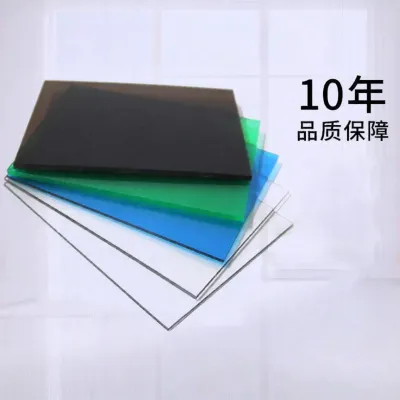
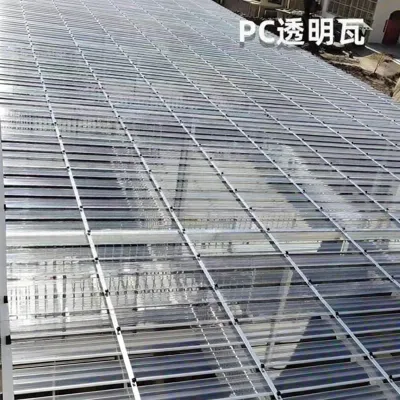
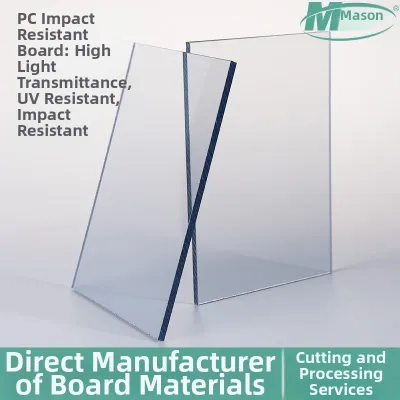

Prices are valid at publication and may change. Please refer to the product page for the latest price.
When the sheet must span an open area without continuous support underneath, the structural demands change completely. Examples include replacing a glass top on a metal frame, installing a floating shelf, or creating a new tabletop that rests only on perimeter rails. In these setups, the polycarbonate sheet itself must resist bending under weight. The distance between the support points—known as the unsupported span—directly dictates the minimum thickness required to prevent bowing or sagging.
As the unsupported span increases, the required thickness of the polycarbonate sheet rises significantly to maintain rigidity. A sheet that is too thin will flex under pressure, compromising both the appearance and utility of the furniture. To ensure safety and stability, always consult the sheet manufacturer’s official span-to-load charts. These technical documents provide specific thickness recommendations based on the exact dimensions of your unsupported span and the weight you plan to place on the surface.
Match Thickness to Your Specific Furniture Application
Different furniture components place unique physical demands on a replacement surface. While a tabletop must withstand direct impacts and heavy objects, a cabinet door prioritizes lightweight operation and hinge compatibility. Understanding these distinct application requirements helps you narrow down the ideal thickness range for your project.

Table Tops and Work Surfaces
Tabletops and workbenches require careful consideration because they frequently endure concentrated weight and sudden impacts. If your design includes an overhang where the polycarbonate sheet extends beyond the supporting frame, you must select a thicker sheet. An inadequate thickness on an overhanging edge will lead to drooping or flexing when someone leans on the table, which can destabilize items placed near the edge.
For dining tables, desks, or workbenches, always check the supplier’s load-bearing specifications for various thicknesses. While a thicker sheet provides excellent rigidity and a premium, substantial feel, it also adds significant weight to the furniture frame. Ensure that the existing legs and joints of your furniture can support both the weight of the new polycarbonate sheet and the items you intend to place on top of it.
Shelves and Cabinet Doors
Using polycarbonate for shelving or cabinet doors introduces specific structural and hardware limitations. Long shelves are highly susceptible to mid-span sagging under the weight of books, electronics, or decorative items. To prevent this, you must either reduce the shelf depth, add intermediate support brackets, or increase the thickness of the polycarbonate sheet to handle the expected load.
For cabinet doors, weight becomes the primary constraint. A thick polycarbonate sheet provides excellent impact resistance and a flat profile, but its weight can easily exceed the load capacity of standard cabinet hinges. Overloading the hinges leads to door sagging, misalignment, and premature wear on the cabinet frame. In these cases, it is often necessary to use a thinner, lighter sheet or upgrade to heavy-duty hardware designed to support the increased load.
Account for Polycarbonate's Physical Traits
Polycarbonate possesses unique physical characteristics that directly influence how you select, cut, and install the material. Unlike glass or wood, polycarbonate has a high coefficient of thermal expansion. This means the sheet will expand and contract with changes in room temperature and humidity. When selecting your thickness and planning your installation, you must leave adequate expansion gaps around the perimeter of the sheet to prevent it from buckling or warping over time.
While polycarbonate is virtually shatterproof and offers exceptional impact resistance, it is relatively susceptible to surface scratching. It is important to note that increasing the thickness of the sheet improves its structural rigidity but does not enhance its surface hardness. If scratch resistance is a priority for a high-use surface, look for sheets with a specialized scratch-resistant coating rather than simply buying a thicker standard sheet.
The thickness of the sheet also dictates how easily you can work with the material. Thicker polycarbonate sheets require specialized tools, such as fine-toothed saw blades and specific cutting speeds, to achieve clean edges without melting or cracking. Additionally, polishing the edges of a thick sheet to a clear, professional finish requires multi-step sanding and buffing. If you do not have access to professional workshop tools, consider ordering custom-cut pieces directly from your supplier to ensure clean, finished edges.
Measure and Order with Installation Clearances
To ensure a successful installation, you must measure your furniture frame with high precision before placing an order. Never assume that a furniture frame is perfectly square or symmetrical. Measure the internal dimensions of the support frame at multiple points—including the top, middle, bottom, and diagonals—to identify any variations or out-of-square corners.
Once you have your raw measurements, calculate the necessary thermal expansion gap. Subtract this clearance from your final order dimensions according to the manufacturer’s guidelines for your specific sheet size and local climate conditions. Leaving this small gap around the edges allows the polycarbonate to expand freely without binding against the frame.
Finally, communicate clearly with your supplier before finalizing your purchase. Check their cutting tolerances to ensure the delivered sheet will fit within your calculated dimensions. If you prefer not to finish the edges yourself, inquire about their professional edge-finishing options, such as flame polishing or routing, to give your replacement surface a smooth, safe, and visually appealing edge.
Frequently Asked Questions (FAQ)
Can I use a polycarbonate sheet directly on a wooden table without a gap?
Using a polycarbonate sheet directly on a wooden table without a gap is generally not recommended. Even when the sheet is fully supported by the flat wooden surface, a small perimeter gap or a slightly loose fit is necessary to accommodate thermal expansion. Without this clearance, the sheet can buckle as temperatures change. Additionally, placing a plastic sheet directly against wood without ventilation can trap ambient moisture, which may damage the wood’s finish or cause warping over time.
Is polycarbonate better than acrylic for heavy-duty shelves?
The choice between polycarbonate and acrylic for heavy-duty shelves depends on whether you prioritize impact resistance or rigidity. Polycarbonate offers high impact resistance and is virtually shatterproof, making it ideal for environments where safety is a primary concern. However, acrylic has a higher surface hardness and greater inherent rigidity, meaning it resists sagging under static loads better than polycarbonate of the same thickness. If you choose polycarbonate for heavy-duty shelving, you will generally need a thicker sheet or more frequent support brackets to prevent sagging compared to an acrylic alternative.
Community discussion
Share your experience or ask a question. Comments are reviewed before publication.