
Choosing the right plastic shoe rack size requires balancing your available closet dimensions with the physical footprint of your footwear collection. A well-chosen rack maximizes vertical space, keeps your wardrobe organized, and protects your shoes from dust and damage. In Singapore’s warm, humid climate, proper shoe storage is also essential for preservation; stagnant air inside a cramped closet can quickly lead to mold and mildew growth on leather, canvas, and suede. By selecting a plastic shoe rack with the correct dimensions and design, you can maintain an organized wardrobe while ensuring your footwear remains in pristine condition.
Measure Your Closet Space Accurately
Before browsing online marketplaces or local home goods stores, you must obtain precise measurements of the closet area where you plan to install the shoe rack. Use a reliable metal measuring tape rather than a flexible sewing tape, as metal provides the rigidity needed for accurate straight-line measurements. Begin by measuring the absolute width, depth, and height of the floor space or the specific shelf designated for the rack. Write these numbers down in centimeters, as most furniture and organizer specifications in Singapore are listed in metric units.
Do not simply measure the open space; you must account for subtle architectural details that can restrict the usable area. Baseboards along the bottom of the closet wall can reduce the available floor width by one to two centimeters on each side. Similarly, low-hanging closet rods, internal light fixtures, or protruding door frames can significantly limit the vertical clearance. If your closet features built-in drawers or pull-out baskets, measure their path of travel to ensure the shoe rack will not block them from opening fully.
Products mentioned in this guide
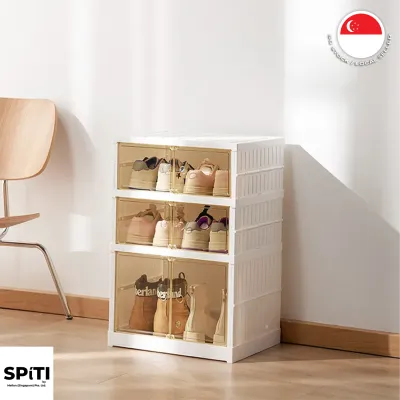
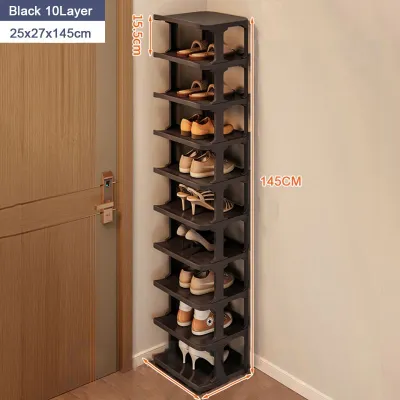
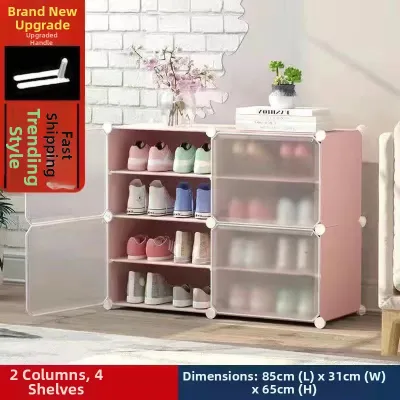
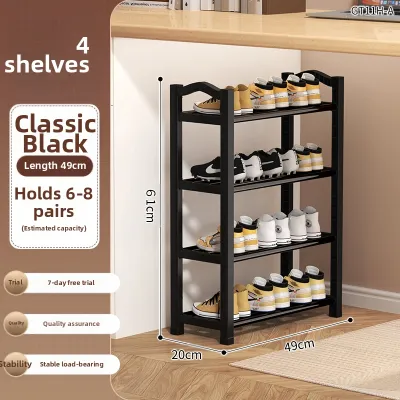
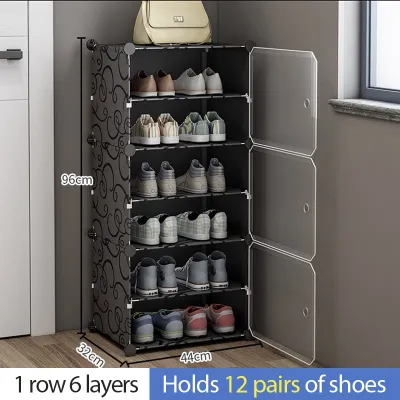
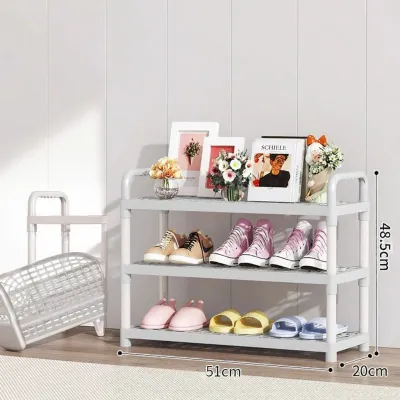
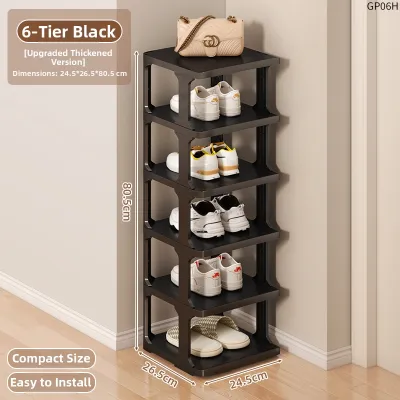
Prices are valid at publication and may change. Please refer to the product page for the latest price.
The mechanics of your closet doors play a critical role in determining the maximum dimensions of your plastic shoe rack. If you have traditional hinged doors, you must factor in their swing radius and ensure the rack does not obstruct the door from closing completely. For sliding doors, the overlap of the doors on their tracks often restricts access to one half of the closet at a time. A shoe rack that is too wide may prevent you from sliding the doors far enough to reach the shoes stored at the far ends of the rack.
Finally, avoid the temptation to buy a rack that fits tightly against every wall or partition. Leaving a small clearance of at least two to three centimeters around the perimeter of the rack is essential for easy installation, cleaning, and maintenance. More importantly, this gap facilitates adequate airflow. In Singapore’s tropical climate, keeping a small buffer zone around your shoe rack prevents moisture from becoming trapped in dead zones, reducing the risk of musty odors and fungal growth on your favorite pairs.
Calculate Your Shoe Storage Capacity Needs
Once you have established the physical boundaries of your closet, the next step is to determine the volume of footwear you need to accommodate. Empty your closet and gather every pair of shoes you intend to store on the new rack. Count them systematically, and group them by style and frequency of use. It is highly recommended to add a buffer of 10% to 20% to your current total to accommodate future purchases, preventing your new plastic shoe rack from becoming immediately overcrowded.

Not all shoes occupy the same amount of physical space, so a simple pair count is not enough to determine the correct rack size. Flat sandals, flip-flops, and low-profile sneakers require minimal vertical clearance—often just 8 to 10 centimeters—and can be placed close together. Conversely, high-top sneakers, platform heels, and boots require significantly more vertical space, sometimes up to 20 or 30 centimeters. Men’s athletic shoes and formal leather shoes also tend to be wider and longer than women’s flats, meaning they will consume more horizontal space per pair.
To translate your shoe count into the required number of tiers or slots, you must calculate the average horizontal footprint of your footwear. On average, a standard pair of adult shoes requires about 20 to 25 centimeters of horizontal width. If you have 15 pairs of shoes and select a rack that is 60 centimeters wide, each tier will comfortably hold about three pairs. Consequently, you will need a five-tier rack to accommodate your entire collection. If your closet height is limited, you may need to opt for a wider, lower rack instead of a tall, narrow one.
If your closet space is exceptionally tight, consider implementing a seasonal or usage-based rotation strategy. Instead of trying to squeeze your entire footwear collection into a single closet rack, store only your most frequently worn pairs in the bedroom wardrobe. Off-season footwear, formal shoes, or specialized sports gear can be cleaned, placed in ventilated plastic shoe boxes, and stored in less active areas of the home, such as under the bed or on high closet shelves. This allows you to purchase a smaller, more streamlined plastic shoe rack that fits comfortably within your daily routine.
Match Plastic Shoe Rack Dimensions to Your Space
With your closet measurements and storage capacity needs in hand, you can now evaluate the different configurations of plastic shoe racks available on the market. Plastic is an exceptionally popular material for closet organization because it is lightweight, easy to clean, resistant to moisture, and highly versatile. However, different structural designs serve different spatial needs.
Stackable and Tiered Plastic Racks
Fixed-tier and stackable plastic shoe racks are ideal for closets with wide, shallow floor plans or deep bottom shelves. These systems typically consist of molded plastic side panels connected by plastic or metal rods, or they may feature modular plastic interlocking cubes. The primary advantage of stackable designs is their vertical scalability; you can start with a basic two-tier setup and add additional modules as your collection grows, provided you have the vertical clearance under your hanging clothes.
When selecting a stackable rack, always verify the product’s finished footprint against your measured closet space. Ensure that the depth of the rack—which typically ranges from 28 to 32 centimeters—allows your largest shoes to sit fully on the shelves without overhanging. If a shoe overhangs the front of the rack, it can catch on sliding wardrobe doors or prevent hinged doors from latching. Additionally, check the height of the individual tiers to ensure your tallest daily-wear shoes can slide in and out without scraping the shelf above.
While plastic is highly durable and impervious to water damage, it does have structural limitations. Before purchasing, check the manufacturer’s stated weight capacity per tier. Lightweight plastic frames can bow, warp, or sag over time if they are overloaded with heavy items like leather work boots or thick-soled platform shoes. Look for racks made from high-density polyethylene (HDPE) or reinforced polypropylene, and ensure the joints and connectors fit tightly together to maintain structural stability under load.
Adjustable and Expandable Options
For closets with irregular layouts, tight corners, or built-in shelving units, adjustable and expandable plastic shoe racks offer a highly customized fit. These racks often feature telescoping horizontal bars that allow you to extend or contract the width of the rack to match the exact dimensions of your closet alcove. This flexibility is particularly useful in Singapore’s built-in wardrobes, where internal compartment widths can vary significantly between different cabinet designs.
Another major benefit of adjustable plastic racks is the ability to customize the vertical spacing between tiers. Many modular plastic designs allow you to remove individual shelves or adjust the mounting heights of the support bars. This feature is invaluable if you need to store a mix of flat sandals and tall high heels or ankle boots on the same rack. By removing a single middle tier, you can create a double-height compartment for taller footwear while keeping the remaining tiers closely spaced for flat shoes, maximizing every cubic centimeter of your closet.
However, adjustable mechanisms require careful inspection to ensure long-term reliability. When fully extended, expandable racks naturally experience more stress at their center points. Verify that the locking mechanisms, friction joints, and connecting pins are robust and made of high-quality plastic or metal. A poorly constructed adjustable rack may sag or collapse under the weight of a full load of shoes. Always follow the manufacturer’s instructions regarding the maximum recommended extension width to ensure the rack remains stable and secure.
Common Sizing Mistakes to Avoid
One of the most frequent errors when choosing a plastic shoe rack is ignoring the actual depth of the shoes themselves. Many consumers measure their closet depth and select a rack that matches that measurement exactly, only to find that their shoes overhang the front of the shelves by several centimeters. This overhang can prevent sliding closet doors from closing smoothly or scuff the inside of hinged doors. To prevent this, always add at least 5 centimeters of buffer to the rack’s physical depth to account for the length of your largest shoes.
Another common pitfall is failing to account for the clearance needed to operate other closet components. A shoe rack placed on the closet floor might block the lowest drawers of a built-in wardrobe system, or it may prevent you from fully sliding a wire basket out of its tracks. Always map out the movement of every moving part inside your closet before finalizing the dimensions of your shoe rack. If necessary, choose a lower-profile rack or place the rack on an upper shelf where it will not interfere with daily wardrobe operations.
Overloading lightweight plastic racks beyond their structural limits is a mistake that can lead to permanent damage. While plastic is highly resilient, budget-friendly models with thin frames are designed primarily for light footwear like sneakers and flats. Placing multiple pairs of heavy leather boots, steel-toed safety shoes, or heavy athletic gear on the upper tiers can cause the plastic joints to crack or the shelves to sag. To maintain stability, always place your heaviest shoes on the bottom tier and lighter footwear on the upper levels.
Finaly, avoid buying a shoe rack that perfectly fills the entire floor space of your closet if it restricts access to your hanging clothes. If your dresses, long coats, or trousers hang down to the closet floor, a tall shoe rack placed directly beneath them will compress the fabric, leading to wrinkles and restricting the airflow necessary to prevent mold. Ensure there is a clear gap of at least 10 to 15 centimeters between the bottom of your hanging garments and the top of the shoe rack or the shoes stored on it.
Frequently Asked Questions (FAQ)
How much weight can a typical plastic shoe rack hold?
The weight capacity of a plastic shoe rack varies significantly depending on the thickness of the plastic, the presence of reinforcing materials, and the overall structural design. Standard, budget-friendly plastic shoe racks typically support between 2 to 5 kilograms per tier, which is sufficient for three to four pairs of lightweight sneakers or flats. Heavy-duty modular plastic cubes or racks with reinforced metal support rods can often hold up to 10 kilograms per compartment. Always consult the manufacturer’s specifications for exact weight limits, and place your heaviest footwear on the bottom tier to lower the center of gravity and enhance stability.
Can I put a plastic shoe rack on a closet shelf instead of the floor?
Yes, placing a plastic shoe rack on an elevated closet shelf is an excellent way to utilize vertical space that might otherwise go unused. Before doing so, you must verify that the closet shelf itself is structurally sound and rated to support the combined weight of the plastic rack and your shoes. Ensure that the footprint of the shoe rack fits entirely within the boundaries of the shelf, with no part of the feet or frame overhanging the edge. This prevents the rack from tipping forward when you retrieve or replace your shoes.
Community discussion
Share your experience or ask a question. Comments are reviewed before publication.