
Selecting the right metal shoe cabinet capacity requires balancing your household’s actual footwear inventory with the physical constraints of your entryway. A cabinet that is too small leads to cluttered hallways and overflowing shoes, while an oversized unit can obstruct walkways and disrupt the flow of your home. By systematically auditing your collection, understanding how shoe types translate to shelf dimensions, and measuring your space for clearance, you can find a metal cabinet that keeps your home organized and highly functional.
Calculate Your Household's Total Shoe Storage Needs
To determine the ideal capacity, start by conducting a thorough audit of every household member’s footwear. Group the shoes into clear categories: daily wear, work or school shoes, athletic gear, and formal or seasonal footwear. This categorization helps you see not just how many shoes you own, but how often they are accessed. A household of four might easily accumulate dozens of pairs, but not all of them need to reside in the primary entryway cabinet.
Next, factor in your household’s life stage and potential growth. Families with young children should anticipate rapid changes in shoe sizes and types; toddler shoes take up minimal space, but teenage athletic shoes require significantly more volume. If you plan to expand your family or frequently host guests, adding a buffer to your baseline count is a practical way to future-proof your storage solution.
Products mentioned in this guide
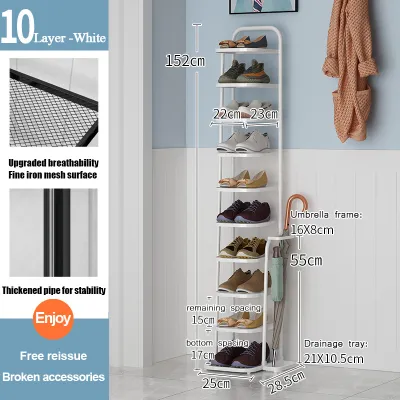
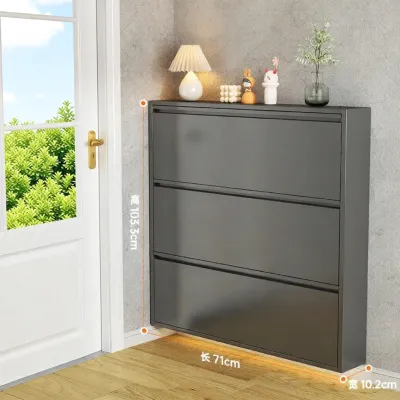
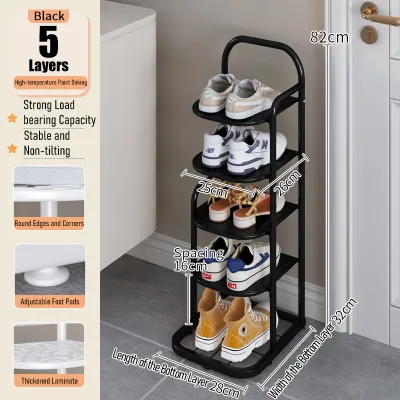
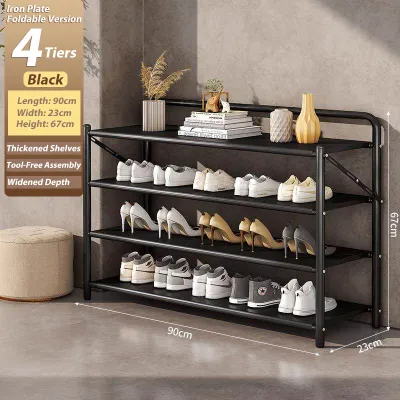
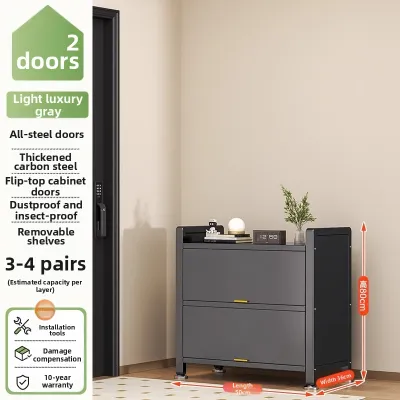
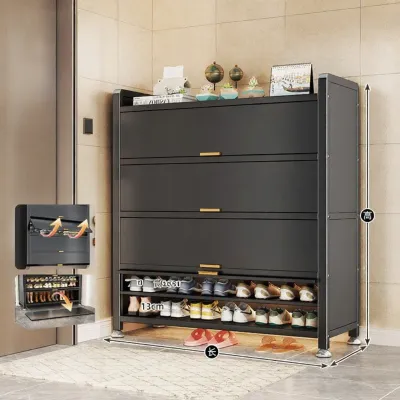
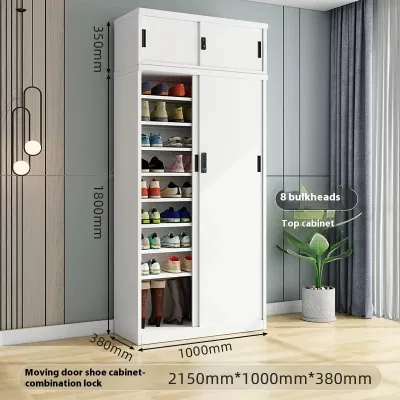
Prices are valid at publication and may change. Please refer to the product page for the latest price.
Finally, separate your daily rotation from long-term storage. Off-season boots, specialty sports gear, or rarely worn formal shoes can be stored in bedroom closets or under-bed containers. Reserving your main metal shoe cabinet for active footwear prevents you from buying an unnecessarily massive unit that dominates your entryway.
Translate Shoe Count into Metal Cabinet Dimensions and Tiers
Once you have a realistic shoe count, you must translate that number into physical cabinet specifications. Standard metal shoe cabinets list their capacities based on average shoe sizes, but actual capacity depends heavily on the style of footwear. For example, a shelf that comfortably holds four pairs of slim flats or sandals might only accommodate three pairs of wide-soled running shoes or heavy work boots.

To estimate capacity accurately, compare the manufacturer’s internal shelf width with the average width of your household’s shoes. Generally, a pair of adult shoes requires about 20 to 25 centimeters of horizontal space. If a metal cabinet shelf is 80 centimeters wide, you can reliably place three to four pairs of standard shoes on it. If your collection consists of bulkier footwear, you will need to plan for fewer pairs per tier or opt for a wider cabinet model.
Adjustable shelves are a critical feature to look for when choosing a metal cabinet. Fixed shelves often leave wasted vertical space above low-profile shoes like loafers, while failing to accommodate taller items like ankle boots or high heels. Metal cabinets with customizable peg systems allow you to shift shelves up or down, maximizing vertical efficiency and ensuring every tier is fully utilized.
Additionally, always verify the structural load limits of the metal shelves. While metal is inherently sturdy, thin-gauge steel shelves can still bow or sag over time if overloaded with heavy work boots or safety shoes. Check the manufacturer’s product specifications for the maximum weight capacity per shelf to ensure the cabinet can safely support your specific collection without structural failure.
Measure Your Entryway and Check Clearance for Metal Cabinets
A high-capacity cabinet is only useful if it fits comfortably within your home’s layout. Begin by measuring the precise floor footprint of your intended placement area, noting the maximum width and depth available. Do not forget to measure the vertical clearance as well, especially if you plan to place the cabinet under light switches, wall-mounted intercoms, or decorative artwork.
Beyond the static footprint, you must account for operational clearance. Measure the door swing radius of the cabinet doors to ensure they can open fully without hitting nearby walls, room doors, or other furniture. Walkway clearance is equally vital; in high-traffic entryways, you should maintain a clear path of at least 90 centimeters so household members can pass by comfortably even when the cabinet doors are open.
If your entryway is narrow or tight, standard swing-door cabinets might block the passage. In these scenarios, consider slim-profile vertical metal designs, such as tipping-bucket shoe cabinets. These specialized units store shoes vertically rather than flat, reducing the cabinet’s depth to as little as 15 to 20 centimeters. This allows you to maximize storage capacity upward along the wall without encroaching on valuable floor space.
Adjust Capacity for Daily Rotation and Guest Footwear
A highly functional shoe storage system must accommodate the daily habits of your household and visitors. To prevent the entryway from becoming cluttered with shoes kicked off in a hurry, look for metal cabinets that feature an open bottom tier or an elevated base. This open space allows family members to slide off their daily slip-ons and store them instantly without needing to open and close cabinet doors every time they enter or leave.
It is also wise to allocate a dedicated buffer zone within the cabinet for guest footwear. When hosting friends or family, having an empty shelf or two prevents a pile-up of shoes at your front door, maintaining a tidy and welcoming entrance. If you anticipate regular gatherings, factoring in an extra 10% to 15% capacity beyond your household’s baseline is a highly effective strategy.
To further optimize your cabinet’s capacity, look for designs that offer external storage accessories. Some metal cabinets feature magnetic side panels or integrated hooks where you can hang shoehorns, umbrellas, or small bags. Utilizing the exterior surfaces of the cabinet frees up internal shelf space for actual footwear, ensuring that every square centimeter of your investment is put to its best possible use.
Common Sizing Mistakes to Avoid When Buying a Metal Shoe Cabinet
One of the most frequent errors when purchasing a shoe cabinet is ignoring shoe depth. Standard cabinets often feature an internal depth of around 30 to 35 centimeters, which is perfectly adequate for average shoe sizes. However, if members of your household wear larger men’s sizes or bulky outdoor boots, these shoes may not fit straight in, forcing you to place them at an angle and drastically reducing the overall capacity of the shelf. Always check the internal depth specification before buying.
Another common oversight is confusing external dimensions with internal usable space. Metal cabinets, particularly those with double-walled construction, thick frames, or sliding door tracks, can have internal dimensions that are significantly smaller than their external footprint. Whether you are looking at entry-level models around S$100 or premium heavy-duty units, always base your capacity calculations on the internal shelf measurements provided by the manufacturer rather than the overall product dimensions.
Finally, never overlook the safety requirement of wall anchoring. High-capacity metal shoe cabinets, especially tall, slim, or vertical tipping designs, can become top-heavy and unstable when fully loaded with heavy footwear. To prevent dangerous tip-over accidents, check if the cabinet includes wall-mounting hardware and ensure your entryway walls can support secure anchoring.
Frequently Asked Questions (FAQ)
How many pairs of shoes fit on a standard metal cabinet shelf?
On average, a standard shelf with a width of 80 centimeters can accommodate three to four pairs of adult shoes placed side by side. However, this capacity varies depending on the style and size of the footwear. Bulky items like sneakers, wide-fit boots, or heavy work shoes take up more lateral space, which may reduce the capacity to two or three pairs per shelf, whereas slim sandals and children’s shoes can often be nested closer together to fit more.
Can I add extra shelves to a metal shoe cabinet to increase capacity?
Whether you can add extra shelves depends entirely on the cabinet’s design and the manufacturer’s specifications. Many metal cabinets feature pre-drilled peg holes that allow you to purchase and install additional matching shelves to maximize vertical space for flat shoes. Before doing so, always verify that the added shelves do not cause you to exceed the cabinet’s total structural weight limit, and ensure the unit remains securely anchored to the wall to maintain stability.
Community discussion
Share your experience or ask a question. Comments are reviewed before publication.