
Quick Answer: Finding Your Ideal Latex Mattress Firmness
To find the right latex mattress firmness, you must balance your sleeping position with your body weight. The standard mattress firmness scale typically ranges from 1 to 10, where 1 is extremely soft and 10 is exceptionally firm. In the context of latex materials, this scale translates to soft (typically rated 3 to 4), medium-soft to medium-firm (5 to 7), and firm (8 to 9). Because latex is inherently responsive and elastic, it provides a distinct pushback sensation rather than the deep sinkage associated with memory foam.
A quick-reference starting point maps these options across different profiles:
- Lighter sleepers (under 60 kg): Generally benefit from softer latex (3 to 5) to allow adequate contouring, especially when sleeping on the side.
- Average-weight sleepers (60 kg to 90 kg): Typically find the best balance of support and pressure relief in the medium to medium-firm range (5 to 7) across most sleeping positions.
- Heavier sleepers (over 90 kg): Usually require a firmer latex profile (7 to 9) to prevent excessive sinkage and maintain proper spinal alignment.
These recommendations are baseline guidelines. Personal comfort remains highly subjective, and individual physical proportions, joint sensitivity, and personal preferences mean you should use these categories as a starting point for physical testing and in-home evaluation.
Products mentioned in this guide

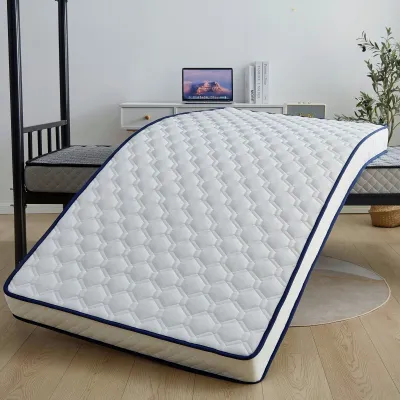
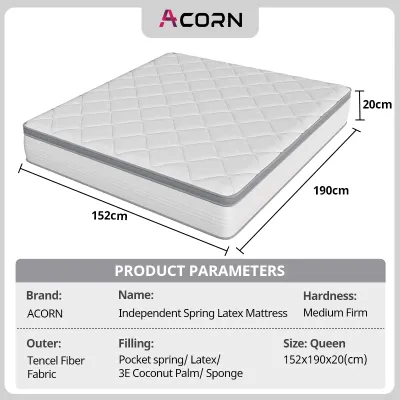
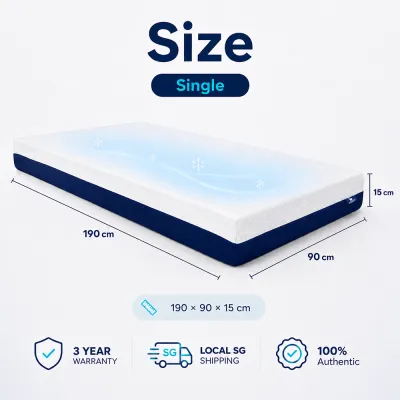
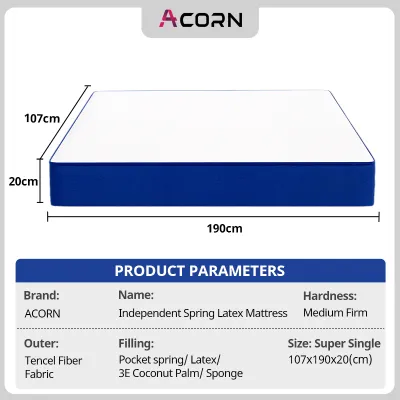
Prices are valid at publication and may change. Please refer to the product page for the latest price.
Step 1: Assess Your Primary Sleeping Position
Your primary sleeping position dictates how your body weight is distributed across the mattress surface, which directly influences where you need support and where you require pressure relief. When you lie down, your spine should maintain its natural, neutral curve. If a mattress is too soft, your heaviest parts—typically the hips and pelvis—will sink too deeply, curving the spine downward. Conversely, if the mattress is too firm, it will force your body to adapt to its flat surface, creating gaps under your lower back or putting intense pressure on your shoulders and hips.

Many people toss and turn throughout the night, making it difficult to identify a single dominant position. To determine your primary style, pay attention to the position in which you naturally fall asleep and the position you find yourself in when you wake up. If you wake up in a consistent position, that is your dominant sleeping posture. If you genuinely split your time equally between different positions, you are a combination sleeper and will likely need to target a highly versatile medium-firm mattress that accommodates transitions without sacrificing support.
Each sleeping position has distinct physical requirements that influence which latex firmness will feel most comfortable. Understanding these requirements allows you to narrow down your choices before factoring in your body weight or specific mattress construction details.
Side Sleepers: Prioritizing Pressure Relief
Side sleeping concentrates your entire body weight onto a relatively small surface area, specifically the shoulders and hips. To prevent discomfort, a latex mattress must be soft enough to allow these protruding joints to sink slightly into the comfort layers. This contouring action redistributes your weight and keeps your spine in a straight, horizontal line from your neck to your tailbone.
If a latex mattress is too firm for a side sleeper, you will likely experience clear physical warning signs. Waking up with numb or tingling arms, stiff shoulders, or aching hips indicates that the mattress is not contouring sufficiently, which restricts local blood circulation. If you observe these symptoms during a trial, it is a strong sign that you need a softer comfort layer or a lower density rating.
Back and Stomach Sleepers: Maintaining Spinal Alignment
Back and stomach sleepers require a completely different support dynamic that prioritizes surface stability over deep contouring. For back sleepers, the mattress must support the natural curve of the lower lumbar spine without letting the pelvis sag. For stomach sleepers, the demand is even more critical; if the midsection sinks too deep, it arches the lower back backward, placing severe strain on the lumbar muscles and ligaments.
When a latex mattress is too soft for these positions, the physical feedback is usually felt in the lower back. Waking up with a dull ache in your lumbar region or feeling as though you are “hammocking” in the middle of the bed are classic signs of insufficient support. Additionally, if you feel stuck or find it difficult to roll over, the latex is likely too soft to provide the active pushback needed for easy movement.
Step 2: Adjust Firmness Based on Body Weight
Body weight is the primary force acting upon the latex layers, directly determining how deep you sink into the mattress and how firm the bed actually feels to you. A mattress rated as “medium” might feel incredibly firm to a lighter individual who does not apply enough force to compress the comfort layers. Conversely, that same mattress might feel excessively soft or bottom out for a heavier individual, who pushes straight through the comfort layers to the rigid support core.
To find your ideal match, adjust your starting firmness choice based on your weight category:
- Lighter Sleepers (Under 60 kg): Because your body exerts less downward pressure, you will not experience the natural contouring of firmer latex. You should generally select a mattress that is one step softer than the standard recommendation for your position to ensure proper pressure relief.
- Average-Weight Sleepers (60 kg to 90 kg): You will experience a feel that closely matches the manufacturer's stated firmness ratings. A true medium or medium-firm latex mattress will typically provide the intended balance of contouring and support.
- Heavier Sleepers (Over 90 kg): Your body will compress the upper layers deeply. To prevent sinking completely through the comfort layers and hitting the hard support core, choose a firmer mattress or one with a thicker, high-density support base.
Before making a final decision, always check the manufacturer’s specified weight limits and core density ratings on the product label. Latex density is often measured in kilograms per cubic meter (kg/m³); a higher density rating indicates a more supportive, durable core that can withstand heavier loads without premature sagging.
Step 3: Evaluate Latex Construction and Comfort Layers
A latex mattress is rarely a single solid block of uniform material; instead, it is typically constructed using multiple layers with different physical properties. The support core, which forms the bottom foundation of the mattress, provides the deep structural integrity and prevents overall sagging. The comfort layers on top are designed to cushion your joints and provide immediate pressure relief. The overall feel of the mattress is a result of how these layers interact, including their individual thicknesses and density ratings.
When evaluating a mattress, do not rely solely on the generic material name “latex” to assume its performance, durability, or feel. Instead, check the specific latex processing method noted on the product label. For example, some manufacturing methods produce a denser, more supportive feel that is highly suited for support cores, while other methods yield a lighter, more contouring structure ideal for comfort layers. Verifying these specifications helps you understand whether the mattress construction aligns with your firmness needs.
Beyond the internal construction, you must verify the physical dimensions and logistics of the mattress before purchasing. Ensure you measure your bed frame dimensions, bedroom space, doorways, and lift access. Latex mattresses are exceptionally heavy and flexible, making them difficult to maneuver through tight corridors or stairwells. Confirming these physical constraints, along with the load capacity of your bed frame, ensures a smooth delivery and setup process.
Step 4: Plan for In-Home Trials and Adjustments
Because mattress comfort is highly subjective, testing a mattress in a showroom for a few minutes is rarely sufficient to determine if the firmness is correct for your body over the long term. A proper evaluation requires sleeping on the mattress in your own home for several weeks. When shopping, prioritize retailers that offer clear, written sleep trial policies that allow you to test the mattress risk-free.
When reviewing a sleep trial policy, pay close attention to the specific terms and conditions:
- Minimum Break-In Period: Many manufacturers require you to keep the mattress for at least 21 to 30 days before initiating a return, as your body needs time to adjust to the new support profile.
- Return and Exchange Conditions: Verify whether the retailer offers a full refund or only store credit, and check if you are responsible for arranging the return transport.
- Associated Fees: Check the policy carefully for any restocking fees or return shipping costs. In Singapore, some retailers may charge a flat fee (often ranging from S$50 to S$150) to cover the logistics of retrieving a heavy latex mattress, so it is essential to verify these potential costs beforehand.
When your new mattress arrives, establish a consistent break-in routine. Your muscles and spine may experience temporary stiffness during the first two weeks as they adapt to the active support of latex. Give your body the full recommended trial period to settle in before deciding whether the firmness level is a perfect match or if you need to initiate an exchange.
Frequently Asked Questions (FAQ)
Can I change the firmness of a latex mattress after buying it?
Yes, you can adjust the feel of your latex mattress after purchase using a few practical methods. The most common approach is adding a compatible latex mattress topper; a soft topper can cushion a mattress that feels too firm, while a high-density, firm topper can add surface support to a bed that is slightly too soft. Additionally, some latex mattresses feature zippered covers that allow you to open the casing and physically rearrange or swap the internal latex layers. Always check your manufacturer’s design and warranty guidelines before attempting to open the mattress or alter its internal structure.
Is a firm latex mattress always better for back pain?
A firm latex mattress is not universally better for back pain, as the ideal firmness depends entirely on your individual sleeping position, body weight, and physical alignment. While a firm mattress prevents sagging for back and stomach sleepers, it can cause severe pressure points and spinal misalignment for side sleepers. The key to relieving discomfort is achieving neutral spinal alignment rather than simply choosing the firmest option. If you experience persistent or severe back pain, consult a qualified healthcare professional for personalized medical advice rather than relying solely on mattress adjustments.
Community discussion
Share your experience or ask a question. Comments are reviewed before publication.