
To choose the right hinge repair plate, you must measure the distance between the existing screw holes on your hinge baseplate, assess the extent of the damaged wood around the cabinet hinge cup, and select a plate thickness that fits within your door’s clearance gap. Matching the screw hole pattern is critical to ensure the plate aligns with your original hardware, while the plate’s overall dimensions must cover the stripped or crumbling wood to provide a stable new mounting surface.
Assess Your Existing Hinge and Cabinet Damage
Before purchasing any hardware, inspect the damaged area around the cabinet door and frame. Stripped screw holes are common in particleboard or MDF cabinets, where repeated stress pulls the screws loose, leaving enlarged, crumbling holes. Take a close look at the wood surrounding these holes to determine if the damage is localized or if the structural integrity of the panel is compromised.
If the wood is only stripped around the screw holes, a standard-sized repair plate will easily cover the area and provide fresh metal threads or new screw positions. However, if the circular hinge cup recess itself is cracked or the surrounding wood has completely blown out, you will need a plate that offers wider coverage. Measure the span of the damaged wood to ensure the repair plate you select is large enough to reach intact, solid wood where new mounting screws can securely grip.
Products mentioned in this guide
![[Local Seller] Stainless Steel Hinge Repair Plate Hinge Fixing Plate Wardrobe Cabinet Door Hinge Repair Installation Repair Plate 不锈钢柜门铰链修复板合页固定板橱柜门适用](https://img.lazcdn.com/g/p/79b153cf9266bd986a2755177af23de1.jpg_400x400q80.jpg_.webp)
![[SG SELLER] 6Pcs/10Pcs 1PC Hinge Repair Plate For Cabinet Furniture Drawer Window Stainless Steel Plate Foldable Table Cabinet Door Hinger Accessories](https://img.lazcdn.com/g/p/639dab4d204848291a069ef650a11dff.jpg_400x400q80.jpg_.webp)

Prices are valid at publication and may change. Please refer to the product page for the latest price.
Check both the cabinet carcass (the side panel) and the cabinet door. Sometimes, only the door side is damaged, while other times, the frame side has failed. Identifying the exact failure points helps you determine whether you need a single plate for the door, a plate for the frame, or a matching pair to reinforce both sides of the hinge assembly.
Decode Key Hinge Repair Plate Specifications
Hinge repair plates are flat metal brackets designed to sandwich between the hinge and the damaged wood, but they are not one-size-fits-all. Understanding the key specifications on product labels—such as overall length, width, hole spacing, and plate thickness—will help you avoid buying incompatible parts.

While the overall exterior size of the plate determines how much damaged wood you can cover, matching the existing hole pattern is the most critical factor for a successful repair. If the plate’s pre-drilled holes do not align with your original hinge baseplate, you will not be able to reattach your cabinet door without altering the door’s alignment or drilling new holes into the hinge itself, which can weaken the hardware.
Measuring Dimensions and Hole Spacing
To find a matching plate, remove the undamaged hinge from the cabinet and measure the distance between the screw holes on the baseplate. Use a ruler or caliper to measure from the center of one screw hole to the center of the other. This center-to-center measurement is the standard format used in hardware specifications.
Compare your measurements directly against the technical drawings or product specifications of the repair plates you are considering. Many standard cabinet hinges use a 32mm or 37mm spacing system, but variations exist depending on the manufacturer and the age of your furniture.
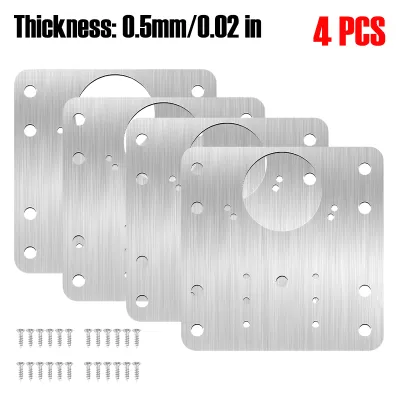
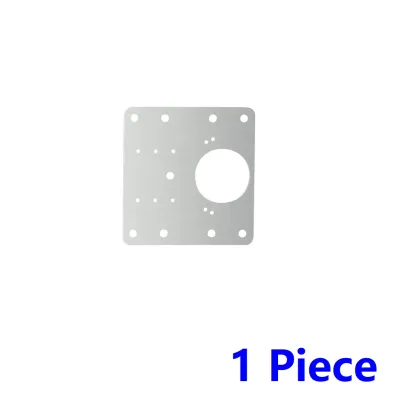
If your measurements do not match standard single-pattern plates, look for repair plates featuring multi-hole patterns. These plates contain multiple clusters of pre-drilled holes, offering adjustable mounting options that allow you to bypass the stripped wood areas while still aligning perfectly with your original hinge configuration.
Evaluating Plate Thickness and Material
The thickness of the repair plate plays a major role in both the strength of the repair and the operation of the cabinet door. A plate that is too thin may bend under the weight of a heavy door, while a plate that is too thick can alter the hinge geometry, preventing the door from closing flush against the frame.
Before choosing a plate, check the clearance gap between your closed cabinet door and the cabinet frame. The plate thickness must be slightly less than this gap to prevent binding or rubbing when the door is operated. Most standard repair plates range from 0.8mm to 1.5mm in thickness, which generally fits within typical cabinet tolerances.
In humid environments, such as kitchens and bathrooms in Singapore, material selection is highly important to prevent premature failure. Look for plates made from stainless steel or those with rust-resistant surface treatments to ensure they withstand moisture and do not corrode over time. Avoid untreated steel plates, which can rust quickly when exposed to steam and high humidity.
Step-by-Step Matching and Installation Checks
Before driving any screws into your cabinet, perform a dry-fit by placing the repair plate over the damaged area and aligning your original hinge on top of it. This step allows you to visually confirm that the plate’s mounting holes line up with solid, unstripped wood rather than empty space or crumbling particleboard.
Next, verify the length of the screws included with your repair plate or those you plan to use. The screws must be long enough to pass through the plate and bite deeply into the cabinet panel, but short enough that they do not pierce through the opposite, visible side of the cabinet door or outer frame. Measure the thickness of your cabinet panel and compare it to the screw length to ensure a safe margin.
Finally, review the manufacturer’s instructions for specific installation requirements, such as recommended pilot hole sizes or torque limits. Using a manual screwdriver rather than a high-torque power drill is often recommended when securing screws into repair plates and particleboard, as excessive force can easily strip the new holes and ruin the repair.
When to Replace the Hinge Instead of Using a Repair Plate
While hinge repair plates are highly effective for fixing stripped screw holes, they cannot resolve structural failures within the hinge hardware itself. If you notice a bent hinge arm, a broken internal tension spring, or a severely cracked hinge cup, a repair plate will not restore functionality. In these cases, you must replace the entire hinge assembly with new hardware.
Additionally, if the cabinet’s particleboard is completely crumbling, water-logged, or rotting, there will be no solid substrate left for the repair plate’s screws to bite into. Attempting to mount a plate onto severely degraded wood will only result in the plate pulling loose under the weight of the door.
If the damage extends far beyond the immediate hinge mounting area, or if the cabinet structure itself is sagging, stop the DIY process. In these situations, it is best to consult a qualified carpenter or furniture repair professional to assess whether the cabinet panel needs to be replaced entirely or if a more advanced structural repair is required.
Frequently Asked Questions (FAQ)
Can I use a larger repair plate if the exact size is unavailable?
Yes, you can use a larger repair plate as long as the pre-drilled hole pattern still aligns with your hinge and there is enough flat, unobstructed cabinet surface to accommodate the larger footprint. However, you must carefully measure the surrounding space to ensure the oversized plate does not interfere with adjacent doors, drawers, shelves, or the cabinet’s outer edges when the door is fully closed.
Do I need to pre-drill holes for the repair plate screws?
It is highly recommended to check the repair plate manufacturer’s instructions and identify your specific cabinet material before installing. For hardwoods, or when placing screws near the edges of particleboard and MDF, pre-drilling small pilot holes is essential to prevent the wood substrate from splitting or bulging under the pressure of the screw threads.
Community discussion
Share your experience or ask a question. Comments are reviewed before publication.