
Choosing the right headboard panel size for your HDB bed frame requires balancing standard Singapore mattress dimensions with the physical constraints of typical flat layouts. For a standard setup, your headboard panel should extend 5 to 15 cm past each side of your bed frame—known as the overhang rule—and leave at least 1.2 to 1.5 metres of negative wall space below the ceiling. Because HDB bedrooms often feature tight clearances, built-in wardrobes, and strategically placed electrical outlets, selecting the correct width, height, and depth prevents costly layout mistakes.
Failing to measure accurately can lead to blocked power sockets, restricted wardrobe doors, or an cramped walkway that disrupts the flow of your room. By understanding how local bed dimensions interact with HDB wall spaces, you can select a headboard panel that serves as a beautiful, functional anchor for your bedroom.
Standard Headboard Panel Widths for Singapore Bed Sizes
To find the ideal width for your headboard panel, you must start with the standard mattress dimensions used in Singapore. Local bed frames and mattresses follow specific regional sizing rules that differ from those in the United States or Europe. Knowing these baseline widths ensures you do not accidentally purchase an imported panel size that sits awkwardly against your local bed frame.
Products mentioned in this guide
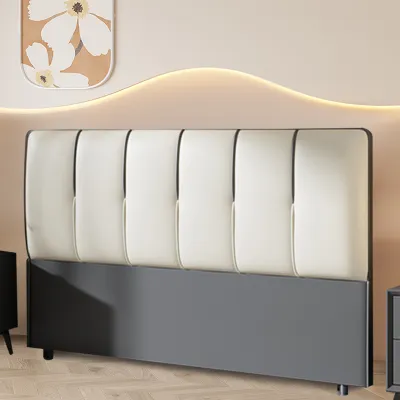
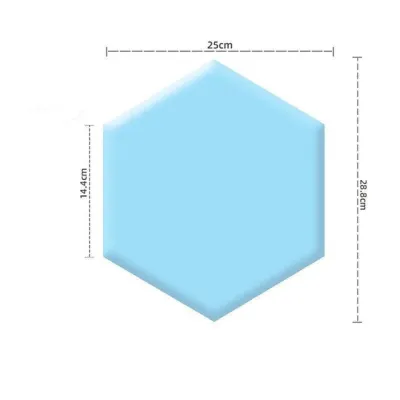
Prices are valid at publication and may change. Please refer to the product page for the latest price.
The four standard mattress widths in Singapore are:
- Single: 91 cm
- Super Single: 107 cm
- Queen: 152 cm
- King: 183 cm
- Super King: 201 cm
While you might assume a headboard panel should match these exact widths, interior designers rely on the overhang rule to create a balanced, visually grounded look. A headboard panel should typically be 5 to 15 cm wider than the actual mattress and bed frame on each side. This extra width prevents the headboard from looking squeezed or swallowed by the mattress once you add thick duvets, fluffy pillows, and tucked-in bed sheets.
| Bed Size | Standard Mattress Width | Recommended Headboard Width | Visual Effect |
|---|---|---|---|
| Single | 91 cm | 101 to 121 cm | Neat, proportional framing for small rooms |
| Super Single | 107 cm | 117 to 137 cm | Balanced, cozy look for guest rooms or studios |
| Queen | 152 cm | 162 to 182 cm | Luxurious anchoring for standard HDB master bedrooms |
| King | 183 cm | 193 to 213 cm | Grand, hotel-like statement for larger master suites |
Before finalizing your headboard width, always measure the outermost edges of your physical bed frame. Many modern bed frames feature wide wooden side rails, protruding padded corners, or integrated floating nightstands. If your bed frame is wider than the mattress itself, calculate your headboard panel width based on the frame’s widest points rather than the mattress dimensions to maintain perfect symmetry.
Proportion and Height: Matching Your HDB Bedroom Space
Selecting the right headboard height is a balancing act between the visual proportions of your bed and the physical limits of your HDB walls. Standard HDB ceiling heights typically range from 2.6 metres in standard flats to 2.8 metres in newer Build-To-Order (BTO) units. This vertical limit dictates how high your headboard can comfortably go without making the bedroom feel cramped.

As a visual rule of thumb, you should always leave adequate negative space above the headboard panel. If a headboard extends too close to the ceiling, it dominates the room, making the ceiling feel lower and the entire space feel top-heavy. Maintaining a clear gap of at least 1.2 to 1.5 metres between the top of the headboard and the ceiling preserves a sense of airiness and open space.
When deciding on height, consider the style of your room and any architectural features:
- Low-profile panels (typically 90 to 110 cm from the floor): These are ideal for rooms with lower ceilings, large windows near the bed, or low-hanging air-conditioning trunking. They keep the visual weight low and make small common rooms feel more spacious.
- Tall, statement panels (typically 120 to 150 cm or higher): These work beautifully in larger master bedrooms with unobstructed, full-height walls. They create a dramatic focal point and provide excellent back support if you enjoy sitting up in bed to read or watch television.
To find your maximum allowable panel height, measure the exact distance from the top of your mattress to the ceiling. Note any wall-mounted fixtures, such as air-conditioning units, decorative beams, or wall sconces, that could physically block a tall headboard. Subtracting the height of these fixtures will give you a safe, realistic height limit for your panel.
Crucial HDB Clearance and Installation Checks
Because HDB flats are designed to maximize floor space, installing a headboard panel requires careful spatial planning. You must ensure the panel’s mounting method, width, and thickness do not conflict with the structural layout, electrical points, or built-in furniture in your room.
Wall-Mounted vs. Floor-Standing vs. Strap-On
The way your headboard panel attaches to your bed or wall directly impacts your room layout and structural requirements.
- Wall-Mounted Panels: These panels are drilled directly into the wall, offering a flush, space-saving fit. However, they require a solid wall backing. In HDB flats, bedroom walls are often solid concrete, which can easily support heavy panels but requires a masonry drill for installation. If you are mounting on a drywall partition, you must locate the internal studs or use heavy-duty hollow-wall anchors to prevent the panel from pulling loose.
- Floor-Standing Panels: These panels rest directly on the floor and are sandwiched between the bed frame and the wall. They require no wall drilling, making them highly suitable for rental units. However, they often feature a thicker bottom base, which can push your entire bed frame slightly forward into the room.
- Strap-On or Bed-Frame-Attached Panels: These panels mount directly to the back of your existing bed frame using pre-drilled holes or brackets. If you choose this option, your headboard panel width must align precisely with the frame's mounting points, leaving very little room for custom sizing or wider overhangs.
Avoiding Power Sockets and Wardrobe Doors
HDB bedrooms are equipped with pre-installed electrical outlets, light switches, and fiber data points that are often located directly behind or adjacent to the bed area. A headboard panel that is too wide or too tall can easily block access to these essential utilities. Before choosing a size, map out the exact coordinates of your wall sockets to ensure they remain fully accessible on either side of the headboard.
Wardrobe clearance is another common issue in compact HDB layouts. If your bed is positioned parallel or adjacent to a built-in wardrobe or a standalone wardrobe with swinging doors, an oversized headboard panel can block the doors from opening fully. Ensure there is at least 60 cm of clearance between the edge of the headboard and any swinging wardrobe doors, drawers, or internal pull-out trays.
Finally, do not forget to account for the thickness of the headboard panel. A heavily cushioned, upholstered panel can easily be 10 to 15 cm deep. This thickness pushes your entire bed frame forward, which can narrow the walking pathway at the foot of the bed or block the swing radius of your bedroom door. Measure your remaining walkway space carefully to ensure you can move around the room comfortably.
Common Sizing Mistakes to Avoid
Avoiding these frequent sizing errors will save you from the hassle of expensive returns, awkward room layouts, and installation failures in your HDB flat.
- Mistake 1: Buying a panel that matches the exact mattress width. This results in a visually pinched look. When you add blankets, duvets, and pillows, the bedding will spill over the sides, completely hiding the headboard and making the bed look disproportionate.
- Mistake 2: Ignoring the bed frame's existing headboard lip. Many bed frames feature a built-in metal lip or proprietary brackets designed to hold a specific headboard. Attempting to install an aftermarket panel without checking these attachment points can lead to an unstable, rattling setup.
- Mistake 3: Choosing an excessively thick upholstered panel for a small common room. In a compact bedroom where every centimetre counts, a thick, tufted panel can reduce valuable walking space down to an uncomfortable squeeze.
- Mistake 4: Failing to account for skirting boards. Most HDB flats feature skirting boards running along the bottom of the walls. A floor-standing or wall-mounted headboard without a skirting cutout will be pushed away from the wall at the bottom, creating an unstable, angled gap at the top that constantly collects dust.
Frequently Asked Questions (FAQ)
Can I use a King headboard on a Queen bed frame in an HDB room?
Yes, using a King-sized headboard panel with a Queen bed frame is a popular design technique that creates a wide, luxurious backdrop, making the bed look visually grander. However, this setup requires a sufficiently wide wall space. Because the panel will extend roughly 15 to 20 cm past the mattress on each side, you must verify that it will not block light switches, power outlets, or wardrobe doors. Additionally, because the mounting brackets will not align, the panel must be wall-mounted or floor-standing rather than attached directly to the Queen frame.
How thick should a headboard panel be for a small HDB bedroom?
For small HDB bedrooms, particularly common rooms, keep the headboard panel thickness between 2 cm and 5 cm. Slim timber panels, low-profile upholstered panels, or wall-hung cushions preserve valuable floor space. Avoid deep, Chesterfield-style tufting or heavily padded panels that exceed 8 cm in thickness unless you have verified that the remaining walkway at the foot of the bed is at least 60 to 70 cm wide. Using a temporary cardboard mockup of the panel’s thickness is a highly effective way to test the physical clearance before purchasing.
Community discussion
Share your experience or ask a question. Comments are reviewed before publication.