
Selecting the perfect TV cabinet from Fortytwo for your Singapore home requires balancing the physical dimensions of your television, the available floor space, and the flow of your living room. In compact HDB apartments and condominiums, a media console that is too large can restrict movement, while one that is too small can look visually unbalanced and fail to support your equipment. By measuring your space accurately, checking your TV’s actual footprint, and planning for delivery access, you can find a cabinet that fits your home beautifully and functions flawlessly.
Measure Your Living Room Space and Layout
Before browsing the extensive online catalog of Fortytwo furniture, you must establish the exact boundaries of your living room layout. Begin by measuring the total length of the wall where you plan to position the TV cabinet. Do not simply measure the empty space; instead, subtract the width of any adjacent items you plan to place nearby, such as standing speakers, air purifiers, side tables, or decorative indoor plants. Leaving a buffer of at least 10 to 20 centimeters on either side of the cabinet prevents the wall from looking cluttered and allows for easier cleaning.
The depth of the cabinet is equally critical, especially in narrow, linear living room layouts common in modern Singapore flats. A cabinet that protrudes too far into the room can narrow your primary walkway, making it difficult to move between the sofa and the television. Measure the distance from the wall to the edge of your coffee table or rug to ensure there is comfortable legroom and walking space. Ideally, you should maintain a clear pathway of at least 60 to 90 centimeters in front of the console to allow household members to pass by without bumping into the furniture.
Products mentioned in this guide
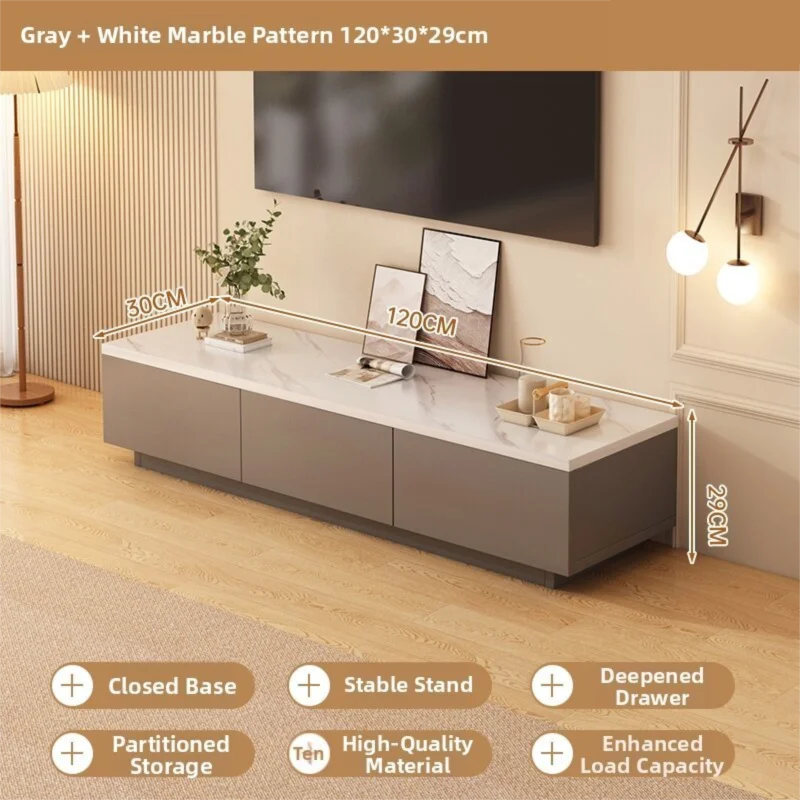
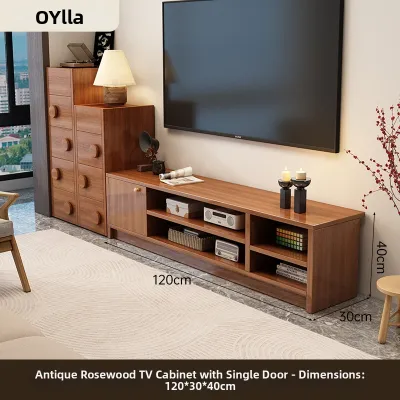
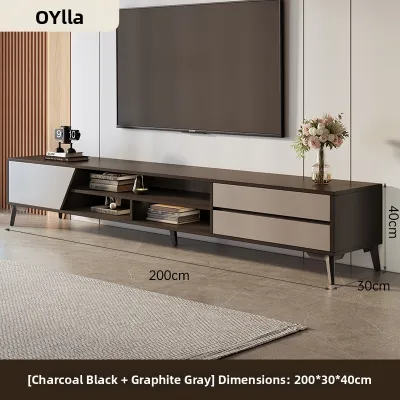
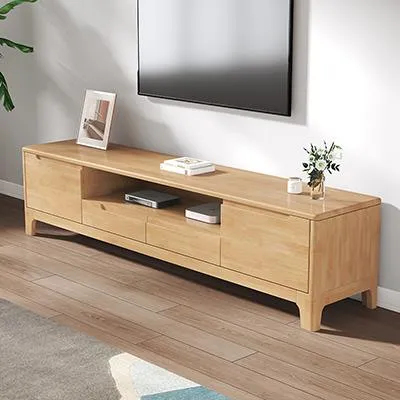
![[CozyNest ]New fully solid wood TV cabinet - Nordic style small-sized for narrow living room suitable for home use simple and elegant Chinese-style matching color TV cabinet](https://img.lazcdn.com/g/p/ed1c6f1afe9ca3680620cd70610a9211.jpg_400x400q80.jpg_.webp)
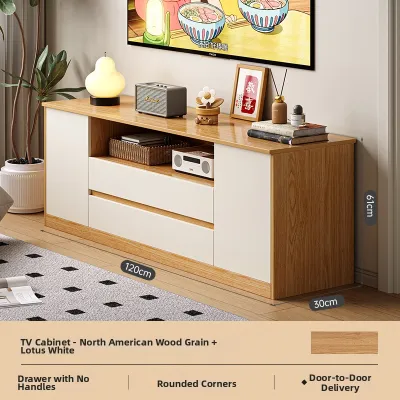
Prices are valid at publication and may change. Please refer to the product page for the latest price.
Additionally, map out the exact locations of your wall power outlets, cable television ports, and internet fiber points. Many Fortytwo TV cabinets feature built-in cable management cutouts, but these must align reasonably well with your wall sockets to avoid unsightly, exposed wires stretching across the wall. If your outlets sit directly behind where the cabinet will go, verify that the cabinet’s back panel is either recessed or has pre-drilled holes that allow you to push the unit flush against the wall without pinching the power plugs.
Match the Cabinet to Your TV Screen Size
A common misstep is assuming that a TV cabinet only needs to match the advertised diagonal size of your television. In reality, you must compare the actual physical width of your TV, including its outer bezels, to the width of the cabinet’s top surface. For a balanced and aesthetically pleasing look, the TV cabinet should be wider than the television itself. A good rule of thumb is to choose a console that extends at least 10 to 15 centimeters beyond the left and right edges of your TV screen, which prevents the setup from looking top-heavy and reduces the risk of someone accidentally knocking into the screen.

Next, examine the design of your television’s stand. If your TV uses a central pedestal stand or two wide-set feet, you must measure the exact depth and width of this footprint. Compare these measurements against the usable depth of the cabinet’s top surface. The TV stand must sit entirely and securely on the flat surface of the cabinet, with a safety margin of several centimeters at both the front and back. Placing a TV on a surface that is too narrow can cause instability, increasing the risk of the television tipping forward if bumped.
Do not rely on general material assumptions when determining if a cabinet can support your television and media accessories. Instead, check the manufacturer’s specifications on the product page for the maximum weight capacity of the cabinet’s top shelf. Solid wood, engineered wood, and metal frames all have different load limits. Factor in the weight of your television, soundbar, gaming consoles, and any decorative items to ensure the total load remains well within the cabinet’s certified weight limit to prevent sagging or structural failure over time.
Check Clearance, Pathways, and Delivery Access
Ensuring your new TV cabinet fits your living room goes beyond static measurements; you must also account for daily movement and physical access. In high-traffic zones, such as the path leading from the entryway to the kitchen or bedrooms, a protruding cabinet corner can become a constant hazard. If your living room layout is tight, consider a Fortytwo cabinet with sliding doors or open shelving rather than swing-out doors or deep drawers, which require extra clearance to open fully without blocking the walkway.
Proper ventilation is another crucial factor that is often overlooked. Electronic devices like gaming consoles, media players, and cable boxes generate significant heat during operation. If you plan to store these devices inside closed cabinet compartments, ensure the cabinet has open back panels or ventilation grates. Even for open consoles, leave a gap of at least 5 centimeters between the back of the cabinet and the wall to allow hot air to escape, protecting your expensive electronics from overheating and premature wear.
Finally, you must plan for the delivery and assembly process. Before finalizing your purchase, measure the dimensions of your building’s lift interior, the width of your front door frame, and any tight corners in your entryway or corridors. Fortytwo furniture items may arrive fully assembled or in large, flat-packed boxes. Compare these packaged dimensions against your home’s entry points to confirm that the delivery team can safely transport the item into your living room without damaging your walls or the furniture itself.
Common Sizing Mistakes to Avoid
One of the most frequent errors homeowners make is confusing a television’s diagonal screen size with its actual physical width. A 65-inch television, for example, refers to the diagonal measurement of the screen, whereas its actual horizontal width is typically closer to 145 centimeters. Always use a physical measuring tape to measure the actual outer dimensions of your TV before matching it to a cabinet size.
Another overlooked detail is the presence of skirting boards along the base of your living room walls. Skirting boards can protrude by 1 to 2 centimeters, preventing a standard flat-backed TV cabinet from sitting completely flush against the wall. This creates an awkward gap at the top where small items can fall behind, and it can also reduce the usable depth of the cabinet in tight spaces. Look for cabinets designed with a recessed back or base cutout that accommodates standard skirting boards, or factor this gap into your overall depth calculations.
Lastly, avoid the temptation to buy a massive cabinet simply because you have the wall space. An oversized media console can visually overwhelm a small or medium-sized living room, making the entire space feel cramped and dark. Balance the scale of your furniture by choosing a cabinet height and length that leaves plenty of open wall space above and around the television, maintaining a bright, airy, and balanced atmosphere in your home.
Frequently Asked Questions (FAQ)
Can I mount my TV on the wall above a shorter cabinet?
Yes, mounting your television on the wall above a shorter media console is an excellent way to create a modern, clean look while saving surface space. When using this setup, the lower cabinet serves primarily as a storage unit for media players, gaming consoles, and decorative items, rather than a physical support. However, you must ensure the TV is mounted at an ergonomic viewing height—typically with the center of the screen at eye level when seated on your sofa. Before mounting, always verify the structural integrity of your wall (especially if it is a drywall partition rather than concrete) and use high-quality mounting brackets suitable for your TV’s weight.
How do I handle skirting boards when placing a cabinet against the wall?
To handle skirting boards effectively, measure their exact height and depth before purchasing your furniture. Many modern TV cabinets from Fortytwo are designed with a recessed base or a specific cutout at the back to accommodate standard skirting boards, allowing the top of the cabinet to sit flush against the wall. If the cabinet you choose does not have this feature, you can account for the 1 to 2-centimeter gap in your floor space measurements, or opt for a wall-mounted floating console that hangs entirely above the skirting line, eliminating the issue altogether.

Community discussion
Share your experience or ask a question. Comments are reviewed before publication.