
Finding the right folding mattress requires more than just picking a convenient size; the firmness level directly impacts your spinal alignment and comfort. Because folding mattresses often have thinner profiles and unique hinge designs, their support feels different from traditional beds. This guide helps you diagnose your specific needs by matching your primary sleeping position and body type to the ideal firmness, ensuring you avoid pressure points and wake up without stiffness. A folding mattress (折叠床垫) is a highly versatile addition to any home, serving as a quick setup for overnight guests or a space-saving sleeping solution. However, choosing the wrong firmness can lead to restless nights and morning backaches, making it essential to understand how your sleeping posture and body weight interact with these unique structures.
Understanding How Folding Mattress Firmness Works
Most mattress brands use a standard firmness scale from 1 to 10, where 1 is extremely soft and 10 is extra-firm. Most folding mattresses fall within the medium (5) to firm (8) range. This is because their thinner profiles require a denser, firmer core to prevent your body from sinking completely through the foam and hitting the hard floor underneath.
When evaluating options, do not rely solely on subjective marketing terms like “plush” or “orthopedic.” Instead, check the manufacturer’s specific foam density, typically measured in kilograms per cubic metre (kg/m³), and Indentation Load Deflection (ILD) specifications on the product label. A higher density indicates a more durable, supportive core, while the ILD rating measures how much force is required to compress the foam, giving you an objective measure of support.
Products mentioned in this guide
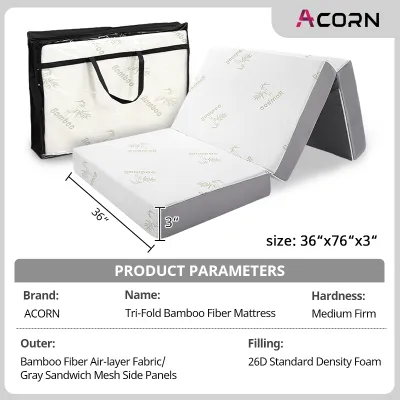
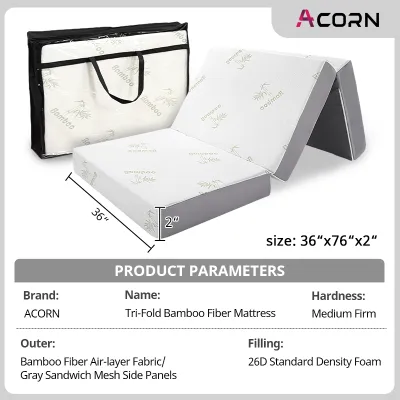
![[1-2 day delivery] Foldable Foam Mattress 3-Fold Mattress](https://img.lazcdn.com/g/ff/kf/Se38f308a460b4ba3aef73a3da6703c621.jpg_400x400q80.jpg_.webp)


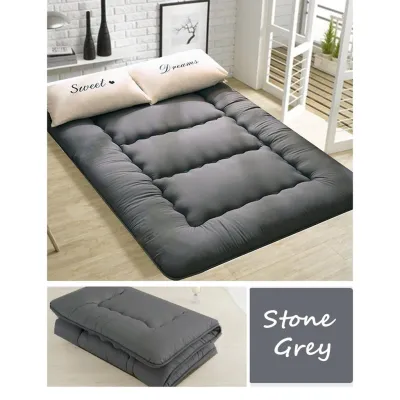
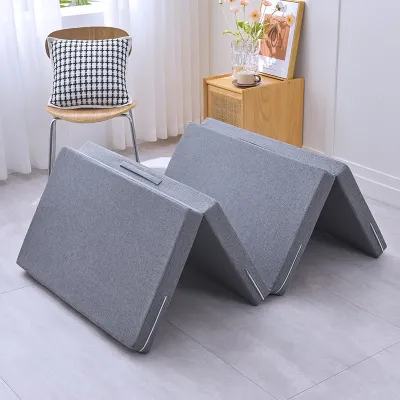
Prices are valid at publication and may change. Please refer to the product page for the latest price.
Matching Firmness to Your Sleep Position
Your primary sleeping position is the most critical factor in determining the baseline firmness you need. When you sleep, your spine should remain in a neutral, straight alignment, similar to your posture when standing upright. Different sleeping positions place pressure on different parts of the body, requiring targeted support and contouring.

To find the perfect balance, you must identify your dominant sleeping posture—whether you spend most of the night on your side, back, stomach, or a combination of these. Each style demands a specific level of surface give and core resistance. By matching your posture to the correct firmness range, you can prevent muscle tension and ensure your body fully recovers.
Guidelines for Side Sleepers
Side sleepers require a mattress that offers excellent pressure relief, particularly around the shoulders and hips. A medium-soft to medium folding mattress (around 4 to 6 on the firmness scale) is generally recommended. This level of firmness allows the foam to contour gently around your body’s widest points, distributing your weight more evenly and keeping your spine straight.
If a folding mattress is too firm or too thin, side sleepers will experience excessive pressure on their joints, leading to discomfort and restricted circulation. Because folding mattresses are naturally thinner than standard beds, side sleepers must ensure the mattress has a high-quality comfort layer that prevents them from bottoming out and feeling the hard floor beneath their hips.
Guidelines for Back and Stomach Sleepers
Back and stomach sleepers require a significantly firmer surface to maintain proper spinal alignment. For back sleepers, a medium-firm to firm folding mattress (6 to 8 on the scale) is ideal. This firmness level provides enough surface give to cushion the lower back and buttocks while offering a solid foundation that keeps the spine in a neutral position.
Stomach sleepers specifically need a firmer surface (7 to 8 on the scale) to prevent their pelvis from dipping. When you sleep on your stomach, your midsection is the heaviest part of your body; if the mattress is too soft, your hips will sink, bowing your lower spine and putting immense strain on your lower back muscles and ligaments.
Guidelines for Combination Sleepers
If you frequently change positions throughout the night, you are a combination sleeper. A medium to medium-firm mattress (5 to 7 on the scale) is typically the best compromise, offering enough contouring for side sleeping while maintaining the necessary support for back or stomach sleeping.
Additionally, look for responsive core materials, such as latex or high-resilience polyurethane foam, which bounce back quickly when you move. This responsiveness makes it much easier to turn over and change positions without feeling “stuck” in a deep foam indentation, allowing for smoother transitions and less disrupted sleep.
Factoring in Your Body Weight and Type
Your body weight and physical build play a major role in how firm a folding mattress actually feels. A mattress that feels perfectly medium-firm to a lightweight individual may feel incredibly soft and unsupportive to someone heavier, as heavier bodies exert more force and compress the foam layers much deeper.
For heavier individuals, a firmer folding mattress or one with a higher-density foam core is essential to prevent bottoming out and feeling the folding hinges or the floor. Conversely, lighter individuals do not exert enough pressure to compress firm foam, meaning a firm mattress will feel like a solid board, offering zero pressure relief. If you are on the lighter side, a softer top layer or a thicker profile will help you achieve the necessary contouring. Always verify the manufacturer’s stated maximum weight capacity on the product label to ensure long-term structural integrity.
Checking Thickness and Construction Limits
The physical design, thickness, and construction of a folding mattress directly influence its effective firmness and overall support. Folding mattresses typically range from 5 to 15 centimetres in thickness. Thinner models (5 to 8 centimetres) have very little room for multiple comfort layers, meaning they must rely on firmer, high-density foam to keep you from bottoming out. If you prefer a softer feel, look for a thicker model (10 to 15 centimetres) that can accommodate a plush comfort layer on top of a supportive base foam.
The construction details, such as the cover material and hinge design, also alter the perceived firmness. A tight, non-stretchy cover can make a mattress feel firmer, while a soft, quilted cover adds surface plushness. Additionally, pay attention to the gaps where the mattress folds. High-quality designs feature tight, well-engineered hinges that minimize the feel of these seams, whereas poorly constructed models may have wide gaps that compromise support. Always check the product labels to verify the core foam type, as materials like memory foam respond to body heat and soften over the night, whereas high-resilience polyurethane foam maintains a consistent firmness.
Testing and Verifying Your Choice
Once you have selected a folding mattress, it is crucial to verify your choice through practical testing. Before making a purchase, check the retailer’s return policy and warranty terms. Confirm whether folding mattresses are eligible for a sleep trial, as some retailers treat portable or folding furniture differently than standard mattresses. A trial period allows you to sleep on the mattress in your own home for several nights to ensure it truly meets your comfort needs.
When testing your new folding mattress, place it on the exact surface you plan to use regularly. If you intend to use it as a floor bed, test it on the floor; if you plan to place it on a slatted guest bed frame or a camping cot, test it there. The underlying base significantly alters how firm the mattress feels, with solid floors offering maximum resistance and slatted frames providing more give. Watch out for clear signs that the firmness is incorrect: if you wake up with joint stiffness, feel the hinges through the cover, or notice visible permanent indentations, the mattress is not providing the right support.
Frequently Asked Questions (FAQ)
Can I use a mattress topper to change the firmness of my folding mattress?
Yes, you can use a thin mattress topper to adjust the surface feel of your folding mattress, but there are practical limitations. A soft topper made of memory foam or latex can add a layer of plushness to a folding mattress that feels too firm. However, adding a topper will make the setup bulkier, and you will need to store the topper separately since it cannot fold up inside the mattress. Additionally, keep in mind that a topper can only make a firm mattress feel softer; it cannot fix a mattress that is already too soft and lacks core support, as it does not add any structural core resistance.
Does a folding mattress feel firmer on the floor compared to a bed frame?
Yes, a folding mattress will almost always feel noticeably firmer when placed directly on the floor. A solid floor provides absolute resistance, preventing the mattress from flexing or yielding under your weight, which concentrates all the compression within the foam layers. In contrast, a slatted bed frame, a mesh cot, or a flexible wooden base has a natural springiness and allows the mattress to sag slightly under pressure. If you plan to use your folding mattress primarily on the floor, you may want to opt for a slightly softer model or a thicker profile to compensate for this added firmness.
Community discussion
Share your experience or ask a question. Comments are reviewed before publication.