
To choose the right foldable shoe rack size for your closet, you must balance your available physical space with your actual storage needs. This involves measuring the exact height, width, and depth of your closet floor, accounting for door clearances, and matching these dimensions against both the folded and fully expanded specifications of the rack. By aligning these physical limits with your footwear collection’s volume and weight, you can maximize vertical space without obstructing your wardrobe’s daily function.
Assess Your Closet Space and Shoe Collection
Before browsing online marketplaces or furniture stores, you must establish the physical boundaries of your closet. Use a metal measuring tape to find the exact width of the closet floor from wall to wall. Be sure to subtract the thickness of any baseboards, trim, or sliding door tracks, as these architectural details often reduce the usable width by several centimeters. Next, measure the depth from the back wall to the inside of the closed door to ensure the rack will not prevent the door from shutting. Finally, measure the vertical clearance from the floor to the bottom of any low-hanging clothes, shelves, or closet rods.
You must also factor in how you interact with the space. A shoe rack should never block sliding doors or prevent hinged doors from swinging fully open. Leave a comfortable walkway clearance so you can stand in front of the rack and reach your shoes. If your closet features hanging garments, ensure their hems do not drape directly onto the top tier of the rack, which can cause wrinkling and restrict access.
Products mentioned in this guide
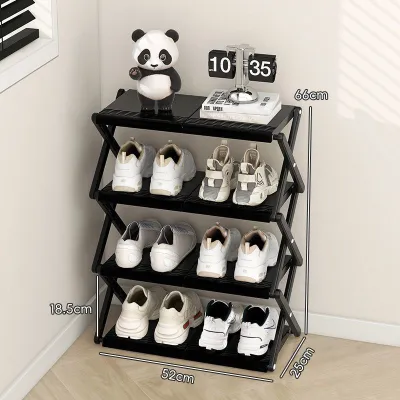
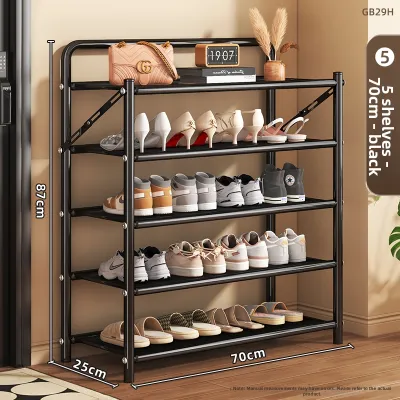
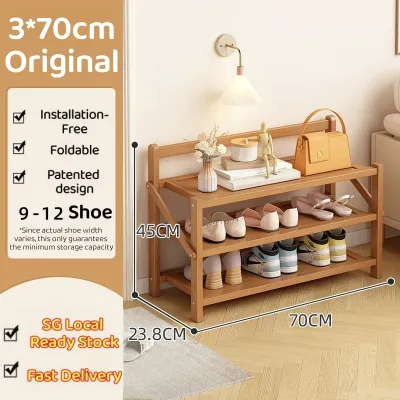
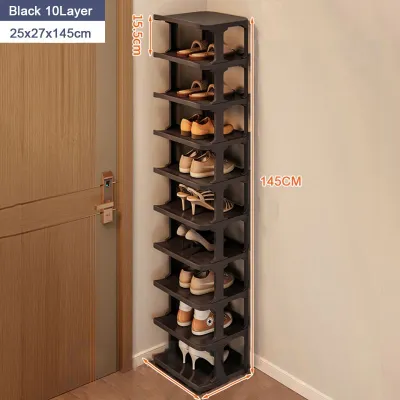
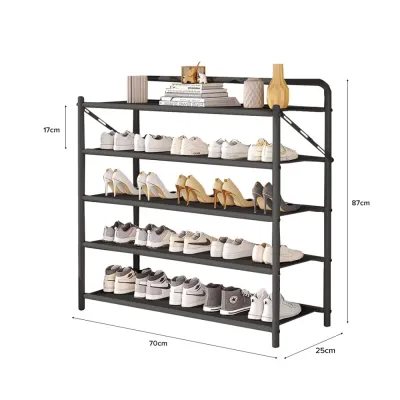
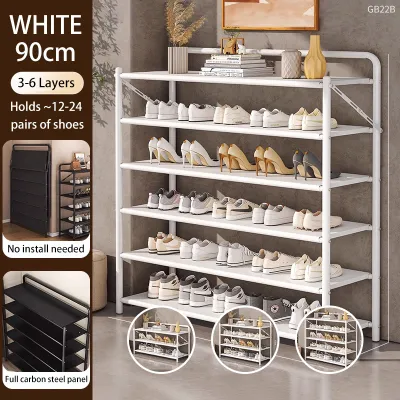
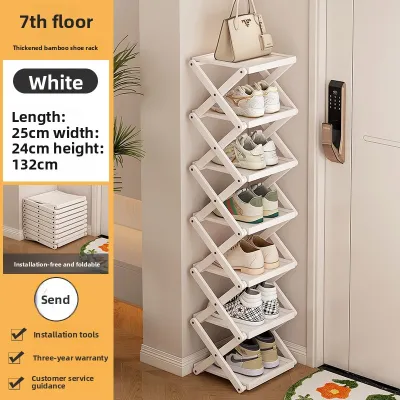
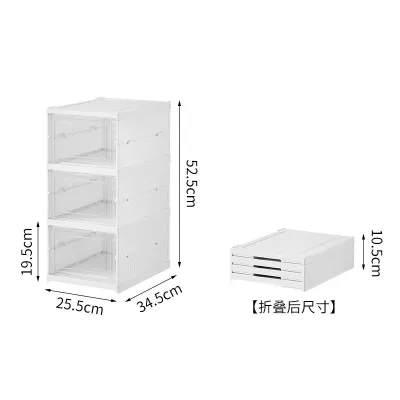
Prices are valid at publication and may change. Please refer to the product page for the latest price.
Once the physical space is mapped, assess your footwear collection. Count your shoes and group them by type, as sneakers, flats, high heels, and boots all occupy different amounts of physical space. Note how many pairs you need to store immediately, and leave a buffer of about ten to twenty percent for future acquisitions.
Match Rack Dimensions to Your Measured Space
With your measurements in hand, compare the base footprint of any potential foldable shoe rack against your available floor space. The rack’s base must sit completely flat on the closet floor. If your closet floor has a raised lip, uneven flooring, or carpet-to-tile transitions, verify how the rack’s feet will rest. A flush fit ensures the unit remains stable and does not wobble when loaded.

Foldable shoe racks are highly valued for their portability, but they must function perfectly when fully deployed. Check the manufacturer’s specifications for both the folded and fully expanded dimensions. The expanded width and depth must fit comfortably within your measured boundaries. Additionally, verify the clearance required to actually fold or unfold the unit inside the closet; some designs require extra overhead or lateral space during the transition phase. If you plan to move the rack between rooms, ensure the folded dimensions allow for easy passage through your doorways and lift access.
Multi-tier designs utilize vertical space efficiently, but they must not interfere with existing closet infrastructure. Ensure the top tier sits at least fifteen to twenty centimeters below any hanging clothes or permanent shelves. This gap allows you to place and retrieve shoes from the top shelf without scraping your hands or disturbing other items.
Evaluate Capacity and Tier Configurations
Do not rely solely on generic capacity claims like “holds twelve pairs.” Instead, calculate the actual capacity using the rack’s specified width. A standard pair of adult shoes typically requires twenty to twenty-five centimeters of horizontal space. Divide the rack’s internal width by this measurement to determine how many pairs will realistically fit on a single tier.
Because foldable frames rely on joints and hinges, they can be vulnerable to overloading. Check the manufacturer’s specified weight capacity per tier and for the entire unit. Heavy footwear, such as work boots or leather dress shoes, can quickly exceed these limits. Distribute weight evenly, placing the heaviest pairs on the bottom tier to maintain a low center of gravity and ensure structural stability.
Standard flat tiers work well for low-profile shoes like flats and sneakers. However, if your collection includes ankle boots, high heels, or high-top sneakers, look for models that offer adjustable tier spacing or removable shelves. This flexibility prevents you from having to squeeze taller shoes into tight spaces, which can damage the footwear or strain the rack’s structure.
Check Stability and Installation Requirements
The integrity of a foldable shoe rack depends entirely on its hardware. Inspect the joint mechanisms, hinges, and locking pins. High-quality locking systems prevent the rack from accidentally collapsing under a heavy load or when bumped. Ensure all moving parts operate smoothly and lock securely into place before loading any shoes.
Taller foldable units with multiple tiers can become top-heavy, especially when placed on carpeted closet floors. Check if the manufacturer recommends or includes wall-anchoring hardware. If you are installing a tall rack, securing it to the wall studs or using appropriate drywall anchors is a crucial step to prevent accidental tipping.
Look for units equipped with rubber floor protection pads or adjustable leveling feet. In Singapore’s humid climate, protecting closet floors from scratches and moisture is essential. Leveling feet are particularly useful for compensating for slightly uneven closet floors, ensuring the rack remains perfectly upright and stable.
Common Sizing Mistakes to Avoid
Many buyers measure only the rack’s frame depth, forgetting that shoes often overhang the front and back edges of the tiers. If a rack has a shallow depth of twenty-five centimeters, a larger shoe will stick out, potentially preventing your closet door from closing. Always add a few centimeters of clearance to your depth measurements to accommodate this overhang.
Do not assume every tier can hold the maximum number of shoes. Bulky running shoes, wide-toed boots, and high heels take up significantly more lateral and vertical space than flat sandals. Account for these variations when planning your layout.
Finally, closets often contain hidden obstacles like baseboard heaters, electrical outlets, light switches, or ventilation grates. Placing a shoe rack directly in front of these features can block access or create safety hazards. Always map out these elements before finalizing your rack’s dimensions.
Frequently Asked Questions (FAQ)
Can I use a foldable shoe rack outside the closet?
Yes, but you must verify the manufacturer’s guidelines regarding material suitability. For example, if you plan to place the rack in a high-humidity area like a balcony or near a bathroom entryway, ensure the material is rated to resist moisture. Additionally, ensure the floor surface is completely level to maintain the structural integrity of the folding mechanisms and prevent the unit from tipping.
How do I measure shoe depth for a foldable rack?
To find the minimum depth required, select the longest pair of shoes in your collection. Measure from the backmost point of the heel to the very tip of the toe. When comparing this to a shoe rack’s specifications, ensure the tier depth is close to this measurement. Adding a small clearance margin of two to three centimeters will prevent the shoes from catching on the tier above or pressing against the closet door.
Community discussion
Share your experience or ask a question. Comments are reviewed before publication.