
Finding the right firmness for a foldable mattress depends on balancing your primary sleeping position, body weight, and the physical constraints of portable foam designs. Because foldable mattresses lack traditional spring support systems, selecting the correct firmness is critical to prevent bottoming out against the floor while ensuring proper spinal alignment. By evaluating your personal sleep profile and understanding how foam density behaves under pressure, you can select a portable bed that offers both comfort and reliable support.
Quick Diagnostic: Matching Firmness to Your Sleep Profile
Your ideal mattress firmness is primarily determined by how your body weight is distributed across the sleeping surface. Side sleepers and individuals with a lighter build generally require softer surfaces. A softer foam allows the shoulders and hips to sink slightly, contouring to the body’s natural curves and relieving pressure on sensitive joints.
Conversely, back and stomach sleepers, along with heavier individuals, typically require a medium-firm to firm support profile. This firmer surface prevents the heavier midsection of the body from sinking too deeply, which is essential for maintaining neutral spinal alignment throughout the night.
Products mentioned in this guide

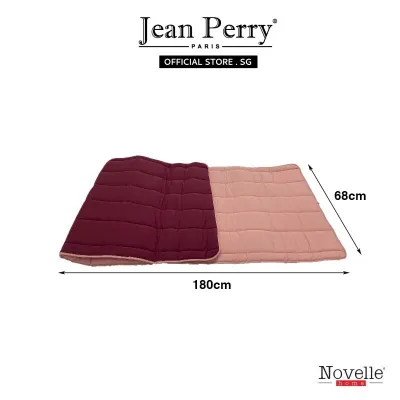
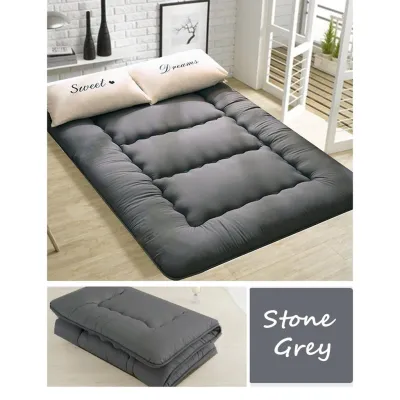

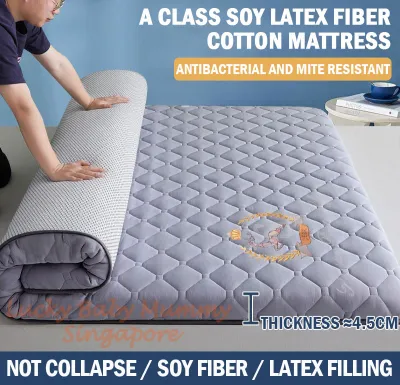
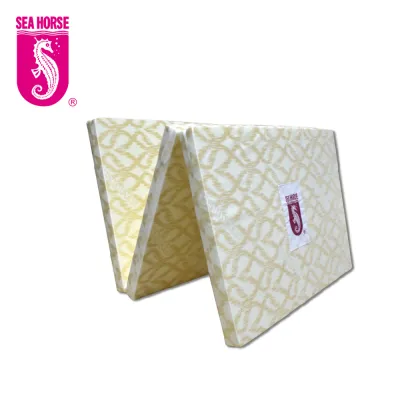

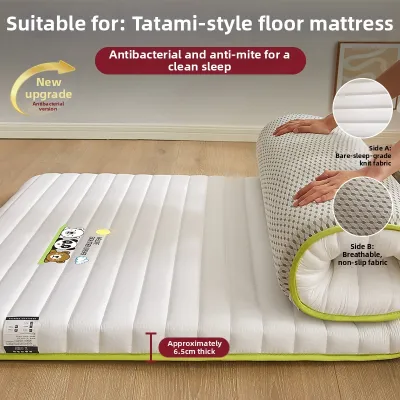
Prices are valid at publication and may change. Please refer to the product page for the latest price.
For combination sleepers who frequently change positions, a medium-firm feel is often the most practical choice. This middle-ground option provides enough surface give to cushion the shoulders when side sleeping, while offering sufficient resistance to support the lower back when rolling onto the back or stomach.
Assess Your Primary Sleeping Position
Your dominant sleeping posture dictates where pressure points form and how your spine aligns. Side sleeping is the most common position, but it places concentrated pressure on the shoulders and hips. To prevent morning stiffness, a side sleeper needs a foldable mattress with enough surface plushness to absorb these sharp pressure points. If the mattress is too firm, the spine will bow sideways, leading to chronic shoulder and lower back discomfort.

Back sleeping requires a highly balanced support system. When you lie on your back, your mattress must support the natural lumbar curve of your lower spine. A mattress that is too soft allows the pelvis to sink lower than the shoulders, flattening the lumbar curve and straining the surrounding muscles. A medium-firm surface keeps the hips in a neutral position while still cushioning the shoulder blades and calves.
Stomach sleeping is the most demanding position in terms of firmness. Sleeping on your stomach naturally coaxes the lower back into an exaggerated arch. If the mattress is too soft, your hips sink deeply into the foam, severely straining the lower back and neck. Stomach sleepers should almost always opt for a firm foldable mattress to keep the body as flat and aligned as possible.
Combination sleepers need to prioritize ease of movement. If a mattress is too soft or uses slow-moving memory foam, you may feel “stuck” in a pocket, making it physically tiring to turn over. A medium-firm mattress with quick-responding foam allows you to transition between positions effortlessly without disrupting your sleep cycle.
Factor in Your Body Weight and Build
Body weight directly influences how deeply you compress the foam layers of a foldable mattress. Lighter individuals, typically weighing under 60 kg, exert less downward force on the mattress. If a lighter person sleeps on a standard firm mattress, they will not compress the foam enough to activate its contouring properties. The mattress will feel exceptionally hard, leading to poor pressure relief and potential joint soreness.
Average-weight individuals, falling between 60 kg and 80 kg, generally experience mattress firmness exactly as rated by the manufacturer. A medium-firm rating will feel truly medium-firm to this group, providing a balanced blend of surface cushioning and deep structural support.
Heavier individuals, particularly those weighing over 80 kg, require a firmer support profile or a thicker mattress design. Because foldable mattresses are typically thinner than standard mattresses, heavier sleepers run a high risk of compressing the foam completely and hitting the hard floor beneath. Opting for high-density foam or a thicker profile helps distribute weight evenly and prevents this uncomfortable bottoming-out effect.
Before making a purchase, always check the manufacturer’s weight limits and foam density specifications. High-density foam, measured in kilograms per cubic metre, indicates how tightly packed the foam cells are. A higher density generally translates to better weight distribution, improved durability, and a more consistent firmness level over time, even under heavier loads.
Evaluate Comfort Preferences and Physical Needs
It is important to distinguish between the “support” of a mattress and its surface “feel.” Support refers to the mattress’s ability to keep your spine in a neutral alignment, which is governed by the core layers of the foam. Feel, on the other hand, is the immediate sensation of softness or hardness when you first lie down, which is determined by the top comfort layers and the cover fabric. You can have a mattress that feels soft to the touch but still provides excellent deep support.
If you suffer from chronic joint pain, back stiffness, or mobility issues, your firmness choice becomes even more critical. A mattress that is too soft makes it incredibly difficult to roll over or stand up, especially since foldable mattresses are often placed directly on the floor. A slightly firmer surface provides the leverage needed to push yourself up and get out of bed comfortably.
Temperature regulation is another factor influenced by mattress firmness. Softer mattresses wrap around your body, increasing the surface area of contact and trapping body heat. In warm and humid climates, such as Singapore, deep sinkage can lead to an uncomfortably warm sleeping environment. Choosing a firmer mattress keeps you positioned on top of the surface, allowing air to circulate more freely around your body and helping you stay cool throughout the night.
Adjust for Foldable Mattress Structures and Use Cases
Foldable mattresses differ significantly from traditional mattresses because they rely entirely on solid foam cores without the support of steel spring coils. This lack of springs means the mattress has very little bounce, and the overall support is entirely dependent on the thickness and quality of the foam. You must adjust your firmness expectations accordingly, as foam-only support feels distinctly different from a hybrid or innerspring bed.
Thinner foldable options, such as compact tri-fold designs measuring 5 cm to 8 cm in thickness, will inherently feel firmer than thicker models. With less material available to absorb your weight, the hard floor underneath acts as a secondary support layer. If you prefer a softer feel, you will need to look for a foldable mattress that is at least 10 cm to 15 cm thick to allow room for comfort layers to compress.
When selecting a firmness, also consider the folding mechanism and hinge design. Ensure that the joints where the mattress folds do not align directly with your main pressure points, such as your hips. A poorly placed hinge on a mattress that is too soft can cause you to sink directly into the gap, leading to severe discomfort. Additionally, verify that a thicker, firmer mattress can still fold compactly enough to fit into your designated storage space, wardrobe, or car boot.
Finally, match the firmness to your primary use case. If the mattress is intended for temporary guest use, a medium-firm profile is the safest choice, as it accommodates the widest variety of sleeping styles. For outdoor camping or floor sleeping, a firmer mattress is highly recommended. A firm, high-density foam base provides better insulation from cold, hard ground surfaces and prevents moisture from seeping through the bottom cover.
Frequently Asked Questions (FAQ)
Can I make a foldable mattress feel softer or firmer after buying it?
Yes, you can easily adjust the surface feel of your foldable mattress using reversible methods. If your mattress feels too firm, adding a removable mattress topper made of memory foam or latex can instantly introduce plushness and pressure relief. This is a highly cost-effective way to customize the bed for side sleepers without replacing the entire unit.
If the mattress feels too soft, placing a solid plywood board underneath the mattress can help. This prevents the foam from sagging into slatted bed frames and provides a rigid foundation that increases the overall sensation of firmness. Additionally, check if your specific model features a dual-sided design, as some foldable mattresses are engineered with a firm side on the bottom and a softer side on top.
Is a foldable mattress firm enough for daily, long-term sleeping?
While foldable mattresses are excellent for temporary use, most standard models are not designed for daily, long-term sleeping. For everyday use, you must verify that the mattress features high-density foam (typically above 30 kg/m³) and a minimum thickness of 10 cm to 15 cm to ensure your spine remains properly supported over time.
Monitor the mattress regularly for physical signs of wear, such as permanent body indentations, sagging in the middle section, or a noticeable loss of support where you feel the floor beneath you. If you begin to experience persistent morning back pain, or if the foam fails to recover its original shape after use, it is a clear indication that you should transition to a traditional, non-folding mattress for your long-term ergonomic health.
Community discussion
Share your experience or ask a question. Comments are reviewed before publication.