
To find the right foam mattress firmness, you must balance your body weight with your primary sleeping position. Heavy sleepers and stomach sleepers require firmer foam to prevent spinal misalignment, while lighter individuals and side sleepers need softer, more contouring foam to relieve pressure on the shoulders and hips. Getting this balance right is essential for deep, restorative sleep, especially in Singapore’s warm climate where ambient temperature directly influences how foam behaves.
Before making a purchase, it is also practical to measure your bedroom space and check lift or doorway access in your apartment. While many modern foam models are delivered compressed in a box, some high-density options arrive flat and require adequate clearance for delivery teams.
Understanding Foam Mattress Firmness Scales
When shopping for a foam mattress, you will frequently encounter a standard 1-to-10 firmness scale. This scale is an industry-wide tool designed to help consumers gauge how a mattress feels when they first lie down. A rating of 1 represents an ultra-plush surface with almost no resistance, while a 10 signifies an incredibly hard, board-like surface. The vast majority of foam mattresses on the market fall between a 3 (soft) and an 8 (firm), as these levels accommodate most human bodies.
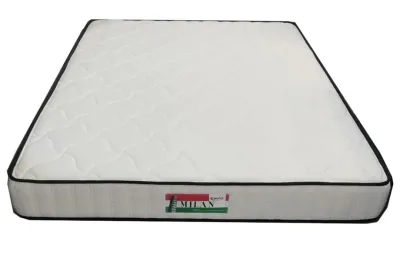
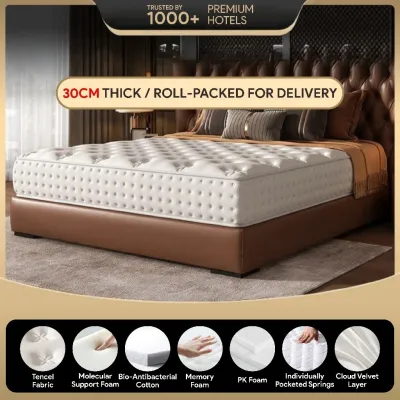
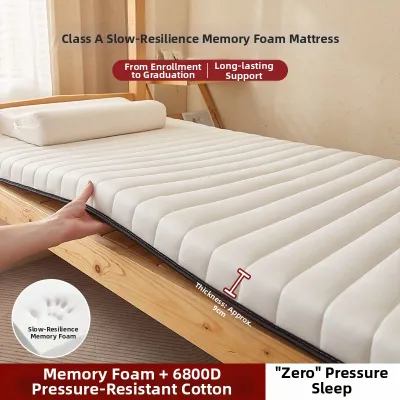
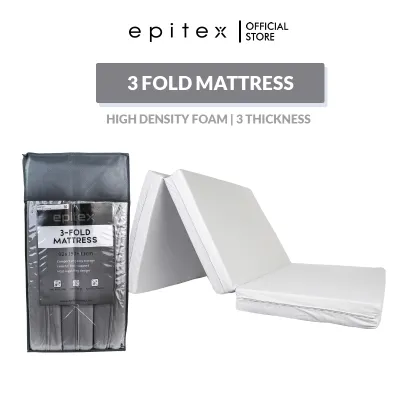
Products mentioned in this guide
![[1-2 day delivery] Foldable Foam Mattress 3-Fold Mattress](https://img.lazcdn.com/g/ff/kf/Se38f308a460b4ba3aef73a3da6703c621.jpg_400x400q80.jpg_.webp)

Prices are valid at publication and may change. Please refer to the product page for the latest price.
Behind this consumer-facing scale lies a more technical measurement known as Indentation Load Deflection (ILD). ILD measures the number of pounds of pressure required to compress a foam sample by 25 percent of its original thickness. While manufacturers use ILD during production and quality control, you do not need to memorize these technical numbers. The simplified 1-to-10 scale remains the most practical reference point for comparing different brands and models.
It is vital to distinguish between initial surface firmness and deep structural support. Firmness refers to the immediate feel of the comfort layers—the top few centimeters of foam that contour to your body. Support, on the other hand, comes from the high-density base core of the mattress, which keeps your spine in a neutral alignment. A mattress can have a plush, soft comfort layer while still providing excellent structural support underneath, preventing your body from sinking into a harmful posture.
Evaluating Your Primary Sleeping Position
Your dominant sleeping position dictates where your body exerts the most pressure on the mattress. To sleep comfortably without waking up sore, your spine must remain in a neutral, straight line from your neck to your tailbone.

Side Sleepers
Side sleeping is highly popular, but it places concentrated pressure on the narrowest parts of your body: the shoulders and the hips. If a foam mattress is too firm, these areas will experience high resistance, cutting off circulation and causing you to toss and turn.
Side sleepers generally require a plush to medium mattress, typically rated 3 to 5 on the firmness scale. This range allows the foam to contour deeply around the shoulders and hips, filling the gap at the waist and keeping the spine horizontally aligned.
Back Sleepers
Back sleepers distribute their body weight more evenly across the mattress surface, but they face a different challenge: maintaining the natural curve of the spine. If the mattress is too soft, the heavy pelvic area will sink too deeply, flattening the lumbar curve and straining the lower back muscles.
Back sleepers typically benefit most from a medium to medium-firm feel, rated 5 to 7. This firmness provides enough surface contouring to cushion the glutes while offering a stable foundation that keeps the lower back properly supported.
Stomach Sleepers
Sleeping on your stomach is the most demanding position for your spine. Without sufficient resistance, gravity pulls your midsection down into the mattress, causing your lower back to arch excessively. This unnatural bowing is a primary cause of morning lower back stiffness and chronic discomfort.
Stomach sleepers require a firmer surface, rated 7 to 8, to keep the hips and pelvis elevated. A firm foam mattress ensures that your body remains on a flat, neutral plane throughout the night.
Combination Sleepers
If you frequently rotate between your side, back, and stomach during the night, you are a combination sleeper. You need a mattress that is versatile enough to accommodate different pressure points while allowing easy movement.
A medium to medium-firm foam mattress, rated 5 to 6, serves as an excellent compromise. It offers enough surface give for side sleeping while providing the responsive support needed when you roll onto your back or stomach.
Factoring in Your Body Weight
Your body weight is the physical force that interacts directly with the foam layers. The heavier you are, the deeper you will sink into the mattress, which alters your perception of how firm the bed actually is.
Lightweight Sleepers (Typically Under 60 kg)
If you weigh under 60 kg, your body does not exert enough downward force to deeply compress standard foam layers. Because you float on top of the comfort layers rather than sinking into them, a mattress rated as “medium” by the manufacturer will likely feel “firm” to you.
To achieve proper pressure relief and contouring, lightweight sleepers often need to select a mattress that is half a point to a full point softer than what is typically recommended for their sleep position. A softer comfort layer ensures the foam actually conforms to your shape.
Average-Weight Sleepers (Typically 60 kg to 100 kg)
Sleepers within the 60 kg to 100 kg range generally experience foam mattresses exactly as advertised. If a manufacturer labels a mattress as a “medium” (around 5 or 6 on the scale), it will feel like a true medium to you.
Your body mass is sufficient to compress the comfort layers for excellent pressure relief without bottoming out into the firmer support core. You can confidently use standard firmness recommendations based on your primary sleeping position as your primary buying guide.
Heavyweight Sleepers (Typically Over 100 kg)
If you weigh over 100 kg, your body mass will compress the foam layers significantly deeper than average. A mattress rated as “medium” will likely feel “soft” or even unsupportive, as you quickly sink past the comfort layers and rest directly on the hard base foam.
Heavyweight sleepers require thicker, firmer foam profiles, rated 7 to 8, and high-density base foams to prevent bottoming out. Opting for a firmer mattress ensures that your spine remains aligned and that the mattress does not degrade prematurely under heavier loads.
The Firmness Matrix: Matching Weight and Position
To make a confident decision, you must combine your sleeping position and body weight into a single diagnostic framework. The matrix below outlines the recommended firmness ranges based on these two key factors.
| Sleeping Position | Lightweight (Under 60 kg) | Average Weight (60 kg to 100 kg) | Heavyweight (Over 100 kg) |
|---|---|---|---|
| Side Sleeper | Soft to Medium-Soft (3 – 4) | Medium-Soft to Medium (4 – 5) | Medium to Medium-Firm (5 – 6) |
| Back Sleeper | Medium-Soft to Medium (4 – 5) | Medium to Medium-Firm (5 – 6) | Medium-Firm to Firm (6 – 8) |
| Stomach Sleeper | Medium to Medium-Firm (5 – 6) | Medium-Firm to Firm (6 – 7) | Firm to Extra-Firm (7 – 9) |
| Combination Sleeper | Medium-Soft to Medium (4 – 5) | Medium to Medium-Firm (5 – 6) | Medium-Firm to Firm (6 – 7) |
While this matrix provides a reliable baseline, individual comfort remains highly subjective. In Singapore’s tropical climate, high humidity and ambient room temperatures can make certain temperature-sensitive memory foams feel slightly softer than they would in a cooler environment. If you sleep without air conditioning, you may want to opt for a slightly firmer foam to offset this natural softening effect. Conversely, if you keep your bedroom air-conditioned to a cool temperature, the foam will retain more of its structural firmness.
Additionally, if you suffer from chronic back pain, joint issues, or specific medical conditions, these general consumer guidelines should not replace professional advice. It is highly recommended to consult a healthcare professional or physiotherapist before finalizing your purchase, as they can provide specific recommendations tailored to your musculoskeletal health.
Verifying Your Choice and Testing the Mattress
Because your body requires time to adapt to a new sleeping surface, a quick five-minute trial in a showroom is rarely enough to judge a mattress accurately. This is why sleep trials are a crucial factor when purchasing a foam mattress.
Many modern mattress brands in Singapore now offer home sleep trials, typically ranging from 100 to 120 nights. These trials allow you to sleep on the mattress in your own home, under your normal sleeping conditions. It can take up to three to four weeks for your muscles and ligaments to adjust to a new support structure, especially if you are transitioning from a sagging spring mattress to a contouring foam model. During this initial break-in period, the foam cells will also open up slightly, making the mattress feel a bit softer and more responsive than it did on night one.
During your home trial, pay close attention to how your body feels when you wake up. Persistent morning stiffness, lower back aches, or a feeling of being “stuck” in the foam when trying to turn over are clear indicators that the firmness level is incorrect. Additionally, check the edge support of the mattress; if you feel like you are rolling off the bed when sleeping near the edge, you may need a model with reinforced edge foam.
Before making your purchase, carefully read the manufacturer’s return policy. Ensure you understand any potential return fees, whether you need to keep the original packaging, and how the mattress will be collected. Finally, review the warranty terms to confirm what level of permanent foam sagging (usually measured in millimeters) is covered over the lifetime of the mattress.
Frequently Asked Questions (FAQ)
Can I change the firmness of my foam mattress after buying it?
Yes, you can adjust the surface feel of your mattress by using a mattress topper. Adding a plush memory foam or latex topper is an excellent, cost-effective way to make a mattress that is too firm feel softer and more pressure-relieving. However, it is virtually impossible to make a mattress that is too soft feel firmer. A topper cannot fix a sagging or overly soft support core; it will simply sink along with the layers beneath it, meaning a replacement is usually necessary in those cases.
Does a firmer foam mattress last longer than a softer one?
Not necessarily. The longevity of a foam mattress is determined by the density of the foam (measured in kilograms per cubic meter, or kg/m³), rather than its subjective firmness rating. A high-density soft foam mattress will resist sagging and maintain its shape far longer than a low-density firm foam mattress. When shopping, look for high-density base support foams, as these layers dictate the overall durability and structural integrity of the bed over time.
Is memory foam better than polyfoam for pressure relief?
Memory foam generally excels at localized pressure relief because it reacts to body heat and weight, allowing it to contour precisely to your unique shape. This slow-response feel is excellent for soothing aching joints. Polyurethane foam (polyfoam), on the other hand, responds much faster and offers a more buoyant, springy feel. Both materials can be engineered to any firmness level, but memory foam is typically preferred for deep contouring, while polyfoam is ideal if you dislike the feeling of sinking into the bed.
Community discussion
Share your experience or ask a question. Comments are reviewed before publication.