
Selecting the right firmness for a 180×80 single mattress requires balancing your physical build, sleep posture, and the unique spatial limits of this compact size. A 180×80 cm mattress—often referred to as a short or narrow single—offers less surface area than a standard single, meaning your body weight is concentrated over a smaller footprint. To achieve restorative sleep, you must select a firmness level that keeps your spine aligned while preventing you from feeling restricted by the mattress edges.
Match Firmness to Your Primary Sleeping Position
Your sleeping posture is the primary factor in determining how a mattress should cradle your body. Side sleepers require a surface that allows the shoulders and hips to sink sufficiently. Without this localized pressure relief, the spine curves unnaturally, leading to morning stiffness in the upper back and lower joints. A soft to medium-firm mattress typically provides the necessary contouring for these high-pressure areas.
For back sleepers, the goal is to maintain the natural curve of the spine. If the mattress is too soft, the pelvis sinks too deep, straining the lower back. If it is too firm, the mattress fails to fill the gap in the lumbar region, leaving the lower spine unsupported. A medium to medium-firm mattress generally offers the balanced resistance needed to keep the torso level.
Products mentioned in this guide

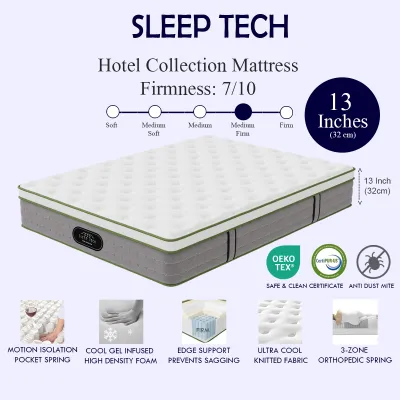
Prices are valid at publication and may change. Please refer to the product page for the latest price.
Stomach sleepers face the greatest risk of spinal misalignment. When sleeping on the stomach, a soft mattress allows the midsection to sag, arching the lower back into an unnatural position. To prevent this hyperextension, stomach sleepers require a firm mattress that keeps the hips and shoulders on a relatively even plane.
Combination sleepers, who rotate through multiple positions, need a responsive mattress that facilitates easy movement. A medium-firm mattress with a resilient comfort layer allows you to turn without feeling stuck in a deep body pocket. This responsiveness ensures that support remains consistent regardless of how many times you shift during the night.
Adjust for Your Body Weight and Build
Body weight directly influences how you perceive mattress firmness. A mattress rated as “medium” by a manufacturer may feel incredibly rigid to a lighter individual and overly soft to a heavier sleeper. Lighter individuals, typically those weighing under 60 kg, do not exert enough force to compress firmer comfort layers. For these sleepers, a softer mattress is often necessary to experience proper contouring and pressure relief.

Conversely, individuals weighing over 90 kg require deeper support to prevent bottoming out against the mattress core. A mattress that is too soft will allow heavier parts of the body to sink excessively, throwing the spine out of alignment. Selecting a firmer mattress or one with a thicker, high-density support core ensures the mattress can withstand greater downward force over time.
The intersection of weight distribution and sleep position is critical when evaluating firmness scales. For example, a heavier side sleeper may need a medium-firm mattress with a thick, plush comfort layer to protect the shoulders while preventing the hips from sinking too deep. A lighter stomach sleeper, on the other hand, might find a medium mattress sufficiently firm to keep their spine neutral.
When shopping for a 180×80 mattress, always check the manufacturer’s specifications for weight capacity limits. Some compact mattresses are designed primarily for children or temporary guest use, featuring thinner profiles and lower weight thresholds. Ensure the internal support structure, whether pocket springs or high-density foam, is rated for your specific weight category.
Address Specific Pain Points and Comfort Preferences
Persistent physical discomfort should guide your final firmness adjustment. If you regularly wake up with shoulder or hip pain, your current sleeping surface is likely too rigid, causing localized pressure build-up. Conversely, lower back stiffness often indicates a lack of core support, suggesting that a firmer transition layer is needed to keep your pelvis elevated.
Because a 180×80 mattress is narrower than a standard single, edge support is exceptionally important. If you tend to sleep near the edge or use the side of the bed for sitting, a mattress with weak edges will make you feel as though you are rolling off. Look for mattresses with reinforced foam perimeters or firmer outer coils to maximize the usable sleep surface.
Motion isolation and ease of movement are also shaped by the comfort layer’s material. Memory foam excels at isolating movement and contouring to the body, but it can make shifting positions more difficult. If you prefer to move freely, a latex or pocket-sprung mattress provides a more buoyant feel while still offering targeted pressure relief.
While adjusting mattress firmness can alleviate minor aches, it is important to recognize the limits of a sleep surface. Persistent, chronic pain that does not improve with different support levels requires professional medical evaluation. A mattress can support spinal alignment, but it cannot cure underlying medical conditions.
Verify 180×80 Dimensions and Physical Constraints
Before finalizing your purchase, you must verify that the 180×80 cm dimensions are compatible with your existing setup. A 180×80 mattress is a non-standard size in many regions, meaning standard single bed frames will be too wide or too long. Measure the internal width and length of your bed frame carefully, ensuring there is only a minimal gap of one to two centimeters on each side.
Consider the physical delivery path into your home. Firmer mattresses, particularly those with thick innerspring systems, cannot be easily bent or compressed. Measure your doorways, stairwells, and lift clearances to ensure the delivery team can navigate the mattress to your bedroom. If access is tight, a roll-packed foam or hybrid mattress may be a more practical option.
Always check the exact product specification sheet rather than relying solely on generic size names. Some manufacturers label 180×80 mattresses as “short singles” or “cabin mattresses,” while others use custom terminology. Confirming the precise metric measurements prevents costly return shipping fees and delivery delays.
Finally, ensure your bed frame’s foundation matches the mattress type. Solid platforms or closely spaced wooden slats (typically less than 7 cm apart) provide the stable base required for heavy pocket-spring or memory foam mattresses. A weak or sagging foundation will compromise the mattress’s firmness and support, rendering even the best-chosen mattress ineffective.
Test, Verify, and Review Trial Policies
Testing a mattress in a showroom requires more than a brief sit on the edge. To get an accurate sense of support, lie down in your primary sleeping position for at least fifteen to twenty minutes. Pay close attention to whether your shoulders and hips feel compressed, and check if your lower back feels supported or suspended in the air.
When researching online, look for customer reviews from individuals with similar body types and sleeping positions. Pay attention to feedback regarding how the firmness holds up after several months of use. Keep in mind that subjective terms like “firm” or “soft” vary widely, so focus on descriptions of spinal alignment and pressure relief.
Because your body needs time to adjust to a new sleep surface, a home sleep trial is invaluable. Review the trial policy carefully to understand the minimum break-in period, which is often around thirty days. Check for potential return fees, such as transportation or restocking charges, which can range from S$50 to S$150 depending on the retailer’s policy.
Lastly, examine the warranty terms to protect your investment. A standard warranty should cover manufacturing defects and premature sagging or indentations deeper than a specified threshold (typically 2.5 cm). Understanding these terms ensures that if the mattress loses its structural integrity prematurely, you are covered for a replacement or repair.
Frequently Asked Questions (FAQ)
Can I adjust the firmness of my current 180×80 mattress?
Yes, you can temporarily alter the surface feel of your mattress by adding a mattress topper. A plush memory foam or latex topper can soften a mattress that feels too rigid, while a high-density foam topper can add a layer of surface tension to a slightly soft bed. However, a topper cannot fix a mattress that is structurally sagging or has broken internal coils. If the core support has degraded, adding a topper will only follow the contour of the sag, failing to resolve spinal misalignment. Ensure any topper you choose matches the exact 180×80 cm dimensions to prevent overhang and maintain proper ventilation.
Is a firmer mattress always better for back support?
No, a firmer mattress is not universally better for back support. While a firm surface prevents the spine from sagging, an excessively rigid mattress can create painful pressure points at the shoulders and hips, forcing the spine into an unnatural alignment. The ideal level of support depends entirely on your body weight and sleeping posture. Medium-firm mattresses are often recommended because they offer a balance of surface contouring and deep structural support. When evaluating a mattress, distinguish between the initial comfort layers, which provide pressure relief, and the deeper support core, which maintains overall spinal alignment.

Community discussion
Share your experience or ask a question. Comments are reviewed before publication.