
Choosing a dunlopillo mattress is a significant investment in your long-term sleep health, but the key to unlocking its benefits lies in selecting the correct firmness. A mattress that is too soft can cause your spine to sag, while one that is too firm can create painful pressure points on your shoulders and hips. To find the right balance, you must evaluate how your sleeping position and body weight interact with the mattress’s structural support and comfort layers.
By taking a systematic approach to your physical build and nightly habits, you can narrow down the ideal firmness level before making a purchase. This guide breaks down the technical differences in mattress construction, analyzes how different sleep postures impact your alignment, and outlines practical steps to verify your choice in the Singapore market.
Understanding Dunlopillo Mattress Firmness Levels and Labels
Mattress firmness is typically measured on a standard industry scale from 1 to 10, where 1 represents an ultra-plush, cloud-like surface and 10 represents an exceptionally hard, rigid surface. Premium brands like Dunlopillo design their collections across a curated range of this scale, usually falling between 3 and 9 to ensure proper orthopedic support. These models are categorized into four primary groups: Plush/Soft (3–4), Medium (5–6), Medium-Firm (7–8), and Firm/Extra Firm (9–10).
Products mentioned in this guide





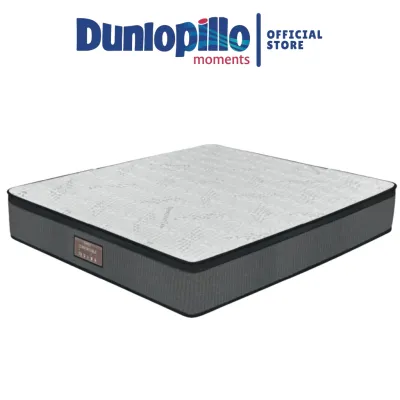


Prices are valid at publication and may change. Please refer to the product page for the latest price.
Because naming conventions and subjective feel can vary between different collections, you should always check the specific product tags, official website descriptions, or retailer specifications for the exact numerical rating of your targeted model. A “medium” mattress in a luxury latex collection may feel slightly different from a “medium” mattress in an pocket-spring hybrid line due to the unique compression characteristics of the materials used.
When evaluating these labels, it is vital to distinguish between support and comfort. Support refers to the mattress core’s ability to keep your spine in a neutral alignment, resisting the downward pull of gravity on your heaviest body parts. Comfort refers to the plushness of the top layers that cushion your skin and joints. A high-quality mattress can have a highly supportive, rigid core while still offering a soft, contouring surface feel.
Diagnosing Your Ideal Firmness by Sleep Position
The primary objective of any bed is to maintain neutral spinal alignment, mimicking your natural standing posture. Your preferred sleeping position dictates which parts of your body require deep cushioning and which parts need rigid resistance to prevent unnatural twisting or bending during the night.

Side Sleepers
Side sleeping places your entire body weight on narrow contact points, specifically the shoulders and hips. To prevent numbness, tingling, and joint pain, side sleepers require a softer to medium firmness level, typically between 3 and 5 on the scale. This level of plushness allows the shoulders and hips to sink sufficiently into the comfort layers, keeping the spine straight. If the mattress is too firm, it pushes back against these joints, forcing the spine to curve upward and causing chronic morning stiffness.
Back and Stomach Sleepers
Back and stomach sleeping require a flatter, more supportive surface to prevent the heavier midsection and pelvis from sinking too deeply. For back sleepers, a medium-firm mattress (6 to 8) supports the natural curve of the lower back while keeping the shoulders and hips level. Stomach sleepers require an even firmer surface (7 to 9) to prevent the pelvis from dipping forward, which can cause hyperextension of the lumbar spine and severe lower back strain.
Combination Sleepers
If you frequently change positions throughout the night, you need a responsive surface that facilitates easy movement. A medium to medium-firm mattress (5 to 7) is ideal, as it offers enough contouring for side sleeping while providing the structural resistance needed for back or stomach sleeping. Dunlopillo’s natural latex is highly resilient, meaning it quickly snaps back to its original shape, making it easier to turn over without feeling “stuck” in a physical depression in the bed.
Adjusting for Body Weight and Physical Build
Firmness is inherently subjective because it depends on how much pressure your body exerts on the comfort layers. Your weight determines how deeply you compress the mattress materials, which directly alters how firm or soft the bed feels to you.
Lightweight sleepers who weigh under 60 kg do not exert enough force to compress firmer mattress layers deeply. A mattress rated as “medium-firm” may feel quite hard and unyielding to a lighter individual. To experience proper pressure relief and contouring, lightweight sleepers typically need to choose a softer model than standard guidelines suggest for their sleeping position.
Average weight sleepers between 60 kg and 100 kg generally experience mattress firmness exactly as advertised. If you fall into this category, you can safely follow the standard recommendations based on your primary sleeping position, as your body will compress the comfort layers sufficiently to engage both the comfort and support systems.
Heavyweight sleepers who weigh over 100 kg exert substantial pressure, causing them to sink deeply through the comfort layers. On a soft mattress, this can lead to a “hammocking” effect where the middle of the body sinks too far, misaligning the spine. Heavyweight sleepers require firmer models (7 to 9) or specialized mattresses featuring high-density support cores to maintain proper alignment. Before purchasing, always verify the maximum weight capacity of the mattress and ensure your bed frame is highly stable and rated to support both the heavy mattress and the sleepers.
Quick Reference: Sleep Position and Weight Matrix
To help you narrow down your options, the following matrix combines sleeping positions and weight categories to provide a baseline firmness recommendation.
| Sleep Position | Lightweight (Under 60 kg) | Average Weight (60–100 kg) | Heavyweight (Over 100 kg) |
|---|---|---|---|
| Side Sleepers | Plush/Soft (3–4) | Soft to Medium (4–5) | Medium-Firm (6–7) |
| Back Sleepers | Medium (5–6) | Medium-Firm (6–7) | Firm (8–9) |
| Stomach Sleepers | Medium-Firm (6–7) | Firm (7–8) | Extra Firm (8–10) |
| Combination Sleepers | Medium (5) | Medium-Firm (6) | Firm (7–8) |
Please note that this matrix serves as a baseline diagnostic tool. Individual comfort preferences, specific physical conditions (such as chronic joint issues), and the exact material composition of your chosen model will influence your final comfort.
How to Test and Verify Your Mattress Choice
Once you have diagnosed your ideal firmness range, you should validate your choice through physical testing and careful evaluation of retail policies.
When testing in a showroom, do not simply sit on the edge of the bed or lie down for a few seconds. Spend at least 10 to 15 minutes lying down in your primary sleep position. Wear loose, comfortable clothing and use a pillow that matches the height and loft of your pillow at home. Pay close attention to whether you feel any pressure on your shoulders or if your lower back feels unsupported.
If you are purchasing online from authorized retailers or official brand stores in Singapore, carefully review the terms of any sleep trial periods, return policies, and warranty conditions. Some retailers offer a comfort exchange period, allowing you to swap the firmness level of your mattress within a specific timeframe if it does not suit your sleeping style after a few weeks of home use.
Because premium latex mattresses are exceptionally heavy and dense, you must also consider physical logistics before finalizing your purchase. Verify that the finished dimensions of your chosen mattress (such as Singapore Standard King: 183 cm x 190 cm, or Queen: 152 cm x 190 cm) match your existing bed frame. Ensure your bed frame is structurally sound, stable, and has a load capacity capable of holding both the mattress and the sleepers. If you use a slatted frame, check that the slat spacing does not exceed 5 to 7 cm to prevent the latex from bulging through, which can ruin the mattress support. Additionally, verify lift access and doorway clearances in your HDB or condominium, as solid latex mattresses cannot be easily folded or compressed to navigate tight corners during delivery.
During the first 30 nights at home, your body will undergo an adjustment period as your muscles adapt to the new support profile. Watch for persistent signs of a poor match, such as waking up with lower back stiffness, feeling unable to roll over easily, or experiencing a lack of edge support when sitting near the border. If you notice actual structural sagging rather than the expected minor settling of the comfort layers, contact the manufacturer or retailer immediately to verify your warranty terms.
Frequently Asked Questions (FAQ)
Can a mattress topper change the firmness of my Dunlopillo mattress?
A high-quality topper can adjust the surface feel of your bed, such as adding a plush layer to a mattress that feels slightly too firm for side sleeping. However, a topper is only a surface-level modification. It cannot fix a mattress with a sagging, degraded, or fundamentally unsupportive core. If the base mattress has lost its structural integrity, adding a topper will not restore proper spinal support.
Is a firmer Dunlopillo mattress always better for back pain?
No. While a supportive mattress is essential for spinal alignment, an excessively firm mattress can actually worsen back pain by creating gaps between your body and the bed, failing to support the natural curve of your lumbar spine. It can also create painful pressure points on your shoulders and hips. For chronic back pain, it is always best to consult a healthcare professional. Generally, research and sleep experts suggest that a medium-firm mattress offers the optimal balance of spinal support and pressure-relieving comfort for the majority of sleepers.
Community discussion
Share your experience or ask a question. Comments are reviewed before publication.