
Choosing the right drawer slides—often referred to as sliders—depends on identifying your current mounting style, understanding the physical dimensions of your drawer box, and selecting a mechanism that matches your load requirements. Whether you are replacing a broken runner in a kitchen cabinet or upgrading a wardrobe drawer in Singapore, matching the exact physical specifications of your existing hardware is crucial for a smooth, lasting repair.
By identifying whether you have side-mount, under-mount, or center-mount hardware, and verifying key measurements like slide length and side clearance, you can ensure a seamless replacement without structural modifications. Taking the time to evaluate these details before purchasing replacement parts prevents alignment issues and ensures your drawers glide smoothly for years to come.
Identifying Your Current Drawer Slide Type
To find the correct replacement sliders, you must first identify how your existing hardware is mounted and how it operates. Mismatched mounting styles or mechanisms will prevent the drawer from fitting back into the cabinet frame.
Products mentioned in this guide
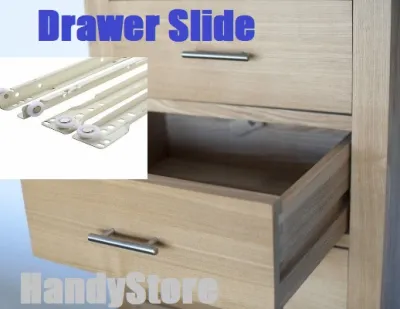
Prices are valid at publication and may change. Please refer to the product page for the latest price.
Mounting Styles: Side, Under, and Center
Side-mount slides attach directly to the left and right sides of the drawer box and the cabinet interior walls. When you pull the drawer out, the metal tracks are fully visible on both sides, making them easy to identify, measure, and replace.
Under-mount slides are installed underneath the drawer box, attaching to the bottom sides of the frame to remain hidden from view. Because they are concealed, they offer a clean aesthetic and maximize the visible width of the drawer, but they require specific drawer box construction, including a recessed bottom and precise rear notch cutouts.
Center-mount slides feature a single track running directly down the middle of the drawer’s underside. This style is frequently found in older, antique, or lighter-duty furniture, such as bedroom dressers. While simple to install, they offer less lateral stability than dual-side systems and are generally reserved for smaller drawers holding lightweight items.
Mechanisms: Roller vs. Ball-Bearing
Roller slides, or epoxy slides, use nylon or plastic wheels rolling along a painted steel track. These systems are common in budget-friendly furniture because they are inexpensive and simple to install. However, they generally support lighter loads and may feel less smooth or develop a noticeable wobble over time as the plastic wheels wear down.
Ball-bearing slides utilize rows of small steel balls housed within a metal track to reduce friction. This design provides a remarkably smooth, quiet glide and can handle significantly heavier weight loads than standard roller wheels, making them the modern standard for kitchen drawers and office filing cabinets.
To determine your current mechanism, open the drawer fully and inspect the track. A simple painted track with a visible plastic wheel at the front indicates a roller slide. A telescoping metal track containing tiny steel balls inside the rails indicates a ball-bearing slide.
Decoding the Specs That Actually Matter
When browsing replacement hardware, technical specifications can easily become confusing. Focusing on four critical dimensions and ratings will help you select a slide that matches both your furniture’s structure and your daily storage needs.

Slide Length
The length of your replacement slide must match the physical depth of the drawer box itself, not the overall cabinet depth. A slide that is too long prevents the drawer from closing completely, while one that is too short reduces stability and limits rear access.
Load Capacity
Manufacturers rate drawer slides based on static (stationary) and dynamic (moving) weight limits. For household applications, estimate the total weight of the drawer box plus its typical contents—such as heavy pots—and select a dynamic rating that comfortably exceeds this estimate.
Extension Type
Extension determines how much of the drawer interior is exposed. Partial extension slides keep the rear portion of the drawer inside the cabinet. Full extension slides allow the drawer box to pull out completely, offering total visibility. Over-travel slides extend even further, which is useful if thick overhanging countertops or decorative trim might block access.
Side Clearance
Side clearance is the critical gap required between the drawer box and the cabinet opening. Side-mount slides typically require a specific clearance (often around 12.7 mm or 1/2 inch per side), while under-mount slides have different spatial requirements. Always check the manufacturer’s spec sheet for exact clearance numbers before purchasing.
How to Measure for an Exact Replacement
Taking precise measurements is the most critical step in securing a replacement slide that fits without binding. Do not rely on guesswork; instead, follow a systematic measuring process using a reliable tape measure.
Measuring the Drawer Box
Remove the drawer and measure the exact length, width, and height of the wooden box itself, excluding the decorative drawer front face. The box length determines your target slide length, as a mismatched size will prevent the drawer from functioning properly.
Measuring the Cabinet Opening
Measure the interior height and width of the cabinet space where the drawer sits to verify there is enough room for the new slides and required clearances. Subtracting the drawer box width from the cabinet opening width reveals your available side clearance, which must match the specifications of your new slides.
Inspecting the Old Slide
Safely disconnect the existing slide, using the release levers if applicable, and measure its length from end to end. Look for any stamped manufacturer names, model numbers, or spec labels on the metal track to help find an exact match.
Documenting the Setup
Take clear photos of the mounting points, the back of the drawer, and the cabinet interior before purchasing. These visual references are incredibly helpful when consulting with hardware suppliers or during reassembly.
Pre-Installation Compatibility and Safety Checks
Before screwing your new slides into place, you must evaluate the structural integrity of your furniture. Failing to check these conditions can lead to loose screws, misaligned tracks, or permanent damage to your cabinetry.
Cabinet Material Verification
Particleboard or MDF cabinets have weaker screw-holding power than solid wood or plywood. Check if the existing screw holes are stripped or enlarged; if so, plan to repair them using wood filler or wooden dowels, or use slightly larger gauge wood screws as recommended by the manufacturer.
Obstruction Checks
Look inside the cabinet cavity for hidden obstacles like hinge mechanisms, plumbing pipes, or adjacent drawer hardware that could block the new slide’s path. Ensure a wider or deeper replacement slide will not collide with these internal components.
When to Stop and Seek Help
Establish clear boundaries before starting. If the cabinet structure is damaged, the drawer box is warped, or upgrading to heavy-duty slides requires structural reinforcement that you cannot safely perform, stop and consult a qualified carpenter or furniture repair professional.
Frequently Asked Questions (FAQ)
Can I upgrade my existing roller slides to ball-bearing slides?
Yes, upgrading is often possible, but the side clearance and drawer box dimensions must exactly match the requirements of the new ball-bearing slides. Keep in mind that under-mount ball-bearing slides usually require a completely new drawer box with specific bottom recesses and rear notches that standard drawers lack.
Is it worth installing soft-close mechanisms on old cabinets?
Installing soft-close slides is a highly rewarding upgrade that prevents slamming and reduces wear on the cabinet frame. However, the cabinet carcass must be structurally sound and perfectly square; if the frame is warped or tilted, the soft-close mechanism may bind or fail to engage properly.
Why does my new drawer slide feel stiff or get stuck?
A newly installed slide that feels stiff or gets stuck is usually caused by uneven mounting, incorrect side clearance, or mounting screws protruding into the track path. Verify that the tracks are perfectly level, double-check your side clearance measurements, and ensure all screws are driven flush with the slide surface.
Community discussion
Share your experience or ask a question. Comments are reviewed before publication.