
Choosing the right dormitory mattress firmness requires balancing your primary sleeping position with your body weight, all while working within the physical limits of a student room. Side sleepers generally require a softer surface to cushion the shoulders and hips, back sleepers need a medium-firm balance to support the spine, and stomach sleepers require a firm surface to prevent the hips from sinking. Your body weight acts as the final modifier, determining how deeply you compress the comfort layers and whether you need to adjust your target firmness up or down.
Check Your Dormitory Bed Frame Constraints First
Before ordering any mattress, you must verify the physical dimensions of the bed frame provided by your dormitory. Standard sizes can vary slightly between institutions, and even a discrepancy of a few centimeters can prevent a mattress from laying flat. Use a physical measuring tape to record the inner length, width, and depth of the bed frame recess rather than relying solely on listed room specifications.
For those assigned to bunk beds or lofted setups, safety rail height is a critical limiting factor. Safety standards typically require a minimum clearance between the top of the mattress and the upper edge of the guardrail to prevent accidental falls. Measure this distance carefully to determine the maximum allowable mattress thickness, which often restricts you to profiles of 15 centimeters or less.
Products mentioned in this guide

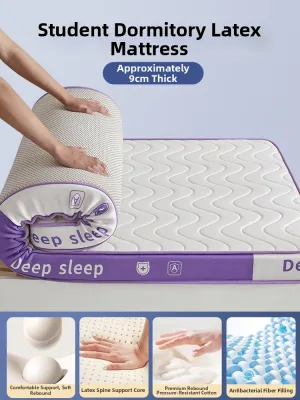
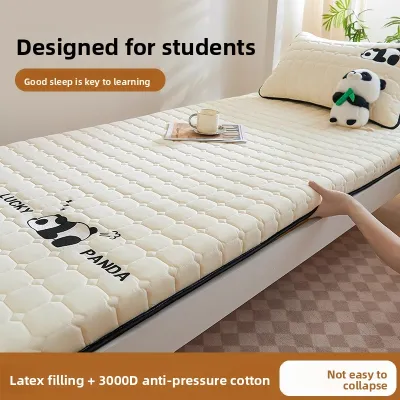




Prices are valid at publication and may change. Please refer to the product page for the latest price.
The style of the bed base also directly influences how firm your mattress will feel. A solid wooden platform or a metal pan base offers zero give, which naturally makes any mattress placed on top feel slightly firmer. Conversely, a slatted base introduces a small amount of flex, but wide gaps between slats can cause certain mattress materials to sag over time, requiring you to check if a bunkie board is needed.
Identify Your Primary Sleeping Position and Body Weight
Your sleeping position dictates where your body concentrates pressure against the mattress surface throughout the night. When you lie down, gravity pulls your heaviest zones—typically the pelvis and shoulders—downward, while your spine requires continuous support to maintain its natural alignment. Misalignment in these areas often leads to morning stiffness and disrupted sleep cycles.

Body weight is the primary force that determines how deeply you sink into the comfort layers of a mattress. A lighter individual exerts less downward force, meaning they primarily experience the top comfort layers and may find standard mattresses feel firmer than advertised. Conversely, a heavier individual compresses these layers more deeply, requiring a robust support core to prevent them from bottoming out against the rigid bed base.
To determine your dominant sleeping position, observe the posture you naturally assume when falling asleep and the position you find yourself in upon waking. If you frequently wake up on your side with your arm tucked under your pillow, your shoulders and hips are your primary pressure points. If you wake up flat on your back or stomach, your support needs shift toward keeping your torso level and preventing your midsection from sagging.
Match Firmness Levels to Your Sleep Profile
Side sleepers require a mattress that offers targeted pressure relief to accommodate the curves of the shoulders and hips. A medium to medium-soft surface allows these prominent joints to sink just enough to keep the spine straight and prevent numbness in the arms. If the mattress is too firm, it can cut off circulation and cause tossing and turning; if it is too soft, the torso sinks excessively, twisting the lower back.
Back sleepers need a balanced surface that fills the gap in the lumbar region while supporting the shoulders and buttocks. A medium to medium-firm mattress typically provides this equilibrium, offering enough surface contouring to cradle the lower back while maintaining a stable foundation. This prevents the pelvis from tilting backward, which is essential for keeping the neck and spine in a neutral alignment.
Stomach sleepers face the greatest challenge in maintaining spinal alignment, as gravity naturally pulls the midsection downward into the mattress. To prevent this swayback posture, which strains the lower back muscles, stomach sleepers require a firm to extra-firm surface. A firm mattress keeps the hips level with the shoulders, ensuring the spine remains flat and reducing the risk of chronic lower back discomfort.
Adjusting these general recommendations for your body weight ensures you achieve the intended level of support. If you weigh under 60 kilograms, you may need to select a mattress one step softer than the standard recommendation to experience adequate contouring. If you weigh over 90 kilograms, opting for a firmer model or one with a reinforced support core is necessary to prevent excessive sinkage and maintain proper alignment.
Select Materials Suitable for Dormitory Living
Dormitory environments present unique challenges, including limited ventilation, shared climate control, and the logistical difficulty of moving furniture through narrow stairwells. Memory foam mattresses excel at contouring to your body shape and isolating motion, which is highly beneficial in shared rooms. However, traditional memory foam can retain body heat, so look for open-cell structures or gel infusions if your dormitory lacks air conditioning.
Natural or synthetic latex mattresses offer a highly responsive feel that makes it easy to change positions, along with natural breathability that helps dissipate heat. While highly durable, latex is significantly heavier and less pliable than polyurethane foam, making it more challenging to transport up multiple flights of stairs during move-in day. If you choose latex, verify that you have assistance or that the delivery service covers room-of-choice placement.
Innerspring and hybrid mattresses utilize pocketed coils to provide robust edge support and excellent airflow, making them a cool-sleeping option. However, their steel coil construction means they cannot be easily folded or compressed once unpacked, which can complicate move-out logistics at the end of the academic term. When evaluating these options, check the product labels for the exact material composition, care instructions, and whether the mattress requires regular flipping.
Verify Your Choice Before and After Purchase
Because comfort is highly subjective, testing a mattress under realistic conditions is the most reliable way to verify your choice. If visiting a physical showroom, spend at least fifteen minutes resting in your primary sleeping position to allow your muscles to relax and reveal any hidden pressure points. Pay close attention to whether your spine feels neutral and if you can roll over without excessive physical effort.
In shared dormitory rooms or tight layouts, edge support and motion isolation are essential features to evaluate. Strong edge support prevents you from feeling like you are rolling off the side of a narrow single bed, effectively maximizing your usable sleeping surface. Excellent motion isolation ensures that if you share a room or bunk bed, your roommate’s movements or late-night study sessions will not vibrate through your mattress and disrupt your sleep.
Before finalizing your purchase, carefully review the terms of any sleep trial, return policy, and warranty offered by the retailer. Many online mattress brands offer trial periods that allow you to test the mattress in your dorm room for several weeks, which is ideal since your body can take up to a month to adjust to a new sleep surface. Ensure you understand the return logistics, including whether you must retain the original packaging and if return shipping fees apply.
Frequently Asked Questions (FAQ)
Can I use a mattress topper to adjust the firmness of my existing dorm mattress?
Yes, a mattress topper is a practical way to alter the surface feel of a dormitory mattress, but it has distinct limitations. A soft topper can add cushioning to a mattress that is too firm, while a firm topper can provide a slightly more stable surface. However, a topper cannot fix a mattress that is already sagging or structurally compromised, as it will simply conform to the depressions beneath it. Additionally, if you are sleeping on a bunk bed, you must ensure the combined height of the mattress and topper does not exceed the safety rail limits.
What is the standard size for a dormitory mattress in Singapore?
In Singapore, the most common sizes for dormitory beds are Single and Super Single, but dimensions can vary significantly between different student residences and boarding schools. A standard Single mattress typically measures 91 centimeters by 190 centimeters, while a Super Single measures 107 centimeters by 190 centimeters. Because some institutions use custom-built frames or international size standards, you should always contact your dormitory management to obtain the exact inner dimensions of your bed frame before purchasing a mattress.
Community discussion
Share your experience or ask a question. Comments are reviewed before publication.