
Selecting a round dining table is an excellent way to foster intimate conversations and create a smooth traffic flow in your home. Unlike rectangular tables, a round design has no sharp corners, making it naturally inviting and highly adaptable for compact dining areas. However, finding a practical balance between seating capacity and available floor space requires careful calculation. Choosing a table that is too small leaves guests cramped, while an oversized table can restrict movement and make your dining room feel congested. To make the right decision, you must map out the exact diameter needed for your household and verify that your room can accommodate both the table and the surrounding clearance.
Standard Round Dining Table Diameters and Seating Capacity
To establish a baseline for your dining area, you must first align your typical daily seating requirements with standard table dimensions. Round dining tables are highly efficient, but their seating capacity scales differently than rectangular alternatives because diners sit at an angle to one another.
For intimate dining or small households of two people, a compact table with a diameter of 90 cm or less is ideal. These smaller dimensions fit comfortably into breakfast nooks, open-plan kitchen corners, or enclosed balconies. They provide just enough surface area for two place settings and a modest centerpiece without overwhelming the surrounding space.
Products mentioned in this guide
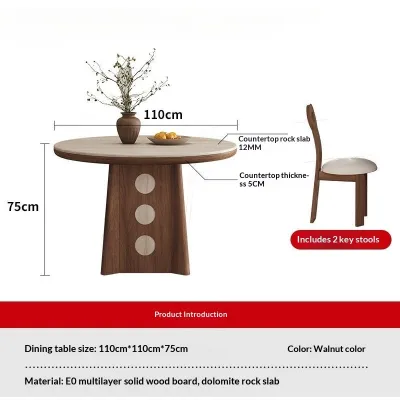
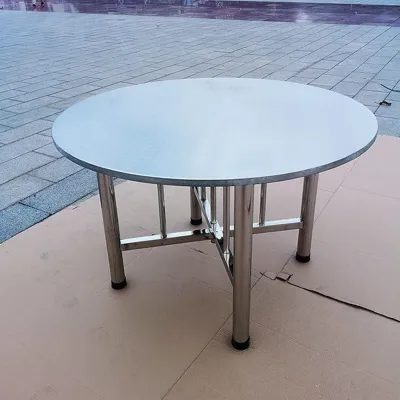
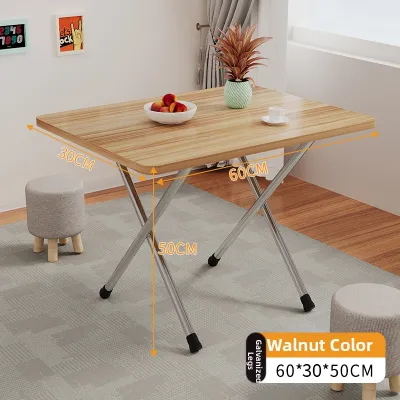
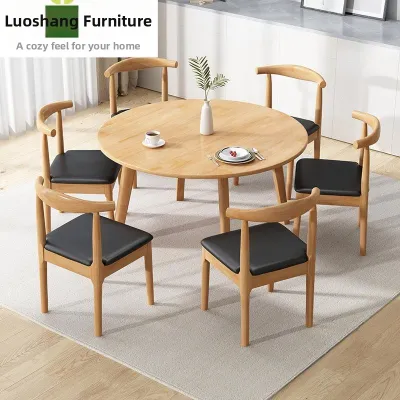
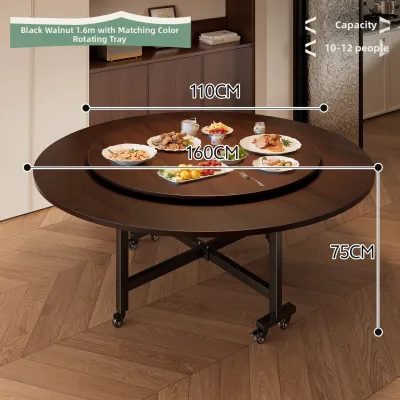
3 Lazada user ratings
First impression, the walnut texture is really nice, very grand. Been using it for a few days, it can seat about ten people, enough for gues…Read full reviewShow less
First impression, the walnut texture is really nice, very grand. Been using it for a few days, it can seat about ten people, enough for guests. It's very stable whether for eating or just as a shelf. When not in use, just fold it up against the wall, doesn't take up space.
The quality is excellent and the solid wood material feels great. It was easy to assemble and the customer service was helpful. The design l…Read full reviewShow less
The quality is excellent and the solid wood material feels great. It was easy to assemble and the customer service was helpful. The design looks beautiful, the size is just right, and it offers great value. Overall, I am very satisfied with this purchase.
It took about twenty minutes to assemble this folding dining table. The black walnut finish looks elegant and high-end. It is sturdy and sta…Read full reviewShow less
It took about twenty minutes to assemble this folding dining table. The black walnut finish looks elegant and high-end. It is sturdy and stable, and it saves so much space by folding into a corner when not in use. Very practical and highly recommended.
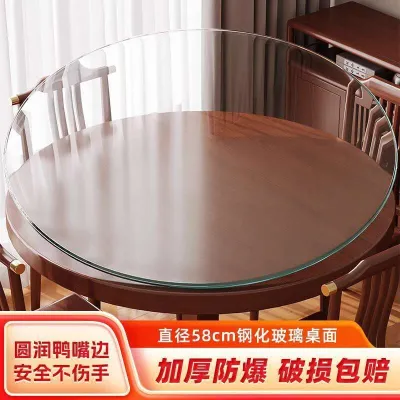
9 Lazada user ratings
I received the goods two days ago, and today they are empty. I opened them and looked at them. They look good and I like them. They are of g…Read full reviewShow less
I received the goods two days ago, and today they are empty. I opened them and looked at them. They look good and I like them. They are of good quality and affordable. Can be purchased!
The product has been received and the quality is very good. It still has a duckbill shaped edge, which looks great and is worth buying
It's really great! The goods have arrived completely and the size is appropriate. I'm very satisfied with my shopping
The glass is very good and transparent, and the size is very correct. I recommend purchasing it
Very satisfied, very good, very suitable! Moderate thickness
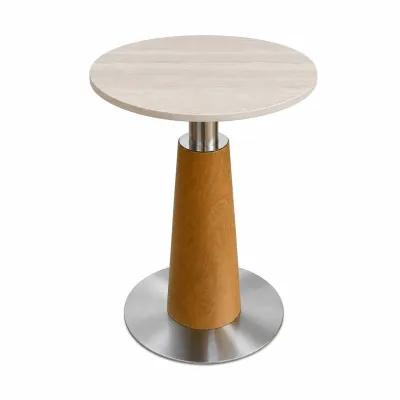
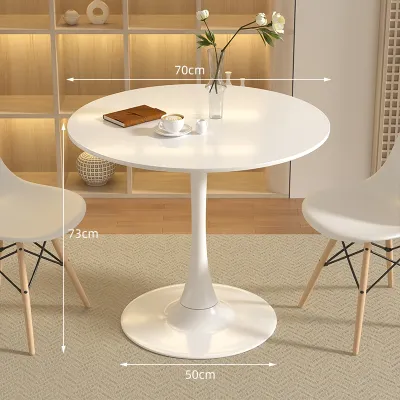
12 Lazada user ratings
🛠️Durability: ok for the price. Solid and stable. 💰Price: bought during sale, was below $50. 🎨Design: modern and sleek. Exterior is white, bu…Read full reviewShow less
🛠️Durability: ok for the price. Solid and stable. 💰Price: bought during sale, was below $50. 🎨Design: modern and sleek. Exterior is white, but inner and underneath parts that you can’t see after the assembly have spray paint spots of other colours. Good for non fussy buyers.
It feels very strong and more textured. I bought some accessories and put it on it. It is very beautiful, has a high sex ratio, fast logisti…Read full reviewShow less
It feels very strong and more textured. I bought some accessories and put it on it. It is very beautiful, has a high sex ratio, fast logistics speed, good customer service services, worth buying
I bought one for the first time, I think the quality is pretty good, and I bought another one after the price is also good. The delivery is …Read full reviewShow less
I bought one for the first time, I think the quality is pretty good, and I bought another one after the price is also good. The delivery is also very fast. You can refer to it, satisfied ~
The quality is very good, thick, the paint surface is smooth and the installation is simple and stable, and it is recommended to buy
Easy to assemble with hand tools. Stable and heavy. Arrived a little dented but luckily it's under the table top.
Prices are valid at publication and may change. Please refer to the product page for the latest price.
When accommodating a standard family of four, the ideal table diameter ranges from 100 cm to 120 cm. A 100 cm table offers a cozy dining experience, but if you frequently serve family-style meals with multiple shared platters, upgrading to a 110 cm or 120 cm diameter is highly recommended. This extra space ensures that individual place settings do not overlap and leaves sufficient room in the center for serving dishes, drinkware, and condiments.
For larger gatherings of six to eight people, the required table diameter increases significantly to maintain comfort. To seat six diners comfortably, look for a table diameter between 130 cm and 150 cm. If you regularly host eight people, you will need a diameter of 150 cm to 180 cm. At these larger sizes, the physical design of the table base becomes critical. Traditional four-legged tables can severely restrict legroom at these dimensions, making a central pedestal base a much more practical choice for maximizing under-table clearance.
Before finalizing your choice, always verify the exact finished dimensions, tabletop thickness, and base design on the manufacturer’s specification sheet. Minor variations in edge profiles or leg placement can alter the usable seating area and affect how well your chairs tuck underneath.
Calculating Chair Clearance and Walkway Space
Determining the correct table diameter is only half the equation; you must also calculate the total footprint required for the chairs and walkways. A common mistake is measuring only the empty table and forgetting that chairs require substantial space when occupied.

To calculate the necessary clearance, start with the physical depth of your dining chairs. A standard dining chair typically has a depth of 45 cm to 55 cm. However, to sit down or stand up comfortably, a diner must be able to pull the chair away from the table. This action requires a minimum clearance of 60 cm to 75 cm from the edge of the tabletop to the nearest obstruction, such as a wall, sideboard, or kitchen counter.
If the dining area serves as a primary pathway through your home, you must account for traffic flow behind seated guests. To allow someone to walk past comfortably while others are dining, you should maintain a clearance of 90 cm to 110 cm between the table edge and the wall. This ensures that family members can move freely without forcing diners to tuck their chairs in mid-meal.
Your choice of seating style also heavily influences these spatial requirements. If you plan to use dining chairs with wide profiles, prominent armrests, or swivel bases, you must adjust your calculations. Armchairs cannot always be pushed fully under the tabletop, especially if the table apron is low, which increases the permanent footprint of the dining set. Swivel bases require a wider clearance radius to prevent the chair frame from striking nearby walls or adjacent furniture during rotation. Always measure the widest point of your chosen chairs and compare them against the table’s under-frame clearance before purchasing.
Step-by-Step Guide to Measuring Your Dining Area
Before committing to a specific round dining table, conducting a precise physical assessment of your room is essential to avoid layout conflicts and delivery issues.
First, measure the usable floor space where the dining set will be placed. Do not rely on general room dimensions from floor plans. Instead, use a metal measuring tape to measure the actual floor area, making sure to exclude skirting boards, built-in cabinets, radiators, or any other protruding architectural fixtures. Mark the center point of your intended dining zone and use a piece of string or painter’s tape to outline the proposed table diameter on the floor. This visual aid helps you assess the remaining space realistically.
Second, account for functional zones and movement paths within the room. Check for nearby door swings, low window sills that might block a chair back, and the clearance of adjacent drawers or cabinet doors. Ensure that opening a sideboard drawer or a nearby refrigerator door will not collide with a dining chair.
Third, verify the delivery route from the street to your dining room. This step is particularly crucial for residents of high-rise apartments, such as HDB flats or condominiums in Singapore. Measure the height and width of your front door frame, internal hallways, stairwells, and elevator doors. A solid, one-piece round tabletop with a 150 cm diameter cannot be disassembled and may not fit into standard passenger lifts or tight corridor turns. Check the manufacturer’s packaging dimensions to ensure the delivery team can safely transport the table into your home without damage.
Common Sizing Mistakes to Avoid
Avoiding common spatial planning pitfalls will ensure your round dining table is both highly functional and visually appealing.
One frequent oversight is ignoring the design of the table base. A pedestal base is highly efficient because it eliminates corner legs, allowing you to slide chairs in completely and adjust seating positions freely. However, you must verify the stability of the pedestal, especially for heavier stone or solid wood tops, to prevent tipping. Conversely, a table with four legs restricts where chairs can be placed, as guests cannot sit comfortably where a leg is positioned. This limitation can reduce the actual seating capacity of a 120 cm table from four people to three.
Another mistake is forgetting to plan for extendable mechanisms. If you choose a round table with a drop-leaf or butterfly extension, you must measure the room based on its fully extended oval or larger round shape. Operating an extendable table in a space that only fits its compact form defeats the purpose of the mechanism and can block essential walkways when guests arrive.
Finally, consider the visual weight of the table material. A solid, dark timber or heavy marble table can dominate a small, poorly lit room, making the space feel cramped even if the physical measurements are technically correct. For tighter spaces, choosing a table with a lighter finish, a glass top, or a slender metal frame can maintain an airy, spacious feel while still providing the necessary seating capacity.
Frequently Asked Questions (FAQ)
What is the best round dining table size for a small HDB or condo?
For compact apartments like Singapore HDB flats or condominiums, a round dining table with a diameter of 90 cm to 100 cm is generally the most practical choice. This size comfortably seats three to four people without dominating the living area. To maximize space, prioritize a pedestal base rather than four legs, as this allows chairs to tuck in completely when not in use, keeping walkways clear. If you occasionally host guests, consider a drop-leaf or extendable round table, but always measure your specific floor plan to ensure the extended table does not block main pathways or entryways.
How much space do you need between a round table and the wall?
To ensure comfortable movement, you should maintain a minimum distance of 90 cm between the edge of the round table and the wall. This clearance provides approximately 60 cm for pulling out the chair and sitting down, plus an additional 30 cm of walkway space behind the chair. If the area is a high-traffic zone or leads directly to a kitchen or hallway, increasing this clearance to 110 cm or more is highly recommended. Always measure your specific dining chairs, as wider profiles or deep backrests will require more clearance to prevent scuffing your walls.

Community discussion
Share your experience or ask a question. Comments are reviewed before publication.