
Selecting the right coat hanger for a small Singapore apartment entryway is a balancing act between maximizing floor space and managing daily traffic. In typical local layouts, such as HDB flats or compact condominiums, the entryway is often a narrow corridor or a direct transition into the living room. To keep this high-traffic zone organized without creating a physical bottleneck, you must evaluate how your household moves through the space and what items you actually need to store. The ideal solution—whether it is a freestanding pole, a wall-mounted rail, or an over-door bracket—depends on your wall construction, floor area, and tenancy rules.
Diagnose Your Entryway Space and Traffic Flow
Before purchasing any coat hanger, you must carefully measure and observe the physical constraints of your entryway. Start by measuring the clear walkway width. A comfortable corridor requires at least 90cm of unobstructed space for a single person to walk through easily. If your entryway is narrower than this, a floor-standing rack will likely block the path, making a wall-mounted or over-door option a much safer choice.
Next, observe the door swing radius. Open your main door fully and trace its path along the floor and walls. The area directly behind an open door is often considered dead space, but it can be the perfect spot for a slim wall-mounted rack or a low-profile hook system, provided it does not prevent the door from opening to at least a 90-degree angle.
Products mentioned in this guide


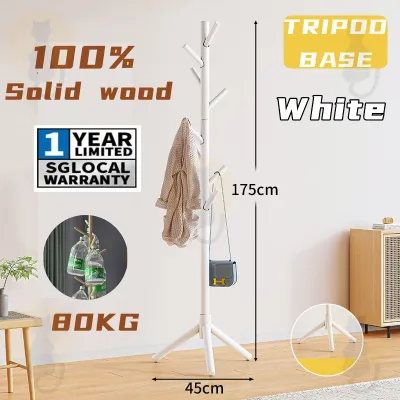
Prices are valid at publication and may change. Please refer to the product page for the latest price.
Finally, check for existing fixtures that might limit your placement options. Many Singapore apartments feature built-in shoe cabinets, distribution board (DB) boxes, smart home control panels, or light switches right next to the entrance. Ensure your chosen rack does not block access to these utilities or prevent cabinet doors from opening fully.
Match Coat Rack Styles to Your Spatial Constraints
Different coat rack designs offer distinct advantages depending on your home’s layout. Matching the right style to your physical layout ensures your entryway remains functional, safe, and visually appealing.

Freestanding Coat Racks
Freestanding coat racks are highly versatile because they require no drilling and can be moved easily whenever you decide to rearrange your furniture. However, in a small entryway, a floor-standing unit must be chosen with care to avoid creating visual clutter.
Start by evaluating the base footprint. Most freestanding models have a base diameter of 30cm to 45cm; you must ensure this footprint fits entirely outside the main walking path so no one trips over it in the dark. Visual weight is another critical factor. A bulky, dark wooden coat tree can make a small foyer feel incredibly cramped. Instead, look for minimalist metal or light-toned wood designs with slender vertical poles that keep the sightlines open.
Stability is the final check for any floor model. A tripod base offers excellent stability but takes up a larger physical footprint. If space is exceptionally tight, a flat, heavily weighted circular base is often a better choice, provided the weight is sufficient to keep the rack upright when fully loaded with bags and jackets.
Wall-Mounted Coat Racks
Wall-mounted coat racks are the ultimate space-savers because they keep your floor completely clear, making the entryway feel larger and easier to clean. When evaluating this style, assess the available wall width and height. You can install a single long rail with multiple hooks, or arrange individual decorative hooks at varying heights to accommodate different family members.
For exceptionally narrow corridors, consider foldable or retractable wall-mounted designs. These innovative racks feature hooks that flip down when you need to hang an item and snap back flush against the wall when empty, reclaiming valuable centimeters of clearance.
Before committing to a wall-mounted system, you must verify your wall material. Mounting a heavy coat hanger onto a solid concrete wall requires different tools and hardware than mounting onto a hollow drywall partition. Ensuring a secure mount prevents the rack from pulling away from the wall under the weight of daily items.
Over-Door Coat Hangers
Over-door coat hangers are an excellent, damage-free solution for renters or those with extremely limited wall and floor space. To ensure this style works for your home, start by measuring your door thickness. Most over-door brackets are designed for standard door thicknesses, but older or custom doors in Singapore apartments can vary, so a quick measurement prevents buying a bracket that is too loose or too tight.
Next, check the top clearance of your door frame. There must be enough of a gap—typically about 2mm—between the top of the door and the frame for the metal brackets to sit without scraping. If the clearance is too tight, the bracket will rub against the frame, damaging the paint and making the door difficult to close.
Finally, verify that your door material can handle the dynamic weight of hanging items. Solid timber doors can easily support multiple heavy bags, whereas lightweight hollow-core doors can experience hinge strain or warping if overloaded.
Audit Your Daily Hanging and Storage Needs
To choose the right capacity, you must audit your household’s actual daily hanging habits. Start by counting the maximum number of items that need to be stored at the entryway simultaneously. In Singapore’s tropical climate, you are unlikely to hang heavy winter coats, but you will need space for light cardigans, umbrellas, hats, reusable grocery bags, and work lanyards.
If your entryway lacks other storage furniture, look for multi-purpose features. A freestanding rack with an integrated umbrella stand and a drip tray is incredibly useful during the monsoon season, preventing wet umbrellas from dripping onto your living room floor. Some wall-mounted units also feature a small top shelf for keys and mail, combining multiple entry functions into one compact piece.
Always review the manufacturer’s specified weight limits per hook and for the entire unit. Overloading a coat hanger can lead to bent hooks, damaged walls, or a tipped-over rack, so ensure the rated capacity matches your heaviest daily bags.
Check Installation Rules and Safety Limits
Safe installation is crucial to prevent accidents and comply with local housing guidelines. If you live in a rented apartment, review your tenancy agreement before drilling any holes. Many landlords prohibit drilling into concrete walls or doors, which makes freestanding or over-door options your best alternatives.
If you are permitted to drill, make sure you match your wall anchors to the specific wall material. Standard plastic plugs are suitable for solid concrete walls, but they will fail if used on hollow drywall partitions. For drywall, always purchase specialized toggle bolts or hollow-wall anchors from a local hardware store.
Finally, plan anti-tip measures for freestanding units. Even if a floor model feels stable when empty, it can easily tip over if a heavy bag is pulled off quickly or if a pet bumps into it. Placing a freestanding rack flush against a corner or using a discreet wall-tether strap can significantly improve safety in a busy household.
Frequently Asked Questions (FAQ)
Can I install a wall-mounted coat rack on a drywall partition?
Yes, you can install a wall-mounted coat hanger on a drywall partition, but you must use the correct hardware. Standard plastic wall plugs will not hold and can damage the drywall. Instead, use heavy-duty hollow-wall anchors or toggle bolts that expand behind the plasterboard to distribute the weight. For the most secure installation, use a stud finder to locate the internal timber or metal studs and screw the rack directly into them.
How do I prevent a freestanding coat rack from tipping over?
To prevent a freestanding coat hanger from tipping, always practice balanced loading. Avoid hanging all your heavy bags and jackets on one side; instead, distribute the weight evenly around the hooks. Place heavier items on the lower hooks or shelves to keep the center of gravity low. If the rack is placed on a smooth tile or laminate floor, adding non-slip rubber pads to the base can also prevent it from sliding and wobbling.
Community discussion
Share your experience or ask a question. Comments are reviewed before publication.