
Finding the perfect slim shoe rack for your HDB flat is a balancing act between maximizing storage capacity and preserving precious floor space. In Singapore’s compact apartments, the entryway is often a high-traffic bottleneck where keys, bags, and footwear quickly pile up. A slim shoe rack is an excellent solution to keep this area organized, but choosing one requires careful planning.
To select the right capacity, you must evaluate your household’s daily footwear habits, measure your physical layout, and understand how slim furniture designs function. This guide will help you calculate your storage needs, navigate HDB space constraints, and choose a configuration that is both safe and functional.
Assessing Your HDB Entrance and Corridor Space
Before browsing online marketplaces or visiting furniture showrooms in Singapore, you must obtain precise measurements of your designated storage area. Use a steel measuring tape to record the width, depth, and height of the foyer interior. If you live in a newer BTO flat, the entryway may be a narrow recessed niche or a direct opening into the living room, meaning every millimeter counts.
Products mentioned in this guide
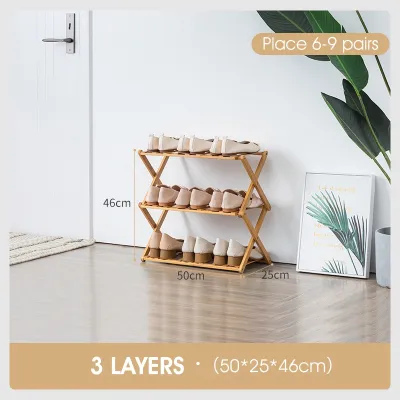
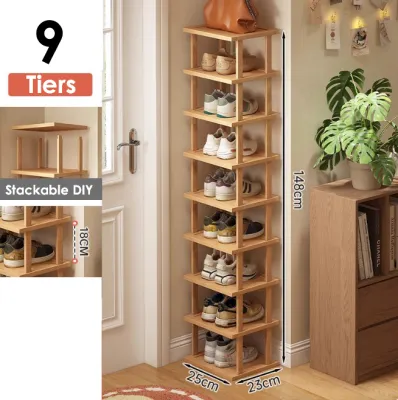
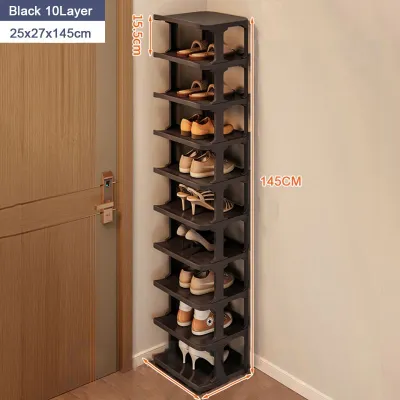
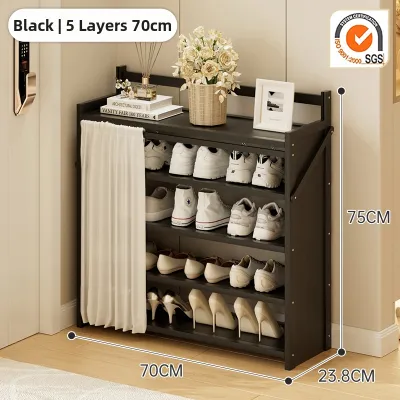
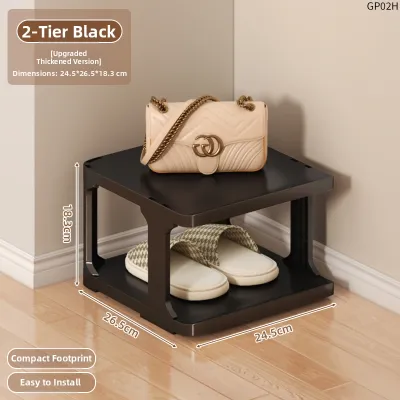
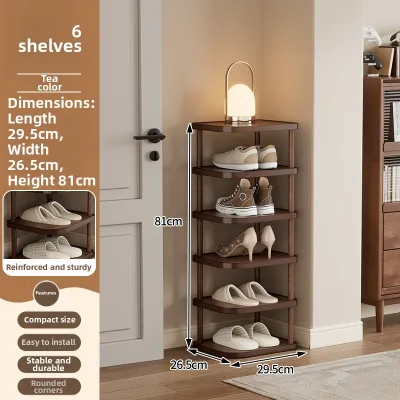
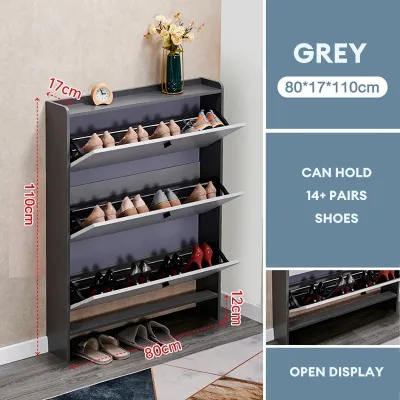
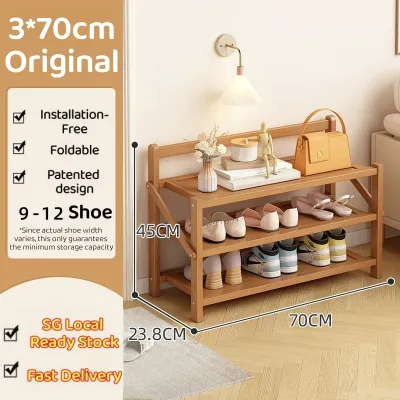
Prices are valid at publication and may change. Please refer to the product page for the latest price.
A critical step is checking the door and gate swing arcs. In many HDB flats, the main wooden door swings inward while the metal security gate swings outward. However, some layouts feature doors that swing outward or gates that require specific clearance paths. Open both your door and gate fully, then measure the clearance zone. Your slim shoe rack must sit entirely outside these swing paths to prevent daily collisions, scratches, or blocked entryways.
If you are considering placing your shoe rack outside your flat, safety and regulatory compliance must be your top priority. The Singapore Civil Defence Force (SCDF) regulates common corridors strictly because they serve as vital escape routes during emergencies. SCDF guidelines mandate that a minimum clear escape path of 1.2 meters must be maintained along the corridor at all times.
Additionally, individual town councils have specific by-laws regarding corridor usage. Some town councils strictly prohibit any furniture placement in common areas, while others allow slim shoe racks provided they do not obstruct fire hose reels, dry risers, electrical meters, or rubbish chutes. Always check your local town council’s guidelines before making an outdoor purchase to avoid warnings or forced removal of your furniture.
Matching Shoe Rack Capacity to Your Household Size
To determine the ideal capacity, start by categorizing your household’s footwear. Differentiate between daily grab-and-go pairs—such as school shoes, work shoes, daily sneakers, and casual slippers—and occasional or seasonal footwear like formal heels, hiking boots, or running shoes. Your entryway rack should prioritize immediate daily needs, while less-frequent footwear can be stored elsewhere.

For a practical estimation framework, allocate 2 to 3 pairs of daily shoes per adult household member, plus an additional 2 to 3 slots for guests. For a three-person household, this translates to a daily storage requirement of roughly 8 to 11 pairs. If you frequently host gatherings, you may want to opt for a slightly larger capacity or keep a few foldable storage stools nearby.
When selecting a rack, apply the “80% rule” for visual tidiness and long-term usability. If a manufacturer advertises a shoe rack as having a 20-pair capacity, plan to store no more than 16 pairs in it. Leaving approximately 20% of the space empty prevents overcrowding, allows proper air ventilation to reduce odors and moisture buildup, and makes it significantly easier to retrieve and put away shoes during busy mornings.
To preserve your entryway’s visual space, establish a strict offloading strategy. Keep off-season shoes, specialty sports footwear, and formal dress shoes in bedroom wardrobes, under-bed storage, or utility closets. This keeps your slim shoe rack uncluttered and ensures that the entryway remains a welcoming, tidy space for both residents and visitors.
Understanding Slim Shoe Rack Dimensions and Configurations
In the furniture industry, a “slim” shoe rack typically refers to a unit with a depth ranging from 15cm to 24cm, compared to standard cabinets which are usually 30cm to 35cm deep. While an ultra-slim 15cm rack takes up minimal floor space, its shallow depth directly impacts the types of shoes it can accommodate. Standard flat shelves in a 15cm-deep cabinet cannot hold adult shoes horizontally; instead, these units must utilize specialized internal designs.
Tier height and shelf adjustability are crucial factors to consider. Fixed shelves with a low vertical clearance (typically 12cm to 15cm) are suitable for flats, sandals, and low-profile sneakers, but they will fail to accommodate high-top sneakers, mid-cut boots, or platform shoes. Choosing a rack with adjustable or removable shelves allows you to customize the interior layout, ensuring you can create taller compartments when needed without wasting space on empty vertical gaps.
The internal design of the rack also dictates its usability. The three most common configurations for slim racks are:
- Tilt-out (tipping bucket) designs: These feature compartments that swing outward on a hinge, storing shoes vertically or at an angle. This is the most popular slim configuration, but it can struggle with bulky athletic shoes, thick-soled running sneakers, or men's shoes larger than UK size 10, which may prevent the compartment from closing fully.
- Pull-out drawers: These function like vertical pantry drawers, sliding straight out to reveal shoes stored side-by-side. They offer excellent visibility but require sufficient clearance in front of the rack to pull the drawers out completely.
- Open-shelf racks: These simple tier-based units lack doors, offering maximum ventilation and quick access. However, they expose your shoes to dust and can look visually cluttered if the shoes are not neatly arranged.
When reading product listings, evaluate capacity claims with a critical eye. Manufacturers often calculate maximum capacity using small, low-profile shoes, such as women’s flats or children’s footwear. If your household consists of adults with larger shoe sizes or bulky athletic footwear, a “24-pair” rack may realistically only hold 14 to 16 pairs. Always check the internal width and height of the shelves rather than relying solely on the advertised pair count.
Space-Saving Designs and Stability Considerations
To maximize floor space in a tight HDB layout, consider alternative mounting and structural designs. Wall-mounted or floating slim shoe racks are excellent options because they clear up floor space entirely, making it easy to sweep and mop underneath. This configuration also creates a lighter, more spacious visual effect in a narrow foyer.
However, wall-mounting requires careful installation. You must verify your wall type before drilling. Concrete walls, which are standard for structural walls in HDB flats, provide excellent support when paired with high-quality wall plugs and screws. If you are mounting onto a drywall or partition wall (often found in renovated interiors), you must locate the timber studs or use heavy-duty hollow-wall anchors. Always check the manufacturer’s specified weight limits and load capacities to avoid damaging your walls.
Modular and stackable shoe racks offer great flexibility, allowing you to add vertical tiers as your shoe collection grows. However, stacking units increases the overall height while maintaining a very narrow footprint. This dramatically raises the unit’s center of gravity, making it highly unstable.
Tipping is a severe safety risk for any tall, slim, and lightweight furniture. When multiple tilt-out drawers are opened simultaneously, or when a child or pet pulls on the handle, the entire unit can easily tip forward. To prevent serious injury or damage, you must secure any tall or slim shoe rack to the wall using a wall-anchoring kit or anti-tip straps. Ensure the rack’s joints are sturdy, and verify that the unit is perfectly level and stable before loading it with shoes.
If drilling into walls is not an option—such as in rental flats—or if you have absolutely zero floor space, over-door or hanging organizers are a practical alternative. These fabric or plastic organizers hang over the back of a storeroom or bedroom door, providing zero-footprint storage for lightweight footwear like slippers and sandals.
Common Sizing and Capacity Mistakes to Avoid
One of the most frequent mistakes homeowners make is ignoring the door swing arc. Placing a slim shoe rack even slightly inside the path of an inward-opening front door or an adjacent bedroom door can cause daily frustration, scuffed paint, and restricted access. Always measure the door’s full movement range before finalizing the rack’s position.
Another critical hazard is overloading the top shelves of an unanchored slim rack. Placing heavy boots, bags, or decorative items on top of a narrow cabinet raises its center of gravity, making it highly susceptible to tipping over. Keep heavier footwear on the bottom tiers to maintain a lower center of gravity and improve overall stability.
Many buyers also assume that all “slim” racks are built the same, failing to measure the internal width between the side panels. If the internal width is slightly too narrow to fit a complete set of shoes side-by-side, you will be forced to overlap them or leave empty, unusable gaps, which defeats the purpose of a space-saving design.
Finally, never block essential utilities or safety equipment. In HDB common corridors, placing a shoe rack in front of electrical meters, water meters, fire hose reels, or dry risers is a serious safety violation. Ensure all utility doors and emergency equipment remain completely unobstructed and easily accessible at all times.
Frequently Asked Questions (FAQ)
Can I place a shoe rack outside my HDB door in the common corridor?
Common corridors are designated fire escape routes regulated by the Singapore Civil Defence Force (SCDF). While some town councils permit slim shoe racks outside flats, you must maintain a minimum clear escape path width of 1.2 meters at all times. The rack must not obstruct any fire safety equipment, utility meters, or escape routes. Always check with your specific town council’s by-laws before placing any furniture in the corridor.
How do I store tall boots in a slim shoe rack?
Most slim shoe racks are designed for low-profile footwear, but you can accommodate tall boots by choosing a model with removable or adjustable shelves to create double-height compartments. If your rack has fixed shelves, use flexible boot shapers or gently fold the boot shafts to fit the lower clearance. If storing them in the entryway compromises the rack’s stability or capacity, it is best to store tall boots in your bedroom wardrobe.
Community discussion
Share your experience or ask a question. Comments are reviewed before publication.