
Choosing the perfect plastic shoe rack requires balancing your household’s actual shoe volume with the physical realities of your entryway. In Singapore, where space is at a premium, an oversized rack can block vital walkways, while an undersized one leads to cluttered piles. Finding the right capacity involves auditing your collection, measuring your space with precision, and selecting a configuration that can adapt to your lifestyle.
By taking a systematic approach to your footwear storage, you can maintain an organized, welcoming entrance. This guide will walk you through the essential steps to determine the ideal capacity, avoid common sizing mistakes, and select a durable, stable storage solution.
Assess Your Shoe Collection and Household Needs
Before browsing online marketplaces or local home goods retailers, you must establish a baseline capacity requirement. Empty your current storage and count every pair of shoes in your household. Group them by family member, keeping in mind that adult shoes require significantly more physical space than children’s shoes. A child’s shoe might only take up 12 to 15 centimeters of width, whereas an adult’s athletic shoe can easily require 20 to 25 centimeters.
Products mentioned in this guide
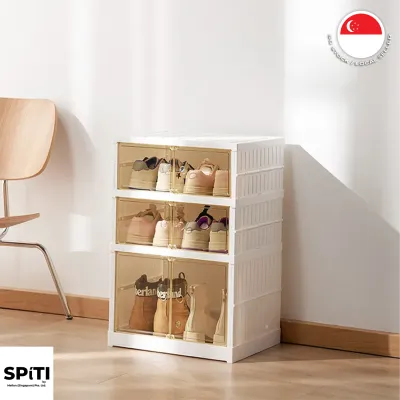
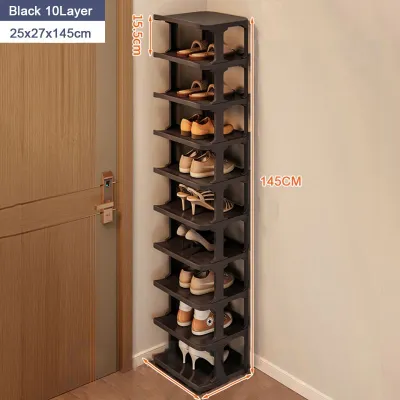
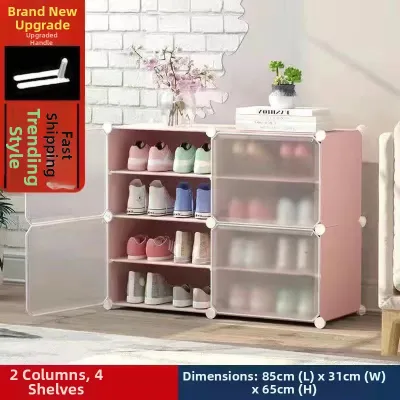
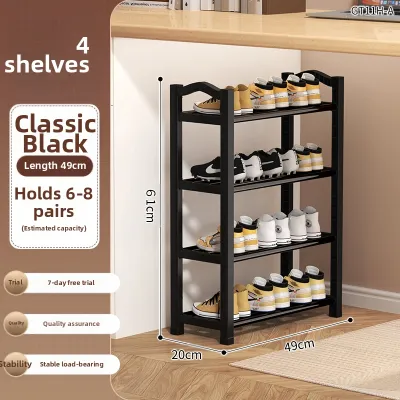
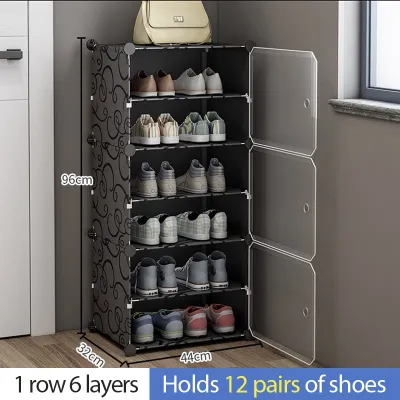
Prices are valid at publication and may change. Please refer to the product page for the latest price.
Different shoe types dictate vertical space requirements. Flat sandals, slippers, and loafers can sit comfortably in low-clearance tiers of about 10 to 12 centimeters high. High heels, high-top sneakers, and ankle boots require at least 15 to 20 centimeters of vertical clearance. If you have taller boots, they will need even more space or must be stored horizontally, which dramatically reduces the rack’s overall pair capacity.
Anticipate your future capacity needs rather than just planning for today. Consider how your household might change over the next few years. Are you planning to expand your family, or do you have a runner whose hobby requires specialized, bulky footwear? Factor in a buffer of 15% to 20% above your current count to accommodate new purchases and guests.
To optimize your entryway, separate your daily essentials from occasional or storage-only footwear. Your primary plastic shoe rack at the entryway should focus on high-frequency pairs like school shoes, work shoes, and daily slippers. Occasional footwear, such as formal heels, dress shoes, or seasonal boots, can be stored in enclosed cabinets, under-bed storage, or stacked boxes in a closet to keep your main entrance clear.
Measure Your Available Space and Clearance
Do not rely on visual estimation when planning your entryway layout. Use a metal measuring tape to record the width, depth, and maximum height of your designated floor space. Write these finished dimensions down in centimeters, as most furniture specifications are listed this way. If the shoe rack is delivered fully assembled, verify that its finished dimensions can easily pass through your apartment doorway and lift access.

In compact layouts like Singapore HDB flats or apartments, clearance checks are critical. Measure the door swing arc of your main entrance and any nearby room doors to ensure the plastic shoe rack will not obstruct their path. Leave at least 70 to 80 centimeters of clear walkway width in front of the rack so family members can pass and maneuver comfortably. If you plan to place a shoe-changing stool nearby, factor its footprint into your clearance calculations.
Look closely at the floor and walls for architectural obstacles. Skirting boards can prevent a shoe rack from sitting flush against the wall, effectively adding 1 to 2 centimeters to the depth requirement. Check for electrical meters, DB boxes, light switches, intercom units, or wall-mounted fire hydrants. The rack must not block access to these utilities, and any corridor placement must comply with local civil defence regulations regarding escape route clearances.
Another common oversight is checking only the rack’s external depth. If a plastic shoe rack has an external depth of 30 centimeters, but your shoes are size US 11 (which can be 31 centimeters long), your shoes will overhang. This can cause toes or heels to protrude into the walkway, creating a tripping hazard and making the entryway look untidy. Measure your longest pair of shoes and compare them to the rack’s internal shelf depth before purchasing.
Match Rack Capacity to Space and Collection
Once you have your shoe count and space measurements, you can select the right plastic shoe rack configuration to bridge the gap between physical space and storage volume.
Compact Spaces and Light Collections
If you live alone or have a minimal collection, a narrow, vertical plastic shoe rack is highly effective. These tower-style designs utilize vertical wall space, often holding 4 to 10 pairs while occupying a footprint of less than 30 by 30 centimeters. Alternatively, a low-profile plastic bench with built-in shoe slots underneath provides a convenient place to sit while keeping daily footwear organized.
Standard Family Needs
For a typical household of three to four people, a multi-tier standard plastic shoe rack is the practical choice. Look for models with 4 to 6 tiers that can hold 12 to 24 pairs. To accommodate a diverse mix of adult and children’s shoes, prioritize racks with adjustable or removable shelves. Removing a single plastic panel can instantly double the vertical clearance of a tier, allowing you to store taller boots or high heels without bending them.
Large Collections and Expanding Needs
If your collection is extensive or growing, modular and stackable plastic shoe racks offer excellent flexibility. These systems consist of individual plastic interlocking units or cubes that you can assemble horizontally or vertically. As you acquire more shoes, you can purchase additional matching modules to expand your storage capacity without needing to buy an entirely new furniture piece.
Material-Specific Considerations
Plastic is exceptionally lightweight, making it easy to move during cleaning or home reconfigurations. However, this lightweight nature means a fully loaded, tall plastic rack can become unstable. Always check the manufacturer’s specified load capacity per tier to avoid overloading. To prevent tipping, choose a plastic shoe rack with a wide, stable base and anti-slip feet. If you are building a tall vertical stack, verify if the product includes wall-anchoring hardware or brackets, and follow the manufacturer’s instructions to secure it safely to the wall. Keep in mind that while plastic is generally easy to wipe clean, you should check the manufacturer’s care instructions regarding specific cleaning agents to avoid degrading the finish or structural integrity over time.
Common Sizing Mistakes to Avoid
Avoiding frequent pitfalls during the selection process will prevent buyer’s remorse and safety hazards in your home.
- The "Tier Count" Trap: Do not buy a rack simply because the label says "5-Tier Shoe Rack." If the vertical gap between those tiers is only 12 centimeters, you will struggle to fit anything other than flat sandals and low-profile sneakers. Always look for the specific height clearance between shelves rather than just the number of shelves.
- Ignoring External vs. Internal Dimensions: The external width of a plastic shoe rack includes the thickness of the side panels, frame, and connectors. If the external width is 60 centimeters, the usable internal shelf width might only be 54 centimeters. If your average shoe pair width is 20 centimeters, you will only be able to fit two pairs comfortably, leaving a useless 14-centimeter gap. Squeezing a third pair in can warp the plastic frame or scuff your shoes.
- Overcrowding the Entryway: It is tempting to buy the largest rack that physically fits into your space to maximize storage. However, prioritizing maximum capacity over ergonomic flow creates a cramped, welcoming-unfriendly entrance. Maintain a balanced ratio between storage capacity and open floor space to keep your entryway functional.
- Neglecting Center of Gravity: Plastic shoe racks are inherently light. If you place heavy leather boots, safety shoes, or bulky wet-weather footwear on the top shelves while leaving the bottom shelves empty or filled with light slippers, the rack's center of gravity rises dangerously. This makes the unit highly susceptible to tipping over if bumped. Always distribute weight logically: place your heaviest, bulkiest shoes on the bottom tiers and reserve the upper tiers for lightweight footwear.
Frequently Asked Questions (FAQ)
How many pairs of shoes can a standard tier of a plastic shoe rack hold?
A standard tier’s capacity depends entirely on its internal width and the physical size of the shoes. On average, a single pair of adult shoes requires about 20 to 25 centimeters of horizontal space, while children’s shoes require 12 to 15 centimeters. To get a realistic estimate, measure the internal width of the rack’s tier and divide it by the average width of your household’s shoes. For example, a tier with an internal width of 60 centimeters will comfortably hold three pairs of average adult shoes, but might only fit two pairs of wide athletic trainers or four pairs of children’s shoes.
Can I stack plastic shoe racks to increase capacity?
You should only stack plastic shoe racks if the specific model is explicitly designed for modular expansion. These models feature interlocking grooves, stacking pins, or heavy-duty connectors that secure the units together. Never attempt to free-stack standard, non-modular plastic racks, as they lack secure connection points and pose a severe tipping hazard. Always check the manufacturer’s guidelines for the maximum recommended stacking height and load capacity to ensure structural safety.
Are adjustable shelves necessary for a plastic shoe rack?
Adjustable or removable shelves are highly recommended if your household wears a diverse range of footwear, such as high heels, boots, and high-top sneakers alongside flat shoes. They allow you to customize the vertical clearance to match your collection. However, if your household primarily wears uniform, low-profile footwear like flat sneakers, sandals, and school shoes, a fixed-tier plastic shoe rack is often a better choice. Fixed-tier models typically offer greater structural rigidity, simpler assembly, and a more stable frame.
Community discussion
Share your experience or ask a question. Comments are reviewed before publication.