
To choose the right capacity metal shoe rack, you must first calculate your household’s active shoe inventory, account for the physical dimensions of different footwear styles, and verify the actual usable width of the rack’s tiers. While manufacturers often advertise a generic pair capacity, real-world storage depends heavily on whether you are storing wide men’s sneakers, narrow women’s flats, or bulky children’s shoes. By matching your family’s shoe volume with a well-ventilated, sturdy metal frame that fits your entryway footprint, you can maintain an organized, clutter-free foyer.
A high-quality metal shoe rack offers an exceptionally durable and slim-profile solution for busy households. Unlike bulky wooden cabinets, metal designs maximize internal storage space while minimizing the physical footprint in tight hallways. To find the perfect balance between storage capacity and spatial constraints, you need to look beyond marketing labels and analyze the structural details, shelf configurations, and dimensions of your potential purchase.
Assess Your Household's Total Shoe Volume
Determining the ideal capacity of a metal shoe rack begins with a comprehensive audit of your household’s current shoe collection. To establish a reliable baseline, list every member of the household and count the number of shoes they wear on a regular basis. A practical baseline formula involves multiplying the number of residents by their average daily and seasonal footwear pairs. For instance, a household of four where each person utilizes four pairs of active shoes—such as work shoes, school shoes, athletic trainers, and casual sandals—will require a baseline capacity of at least 16 pairs.
Products mentioned in this guide
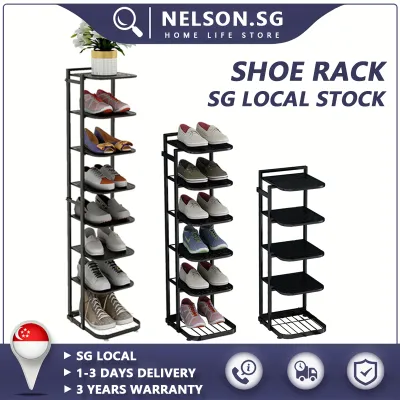
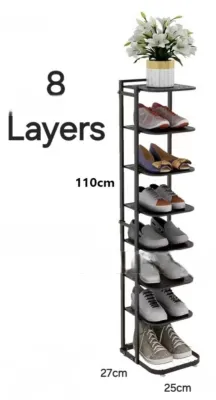
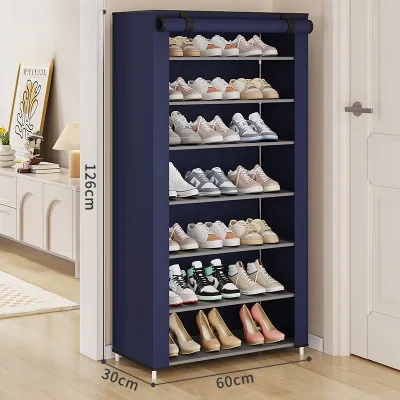
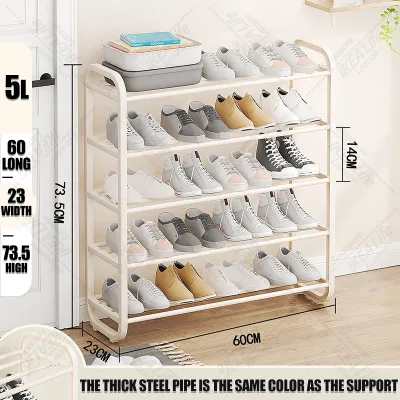
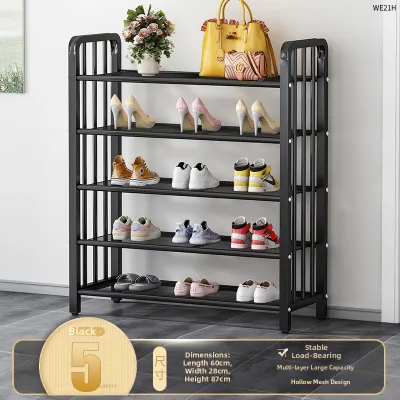
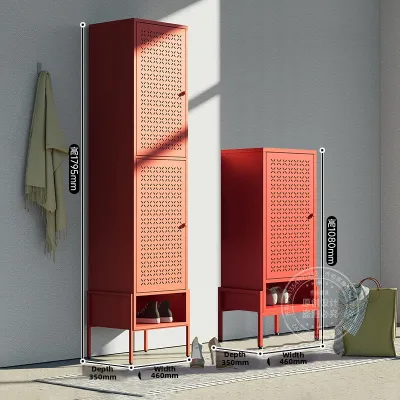

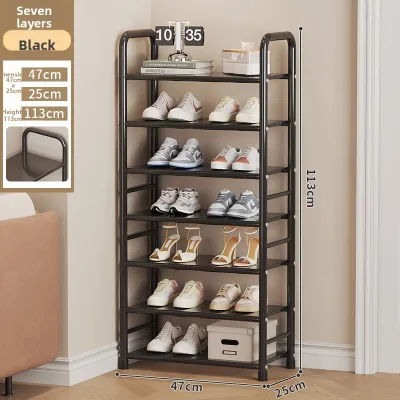
Prices are valid at publication and may change. Please refer to the product page for the latest price.
Standard calculations often fall short when you fail to account for bulky or non-standard footwear. Heavy-duty work boots, chunky platform sneakers, high-top basketball shoes, and high heels occupy significantly more physical space than standard flat loafers or running shoes. If your household collection features a high proportion of these bulky items, you must allocate extra horizontal and vertical clearance. A single pair of wide-soled sneakers can easily take up one and a half times the space of a standard dress shoe, quickly reducing the actual capacity of any fixed-tier rack.
To ensure your storage solution remains functional over time, always add a 15% to 20% capacity buffer to your baseline calculation. If your current active household inventory stands at 20 pairs, target a metal shoe rack designed to hold 23 to 24 pairs. This buffer easily accommodates new purchases, seasonal footwear transitions, and guests’ shoes without causing immediate overflow or entryway clutter.
Translating Shoe Count into Rack Capacity
Understanding how physical tier width translates to actual shoe pairs is essential for selecting the right metal shoe rack. Manufacturers typically design shelves around standard shoe sizes, but the physical width of individual shoes varies greatly by style and gender. On average, a pair of men’s shoes requires 22 to 25 centimeters of horizontal shelf space, while a pair of women’s shoes requires 18 to 22 centimeters, and children’s shoes require 15 centimeters or less. Consequently, a metal tier with a finished width of 60 centimeters will comfortably hold three pairs of women’s flats, but only two pairs of wide men’s athletic shoes, leaving a narrow, unusable gap.

To optimize your storage layout, compare standard tier widths against your family’s specific footwear profile:
- 60cm Tiers: Fits 2 pairs of large men's shoes or 3 pairs of narrow women's shoes.
- 80cm Tiers: Fits 3 pairs of men's shoes or up to 4 pairs of women's shoes.
- 100cm Tiers: Fits 4 pairs of large men's shoes or 5 pairs of women's shoes.
Do not rely blindly on the “total pairs” capacity advertised on the product packaging. Marketing claims are frequently based on highly optimized scenarios, such as lining up narrow, low-profile women’s sandals or children’s shoes side-by-side. A rack marketed as a “20-pair shoe organizer” may only accommodate 12 to 15 pairs of mixed adult footwear in a real-world household setting. Always verify the exact physical dimensions of each tier and divide the width by the average centimeter requirements of your family’s shoes to determine the true capacity.
The angle of the tiers also plays a pivotal role in determining usable space and overall density. Flat metal tiers offer the highest storage density and allow you to stack shoeboxes or store non-shoe items easily. Slanted display tiers improve visibility and make it easier to grab your shoes on the go, while also allowing the rack to have a shallower physical depth. However, slanted tiers often reduce the total usable height between levels, making it difficult to store taller shoes like high-tops or ankle boots without them hitting the shelf above.
Matching Rack Dimensions to Your Entryway Space
Before committing to a high-capacity metal shoe rack, you must carefully measure the physical footprint of your designated entryway or foyer. Use a measuring tape to record the maximum available width, depth, and height of the space. When measuring, pay close attention to architectural obstructions such as baseboards, skirting boards, electrical outlets, light switches, or low-hanging intercom systems. A skirting board protruding from the bottom of the wall can prevent a tall metal rack from sitting flush, which can compromise its stability and reduce the available clearance in a narrow corridor.
Maintaining smooth traffic flow and adequate clearance is particularly critical in compact apartment layouts, such as HDB flats or condominiums in Singapore. The entryway is a high-traffic zone where family members gather to put on or remove footwear. Ensure that the depth of the shoe rack does not obstruct the swing arc of your main entrance door or safety gate. As a general rule, maintain a clear, unobstructed walkway of at least 60 to 90 centimeters in front of the rack to allow people to pass comfortably and bend down to tie their shoes without bumping into walls or furniture.
One of the primary structural advantages of choosing a metal shoe rack over a wooden cabinet is its slim profile. Wooden cabinets require thick side panels and front doors, often resulting in an external depth of 35 to 40 centimeters. In contrast, metal wire, mesh, or thin steel tube racks can achieve excellent structural integrity with an external depth of just 25 to 30 centimeters. This shallow depth allows you to store high-capacity shoe collections in tight hallways and behind doors where a traditional wooden cabinet simply would not fit.
Additionally, consider delivery and assembly conditions when evaluating dimensions. If you are purchasing a large, pre-assembled high-capacity metal rack, verify that its finished dimensions can easily clear your building’s lift doors, stairwells, and apartment doorways. For flat-pack models, ensure you have the necessary floor space for assembly and check if the manufacturer provides clear setup instructions and all required assembly tools.
Metal Rack Features That Maximize Usable Capacity
To get the most out of your metal shoe rack, look for specific structural features that enhance versatility and maximize space utilization. Adjustable tier heights are highly beneficial for households with a diverse collection of footwear. Instead of struggling with fixed-height shelves that leave wasted vertical space above flat shoes and squeeze taller boots, adjustable metal brackets allow you to customize the clearance of each level. You can set tight 12-centimeter gaps for flat sandals and slippers, while dedicating a spacious 25-centimeter gap for high-top sneakers or boots.
Structural rigidity and weight capacity are critical considerations when storing a large volume of shoes. A fully loaded 20-pair shoe rack can easily weigh 15 to 25 kilograms depending on the footwear styles. Under this concentrated weight, cheap plastic or thin particle-board shelves are prone to bowing, cracking, or tipping. High-quality metal frames constructed from steel tubes or heavy-duty wire mesh resist sagging over years of continuous use. When purchasing, check the manufacturer’s specified weight limit per tier to ensure it can safely support your heaviest footwear.
While metal is structurally strong, its resistance to moisture, rust, and scratches depends on the specific finish. In humid environments like Singapore, bare metal can corrode quickly when exposed to wet umbrellas or damp rain shoes. To ensure long-term durability, check for high-quality powder-coated, epoxy-coated, or chrome-plated finishes, and inspect the joints for solid welds. Always follow the manufacturer’s care instructions, which typically recommend wiping down wet shoes before placement and cleaning the frame with a dry or damp microfiber cloth.
For growing households, stackable and modular metal shoe racks offer an excellent long-term storage strategy. These systems feature interlocking joints or metal dowels that allow you to securely stack multiple units vertically. You can start with a modest 3-tier rack and easily add matching tiers on top as your family expands, scaling up your storage capacity vertically without consuming additional floor space.
Common Sizing and Capacity Mistakes to Avoid
To ensure long-term satisfaction with your purchase, avoid several common pitfalls that buyers face when selecting a shoe rack capacity:
- Ignoring the top shelf design: Many people forget to check if the top tier of the rack is functional. A flat, solid top shelf (such as one made of wood-grain laminate or solid sheet metal) can double as an entryway console table for keys, mail, and bags. A slanted top tier or open wire frame limits this usability, forcing you to find alternative storage for daily pocket items.
- Forgetting to allocate space for shoeboxes: If you prefer to store expensive leather shoes or seasonal footwear in their original packaging, standard metal wire shelves may not provide enough clearance. Shoeboxes require significantly more depth and height than loose shoes, so you must select a rack with flat, deep shelves and generous vertical spacing.
- Neglecting stability and wall anchoring: High-capacity metal shoe racks that are tall and narrow can easily become top-heavy when fully loaded. If your selected rack is over one meter tall or has more than five tiers, check if the manufacturer includes wall-anchoring hardware. Properly securing the rack to the wall using anchors is essential to prevent accidental tipping, especially in busy households.
Frequently Asked Questions (FAQ)
Should I factor in shoebox storage when calculating rack capacity?
Yes, you must factor in shoeboxes if you plan to store shoes in their original packaging. A standard shoebox is significantly larger than a loose pair of shoes, requiring a shelf depth of at least 30 to 35 centimeters and a vertical clearance of 20 to 25 centimeters. When calculating your required capacity, treat each boxed pair of shoes as equivalent to the physical space of two loose pairs, and look for flat, heavy-duty metal shelves rather than slanted wire designs.
How do I store tall boots on a standard metal shoe rack?
To store tall boots on a standard metal shoe rack, look for a model that features removable or adjustable shelves. By removing a single metal shelf, you can double the vertical clearance of the tier below to accommodate tall riding boots or rain boots without bending the shafts. Alternatively, you can place tall boots on the very top shelf of the rack, insert sturdy boot shapers to keep them upright, or hang them from the side frames of the metal structure using specialized boot clips and S-hooks.
Community discussion
Share your experience or ask a question. Comments are reviewed before publication.