
Finding the right storage solution for your footwear involves balancing internal storage space with external physical constraints. If you are looking for a waterproof shoe cabinet with lock, you likely need to protect your footwear from external elements—such as rain on a balcony or corridor dampness—while keeping your collection secure. Selecting the correct capacity requires more than just counting your shoes; you must analyze your collection’s physical profiles, account for future purchases, and measure your available space carefully.
Calculate Your Required Capacity Based on Shoe Types and Collection Size
To determine the ideal capacity, start by taking an accurate inventory of your current shoe collection. Group your shoes by type, as different designs occupy vastly different amounts of physical space. For example, flat sandals, flip-flops, and low-profile slip-ons can easily stack or sit closely together, requiring minimal vertical clearance of about 10 centimeters per tier. On the other hand, high heels, chunky running shoes, and boots demand significantly more vertical room, often requiring 15 to 40 centimeters of clearance.
Once you have your baseline count, add a 10% to 20% buffer to your total. This buffer accommodates new purchases, seasonal footwear rotations, or shoes belonging to guests. If you currently own 20 pairs of shoes, you should target a cabinet designed to hold at least 22 to 24 pairs. Failing to include this margin often leads to immediate overcrowding, forcing you to stack shoes on top of each other, which can deform their shape and trap moisture.
Products mentioned in this guide
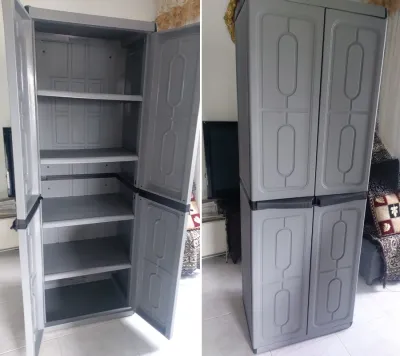
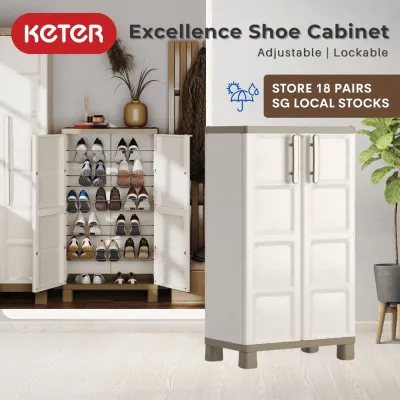
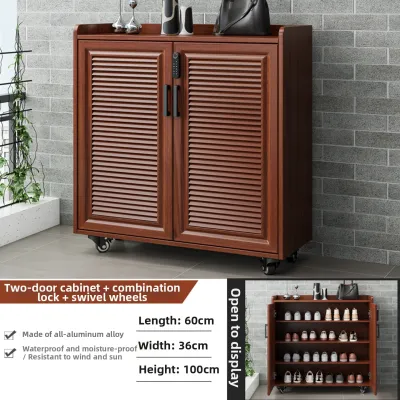
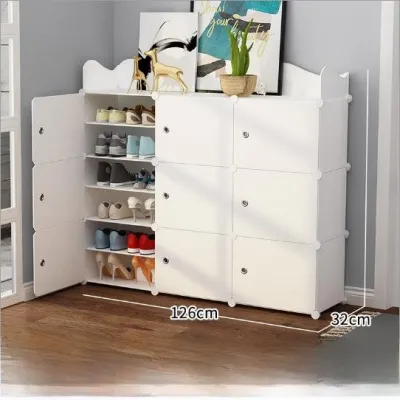
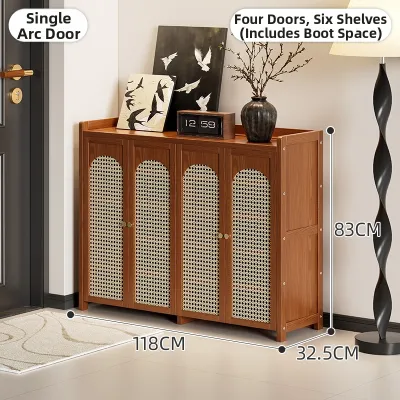
Prices are valid at publication and may change. Please refer to the product page for the latest price.
Next, translate this total pair count into physical shelf space. On average, a standard pair of men’s shoes requires a horizontal width of 22 to 25 centimeters, while women’s shoes require 18 to 22 centimeters. A shelf with an internal width of 80 centimeters can comfortably hold three to four pairs of shoes side by side.
Remember that external cabinet dimensions do not translate directly to usable internal storage. Heavy-duty waterproof panels, dual-wall structures, and integrated locking mechanisms consume internal volume. For example, a digital or mechanical lock housing can protrude several centimeters into the top shelf area, reducing the vertical clearance for the shoes placed directly underneath it. Always verify the actual internal shelf width and depth rather than relying solely on the external product specifications.
Match External Dimensions to Your Entryway and Corridor Constraints
Before purchasing any furniture, you must match its external dimensions to the physical realities of your entryway, balcony, or corridor. Start by measuring the maximum footprint available in your designated placement area, including the width, depth, and height. Ensure you leave adequate clearance for cabinet doors to swing open fully without striking walls, light switches, or adjacent furniture.

For residents living in Singapore HDB flats or condominiums, placing a shoe cabinet in a common corridor requires careful adherence to local safety rules. The Singapore Civil Defence Force (SCDF) and HDB maintain strict guidelines regarding corridor obstructions to ensure safe evacuation routes during emergencies. Generally, a minimum clear escape path of 1.2 meters must be maintained along the corridor at all times. Placing a deep cabinet in a narrow hallway can violate these fire safety regulations, potentially resulting in warnings or forced removal. Always check the latest local municipal or SCDF guidelines before deciding on a cabinet’s external depth.
To accommodate tight spaces, you might consider slim-profile cabinets with tilting compartments, which often have an external depth of only 15 to 20 centimeters. However, keep in mind that these tilting mechanisms limit the types of shoes you can store, often making them unsuitable for high heels or high-top sneakers. Standard swing-door cabinets usually require a depth of 32 to 35 centimeters to store shoes straight, which must be factored into your corridor measurements.
Additionally, you must map out the physical delivery path from the delivery vehicle to the final installation spot. Measure the height and width of your building’s elevator door, the clearance of stairwell turns if there is no lift access, and the clear opening of your main door frame. A fully assembled, heavy-duty waterproof cabinet can be incredibly bulky, and failing to verify these pathways beforehand can lead to delivery failures or costly return fees.
Verify Specifications for a Waterproof Shoe Cabinet with Lock
A cabinet labeled waterproof or lockable must live up to those claims in its specific placement environment. True waterproofing relies on high-quality materials and precise construction rather than generic marketing terms. When evaluating cabinets for semi-outdoor areas like Singapore’s HDB corridors, balconies, or damp ground-floor entryways, look for materials such as powder-coated aluminum, high-density polyethylene (HDPE), or specially treated marine-grade plywood.
Inspect the joints and edges of the cabinet closely. High-quality waterproof cabinets feature sealed edges and seamless panels that prevent rainwater or ambient humidity from seeping into the structure. Furthermore, ensure all hardware—including hinges, screws, and shelf brackets—is made from rust-resistant materials like stainless steel or solid brass. Standard steel hardware will quickly corrode in humid tropical climates, causing doors to sag and locks to jam.
The choice of locking mechanism should align with your specific security concerns. If your primary goal is to prevent opportunistic theft in a shared common corridor, a basic padlock hasp or a built-in mechanical key lock provides a visible physical deterrent. However, managing physical keys can be inconvenient if multiple family members need daily access. For greater convenience, digital combination locks or electronic keypad locks allow keyless entry via a PIN code, though they require periodic battery replacements and must be rated for outdoor humidity. If you are placing the cabinet indoors simply to keep expensive footwear away from curious pets or young children, a simpler magnetic child lock or basic utility lock may suffice.
In Singapore, basic plastic waterproof cabinets typically range from S$50 to S$150, while durable aluminum or marine-grade composite cabinets with secure digital locks can range from S$300 to over S$800. Finally, verify the manufacturer’s specified weight limits and care instructions. A large shoe collection can be surprisingly heavy; a single pair of heavy boots or leather shoes can weigh over one kilogram. Ensure the internal shelves are rated to support the cumulative weight of your collection without bowing. If shelves sag, it can misalign the cabinet doors, putting uneven stress on the hinges and preventing the locking mechanism from latching securely.
Avoid Common Sizing, Clearance, and Placement Mistakes
One of the most frequent errors when installing a waterproof shoe cabinet with lock is ignoring the door swing radius. Swing doors require a clear arc in front of the cabinet equal to the width of the door panel. If your entryway is narrow, opening the doors can completely block the passage or scrape against adjacent walls, damaging both the cabinet and your home’s paintwork. If space is tight, consider sliding doors or tambour doors, which do not require any forward clearance to open, though they may slightly reduce the maximum internal width.
Another common mistake is overlooking proper ventilation. While a waterproof cabinet is excellent at keeping external moisture out, an entirely airtight enclosure will trap the humidity carried in by worn shoes. Damp shoes placed inside a sealed, unventilated cabinet will quickly develop mold, mildew, and unpleasant odors. Look for cabinets with integrated ventilation grilles that are angled downward to prevent rain entry while allowing air circulation. Additionally, avoid pushing the cabinet flush against a damp outer wall; leave a gap of 2 to 5 centimeters to allow air to circulate behind the unit, preventing mold growth on the wall itself.
It is also vital to understand the limits of waterproof labeling. Most outdoor-rated shoe cabinets are designed to be weather-resistant, meaning they can withstand wind-blown rain, high humidity, and occasional splashes. They are not, however, designed to withstand standing water, flooding, or direct high-pressure hose washing. Spraying your cabinet directly with a garden hose during cleaning can force water through the seams, ventilation grilles, or lock keyways, damaging both the cabinet structure and the stored footwear.
Follow This Pre-Purchase and Installation Checklist
To ensure a seamless purchase and installation process, follow this step-by-step checklist before making your final decision:
- Pre-Purchase Verification:
- Measure the maximum width, depth, and height of your designated placement spot.
- Subtract the required clearance for door swings, drawer extensions, and walking paths.
- Confirm that the clear corridor width complies with SCDF and HDB fire safety guidelines (minimum 1.2 meters).
- Count your footwear, categorize by profile height, and add a 10% to 20% capacity buffer.
- Verify that the internal shelf dimensions (not just external dimensions) accommodate your largest shoes.
- Confirm the delivery route clearances, including elevator doors and entryways.
- Installation and Setup:
- Place the cabinet on a flat, stable surface and use a spirit level to check its alignment.
- Adjust the leveling feet if your floor is uneven, as an unlevel cabinet will cause door misalignment and stress the locking mechanism.
- Anchor tall, narrow, or heavy cabinets to the wall using the manufacturer-provided anti-tip hardware, especially in households with children or pets. Always check your wall type (e.g., concrete, brick, or drywall) and use the appropriate wall plugs and screws before drilling.
Frequently Asked Questions (FAQ)
Can I place a waterproof shoe cabinet outside my HDB flat door?
Yes, but you must strictly adhere to local safety regulations. The Singapore Civil Defence Force (SCDF) and HDB enforce strict rules regarding common corridor usage to prevent obstruction during emergencies. You must maintain a minimum clear escape passage of 1.2 meters, and the cabinet must not block fire hydrants, dry risers, or escape stairwells. Always consult the latest official guidelines from HDB and your Town Council, and obtain any necessary approvals before placing furniture in common areas.
How do I maintain the lock and hinges in a humid environment?
To protect your hardware from Singapore’s high humidity, regularly wipe down the metal hinges, tracks, and locking mechanisms with a dry microfiber cloth to remove accumulated moisture and salt residue. Avoid using harsh chemical cleaners that can strip away protective coatings. Apply a light coating of a manufacturer-approved lubricant or rust-inhibitor spray to the moving parts of the lock and hinges at least once every six months to ensure smooth operation and prevent corrosion.
Community discussion
Share your experience or ask a question. Comments are reviewed before publication.