
Finding the perfect bookshelf rack involves balancing your storage capacity with the physical layout of your room. In Singapore’s space-conscious apartments, selecting the wrong size can quickly make a room feel cramped or leave you with shelves that cannot accommodate your belongings. To choose the right size, you must measure your physical floor space, evaluate your storage needs, and ensure the unit can safely fit through your entryways.
By taking a systematic approach to measuring and planning, you can find a unit that fits seamlessly into your home. This guide will walk you through the essential steps to determine the ideal dimensions for your space, ensuring your new furniture is both functional and visually balanced.
Measure Your Available Space and Room Layout
Before browsing designs, you must establish the maximum physical boundaries of your room. Use a metal measuring tape to record the width of the wall, the available floor depth, and the ceiling height. Taking these measurements at multiple points along the wall is highly recommended, as floors and walls in residential buildings are rarely perfectly straight.
Products mentioned in this guide
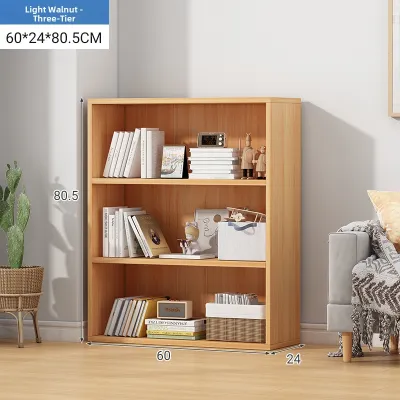
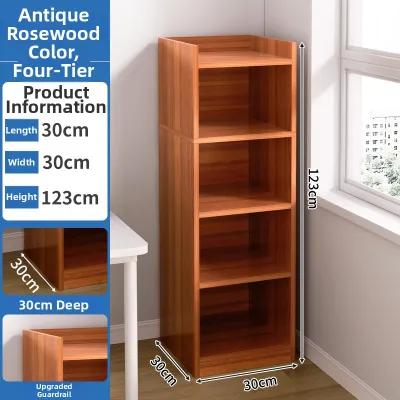
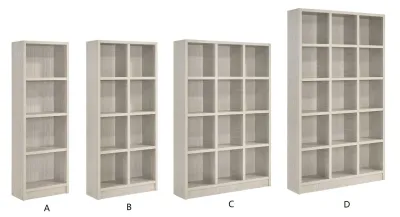
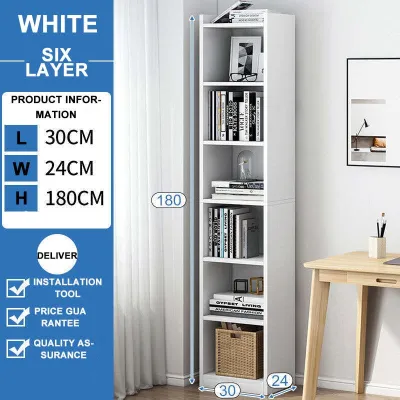
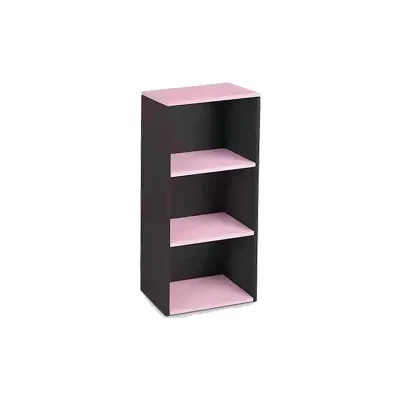
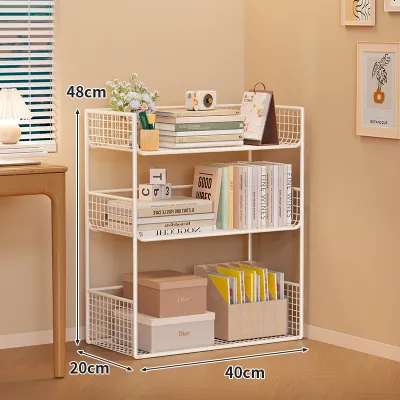
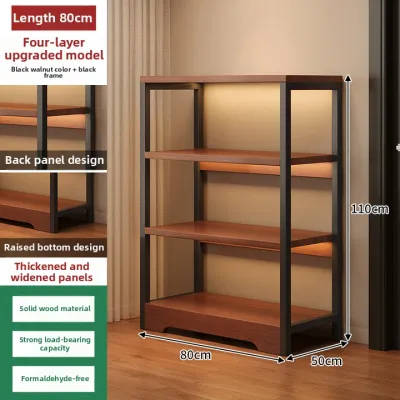
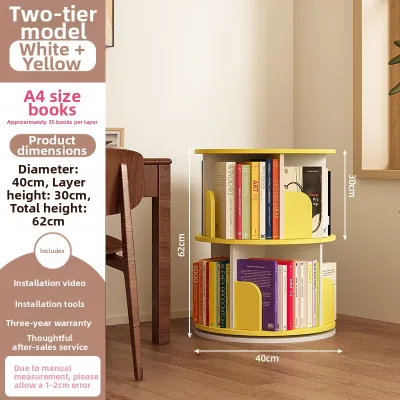
Prices are valid at publication and may change. Please refer to the product page for the latest price.
In Singaporean homes, such as HDB flats and condominiums, several architectural features can obstruct a bookshelf rack. Skirting boards or baseboards typically protrude 1 to 2 cm from the wall, preventing flat-backed furniture from sitting flush. If you want your rack to sit tight against the wall, look for units with a skirting cutout at the base, or subtract the skirting thickness from your available floor depth.
Wall-mounted fixtures and structural elements also dictate where a rack can stand. Air conditioning trunking often runs along the upper portions of walls or corners, which can severely limit the height of a tall unit. Additionally, ensure you do not block power outlets, light switches, or window sills that protrude into the room. If a rack must cover an outlet, choose an open-backed design that allows cords to pass through easily.
Finally, plan the delivery and assembly pathway from the building entrance to your room. Measure the height and depth of your estate’s elevator, the width of corridor turns, and the clearance of your main entryway. If you are purchasing a fully assembled solid-wood bookshelf rack, these dimensions are critical to ensure the item can physically enter your home. For flat-packed units, ensure you have enough floor clearance in the room to safely lay out the pieces and assemble them.
Match Bookshelf Rack Dimensions to Your Storage Needs
Your inventory of books and display items directly dictates the shelf depth and height clearance you require. Standard novels and paperbacks generally require a shelf depth of 15 to 20 cm, making them suitable for shallower units. In contrast, large art books, textbooks, vinyl records, and storage bins require a deeper shelf of 30 to 35 cm to prevent them from overhang.

Calculating vertical space requirements is equally important for organizing your collection. Fixed-shelf units offer excellent structural stability but limit you to pre-determined heights, which can leave wasted empty space above smaller books. Adjustable shelves provide the flexibility to customize compartment heights, allowing you to maximize vertical storage efficiency as your collection evolves over time.
Beyond physical storage, consider how the visual weight of the bookshelf rack affects your room’s proportions. A massive, dark-toned bookshelf rack with a solid back can easily dominate a small study, making the environment feel closed in. To maintain a sense of spaciousness, consider open-backed designs, lighter wood tones, or slender metal frames that allow light to pass through.
Utilizing vertical height is an excellent strategy for compact rooms. A tall, narrow bookshelf rack draws the eye upward, making the ceiling appear higher while maximizing storage on a minimal footprint. If you choose a tall design, ensure the upper shelves are reserved for lightweight items or decorative pieces to keep the unit’s center of gravity low.
Standard Bookshelf Rack Sizes and Spatial Footprints
Understanding standard industry dimensions helps you narrow down your search and set realistic expectations for your room layout. Bookshelf racks generally fall into three width categories, each serving different spatial and storage functions:
- Narrow or Tall Racks (40 to 60 cm wide): These compact units are highly versatile and fit easily into tight corners, narrow alcoves, or directly beside a desk or bed. They are ideal for studio apartments or small bedrooms where floor space is at a premium.
- Standard Mid-Sized Units (80 to 100 cm wide): This is the most common size range for living rooms, home offices, and dining areas. They offer a generous amount of storage space without overwhelming standard-sized rooms, making them a practical starting point for most households.
- Wide or Modular Systems (120 cm and wider): Designed for dedicated home libraries or spacious living areas, these systems can span entire walls. Modular options allow you to combine multiple units side-by-side, giving you the flexibility to expand your storage as your collection grows.
Shelf depth also plays a major role in how much floor space the rack occupies. Shallow racks measuring 15 to 20 cm deep are excellent for narrow hallways, entryways, and walkways because they do not impede foot traffic. Deep racks measuring 30 to 40 cm are better suited for heavy storage, storage boxes, and large-format items, but they require a larger room footprint to prevent the space from feeling restricted.
Clearance, Safety, and Installation Considerations
To maintain comfortable traffic flow, you must leave adequate walking clearance in front of your bookshelf rack. Ensure there is at least 60 to 90 cm of open space in front of the shelves. This clearance allows you to stand, bend down, and browse the lower shelves comfortably without bumping into other furniture or blocking doorways.
In Singapore’s humid tropical climate, proper ventilation is essential to preserve both your furniture and your books. Avoid pushing the bookshelf rack completely flush against the wall; instead, leave a gap of 2 to 5 cm behind the unit to facilitate air circulation. This small gap helps prevent moisture buildup, which can lead to mold growth on the back panel of the rack and damage your book collection.
While some materials are marketed as moisture-resistant, a material name alone does not guarantee durability against high humidity. Inspect the quality of the protective finish, check that the joints are tightly sealed, and follow the manufacturer’s care instructions to maintain the unit. Regularly wiping down the shelves and keeping the room well-ventilated will extend the lifespan of your furniture.
Anti-tip safety is a critical consideration, especially for tall or narrow units. Any bookshelf rack taller than 120 cm should be securely anchored to the wall to prevent accidental tipping. Before installation, check your wall type; concrete walls, common in HDB flats, require masonry drill bits and appropriate wall plugs, while drywall partitions require specialized toggle bolts. Always consult the manufacturer’s installation instructions and use the provided safety brackets.
Common Sizing Mistakes to Avoid
One of the most frequent errors is failing to account for skirting boards when measuring floor space. If your measurements are taken strictly wall-to-wall at waist height, you may find that the skirting boards at the floor level prevent the rack from fitting into a tight alcove. Always take your width measurements at the floor level, accounting for any baseboard protrusions.
Another common mistake is forgetting to measure the depth of nearby architectural trim, window sills, or wall-mounted light fixtures. A bookshelf rack that fits perfectly on paper might block a window frame or hit a light fixture once fully assembled. Walk around the designated area and look for any elements that extend outward from the wall.
Finally, do not overestimate your usable floor space by neglecting door swings and curtain drapes. Ensure that bedroom doors, wardrobe doors, and cabinets can open fully without striking the bookshelf rack. Additionally, leave enough clearance near windows so that heavy curtains can hang and slide freely without getting pinched behind the side of the rack.
Frequently Asked Questions (FAQ)
How much weight can a standard bookshelf rack hold?
A shelf’s weight capacity is determined by several structural factors rather than its overall size. The thickness of the shelf, the span width between supports, the type of joinery used, and the underlying material all play critical roles. To avoid sagging or structural failure, always check the manufacturer’s specific load specifications for each shelf before loading it with heavy books.
Can I use a tall bookshelf rack in a room with low ceilings?
Yes, you can use a tall rack in a room with low ceilings, provided you measure carefully. Subtract the height of any ceiling fans, light fixtures, or structural beams from your total ceiling height to ensure clearance. It is best to leave a gap of at least 10 to 15 cm at the top of the unit to allow for air circulation, cleaning access, and to prevent the room from feeling visually cramped.
Community discussion
Share your experience or ask a question. Comments are reviewed before publication.