
Choosing the right book shelf rack dimensions depends on measuring your available wall space, ensuring clear walkway clearances, and matching the shelf depth and width to your actual storage items. Whether you are organizing a compact study or displaying a large collection in your living room, selecting the correct proportions prevents your space from feeling cramped while ensuring your books are safely supported.
Measure Your Available Space Beyond the Basics
Measuring for a book shelf rack involves much more than simply running a tape measure along the base of a wall. To ensure a seamless fit, you must evaluate the entire three-dimensional volume of the designated area. Start by measuring the maximum width and height of the wall or corner where you plan to position the unit. If your room has false ceilings, decorative ceiling moldings, or exposed air conditioning trunking, measure the height from the floor to the lowest point of these overhead obstructions rather than the bare ceiling.
Walkway clearance is another critical factor that dictates how comfortable your room will feel. A book shelf rack should never impede the natural flow of traffic. As a general rule, maintain a clear walkway of at least 60 to 90 centimeters in front of the bookshelf. If you select a model with hinged doors or pull-out drawers, you must add the depth of the open doors or fully extended drawers to the unit’s base depth to calculate the total clearance required.
Products mentioned in this guide

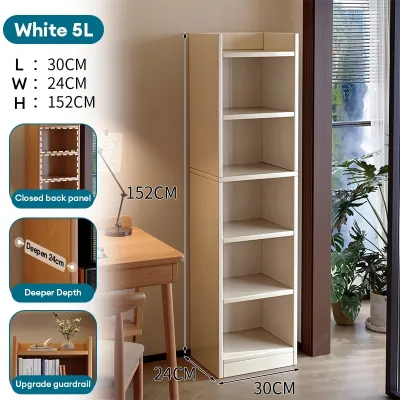
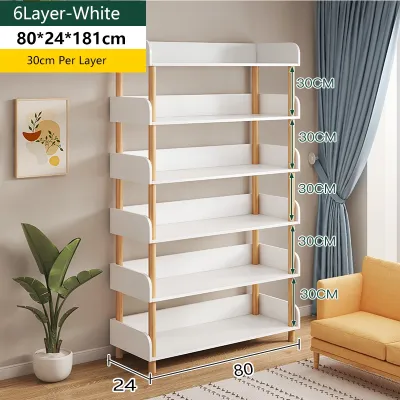
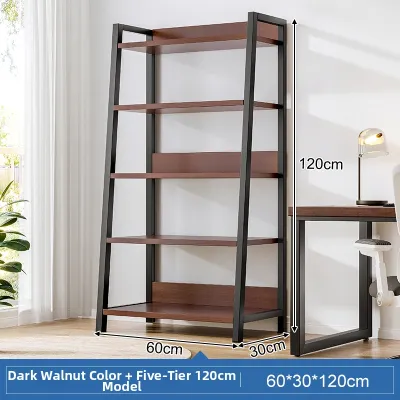
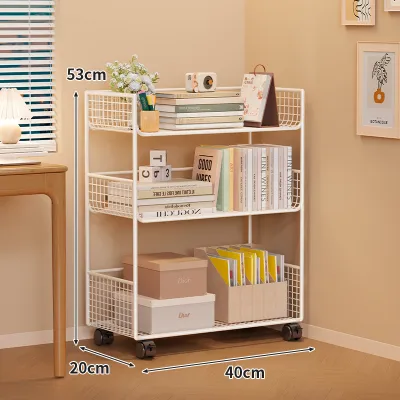

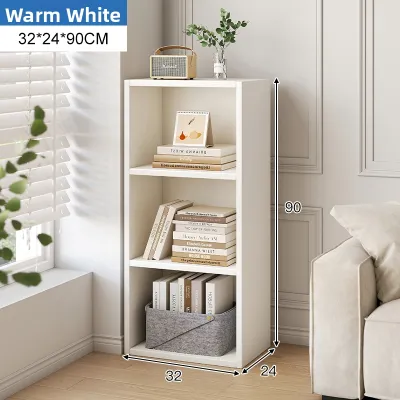
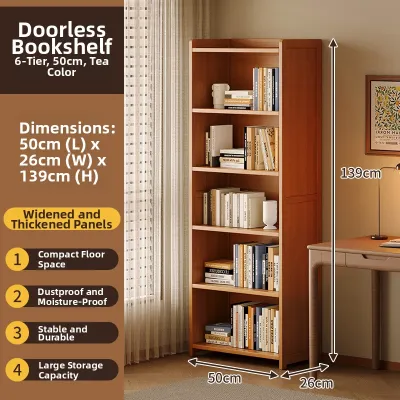
Prices are valid at publication and may change. Please refer to the product page for the latest price.
Several easily overlooked physical obstacles can disrupt your installation plans. Skirting boards, which typically project 1.5 to 2 centimeters from the wall, prevent furniture from sitting completely flush. If you do not account for this, a tall bookshelf may lean forward dangerously or fail to fit into a tight alcove. Look for units designed with a skirting board cutout at the base, or factor this gap into your depth calculations. Additionally, identify the locations of wall-mounted power outlets, light switches, internet data ports, and the swing radius of nearby doors or windows. Blocking these utilities can make your room highly dysfunctional.
Finally, map out the entire delivery and access route before finalizing your purchase. Many homeowners buy a beautiful, pre-assembled book shelf rack only to find it cannot fit inside the apartment building’s elevator, navigate tight corridor corners, or pass through the front doorway. Measure the height and width of your building’s lift doors, the interior cabin dimensions, and the clearance of all stairwells and hallways. If you live in an upper-floor apartment with restricted access, flat-pack furniture that can be assembled directly in the room is often the most practical choice.
Align Shelf Depth and Width With Your Storage Needs
The internal dimensions of your book shelf rack must directly align with the specific items you intend to store. Choosing a shelf that is too shallow will cause books to overhang, creating an untidy appearance and a potential safety hazard. Conversely, choosing a shelf that is excessively deep wastes valuable floor space and can make your room feel unnecessarily cramped.

To determine the ideal shelf depth, categorize your reading material and storage items:
- Standard Paperbacks and Novels: These compact books require a shelf depth of only 18 to 22 centimeters.
- Hardcovers and Textbooks: Larger novels, reference manuals, and standard office binders need a depth of 25 to 30 centimeters.
- Oversized Books and Records: Art books, vinyl records, and large decorative storage boxes require a depth of 35 to 40 centimeters.
If your collection is diverse, look for a book shelf rack with adjustable shelves. Adjustable shelving systems allow you to reposition the individual shelves at varying heights, maximizing vertical storage efficiency and eliminating wasted empty space above shorter books.
Calculating the total width of the bookshelf requires estimating the size of your current collection and planning for future growth. Measure the total linear meters of your books by grouping them together and measuring the length of the row. For example, if your books span 4 linear meters and you are considering an 80-centimeter-wide bookshelf, you will need at least 5 shelves of that width to accommodate them (400 cm / 80 cm = 5). Always add a buffer of 20% to 30% to this calculation to allow room for future acquisitions, bookends, and decorative items.
Keep in mind that the physical width of a shelf also affects its structural integrity. Long, unsupported shelves spanning more than 80 centimeters are prone to bowing or sagging under the weight of heavy books. When evaluating the materials of a book shelf rack—whether solid wood, engineered wood, or metal—remember that the material name alone does not guarantee resistance to moisture, scratches, or wear. In humid indoor environments, you must inspect the quality of the protective finish (such as laminate, lacquer, or powder coating) and the strength of the joints. Always review the manufacturer’s care instructions and ensure the unit is suited for your specific room conditions to prevent warping or structural degradation over time.
Choose the Right Height and Profile for Your Room Layout
The overall height and profile of your book shelf rack play a major role in the visual balance and functionality of your room. You must decide whether a tall, vertical configuration or a low, horizontal layout best suits your architectural constraints and storage goals.
Tall and Narrow Configurations for Small Footprints
Tall and narrow book shelf racks are highly effective solutions for rooms with limited floor space but ample vertical clearance. Typically standing between 180 and 220 centimeters high and measuring 40 to 60 centimeters wide, these units draw the eye upward, making compact rooms feel loftier and more spacious. They are ideal for tight corners, narrow alcoves, or the small spaces between other furniture pieces.
While vertical configurations maximize storage efficiency, they also present unique safety challenges. A tall, narrow bookshelf has a high center of gravity and can easily tip over if overloaded or subjected to accidental pulling. It is critical to anchor these units securely to the wall using appropriate anti-tip hardware. When installing, always check the manufacturer’s instructions and ensure you use the correct wall plugs and screws for your specific wall material—such as concrete anchors for solid masonry walls or toggle bolts for drywall partitions. This safety measure is non-negotiable, particularly in households with children or climbing pets.
Low and Wide Configurations for Open or Windowed Spaces
Low and wide book shelf racks, usually measuring 80 to 120 centimeters in height, offer excellent versatility for open-plan layouts or rooms with specific architectural features. These horizontal units fit perfectly beneath windows, under sloped ceilings, or along half-walls where a taller unit would block natural light or disrupt sightlines.
Using a low bookshelf as a room divider is a highly effective way to define separate zones—such as separating a study nook from a living area—without making the space feel enclosed. The low profile maintains an open, airy atmosphere and allows natural light to flow freely across the room. Additionally, the top surface of a low unit serves as a highly functional display platform. You can utilize this space to showcase potted plants, framed photographs, or table lamps, or even use the unit as a stylish media console beneath a wall-mounted television.
Common Bookshelf Sizing Mistakes to Avoid
Avoiding common sizing errors during the planning stage will save you from the frustration of dealing with unstable, poorly fitting, or unusable furniture.
One frequent mistake is ignoring the skirting board gap. If you measure the width of an alcove only at shoulder height, you may find that the skirting boards at the floor level prevent the bookshelf from sliding into place. Furthermore, if the unit does not have a base cutout to accommodate the skirting board, it will be pushed away from the wall at the bottom, causing the top to lean forward and creating a serious tipping hazard.
Another common error is overloading shallow or poorly constructed shelves. Heavy items like encyclopedias, textbooks, or ceramic decorative pieces should always be placed on the lowest shelves to keep the unit’s center of gravity low. Placing heavy items on upper shelves or exceeding the manufacturer’s recommended load capacity can lead to bowing shelves, joint separation, or structural failure.
Homeowners also frequently block essential ventilation, air conditioning airflow, or natural light sources. Placing a tall, deep book shelf rack directly beneath or adjacent to an air conditioning unit can disrupt the airflow pattern, reducing cooling efficiency. In humid climates, blocking the natural circulation of air behind large furniture pieces can trap moisture against the wall, creating an ideal breeding ground for mold and mildew that can damage both your books and your walls.
Finally, do not forget to check the weight capacity of your flooring, especially if you live in an upper-floor apartment or plan to place the bookshelf on a raised timber platform. A fully loaded bookshelf can exert significant concentrated weight on a small footprint. Ensure your flooring material can support this load without denting, warping, or cracking over time.
Frequently Asked Questions (FAQ)
What is the standard depth for a book shelf rack?
The standard depth for a typical book shelf rack ranges between 25 and 35 centimeters. This range is highly versatile, comfortably accommodating standard novels, hardcovers, and most decorative items. Deeper units measuring 40 centimeters or more are generally reserved for specialized storage, such as deep storage boxes, office binders, or electronic equipment. Always check the manufacturer’s exact product specifications before purchasing to ensure the interior shelf depth matches your storage needs.
How much clearance should I leave behind and around a bookshelf?
It is highly recommended to leave a clearance gap of at least 2 to 5 centimeters between the back of the book shelf rack and the wall. This gap ensures adequate airflow to prevent moisture buildup, accommodates skirting boards, and provides space for cable routing if you use integrated lighting. Additionally, leave at least 5 to 10 centimeters of clearance on the sides if the unit is placed near doorways, window curtains, or high-traffic walkways to prevent accidental collisions and allow for easy cleaning.
Community discussion
Share your experience or ask a question. Comments are reviewed before publication.