
Finding the ideal book rack shelf requires balancing your home’s physical layout with the practical demands of your reading collection. In Singapore, where residential space is highly optimized, choosing a storage unit is not just about aesthetics; it is a precise exercise in spatial planning. An improperly sized shelf can quickly overwhelm a room, block natural light, or leave you with sagging shelves and no room for future acquisitions. To make a successful purchase, you must evaluate your available wall space, account for unique architectural features, and calculate the exact linear capacity your books require.
Measuring Your Space for a Perfect Fit
Before browsing designs online or visiting a showroom, you must establish the exact physical boundaries of your intended installation area. Use a metal tape measure rather than a fabric one, as metal remains rigid over long distances and ensures highly accurate horizontal and vertical readings. Record the maximum width, height, and depth available on your chosen wall, keeping in mind that even a few millimeters of discrepancy can prevent a pre-assembled unit from fitting into its designated spot.
Residential layouts often feature architectural elements that restrict where a book rack shelf can sit flush against the wall. Skirting boards, which typically project 1 to 2 cm from the base of the wall, are frequently overlooked. If a book rack does not feature a base cutout to accommodate these boards, the entire unit will be forced away from the wall, creating an unsightly gap where dust accumulates and reducing the overall stability of the unit.
Products mentioned in this guide
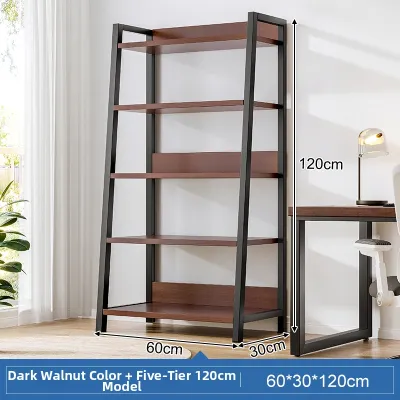
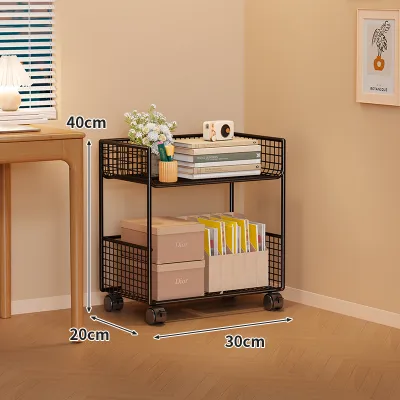
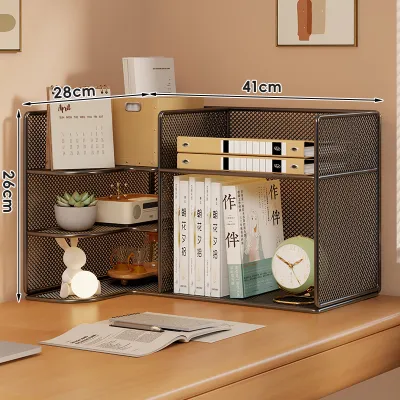
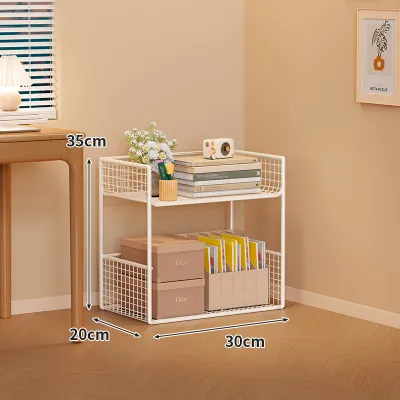
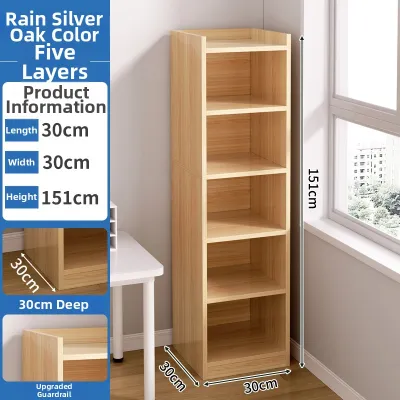
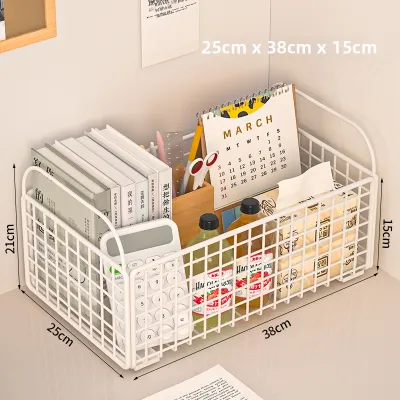

![[SG Stock] Bookcase Shelves Household Living Room Shelves Random Combination Of Storage /Complimentary Backplane](https://img.lazcdn.com/g/p/a63b6137d178423369e0951c109a7d58.jpg_webp_400x400q80.jpg_.webp)
Prices are valid at publication and may change. Please refer to the product page for the latest price.
Additionally, inspect the wall for electrical outlets, light switches, fiber broadband ports, and air conditioning trunking. Blocking access to power sockets or switches is highly inconvenient and can pose a safety hazard if you need to quickly unplug electronics. Air conditioning piping or structural concrete pillars running along the ceiling or corners can also limit the maximum height or depth of the shelf, meaning you must measure the clearance up to the lowest point of these obstructions.
Your measurements must also account for the flow of daily traffic and door operations. A book rack shelf should never impede walkways or restrict the movement of nearby doors, wardrobe panels, or windows. Maintain a clear walking path of at least 60 to 90 cm in front of the shelving unit to allow comfortable passage. If you select a model with lower cabinets, drawers, or pull-out desks, measure their fully extended depth to ensure they do not collide with other furniture or block the room’s entrance when open.
Finally, verify the consistency of your ceiling height. Concrete floors and ceilings in residential buildings can have minor level variances. Measure the vertical distance from floor to ceiling at the left, center, and right points of the intended wall space. If you plan to install a tall, near-ceiling unit, use the shortest measured height as your absolute limit to avoid purchasing a piece of furniture that cannot be stood upright during assembly.
Calculating the Capacity Your Book Collection Needs
Once you have mapped out the physical space, you must determine how much storage capacity your collection actually demands. Books vary significantly in weight and physical dimensions, and grouping your inventory by format is the most reliable way to estimate your spatial needs.

Standard mass-market paperbacks generally measure about 11 cm in width and 18 cm in height, requiring minimal vertical clearance. Trade paperbacks and standard hardcovers typically measure around 15 cm in width and 23 cm in height. Oversized volumes, such as art books, architectural folios, design magazines, or vinyl records, demand at least 30 to 35 cm of vertical clearance and a deeper shelf bed. Knowing the proportion of each book type in your collection prevents you from buying a unit with uniform, non-adjustable compartments that leave tall books stranded on their sides.
To calculate your required linear shelf space, line up your books tightly on a table or along a floor wall, just as they would stand on a shelf. Measure the total horizontal length of this line in centimeters. This number represents your current baseline storage requirement. For example, if your books measure 300 cm in total horizontal length, you will need at least three 100-cm shelves or four 75-cm shelves just to house your existing collection.
Always incorporate a 20% to 30% buffer for future purchases. Readers rarely stop acquiring books, and an immediately packed book rack offers no flexibility, forcing you to stack books horizontally or seek secondary storage solutions within months. If you are an avid reader who buys several books a month, consider a larger buffer or a modular system that can expand over time.
This calculation also dictates whether you should opt for fixed or adjustable shelves. Fixed shelves offer excellent structural rigidity but can result in wasted vertical space if you are storing small paperbacks on tall shelves. Adjustable shelf systems, which use pre-drilled peg holes, allow you to customize the height of each compartment to match the specific books housed there, maximizing the efficiency of your vertical space.
Matching Your Space to Standard Book Rack Shelf Dimensions
With your physical room measurements and your collection’s linear requirements in hand, you can map these numbers to standard market configurations to narrow down your choices.
Low consoles, which stand under 80 cm in height, are highly versatile. They fit comfortably underneath window sills, behind living room sofas, or along narrow hallways without making the space feel cramped. The top surface also doubles as a display area for plants, lamps, or art. However, their storage capacity is limited, making them best suited for smaller, curated collections.
Mid-height units ranging from 120 to 150 cm strike a practical balance for open-plan living areas. They provide substantial storage space while keeping sightlines open, ensuring the room remains bright and airy. These units work exceptionally well in shared home offices or dining rooms where you want storage without the imposing presence of a tall cabinet.
Tall units, standing between 180 cm and 210 cm or more, are the standard choice for dedicated study rooms or library walls. They utilize the vertical volume of your room, offering the highest storage-to-footprint ratio. When opting for tall units, always verify that the flat-pack packaging or pre-assembled frame can fit through your building’s lift doors and your apartment’s main entryway.
Width configurations must match your wall’s structural capacity and visual balance. Narrow single-column towers (40 to 60 cm wide) are highly stable and fit easily into tight corners or alcoves. Wide multi-column units (80 to 120 cm wide) provide a grand, cohesive look but require robust shelf materials to prevent sagging over the wider span.
Shelf depth is another critical dimension. Standard shelves are typically 25 to 30 cm deep, which comfortably accommodates paperbacks, novels, and standard textbooks. Deep shelves (35 cm or more) are designed for heavy binders, reference manuals, or double-row book storage. Double-rowing can double your storage capacity, but it hides the back row of books from view, making retrieval more difficult.
For those with evolving space constraints or rapidly growing collections, modular and expandable systems offer an adaptable solution. These systems allow you to start with a basic unit and add matching vertical or horizontal sections as your budget and storage needs increase.
Avoiding Common Sizing Mistakes and Safety Risks
A common purchasing error is ignoring the relationship between shelf depth and room traffic. A shelf that is too shallow causes books to overhang, which not only looks untidy but also increases the risk of books being knocked off by passing family members. Conversely, a shelf that is excessively deep for your book collection wastes valuable floor space in compact rooms.
Weight capacity is a critical safety and structural consideration. Books are deceptively heavy; a single shelf filled with dense hardcovers or textbooks can easily weigh over 25 kg. Before purchasing, check the manufacturer’s specified maximum load capacity per shelf. Do not rely solely on the material name as a guarantee of strength. While solid timber or heavy-duty steel are naturally robust, their actual load capacity depends on the thickness of the shelf, the span width, and the quality of the joint construction. Long, thin shelves made of low-density particleboard are highly prone to bowing (sagging) over time under heavy loads.
Safety boundaries must be strictly observed, especially with tall, top-heavy, or fully loaded units. Any book rack shelf exceeding 150 cm in height must be securely anchored to the wall to prevent accidental tip-overs. This safety measure is crucial in households with young children or pets who might attempt to climb the shelves. When installing, always refer to the manufacturer’s instructions and use the provided anti-tip hardware. In Singapore homes, walls are typically made of solid concrete or drywall partitions. Ensure you use the correct wall plugs—such as expansion masonry plugs for concrete walls or toggle bolts for drywall—to secure the brackets firmly.
Additionally, consider the logistics of delivery and assembly. Exceptionally large, solid-wood, or pre-welded metal units are incredibly heavy and difficult to maneuver through tight corridors, stairwells, or lift doors. Verify the shipping dimensions and weight of the product, and ensure your home’s flooring can support the concentrated weight of a fully loaded solid-wood unit without indentation.
Frequently Asked Questions (FAQ)
How deep should a book rack shelf be for standard paperbacks and hardcovers?
A standard shelf depth of 25 to 30 cm is highly recommended, as it comfortably accommodates almost all standard fiction paperbacks, trade paperbacks, and hardcovers without leaving excessive wasted space in front of the books. To be certain, measure the deepest book in your current collection. If you own oversized art books, architectural folios, or large reference binders, you will need a specialized shelf depth of at least 35 cm to prevent the items from overhanging the edge.
Do I need to anchor a freestanding book rack shelf to the wall?
Yes, wall anchoring is strongly recommended for any freestanding book rack shelf that stands over 150 cm tall, or any shorter unit that is top-heavy or fully loaded. Tall shelving units can easily tip forward if they become unbalanced, posing a severe safety risk to children or pets. Always consult the manufacturer’s installation manual for specific anchoring guidelines. When mounting to concrete walls common in Singapore, use high-quality masonry wall plugs and screws; for gypsum drywall partition walls, utilize appropriate toggle bolts or hollow-wall anchors to ensure a secure, stable hold.
Community discussion
Share your experience or ask a question. Comments are reviewed before publication.