
To choose the right bed leg risers, you must calculate the total combined weight of your bed setup, measure the exact dimensions of your bed frame legs, and determine your desired under-bed clearance. In space-constrained homes, maximizing vertical space with a reliable leg riser is an excellent way to add storage. However, selecting the wrong size or weight capacity can lead to unstable sleep setups, damaged floors, or structural failure. Focusing on load capacity, cup shape, height, and material durability ensures a safe and stable upgrade.
Calculate Your Bed's Total Weight for Safe Load Capacity
To prevent structural failure, calculate the total weight your bed risers must support. This includes both the static weight of the furniture and the dynamic weight of the sleepers. Many shoppers look only at the “total weight capacity” on the packaging without reading the fine print. Some brands list the combined capacity of a four-pack (e.g., 500 kg), while others list the capacity per individual riser (e.g., 125 kg). Misinterpreting these numbers can easily lead to overloading.
To find your bed’s actual weight, use this formula:
Products mentioned in this guide
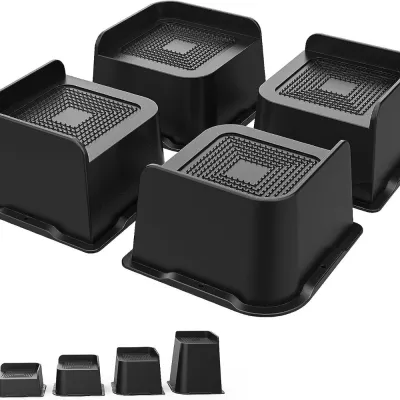
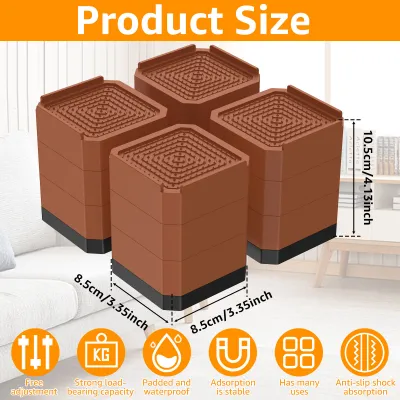

![[SG] 4PCS Adjustable Increase Table Height Foot Pad Furniture Legs Heightening Bed Washing Machine Raiser](https://img.lazcdn.com/g/p/666f1b33c6223679f081148eb8d67da7.jpg_400x400q80.jpg_.webp)
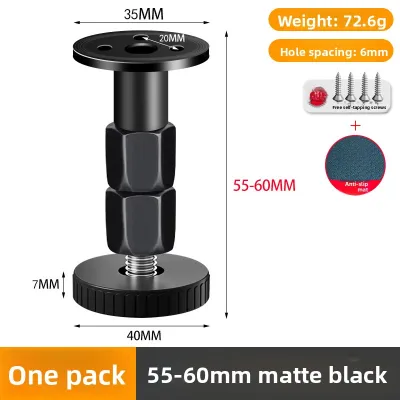
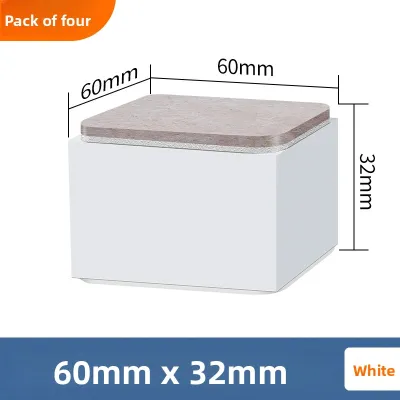
Prices are valid at publication and may change. Please refer to the product page for the latest price.
- Mattress Weight: A standard queen or king pocket-spring mattress weighs 30 to 50 kg. Latex and hybrid models can be heavier.
- Bed Frame Weight: Solid wood, upholstered, or metal bed frames generally weigh 40 to 80 kg.
- Sleepers' Combined Weight: Add the actual weight of all individuals using the bed.
- Bedding and Accessories: Factor in an additional 5 to 10 kg for heavy duvets, toppers, and headboards.
Once you have this sum, add a safety margin of 20% to 30% to account for dynamic loads. When you sit on the edge, roll over, or get in and out of bed, you exert localized, sudden forces that far exceed static weight. A setup with a static weight of 300 kg can easily experience momentary forces of 400 kg or more.
However, blindly choosing the highest industrial-grade weight rating is unnecessary. Extremely high-capacity risers are often made of thick steel or massive industrial plastics. These over-engineered bases are bulky and can ruin your bedroom’s visual appeal. Furthermore, their rigid designs concentrate pressure on small areas, which may crack delicate floor tiles or leave permanent indents in vinyl planks. Matching your calculated weight with a reasonable safety buffer is the safest and most practical approach.
Match the Cup Size and Shape to Your Bed Frame Legs
A secure, wobble-free fit depends entirely on matching the riser’s cup size and shape to your existing bed frame legs. Before buying, measure the exact width, depth, and profile of your bed legs. Bed legs are not standardized; they can be round, square, rectangular, or tapered. Using a square riser cup for a round leg can create uneven pressure points and cause the leg to slip out of place.

The inner diameter of the riser cup must be slightly larger than the outer diameter of your bed leg. A clearance of 2 to 5 millimetres is ideal. This allows the leg to slide in easily without forcing it, but is small enough to prevent shifting during use. If the cup is too tight, the leg will rest on the rim, creating an unstable setup. If the cup is too large, the leg will slide around, causing the bed to wobble.
If your bed frame has casters or wheels, standard flat-cup risers are unsafe. Lateral forces generated when you move can cause the wheels to roll out of a shallow cup, leading to a sudden collapse. For wheeled beds, look for specialized deep-caster cups with contoured recesses or internal rubber grip channels. Alternatively, remove the casters entirely and place the static legs directly into standard risers.
Platform beds or frames without traditional legs present a different challenge. If your bed frame relies on a wide wooden plinth, a continuous perimeter base, or broad block legs, standard cup risers cannot accommodate them. Attempting to balance a wide base on narrow cup risers will damage both the frame and the risers. In these scenarios, look for flat-top risers or heavy-duty adjustable stacking blocks designed specifically for broad, flat contact points.
Choose the Right Height for Storage and Accessibility
Bed leg risers typically come in standard heights of 2 inches (approx. 5 cm), 3 inches (approx. 7.5 cm), 5 inches (approx. 12.5 cm), and 8 inches (approx. 20 cm). Choosing the right height requires balancing your desire for extra under-bed storage with practical daily ergonomics.
To optimize storage space, measure the items you plan to tuck away. If you intend to store plastic bins or suitcases, measure their height first. If your current under-bed clearance is 10 cm and your storage bins are 15 cm tall, a 3-inch (7.5 cm) riser provides the perfect clearance. Choosing a height that precisely matches your storage needs prevents you from raising the bed higher than necessary, preserving the structural stability of the frame.
Accessibility and ergonomics must not be overlooked. Raising a bed too high can make getting in and out of bed difficult and potentially unsafe. If the top of your mattress ends up more than 25 to 30 inches (63 to 76 cm) from the floor, it can strain your knees and hips. This height is particularly challenging for children, older adults, or anyone with joint pain and mobility issues. Ideally, when you sit on the edge of your mattress, your feet should rest flat on the floor with your knees bent at a comfortable 90-degree angle.
Visual proportion is another key factor. Extremely tall risers can make a bed look top-heavy and awkward, throwing off the design balance of your bedroom. They also expose the unfinished underside of the bed frame, mattress base, and stored clutter. If you must use taller risers, consider pairing them with an extra-long bed skirt or valance to hide the risers and keep your bedroom looking neat and cohesive.
Material and Base Design: What Actually Matters for Stability
When evaluating stability, do not rely solely on marketing buzzwords. Terms like “heavy-duty plastic,” “solid wood,” or “premium steel” do not automatically guarantee durability. Instead, look for concrete structural features. For plastic risers, inspect the underside for molded reinforcement ribs or a dense honeycomb grid pattern. These internal structures distribute weight evenly and prevent the plastic from flexing or cracking under heavy loads. For wooden risers, ensure they are carved from solid hardwood blocks rather than hollowed-out composite or pressed wood, which can split along the grain under continuous pressure.
The width of the riser’s base is just as important as its material. A wide, flared base footprint distributes the weight of the bed over a larger surface area. This distribution prevents the riser from sinking into thick carpets or concentrating pressure on hard surfaces like parquet or tile, which can cause permanent indents. A wider base also lowers the center of gravity, making the entire bed setup significantly more stable.
Floor protection features are a must-have for preserving your home’s flooring. Look for risers that come with built-in non-slip rubber pads, silicone grips, or felt protectors on the bottom. If your chosen risers do not have these features, plan to buy aftermarket self-adhesive heavy-duty felt pads to prevent scratching hardwood, laminate, or vinyl floors during daily use.
Safe Installation and Stability Verification
Installing bed leg risers requires care to prevent injury and ensure long-term stability. Before you begin, strip the bed completely of mattresses, pillows, and heavy bedding. Attempting to lift a fully loaded bed frame is dangerous and can lead to back strain or damage to frame joints. We strongly recommend having a second person assist you. One person can lift the corner of the frame while the other carefully positions the riser.
When placing the risers, ensure each bed leg is seated perfectly centered inside the cup. The leg must rest flat against the very bottom of the cup. If a leg is misaligned and rests on the inner lip or rim of the cup, the weight will be distributed unevenly. Over time, the leg will slip off the rim, causing the bed to tilt suddenly and potentially damaging the frame or the floor.
Once all risers are installed, perform a thorough stability check before rebuilding the bed. Apply firm downward pressure to all four corners and the center of the bed frame. Give the frame a gentle shake from side to side, listening closely for any creaking, squeaking, or shifting sounds.
Finally, perform a routine maintenance check after the first two weeks of use. As you sleep on the bed, the frame, legs, and risers will naturally settle under the continuous weight. A quick visual inspection ensures that all legs remain perfectly centered in their cups and that no cracks or shifting have occurred.
Frequently Asked Questions (FAQ)
Can I use bed risers on a bed frame with wheels or casters?
Standard flat-top or shallow-cup risers are unsafe for bed frames with casters, as the wheels can easily roll out of the cup when you shift or get into bed. To secure a wheeled frame safely, choose specialized deep-caster cups equipped with internal grip textures or deep recesses that lock the wheel in place. Alternatively, consider removing the wheels entirely and resting the static frame legs directly into standard risers for maximum stability.
Will bed risers damage my hardwood or laminate floor?
Floor damage typically occurs when concentrated weight from hard plastic or metal risers scrapes against the floor, or when the riser shifts under lateral movement. To protect your hardwood or laminate floors, choose risers with wide, flat bases that distribute weight evenly. Ensure they feature built-in non-slip rubber or felt pads on the bottom, or apply heavy-duty, self-adhesive furniture protectors to the base of the risers before setting up the bed.
Community discussion
Share your experience or ask a question. Comments are reviewed before publication.