
Choosing the right balcony cabinet size for a compact HDB service yard requires balancing your storage needs with strict spatial, structural, and environmental constraints. A poorly sized unit can block essential walkways, interfere with utility access, or suffer rapid deterioration from moisture and sun exposure. By systematically measuring your space, accounting for delivery access, and verifying material specifications, you can select a cabinet that maximizes organization while keeping your service yard safe and functional.
Measure Your Service Yard Before Buying
Before browsing online marketplaces or furniture showrooms, grab a measuring tape to map out the exact physical boundaries of your service yard. Measure the width, height, and depth of the specific alcove or wall space where you plan to position the cabinet. Write down these maximum dimensions as your absolute physical limit, keeping in mind that even a few millimeters of error can prevent a pre-assembled cabinet from sliding into place.
In addition to the final installation spot, you must measure your home’s entry points to ensure the cabinet can actually reach the service yard. Check the finished dimensions of the cabinet against the clearance heights and widths of your main door, hallway corridors, kitchen entrance, and lift doors. If the cabinet is delivered fully assembled, failing to verify these access routes can result in a unit that is impossible to bring inside.
Products mentioned in this guide
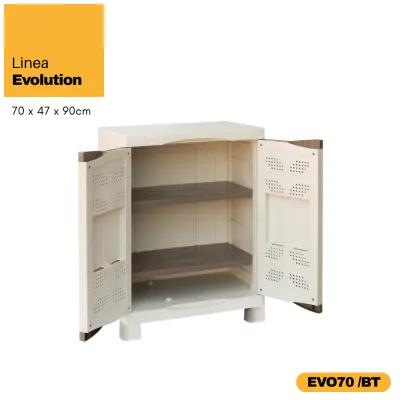
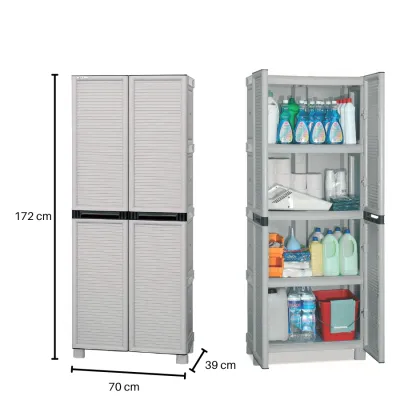
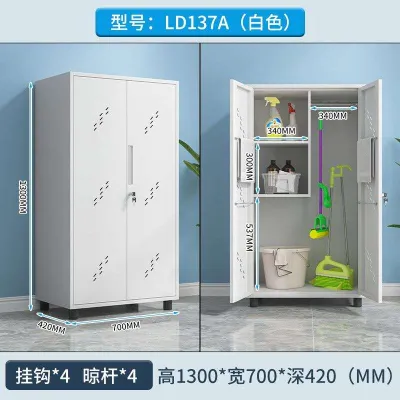
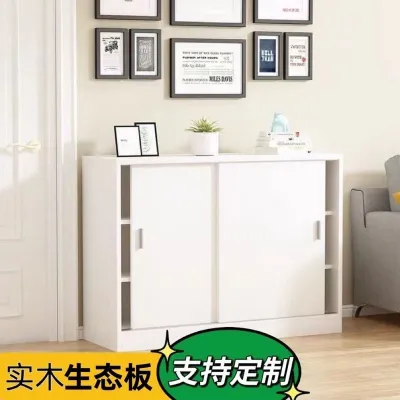
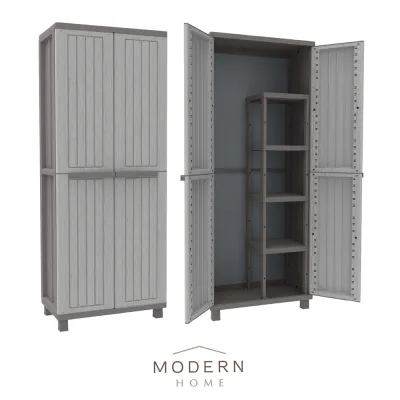
![[SG] Optimus Large Storage Cabinet Grey | Heavy Duty Plastic Cabinet | Suitable For Corridor Outdoor Space Foyer Balcony Garden Yard Storeroom | Good for storing Gardening Tools Handy-Man Tools Bulky Items Household Items Clothes](https://img.lazcdn.com/g/p/4e56f99017231025537667677f0c2155.jpg_400x400q80.jpg_.webp)
Prices are valid at publication and may change. Please refer to the product page for the latest price.
HDB service yards are highly functional zones filled with structural elements that you cannot move. Look closely at the wall and floor area to identify protruding obstacles such as copper water pipes, gas meters, air conditioning condenser brackets, and vertical drainage stacks. Your measurements must subtract the depth of these fixtures to ensure the cabinet does not press against them or block access for future maintenance.
Beyond the static footprint of the cabinet, you must calculate the dynamic space required for daily use. Measure the clearance needed to fully open cabinet doors or pull out drawers without hitting nearby walls or appliances. Ensure there is enough remaining floor space for a person to stand comfortably in front of the open cabinet, maintaining a clear walkway for carrying laundry baskets.
Finally, verify the swing radius of nearby windows, bifold doors, or sliding glass panels. A cabinet that is too deep or placed too close to an opening can restrict window movement, blocking natural ventilation and light. Ensure that any adjacent doors can swing completely open to avoid accidental collisions that could damage both the door frame and the cabinet exterior.
Match Cabinet Dimensions to Your Space Constraints
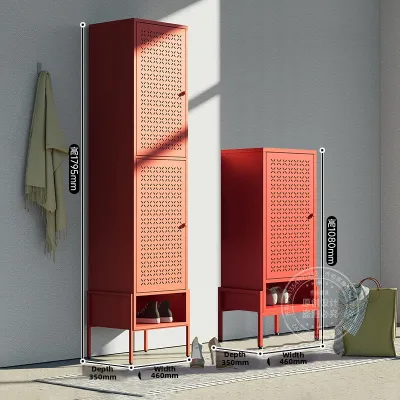
Once you have your maximum dimensions, you can select a cabinet configuration that optimizes your limited floor area. In narrow HDB service yards, shallow-depth cabinets are highly effective. Standard cabinets often measure 60 centimeters deep, but choosing a slimline model with a depth of 30 to 40 centimeters keeps the central walkway clear while still providing ample storage for laundry detergents, cleaning supplies, and household tools.

To maximize storage capacity without consuming valuable floor space, look upward and consider tall, narrow utility cabinets. Utilizing vertical space allows you to store long items like brooms, mops, and vacuum attachments. When selecting a tall unit, ensure the height leaves enough clearance from overhead clothes drying racks or ceiling beams so you can access the top shelves comfortably.
Wall-mounted or floating cabinets offer another excellent way to keep the floor clear, making it easier to wash the service yard floor. However, before purchasing a wall-mounted unit, you must verify the load-bearing capacity of your service yard walls. HDB partition walls or lightweight concrete panels have strict weight limits, requiring specialized wall plugs and anchors to prevent the cabinet from pulling away from the wall under heavy loads.
Multi-functional or folding designs, such as drop-leaf worktables attached to the side of a cabinet, can provide temporary folding space for laundry. When evaluating these space-saving options, check the manufacturer’s specifications for the hinges and structural supports. Ensure the folding mechanisms are rated for the weight of your laundry baskets and that the extended table does not completely block the service yard exit during use.
Verify Environmental Suitability and Material Care
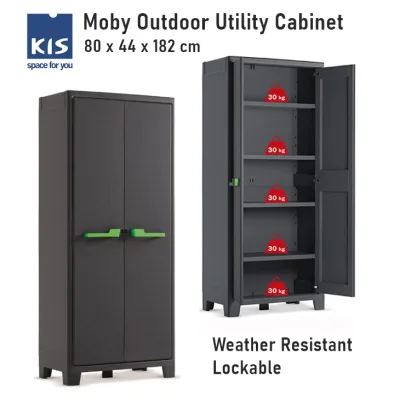
HDB service yards are semi-outdoor spaces exposed to high humidity, wind-blown rain, and direct sunlight. Because of these harsh conditions, a standard indoor wooden cabinet may warp, swell, or develop mold within a few months. Always check the manufacturer’s product label to verify that the cabinet materials are rated for semi-outdoor or high-moisture environments. Look for rust-proof hardware, such as stainless steel hinges, and UV-resistant finishes that prevent plastic or laminate from cracking.
Do not assume that a material name alone guarantees durability. Even if a cabinet is labeled as water-resistant or outdoor-grade, you must inspect the quality of the joints, edge banding, and protective finishes. Poorly sealed edges can allow moisture to seep into the core material, leading to swelling and structural failure over time.
Proper air circulation is essential to prevent mold growth and trapped humidity behind your storage units. When positioning your cabinet, plan for a small ventilation gap of at least two to five centimeters between the back of the cabinet and the wall. This gap allows air to flow freely, reducing the risk of dampness building up and damaging both the cabinet backing and your wall paint.
Water pooling is a common occurrence in service yards due to washing machine discharge or heavy rain blowing through the louvers. To protect your cabinet from standing water, choose a model with raised, adjustable feet or place the unit on a waterproof base pad. Keeping the bottom of the cabinet frame off the wet floor prevents moisture from seeping into the base material and causing structural decay.
Review the manufacturer’s care instructions to understand the long-term maintenance requirements of the surface treatment. Some materials require periodic wiping with a dry cloth, while others can handle mild detergents. Avoid using abrasive cleaners that could scratch the protective coating, exposing the underlying material to moisture and rust.
Ensure Safe Installation and Unobstructed Access
A well-placed cabinet must never compromise the safety or functionality of your home. Ensure that the installed cabinet does not obstruct emergency escape routes, fire safety equipment, or access to utility meters. Technicians must be able to read your gas and water meters easily, and service personnel must have clear access to your washing machine’s water inlet valves and electrical outlets for maintenance.
Tall cabinets present a significant tip-over hazard, especially when loaded with heavy cleaning agents or when doors are pulled open quickly. To guarantee stability, plan to anchor any cabinet taller than one meter to the wall. Check your wall material—whether solid concrete or hollow brick—and use the appropriate heavy-duty wall anchors and brackets recommended by the manufacturer.
If you plan to place a cabinet directly above a washing machine or dryer, ensure there is adequate top clearance. Washing machines vibrate during spin cycles and dryers generate significant heat. Follow the appliance manufacturer’s guidelines for heat dissipation and vibration clearance to prevent the cabinet from shifting, rattling, or overheating.
Before drilling any holes into your service yard walls for mounting brackets or anti-tip anchors, stop and verify the location of concealed utilities. HDB walls contain hidden water pipes, electrical conduits, and gas lines. If you are unsure of the pipe layout, consult a qualified professional installer or use a reliable wall scanner to avoid costly and dangerous structural damage.
Frequently Asked Questions (FAQ)
Can I install a balcony cabinet directly above a washing machine?
Yes, but you must strictly follow the clearance and safety guidelines provided in your washing machine’s user manual. Washing machines require adequate space at the top and sides for heat dissipation and to accommodate physical vibration during high-speed spin cycles. Use a sturdy, independent wall-mounted shelf or a dedicated metal shelving frame that spans over the appliance without touching it. Avoid placing moisture-sensitive items, such as paper products or delicate electronics, in a cabinet located directly above water-using appliances where humidity levels are naturally higher.
How do I handle uneven floors or sloped drains in the service yard?
HDB service yard floors are intentionally sloped toward the floor trap to ensure water drains away quickly. To prevent your cabinet from wobbling or sitting at an angle, choose a model equipped with adjustable leveling feet. Adjust each foot individually until the cabinet is perfectly level, which ensures the doors align correctly and close securely. Never place a solid cabinet base directly over a floor waste trap or block the natural drainage gradient, as this can trap water, cause pooling, and lead to mold growth or water damage.
Community discussion
Share your experience or ask a question. Comments are reviewed before publication.