
To choose the right Azure mattress firmness, you must align your dominant sleeping position and body weight with the correct level of structural support. Your sleeping posture determines where your body requires contouring or resistance, while your physical weight dictates how deeply you will compress the comfort layers. Matching these two variables ensures your spine remains in a neutral, healthy alignment throughout the night.
In Singapore’s warm and humid climate, selecting a mattress with the correct firmness is also essential for thermal comfort. A mattress that is too soft can wrap around the body, trapping heat, whereas a mattress with the correct resistance promotes better air circulation around the sleep surface. By assessing your physical needs and understanding how different materials respond to pressure, you can select a model that delivers both restorative sleep and long-term physical comfort.
Understand the Universal Mattress Firmness Scale
The mattress industry uses a standardized 1 to 10 scale to measure firmness, providing a universal language for manufacturers and consumers. On this scale, a rating of 1 represents an extremely plush, cloud-like surface with almost no resistance, while a 10 represents an exceptionally hard, rigid surface similar to sleeping on a carpeted floor. Understanding this scale is the first step in identifying which Azure mattress model will suit your body structure and support requirements.
Products mentioned in this guide

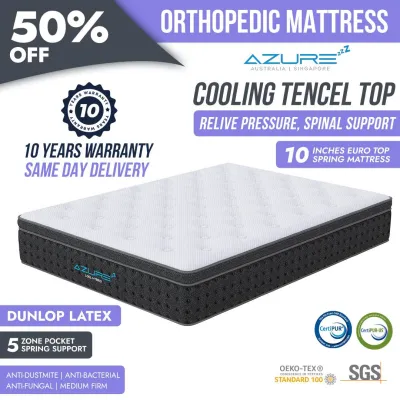

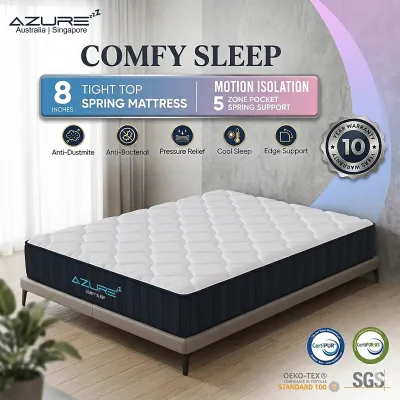
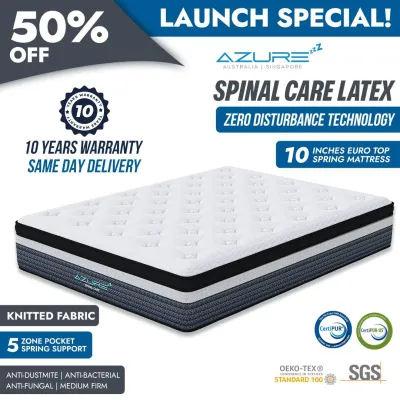

Prices are valid at publication and may change. Please refer to the product page for the latest price.
The scale is typically divided into four primary categories:
- Soft (3 to 4): Highly contouring surfaces that compress easily under minimal pressure, designed for deep cushioning.
- Medium (5 to 6): A balanced feel that offers a blend of initial cushioning and moderate upward support.
- Medium-Firm (7): The industry standard for versatile support, offering minor surface contouring with a highly supportive underlying structure.
- Firm (8 to 9): High-resistance surfaces that minimize sinkage, keeping the sleeper positioned flat on top of the mattress layers.
Because individual perception of firmness can be subjective, you should always cross-reference these general categories with the official product specifications, tags, or digital product sheets provided by the manufacturer. Brand-specific naming conventions can vary, and a medium-firm rating from one manufacturer might feel slightly different from another due to the specific layering of pocket springs, latex, or memory foam. Always verify the exact numerical rating or manufacturer description on the official product page before finalizing your purchase.
Diagnose Your Primary Sleeping Position
Your dominant sleeping posture is the single most important factor in determining your baseline firmness needs. During sleep, your muscles relax, leaving your skeletal structure entirely dependent on the mattress to maintain neutral spinal alignment. If a mattress fails to support your specific posture, your spine will bend unnaturally, leading to chronic muscle tension, stiffness, and morning aches.

Side Sleepers
Side sleeping is one of the most common positions, but it places highly concentrated pressure on the shoulders and hips. If the sleep surface is too rigid, these prominent joint areas will bear the brunt of your body weight, cutting off circulation and causing tossing and turning. Consequently, side sleepers generally require a softer mattress, typically falling in the medium-soft to medium range (around 3 to 5 on the firmness scale).
This softer surface allows the shoulders and hips to sink deep enough into the comfort layers to align with the narrower waist and neck. By facilitating this localized sinkage, the mattress cradles the body’s natural curves, distributing weight evenly and keeping the spine in a straight, horizontal line from the base of the skull to the tailbone.
Back Sleepers
Back sleepers require a balanced sleep surface that preserves the natural curve of the spine. The primary challenge for back sleepers is supporting the lumbar region without allowing the pelvis to sink too deeply. To achieve this balance, back sleepers typically perform best on a medium to medium-firm mattress, ranging from 5 to 7 on the firmness scale.
A mattress in this range provides enough surface contouring to fill the gap beneath the lower back while offering sufficient resistance to keep the hips level with the shoulders. If the mattress is too soft, the heavy pelvic area will sag, causing a painful forward bend in the spine; if it is too firm, the mattress will fail to contour to the lower back, leaving the lumbar muscles strained as they work overnight to support themselves.
Stomach Sleepers
Stomach sleeping is highly demanding on the lower back and requires a firm to extra-firm surface, generally between 7 and 9 on the scale. When sleeping on your stomach, the majority of your body weight is concentrated around your midsection and pelvis. Without adequate upward resistance, your hips will sink deep into the mattress, causing your spine to hyperextend into an unnatural arch.
To prevent this spinal distortion, stomach sleepers must choose a mattress that keeps the body flat and elevated on top of the comfort layers. A firm surface ensures the hips remain level with the shoulders, reducing tension in the lumbar muscles and preventing neck strain from an exaggerated sleeping angle.
Combination Sleepers
Combination sleepers are individuals who shift between multiple positions—such as moving from their back to their side—throughout the night. For these sleepers, a highly specialized firm or soft mattress can cause discomfort during transitional phases. Instead, combination sleepers benefit most from a versatile medium or medium-firm mattress, typically rated between 5 and 7.
A medium-firm surface serves as an excellent compromise, offering enough pressure relief for side sleeping while maintaining the structural integrity needed for back or stomach support. Additionally, this firmness level typically provides better responsiveness, making it easier to roll over and change positions without feeling like you are sinking into a deep, inescapable pocket of foam.
Adjust for Your Body Weight
While your sleeping position provides a reliable baseline, your body weight dictates how much force you actually exert on the mattress materials. A mattress that feels medium-firm to an average-weight person may feel incredibly rigid to a lighter individual or excessively soft to a heavier person. To ensure optimal spinal alignment, you must adjust your baseline firmness choice based on your weight category.
Lighter Individuals
Lighter individuals, generally defined as those weighing under 60 kilograms, exert less downward pressure on the mattress surface. Because of this, they often do not compress the upper comfort layers deeply enough to reach the supportive core of the mattress. This lack of compression can make a standard medium-firm mattress feel significantly firmer than its official rating suggests.
If you fall into this weight category, you should consider choosing a mattress that is slightly softer than the standard recommendation for your sleeping position. Selecting a model with a plush comfort layer or a lower firmness rating ensures that you still receive adequate contouring, pressure relief, and joint cradling despite exerting less physical force on the bed.
Average-Weight Individuals
Average-weight individuals, typically weighing between 60 and 85 kilograms, generally experience mattress firmness exactly as the manufacturer intended. The comfort and support layers are engineered to compress proportionally under this amount of weight, providing the calibrated balance of sinkage and resistance advertised on the product page.
If you are in this weight range, you can confidently stick to the baseline recommendations derived from your primary sleeping position. Focus your decision-making on material preferences, thermal regulation, and specific support features, as the standard firmness ratings will align closely with your physical experience of the mattress.
Heavier Individuals
Heavier individuals, generally defined as those weighing over 85 kilograms, compress mattress layers much more deeply than average-weight sleepers. This deeper compression can cause standard comfort layers to bottom out, making a medium mattress feel excessively soft and causing the body to sink into a ‘hammocking’ posture that misaligns the spine.
To combat this sinkage, heavier individuals should opt for a firmer mattress than their sleeping position would typically require, or look for Azure models specifically engineered with high-density foam layers or reinforced, heavy-gauge pocket coil systems. These robust structural elements provide the necessary upward resistance to support higher body mass, preventing premature sagging and ensuring long-term durability.
Evaluate Azure Mattress Specifications and Trials
Once you have determined your ideal firmness based on your posture and weight, the next step is translating these requirements into a specific purchase. Start by comparing your diagnosed firmness needs against the specifications of the available Azure mattress models. Carefully review the material composition of each model, as the underlying technology plays a massive role in how firmness is experienced.
For example, memory foam models offer deep, slow-response contouring that hugs the body, which can make a medium mattress feel slightly softer and warmer. In contrast, hybrid models featuring pocket springs combined with latex or high-density foam offer a more responsive, bouncy feel that keeps you positioned on top of the mattress, enhancing ease of movement and airflow—a crucial consideration for Singapore’s tropical climate.
When purchasing a mattress, also consider the practical logistics of your home environment. Ensure the finished dimensions of the mattress match your existing bed frame, and verify that your doorways, hallways, and apartment lifts can accommodate the delivery of the mattress size you select. For high-rise living in Singapore, checking lift dimensions beforehand prevents unexpected delivery complications.
Finally, because comfort is deeply subjective, always verify the manufacturer’s sleep trial period and return policies before completing your purchase. A brief test in a showroom cannot replicate the experience of actual sleep, as your muscles and spine require several weeks to adjust to a new support structure. A multi-week, in-home sleep trial is the only definitive way to confirm that your chosen firmness level supports healthy, pain-free sleep over the long term.
Signs Your Current Mattress Firmness Is Incorrect
Whether you are evaluating your current bed or testing a new Azure mattress during its trial period, your body will provide clear physical feedback if the firmness is incorrect. Recognizing these warning signs early allows you to make necessary adjustments before chronic sleep deprivation or physical pain sets in.
Indicators that your mattress is too firm include:
- Waking up with stiffness, numbness, or a 'pins and needles' sensation in your arms, shoulders, or hips.
- Experiencing localized joint pain due to a lack of contouring and excessive pressure concentration.
- Tossing and turning constantly throughout the night as your body attempts to find a comfortable position.
Indicators that your mattress is too soft include:
- Waking up with a dull, aching pain in your lower back, caused by your pelvis sinking too deep and straining the lumbar muscles.
- Feeling 'stuck' in the mattress and finding it difficult or physically exhausting to roll over or change positions.
- Noticing a significant lack of edge support, which makes you feel as though you might roll off the bed when sleeping near the perimeter.
If you are transitioning to a new mattress, keep in mind that a minor adjustment period is normal. Your body may experience mild soreness during the first two to three weeks as your muscles adapt to proper alignment. Track your symptoms consistently over this period; if the discomfort persists beyond three weeks, it is a strong indication that you need to exchange the mattress for a different firmness level.
Frequently Asked Questions (FAQ)
Can partners with different sleep positions share the same Azure mattress?
Yes, partners with different sleeping positions can comfortably share a mattress by selecting a medium-firm model (around a 6 or 7 on the scale). This rating serves as an excellent universal compromise, offering enough surface contouring for a side-sleeping partner while providing the structural support required by a back- or stomach-sleeping partner. To minimize sleep disruptions, look for hybrid models with individually pocketed coils, which isolate motion transfer so that one partner’s movements do not disturb the other. For couples with drastically different firmness needs or significant weight differences, check if the manufacturer offers dual-firmness customization or split configurations.
Is a firmer mattress always better for back pain?
No, the common belief that an extremely firm mattress is always best for back pain is a misconception. While proper support is vital, a mattress that is too rigid cannot conform to the natural curves of your body, leaving gaps beneath your lower back and creating painful pressure points at your shoulders and hips. Sleep research generally indicates that a medium-firm mattress provides the optimal balance of lumbar support and pressure relief for reducing back pain. However, your individual body weight and primary sleeping position must ultimately guide your choice to ensure your spine remains in neutral alignment.
Community discussion
Share your experience or ask a question. Comments are reviewed before publication.