
Choosing the right air mattress firmness depends directly on your dominant sleeping position. Because air behaves like a fluid, shifting under pressure, your sleep posture determines how your weight is distributed and where you need the most support. Back sleepers generally require a medium-firm setting to prevent their hips from sagging, side sleepers need a medium-soft surface to cushion their shoulders and hips, and stomach sleepers must have a firm to extra-firm setting to protect their lower back from hyperextension. Adjusting your mattress to match these needs is the most effective way to prevent waking up with stiffness or back pain.
Why Your Sleep Posture Changes Air Mattress Support Needs
Traditional mattresses rely on localized resistance, where individual steel springs or foam layers compress independently to support your body. In contrast, an air mattress utilizes a pressurized chamber of air that shifts dynamically. When you lie down, your heaviest areas displace the air, pushing it toward the lighter ends of the mattress. This displacement can easily cause your midsection to sink too deep or your shoulders to be pushed upward, throwing your body out of its natural alignment.
Achieving a neutral spine curve is the primary goal of any sleep surface. In a neutral position, your ears, shoulders, hips, and knees align naturally, minimizing stress on your muscles and ligaments. Because body weight is distributed differently in each posture, a single universal firmness cannot accommodate everyone. Without proper calibration, the air mattress will fail to support key pressure points, leading to poor circulation, joint strain, and morning back pain.
Products mentioned in this guide
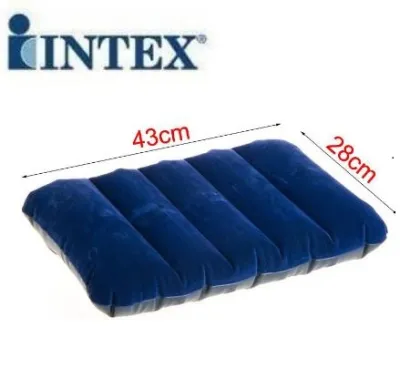
![[SG SELLER] INTEX Inflatable Airbed / Mattress for Single or Double Foldable](https://img.lazcdn.com/g/p/3cf015ea3efaa1526f76dddff1e7a6e9.png_400x400q80.png_.webp)
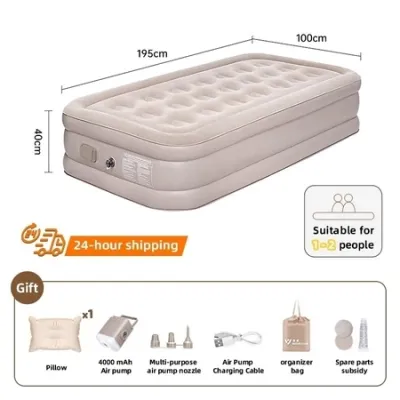


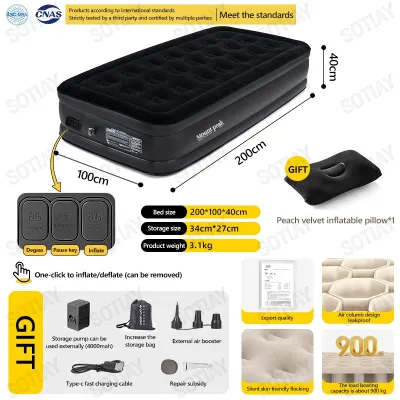
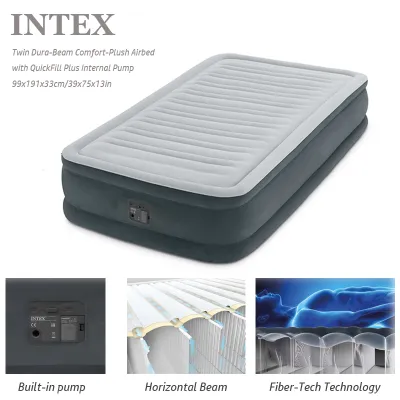

Prices are valid at publication and may change. Please refer to the product page for the latest price.
How to Identify Your Dominant Sleeping Position
To apply the correct firmness settings, you must first identify your dominant sleeping posture. While many people believe they shift constantly, most individuals spend the majority of the night in one primary position. You can determine your dominant style by paying attention to specific physical cues and habits.

If you consistently wake up flat on your back with your arms resting at your sides, you are a back sleeper. Side sleepers often wake up curled on their side, sometimes experiencing a slight stiffness in the shoulder or hip that rested against the mattress. Stomach sleepers typically wake up face down, occasionally with one leg drawn upward, and may feel a dull ache in their lower back due to overnight spinal sagging.
If you are a combination sleeper who rotates throughout the night, prioritize the position you wake up in or the one you use to fall asleep. These positions represent the longest stretches of quiet, uninterrupted sleep where your spine requires the most consistent support.
You can use this quick self-check checklist to confirm your dominant posture:
- Falling Asleep: Note the exact position you naturally adopt when first turning off the lights.
- Waking Up: Record your posture immediately upon waking for three consecutive mornings.
- Sensation Check: Identify where you feel the most pressure or tension when you first open your eyes.
- Pillow Location: Check if your pillow is still under your head (common for side and back sleepers) or pushed away (common for stomach sleepers).
Firmness Guidelines for Back Sleepers: Preventing the Hammock Effect
Back sleepers should aim for a medium-firm setting as their baseline. This level of inflation provides a supportive platform that holds up the spine while allowing the buttocks to sink just enough to maintain the natural S-curve of the lower back.
If the air mattress is under-inflated, back sleepers will experience the hammock effect. In this scenario, the heavy pelvic area sinks deeply into the center of the air chamber, pulling the lower spine downward into an unnatural curve. This sagging strains the lower back muscles and ligaments, which must work overtime to stabilize your body, resulting in stiffness and pain when you wake up.
Conversely, an overly firm air mattress behaves like a rigid board, creating a different set of alignment issues. When inflated to maximum capacity, the mattress cannot contour to the shoulder blades and buttocks. This leaves an empty gap directly beneath your lumbar spine, leaving your lower back completely unsupported. To prevent this, you can perform a simple hand-slide test.
To verify your alignment on a medium-firm setting, follow these steps:
- Lie flat on your back on the inflated air mattress.
- Slide your open hand, palm down, into the space beneath the small of your back.
- Evaluate the Fit: If your hand slides through with no resistance, the mattress is too firm. If you cannot slide your hand under your back at all because your hips have sunk too deep, the mattress is too soft. You should feel a snug, gentle pressure against your hand, indicating perfect lumbar support.
Firmness Guidelines for Side Sleepers: Relieving Shoulder and Hip Pressure
Side sleeping concentrates your entire body weight onto two narrow, prominent areas: the shoulder and the hip. To prevent joint pain and numbness, side sleepers require a medium to medium-soft mattress setting that allows these high-pressure zones to sink comfortably into the surface.
This cushioning keeps your spine straight in a horizontal line from your neck down to your tailbone. If the mattress is too firm, your shoulder and hip will be pushed upward, forcing your spine to curve laterally and compressing your shoulder joint, which often leads to restricted blood flow and tossing and turning.
The internal construction of your air mattress heavily influences how well it supports side sleeping. Basic single-chamber air beds tend to balloon outward when compressed, offering very little localized relief. For side sleepers, air mattresses with internal coils, structured baffles, or vertical beam designs are highly recommended. These internal structures act like individual pocket springs, allowing the mattress to compress specifically under your shoulder and hip while maintaining supportive pressure under your waist.
Firmness Guidelines for Stomach Sleepers: Protecting the Lower Back
Stomach sleeping is the most demanding posture for spinal alignment, particularly on an air bed. To protect your lower back from hyperextension, you must adjust your air mattress to a firm or extra-firm setting.
When you sleep on your stomach, your pelvis and midsection carry the majority of your weight. If the air mattress is too soft, your midsection will sink deep into the bed, pulling your lumbar spine into an exaggerated arch. This hyperextension compresses the delicate joints of your spine and strains the surrounding muscles, leading to sharp lower back pain.
To prevent this, inflate the air mattress close to its maximum capacity to create a flat, rigid sleeping surface. This keeps your hips and chest on the same level plane. When choosing a mattress for stomach sleeping, look for models with a reinforced core and robust edge support to prevent the perimeter from sagging under pressure.
You can also optimize your alignment by adjusting your pillows:
- Head Pillow: Use an extremely thin pillow or sleep without one to keep your neck aligned with your spine.
- Pelvic Support: Place a flat, thin pillow under your hips and lower abdomen to help lift your pelvis and maintain a neutral spinal position.
Step-by-Step Guide to Testing and Adjusting Your Air Bed
Calibrating your air mattress requires a systematic approach to find the exact balance of support and comfort. Follow this step-by-step process to adjust your bed:
- Inflate Fully: Start by inflating the mattress to its maximum capacity to stretch the material and establish a firm baseline.
- Lie Down: Lie on the mattress in your primary sleeping position for three to five minutes to let the air distribute and allow the material to settle under your body heat.
- Release Air Slowly: If you need a softer setting, use the built-in pump's deflation dial or tap the quick-release valve to let out air in short, two-second bursts.
- Test Your Alignment: After each adjustment, perform the physical checks for your sleeping position, such as the hand-slide test for back sleepers, until you feel comfortable and supported.
In Singapore’s tropical climate, indoor temperature changes play a significant role in how your air mattress feels overnight. Many homes run air-conditioning in the bedroom, dropping the temperature from a warm daytime average to a cool 20°C to 23°C overnight. Because air contracts as it cools, your mattress will naturally lose internal pressure and feel softer by morning, even without a physical leak. To counter this, inflate your mattress slightly firmer than your target level before bed, or use the integrated pump for a quick top-up right before sleeping.
If you cannot achieve the perfect level of comfort through inflation alone, a mattress topper is an excellent secondary adjustment tool. Placing a two-inch memory foam or fiberfill topper over a highly inflated, firm air mattress provides the best of both worlds. The firm air base keeps your spine from sagging, while the topper cushions your shoulders and hips, making this an ideal solution for side sleepers or couples with different comfort preferences.
Always prioritize safety and material care when adjusting your mattress. Avoid over-inflating the bed to the point where the seams bulge, as this can weaken the joints and cause permanent damage. Always check the manufacturer’s maximum weight capacity and pressure limits before use, and refer to the product manual if you are unsure about safe inflation limits.
Frequently Asked Questions (FAQ)
Can I use a mattress topper to change the firmness of my air bed?
Yes, a mattress topper is an effective way to add surface comfort and pressure relief to an air bed. A two-inch memory foam or pillow-top topper can make a firm air mattress much more comfortable for side sleepers by cushioning the shoulders and hips. However, a topper only modifies surface feel; it cannot fix a lack of structural support. If your air mattress is under-inflated and sagging, adding a topper will not prevent your spine from sinking out of alignment.
Why does my air mattress feel softer in the morning?
An air mattress often feels softer in the morning due to material stretching and temperature drops. New air beds made of PVC or TPU naturally stretch during their first few uses, which increases the internal volume and makes the mattress feel softer without actually losing air. Additionally, if you sleep in an air-conditioned room, the overnight drop in temperature causes the air inside the mattress to contract. To check for a physical leak, leave the mattress fully inflated during the day; if it holds its shape, the softening is simply due to temperature changes.
Is an air mattress suitable for long-term daily use for back pain?
While high-quality air mattresses with adjustable pressure can provide temporary comfort, they are generally not recommended by medical professionals for long-term daily use, especially if you suffer from chronic back pain. Traditional pocket-spring or high-density foam mattresses offer more precise, zoned support that keeps the spine aligned over years of use. If you experience persistent back pain, it is best to consult a qualified healthcare provider or ergonomic specialist to find a permanent sleep solution.
Community discussion
Share your experience or ask a question. Comments are reviewed before publication.