
Finding the right adjustable leg support is a matter of matching your furniture’s structural design with your floor’s specific conditions. The ideal choice depends on whether you need minor leveling to correct a wobble, significant height adjustments for ergonomic comfort, or mobility to move heavy items easily. By selecting the correct hardware, you can extend the lifespan of your furniture, protect your flooring, and ensure a stable, safe setup.
Identify Your Furniture Needs and Floor Conditions
Before purchasing any hardware, evaluate the exact issue you want to resolve. A minor wobble on an uneven tiled floor requires a different solution than a desk that is too low for comfortable working. If your furniture is unstable, observe whether the floor itself is sloped, which is common in wet areas like kitchens, bathrooms, or balconies designed with drainage gradients.
Next, consider the weight and center of gravity of the furniture piece. Heavy solid wood sideboards, wardrobes, or metal workbenches exert significant downward force and require heavy-duty metal leveling feet. Lightweight side tables or decorative shelving units, on the other hand, can utilize lighter plastic or light-duty threaded glides. If a piece of furniture is tall and narrow, raising its height can shift its center of gravity upward, increasing the risk of tipping.
Products mentioned in this guide
![[SG] 4PCS Adjustable Furniture Legs Aluminum Alloy Cabinet Leg Stand Square Non-slip Table Sofa Bed Leg Support](https://img.lazcdn.com/g/p/873a9a1412a7707f95a32d0075781b11.jpg_400x400q80.jpg_.webp)
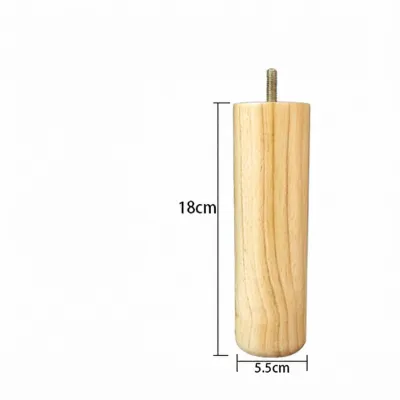
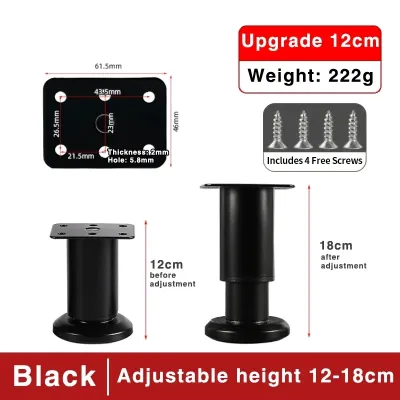
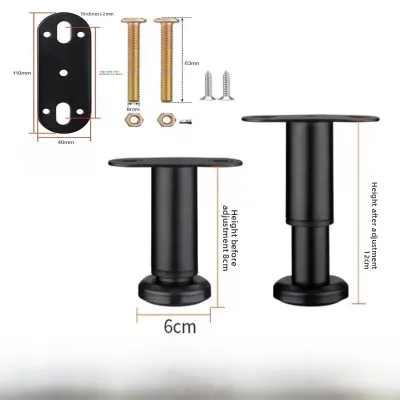
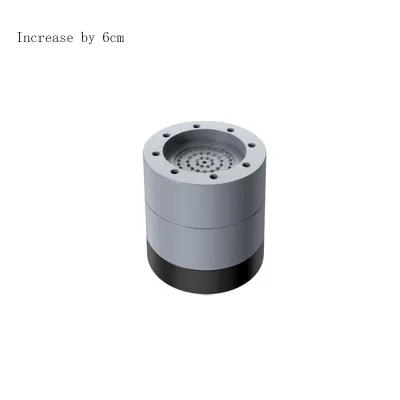
Prices are valid at publication and may change. Please refer to the product page for the latest price.
The floor surface is another critical factor. Hard surfaces like ceramic tiles, marble, or polished concrete require non-slip rubber or polyurethane bases to prevent sliding and dampen vibrations. For delicate parquet or laminate flooring, soft felt-bottomed glides are essential to avoid deep scratches when the furniture is shifted. If the furniture sits on thick carpet, hard plastic or smooth metal bases allow the legs to glide easily without snagging the fibers.
Types of Adjustable Leg Supports and Ideal Applications
Adjustable leg supports generally fall into two main categories based on their mechanical design: micro-adjustment leveling feet and macro-adjustment telescopic legs. Understanding these structural differences helps you determine whether you need subtle leveling or a complete height transformation.

The choice between these systems depends on whether your furniture will remain static or require frequent repositioning. Static furniture benefits from low-profile, high-weight-capacity leveling screws, while dynamic furniture, such as mobile kitchen carts or collaborative office desks, requires telescopic systems or integrated casters.
Threaded Leveling Feet for Heavy Furniture
Threaded leveling feet, also known as furniture glides or levelers, are designed for micro-adjustments. They consist of a threaded metal stem attached to a base pad, which screws into a matching threaded insert installed in the furniture leg. These are ideal for heavy cabinets, entertainment units, and kitchen appliances where minor height corrections of a few millimeters to a couple of centimeters are needed to achieve a precisely level surface.
When replacing or upgrading to threaded leveling feet, you must verify the thread diameter and pitch. If your furniture already has built-in threaded inserts, the new leveling feet must match those exact specifications, such as standard metric sizes like M6, M8, or M10. Using the wrong thread pitch can strip the insert, ruining the structural integrity of the leg joint.
Additionally, pay close attention to the base pad material. A heavy-duty rubber base provides excellent grip on smooth tiles, preventing heavy appliances from shifting during operation. For furniture that may need to be pulled away from the wall occasionally for cleaning, a hard nylon or felt-faced base is more appropriate to protect the floor from friction marks.
Telescopic Tube Legs for Significant Height Changes
Telescopic tube legs are designed for macro-level height modifications, allowing you to raise or lower a surface by several inches or centimeters. These supports consist of concentric metal tubes that slide inside one another, making them highly suitable for study desks, dining tables, or modular shelving units where users need to customize the overall elevation for ergonomic comfort.
The stability of a telescopic leg relies heavily on its locking mechanism. Common designs include pin-lock systems, where a metal pin passes through pre-drilled holes; twist-lock systems, which secure the tubes via internal friction; and external clamp collars. Pin-lock systems generally offer the highest weight capacity and prevent gradual slipping under heavy loads, whereas twist-lock systems allow for infinitely adjustable, seamless height settings but require careful tightening.
Before purchasing telescopic legs, ensure the mounting plate at the top of the leg matches the underside dimensions of your furniture. The mounting plate must be wide enough to distribute lateral forces evenly across the underside of the tabletop. Check that the screw hole pattern does not align too closely with the edges of the furniture panel, which could cause the wood to split or fail under stress.
Adjustable Legs with Casters for Mobility
For furniture that requires both height adjustment and frequent movement, adjustable legs with integrated casters are the most practical choice. These are commonly used on kitchen trolleys, mobile workbenches, and modular office storage units. They allow you to roll the furniture out of the way when cleaning or rearranging a room, then lock it securely in place.
When selecting these supports, the brake mechanism is a critical safety feature. Look for double-lock casters that lock both the wheel rotation and the swivel mechanism simultaneously. This ensures that when the brakes are engaged, the furniture remains completely rigid and does not sway or drift when you apply lateral pressure.
It is also important to calculate the total height added by both the caster wheel and the adjustment thread. Casters naturally add significant height to a piece of furniture, which can alter its ergonomic proportions. Ensure that the minimum height setting of the adjustable caster assembly does not make the tabletop or counter surface uncomfortably high for daily use.
Key Specifications to Check Before Buying
To ensure safety and compatibility, you must carefully review several technical specifications before purchasing any adjustable leg support. The most critical specification is the load capacity. To determine the required load rating, calculate the total weight of the furniture piece plus the maximum weight of its expected contents. Divide this total weight by the number of legs supporting the piece. It is highly recommended to choose legs with a combined load capacity that exceeds your calculated total by at least 20% to account for uneven weight distribution.
Next, identify the correct mounting type for your furniture’s construction. Top-plate mounts feature a flat metal plate that screws directly into the flat underside of a wooden panel, making them highly versatile for flat-bottomed furniture. Threaded inserts require you to drill a hole into the center of a wooden leg and screw or hammer in a metal sleeve, which then accepts the threaded stem of the leveling foot. Stem inserts, often used in hollow metal legs, rely on friction sleeves or expanding plastic collars to grip the inside of the tube.
Finally, measure the required adjustment range. Determine the minimum clearance needed to clear floor obstructions or match adjacent furniture, as well as the maximum height extension required. Avoid extending adjustable legs to their absolute maximum limit, as this reduces the overlap between the threaded stem or telescopic tubes, significantly decreasing lateral stability and increasing the risk of bending or buckling under load.
Installation and Stability Checks
Proper installation is essential to ensure the long-term stability of your upgraded furniture. If you are attaching top-plate mounts or threaded inserts to solid wood, always pre-drill pilot holes using a drill bit slightly smaller than the screw core. This prevents the wood from splitting along the grain and ensures the mounting screws sit completely flush against the metal plate, preventing any wobbling at the joint.
During the installation process, use a spirit level placed on the top surface of the furniture. Adjust each leg gradually, checking the level in both directions (front-to-back and side-to-side). This step is crucial because if one leg is adjusted slightly too short, the remaining legs will carry an unequal share of the load, putting excessive stress on the furniture frame and potentially causing the joints to warp or loosen over time.
Once installed, establish a routine to periodically inspect the hardware. Daily use, moving the furniture, and subtle floor vibrations can cause threaded connections, locking collars, or mounting screws to loosen gradually. Checking these connections every few months and tightening them as needed will maintain structural integrity and prevent sudden failures or tipping hazards.
Frequently Asked Questions (FAQ)
Can I install adjustable legs on hollow or particleboard furniture?
Yes, but you must use specialized mounting hardware. Standard wood screws do not hold securely in particleboard or hollow-core furniture because the material lacks the dense fiber structure of solid wood. Under lateral stress or heavy loads, standard screws can easily strip out, causing the leg to collapse.
To safely install adjustable legs on engineered wood, use T-nuts, threaded inserts designed for soft materials, or wide reinforcing brackets. These components distribute the load over a larger surface area, preventing the particleboard from crumbling. Always check the furniture manufacturer’s guidelines before making modifications, as drilling into engineered wood may void any existing warranties.
How do I match the thread size for replacement leveling feet?
To find a compatible replacement, you need to measure both the thread diameter and the thread pitch of your existing hardware. Use a digital caliper to measure the outer diameter of the threaded bolt on your old leveling foot. Common metric sizes include 6mm (M6), 8mm (M8), and 10mm (M10).
Next, determine the thread pitch, which is the distance between individual thread ridges. You can use a thread pitch gauge, or measure the distance of ten threads with a ruler and divide by ten to find the pitch. If you do not have precision measuring tools, the most reliable method is to take your old leveling foot to a local hardware store and test it against a thread matching board to find the exact fit.
Community discussion
Share your experience or ask a question. Comments are reviewed before publication.