
Finding the right acrylic shoe box brand in Singapore depends on matching the structural integrity of the boxes to the scale of your collection and the constraints of your living space. In a tropical climate where humidity can rapidly damage footwear, choosing the right storage system is not just about aesthetics; it is about preservation. Whether you are housing a modest selection of daily wear or a sprawling gallery of collector sneakers, evaluating brands based on material thickness, modularity, and ventilation is essential. By aligning your purchase with your specific collection tier, you can avoid unstable stacks, cracked panels, and ruined shoes.
Assessing Your Shoe Collection Size and Available Space
Before browsing online marketplaces or local home decor stores, conduct a thorough inventory of your current footwear. Count every pair, categorizing them by height and width, as high-tops, heels, and chunky sneakers require significantly more vertical and lateral clearance than flat sandals or slip-ons. It is equally important to project your collection’s growth over the next twelve to eighteen months. If you buy several new pairs a year, purchasing a rigid, non-expandable storage system will quickly lead to overflow and mismatched organization.
Once you have a clear count, measure your designated storage footprint with precision. In Singapore apartments, space is often at a premium, making entryways, narrow corridors, and household shelters the primary locations for shoe storage. Measure the width, depth, and height of these areas, keeping in mind that doors must have enough clearance to swing open fully without obstruction. Do not forget to account for baseboards or wall skirting, which can prevent storage units from sitting completely flush against the wall, potentially reducing your available floor space.
Products mentioned in this guide
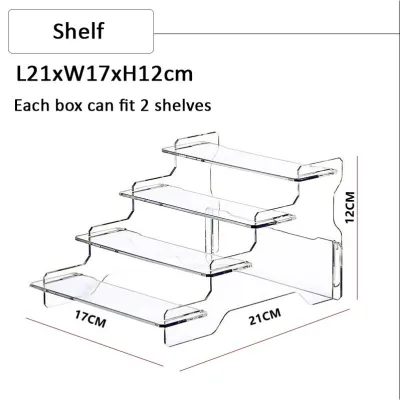
![[2021 NEW] Premium Ultimate Big Capacity Full Acrylic Stackable Magnetic Side Open Display Sneakers Shoes Boxes Sneaker Storage Shoe Rack](https://img.lazcdn.com/g/p/42ac334d1dc8510716de63969699994d.jpg_400x400q80.jpg_.webp)
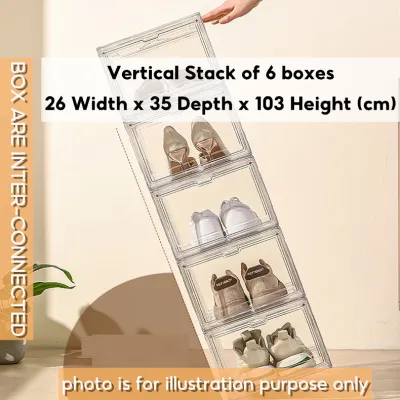
![[SG STOCK] Ultra Clear High Capacity Shoe Box Stackable Magnetic Acrylic Display Storage](https://img.lazcdn.com/g/p/edf83a690b259345d9b59c0c97e18f3e.jpg_400x400q80.jpg_.webp)
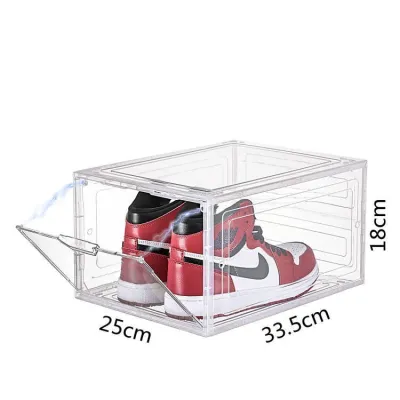
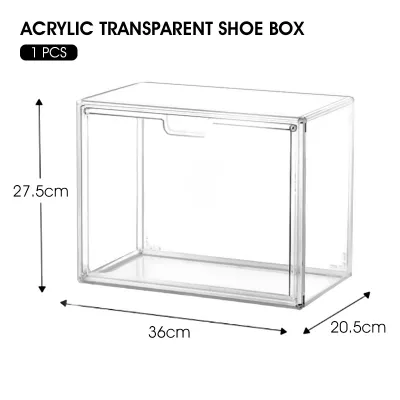
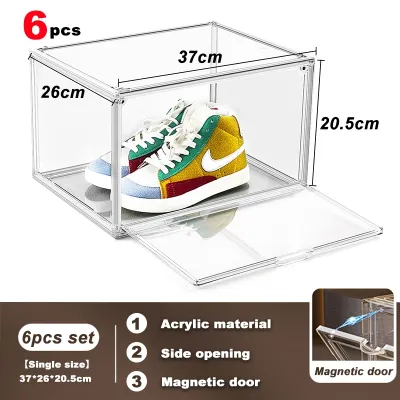
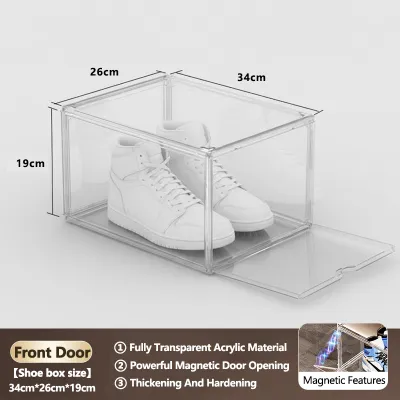
Prices are valid at publication and may change. Please refer to the product page for the latest price.
Finally, consider the logistics of delivery and assembly within your building. If you are ordering large-format, pre-assembled acrylic cabinets or bulk multi-packs, verify the dimensions of your building’s lift, entry doors, and staircases. Some premium brands deliver units fully constructed, which can present a challenge if your corridors are narrow or if there are tight turns in your entryway. Ensuring that these transit paths are clear prevents delivery delays and avoids accidental damage to the fragile acrylic panels before they even reach your home.
Key Features to Evaluate in Acrylic Shoe Box Brands
When comparing different acrylic shoe box brands, the physical specifications of the material should be your primary focus. Acrylic, or polymethyl methacrylate, varies widely in quality, thickness, and density. Look for brands that explicitly state the thickness of their panels, ideally choosing options that feature robust structural walls. Thinner panels are highly susceptible to bowing under weight, which can cause the doors to misalign and the entire stack to wobble over time.

The door mechanism is another critical point of evaluation that dictates daily usability and space efficiency. Brands generally offer three main types: magnetic drop-front doors, side-opening doors, or simple slide-out drawers. Magnetic closures are highly preferred for their tight seal and ease of use, but you must ensure the magnets are strong enough to keep the door securely shut without requiring excessive force that shakes the stack. Side-opening doors are excellent for displaying the profile of a shoe, but they require a wider clearance area in front of the box to open fully, which may not be practical in narrow hallways.
Stackability is what transforms individual boxes into a cohesive storage system. High-quality brands design their boxes with integrated interlocking mechanisms, such as deep top grooves and matching bottom pegs, which lock the units together to prevent sliding. Avoid brands that rely solely on flat, smooth surfaces or basic anti-slip silicone pads, as these do not provide sufficient lateral stability when stacked several tiers high. A robust interlocking design ensures that the weight of the upper boxes is distributed evenly across the frames of the lower units.
In Singapore’s hot and humid climate, proper ventilation is non-negotiable for preserving footwear. Storing shoes in completely airtight acrylic boxes traps residual moisture from sweat and atmospheric humidity, creating an ideal breeding ground for mold, mildew, and dry rot. Evaluate brands based on the presence and placement of ventilation slots or rear mesh panels. These openings must be designed to facilitate continuous airflow while remaining small enough to prevent dust, insects, or pests from entering and damaging your collection.
Matching Brand Offerings to Your Collection Tier
Different collection sizes demand distinct storage strategies, and brands often tailor their product lines to specific consumer segments. Understanding where your collection fits on this scale allows you to target the right brand features and purchasing structures.
Small Collections (Up to 10 Pairs)
For those with minimal inventories, flexibility and space-saving designs are the most critical factors. Look for brands that sell their acrylic boxes as individual units or in small starter packs of two or three, rather than forcing you into bulk purchases. This allows you to buy exactly what you need without storing empty boxes that take up valuable closet space. Individual purchasing also makes it easier to mix and match different box sizes if you have a diverse collection of flat shoes and high heels.
Compact dimensions are highly beneficial for small collections, as they allow you to utilize under-utilized spaces. Seek out brands that offer low-profile boxes designed to slide under bed frames, fit neatly on closet shelves, or sit unobtrusively on narrow entryway benches. These compact units should still maintain high clarity so you can quickly identify your shoes without pulling out multiple boxes.
Aesthetics play a significant role when storage is visible in main living areas. Many brands offer clear, smoked, or tinted acrylic options to help the boxes blend seamlessly with your existing interior decor. Clear acrylic maximizes light transmission and showcases your shoes, while smoked or black-tinted acrylic provides a sleeker, more minimalist look that hides minor dust and protects sensitive materials from direct sunlight exposure.
Medium Collections (10 to 30 Pairs)
As your collection grows into the medium tier, modularity and uniformity become the cornerstones of your storage setup. Focus on brands that maintain standardized dimensions across their core product lines over several years. This consistency ensures that when you purchase additional boxes to accommodate new acquisitions, they will stack perfectly with your existing units without creating uneven, unstable columns.
For collections of this size, purchasing individual boxes quickly becomes uneconomical. Look for brands that offer tiered bundle deals or multi-packs of six, twelve, or twenty-four units on reputable online marketplaces. These packages often provide a lower cost per unit, making it more affordable to build a uniform storage wall. However, ensure that the bundle does not compromise on material quality or include cheaper, thinner plastic alternatives instead of true rigid acrylic.
With ten to thirty pairs, you will likely be stacking your boxes several tiers high. At this height, the load-bearing capacity of the bottom boxes is put to the test. Verify that the brand provides reinforced base plates or structural corner pillars designed to support cumulative weight. Always check the manufacturer’s guidelines regarding the maximum safe stacking height to prevent the lower boxes from cracking or warping under the pressure of the units above.
Large Collections (Over 30 Pairs)
Managing a large collection of over thirty pairs requires heavy-duty, high-capacity storage systems designed for long-term stability. Standard-sized shoe boxes are often inadequate for collectors who own high-top sneakers, work boots, or platform heels. Prioritize brands that offer specialized large-format or extra-deep boxes. These oversized units allow you to store larger shoes upright or sideways without bending the collars or compressing the materials, preserving the shape of your footwear.
When stacking boxes more than six tiers high, the risk of tipping increases significantly, especially in high-traffic areas. Look for brands that offer dedicated safety accessories, such as wall-mounting brackets, anti-tip straps, or interlocking side clips that connect adjacent columns. Securing your storage wall to the home’s structure is a vital safety measure that prevents catastrophic collapses and protects both your investment in footwear and your household.
Purchasing in high volumes also means you should scrutinize the brand’s customer service and warranty policies. Acrylic is a brittle material that can easily crack or chip during transit if not packaged correctly. Choose brands that have a proven track record of robust packaging and offer clear, hassle-free replacement policies for any parts damaged during delivery. A reliable warranty on structural components like hinges and magnetic doors provides peace of mind when making a significant financial investment in your storage system.
Purchasing and Assembly Checklist for Acrylic Storage
Before finalizing your purchase, verify the exact internal dimensions of the acrylic boxes against your largest pair of shoes. Do not rely solely on external dimensions, as the thickness of the panels and the design of the interlocking joints can reduce the usable internal space by up to two centimeters. Measure the length, width, and height of your largest shoes—typically bulky sneakers or high heels—and ensure there is at least a one-centimeter clearance on all sides to prevent the shoes from pressing against the door or walls.
Review the assembly process carefully before the boxes arrive. While some premium brands ship their boxes fully assembled, many budget-friendly options require home assembly to reduce shipping volumes. Look for brands that provide clear, illustrated instructions and utilize snap-fit joints that do not require specialized tools, glues, or screws. Avoid systems that require excessive force to assemble, as applying uneven pressure to acrylic panels during setup can cause micro-fractures that weaken the plastic over time.
Always check the retailer’s return and exchange policy specifically regarding transit damage. Inspect every panel immediately upon delivery, looking for hairline cracks, chipped corners, or cloudy patches before beginning assembly. Once you assemble a snap-fit acrylic box, it can be extremely difficult to disassemble without causing damage, which may void your ability to return a defective product.
Finally, plan your stacking layout with structural physics in mind. Always place your heaviest shoes, such as boots and heavy leather dress shoes, in the bottom rows to keep the center of gravity as low as possible. Lighter footwear, like running shoes, sandals, and canvas slip-ons, should occupy the upper tiers. This distribution of weight minimizes shear stress on the lower frames and significantly improves the overall stability of your storage wall.
Frequently Asked Questions (FAQ)
How do I clean cloudy or scratched acrylic shoe boxes?
To maintain the optical clarity of your acrylic shoe boxes, always use a clean, ultra-soft microfiber cloth dampened with lukewarm, mild soapy water. Avoid using standard glass cleaners, ammonia-based sprays, or household disinfectants, as these harsh chemicals can react with the acrylic, causing it to become permanently cloudy, yellowed, or micro-cracked through a process called crazing. Never use paper towels, polyester cloths, or abrasive scrubbing sponges, as even minor dust particles trapped on these rough surfaces can leave fine scratches on the soft acrylic face. If light scratches do occur, consult the manufacturer’s care instructions to see if they recommend a specialized, non-abrasive acrylic polishing compound designed to restore the smooth finish.
Can acrylic shoe boxes be safely stacked to the ceiling?
While it is physically possible to stack high-quality interlocking acrylic boxes to a significant height, stacking them all the way to the ceiling is generally not recommended without proper structural reinforcement. The maximum safe stacking height depends entirely on the brand’s specified weight limits, the thickness of the panels, and the precision of the interlocking joints. Stacking beyond six to eight tiers high without securing the columns to the wall poses a serious tipping hazard, particularly in homes with active pets or young children. Always consult the product manual for the manufacturer’s maximum recommended stacking limit, and utilize anti-tip wall anchors or mounting brackets to secure any tall columns to the wall studs or concrete structure of your home.
Community discussion
Share your experience or ask a question. Comments are reviewed before publication.