
Quick Guide: Matching Acorn Mattress Firmness to Your Sleep Style
Selecting the right mattress firmness is a critical decision for your sleep health, directly impacting spinal alignment and joint recovery. The standard mattress firmness scale ranges from 1 to 10, where 1 represents an extremely soft surface and 10 represents an extra-firm, rigid surface. Most mattresses, including those from Acorn, fall between a 4 (medium-soft) and an 8 (firm). Finding your ideal spot on this scale depends heavily on your primary sleeping position, which dictates where your body requires pressure relief and where it needs robust structural support.
Each sleeping posture has distinct ergonomic requirements that a mattress must satisfy to prevent morning aches. Side sleepers generally require a softer surface that contours to the shoulders and hips, absorbing pressure and keeping the spine straight. Back sleepers need a balanced medium to medium-firm surface that supports the natural curve of the lower back while offering gentle cushioning. Stomach sleepers require a firm, stable surface to prevent the hips from sinking, which can arch the lower back painfully. For combination sleepers who rotate throughout the night, a highly responsive medium feel is often the most versatile choice.
While these general guidelines provide an excellent starting point, mattress firmness is not a one-size-fits-all metric. Your individual body weight, physical build, and personal comfort preferences will inevitably shift how a mattress feels to you. A lighter individual may find a medium mattress feels quite firm because they do not apply enough pressure to compress the comfort layers, whereas a heavier individual might sink deeply into the same mattress, perceiving it as soft. Understanding these dynamics allows you to evaluate Acorn mattress specifications with greater accuracy, ensuring you choose a model that delivers the precise level of support your body requires.
Products mentioned in this guide
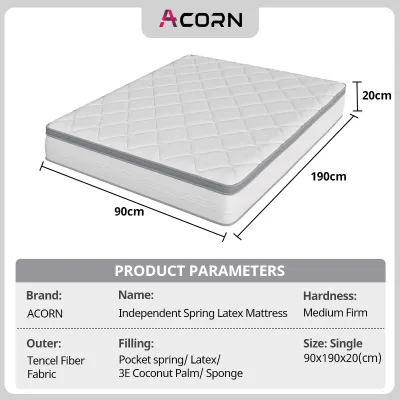
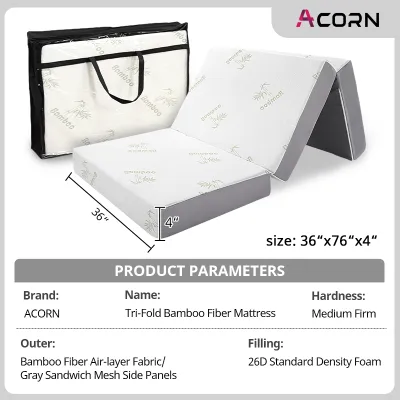
Prices are valid at publication and may change. Please refer to the product page for the latest price.
Side Sleepers: Prioritizing Pressure Relief at the Shoulders and Hips
Side sleeping is one of the most common sleep positions, but it places concentrated pressure on the narrowest parts of your body—specifically the shoulders and hips. To maintain a neutral spinal alignment in this position, these prominent pressure points must be allowed to sink comfortably into the mattress surface. This is why side sleepers typically benefit most from softer to medium-firm mattresses, usually ranging from a 4 to a 6 on the firmness scale. A mattress with sufficient contouring allows the heavier parts of the body to plunge just enough so that the spine remains in a straight, horizontal line from the neck down to the pelvis.

If a side sleeper chooses a mattress that is too firm, the surface will not yield to the shoulders and hips. This lack of compression forces the spine to curve unnaturally, leading to chronic stiffness and lower back discomfort. Furthermore, excessive firmness restricts blood circulation at these contact points, causing the familiar pins-and-needles sensation that forces you to toss and turn throughout the night. Over time, sleeping on an overly rigid surface can exacerbate joint inflammation and lead to persistent shoulder and hip pain.
When browsing the Acorn lineup, side sleepers should pay close attention to the construction materials and comfort layers detailed in the product specifications. Look for models that feature thick contouring foam layers, such as memory foam or specialized pressure-relieving latex, which adapt dynamically to your body shape. Additionally, check if the mattress incorporates zoned support systems. Zoned construction utilizes softer materials or pocketed coils under the shoulders to allow deeper sinkage, while maintaining firmer support under the waist and torso to keep the spine perfectly aligned.
Back Sleepers: Balancing Lumbar Support and Spinal Alignment
Back sleepers require a mattress that can accommodate the natural curve of the spine. The primary goal for this position is to support the lumbar region while allowing the hips and shoulders to settle naturally. To achieve this delicate balance, back sleepers generally find their ideal match in the medium to medium-firm range, typically between a 5 and a 7 on the firmness scale. This level of firmness provides enough surface cushioning to cradle the lower back, combined with a sturdy underlying support system that prevents the body from sagging.
Choosing a mattress that is too soft poses a significant risk for back sleepers. When a mattress lacks sufficient structural integrity, the heaviest part of the body—the pelvis—sinks too deeply into the comfort layers. This excessive sinkage creates a hammocking effect, pulling the lower spine out of its natural alignment and putting immense strain on the lumbar muscles and ligaments. You may wake up with a dull, aching lower back that persists throughout the day. Conversely, an overly firm mattress will leave an empty gap beneath your lower back, forcing your muscles to remain tense all night to support the spine.
To ensure your back is properly supported, examine the internal specifications of Acorn mattresses for reinforced center support zones or high-density base layers. Many high-quality mattresses utilize pocketed spring coils or dense polyfoam bases that offer robust push-back support where your body weight is concentrated. A reinforced center third is particularly beneficial for back sleepers, as it provides extra resistance under the hips and lumbar area, ensuring your spine remains in a neutral, relaxed position from head to toe.
Stomach Sleepers: Preventing Sinkage and Lower Back Strain
Stomach sleeping is ergonomically challenging because it naturally places a high amount of stress on the lumbar spine. When you sleep on your front, the majority of your body weight is concentrated around your midsection and hips. To prevent this heavy center zone from sagging into the bed, stomach sleepers require a firm to extra-firm mattress, typically scoring between a 7 and an 8 on the firmness scale. A flat, unyielding surface is essential to keep your hips elevated and aligned with your shoulders, preserving a neutral spinal posture.
If a stomach sleeper rests on a soft or highly contouring mattress, the pelvis inevitably sinks deep into the comfort layers. This sinkage forces the lower back into an exaggerated arch, hyperextending the spine and compressing the lumbar vertebrae. This misalignment is a primary cause of chronic lower back pain and morning stiffness among front sleepers. Additionally, because stomach sleepers must turn their head to one side to breathe, an overly soft mattress can cause the upper body to sink while the head remains elevated by a pillow, leading to severe neck strain and shoulder tension.
When evaluating Acorn mattresses, stomach sleepers should actively look for models designed with firm support cores and minimal plush cushioning. Avoid variations that feature thick, fluffy pillow-tops or deep memory foam comfort layers, as these materials encourage the very sinkage you need to avoid. Instead, focus on hybrid models with robust pocketed coil systems or all-foam models utilizing high-density support foams. Checking the product descriptions for terms like “firm support,” “high-density base,” or “minimal sinkage” will help guide you to a model that keeps your body flat and your spine protected.
Combination Sleepers: Choosing a Versatile Medium Feel
If you find yourself falling asleep on your back, waking up on your side, and occasionally rolling onto your stomach, you are a combination sleeper. The primary challenge for combination sleepers is finding a mattress that performs well across all positions rather than excelling in just one. For this reason, a true medium to medium-firm mattress—typically a 5 to a 6 on the firmness scale—is widely considered the most versatile and accommodating option. This middle-of-the-road feel offers enough contouring for side sleeping while providing the necessary resistance to support back and stomach sleeping.
Beyond firmness, combination sleepers must prioritize the responsiveness of the mattress materials. When a mattress is slow to recover its shape—as is common with traditional, deep-contouring memory foams—it can create a sinking sensation that makes moving difficult. This feeling of being stuck in the mattress requires extra physical effort to roll over, which can disrupt your sleep cycle and leave you feeling fatigued in the morning. Responsive materials, on the other hand, bounce back quickly, allowing you to transition smoothly from one position to another without waking up.
To find an Acorn mattress that supports active movement, look closely at hybrid models or those incorporating responsive foam layers. Hybrid mattresses combine pocketed coils with foam comfort layers, offering an inherently bouncy and supportive feel that facilitates easy movement. If you prefer an all-foam construction, check the specifications for latex-like foams or open-cell polyfoams that recover their shape instantly. These materials ensure that whether you are on your side, back, or stomach, the mattress adapts immediately to your new posture, maintaining continuous comfort and support.
Pre-Purchase Checklist: Verifying Fit, Trial Periods, and Returns
Before finalizing your Acorn mattress purchase, run through a practical checklist to ensure your chosen firmness level translates to real-world comfort. Because mattress feel is highly subjective, taking a few precautionary steps can save you from the hassle of an unsuitable purchase.
First, factor your body weight into your final decision. Sleepers weighing under 60 kg often perceive mattresses as firmer than advertised because they do not compress the comfort layers fully; they may want to opt for a slightly softer model. Conversely, sleepers weighing over 90 kg apply more force and will sink deeper, making a medium mattress feel soft and potentially lacking in support. If you fall into a heavier weight category, choosing a firmer model or a hybrid option with reinforced coils will help maintain the necessary support.
Second, verify the logistics and consumer protections associated with your purchase. Because it takes the body several weeks to adjust to a new sleeping surface, you should never buy a mattress without a reliable trial period.
Use this checklist to verify your purchase details on the official retailer or brand website:
- Sleep Trial Duration: Confirm the exact number of nights you are allowed to test the mattress at home.
- Return and Exchange Policy: Check if returns are completely free, or if there are return shipping fees, restocking fees, or specific packaging requirements.
- Warranty Terms: Ensure the warranty covers structural defects, such as permanent sagging or indentations deeper than a specified measurement.
- Delivery and Access: Measure your doorways, stairwells, and lift dimensions to ensure the mattress package can be easily delivered to your bedroom, especially if you are purchasing a larger size like a Queen or King.
If you live near a physical showroom in Singapore, visiting in person to lie on the different models for at least 10 to 15 minutes can provide valuable initial feedback. However, if you are purchasing online, relying on a robust, risk-free home sleep trial is the safest way to guarantee that your chosen Acorn mattress firmness truly matches your sleeping style over the long term.
Frequently Asked Questions (FAQ)
Can I change the firmness of my Acorn mattress after buying it?
The core firmness of an Acorn mattress is determined by its internal support layers and cannot be permanently altered once manufactured. However, you can easily adjust the surface feel of your bed by using a mattress topper. If your mattress feels too firm, adding a plush memory foam or latex topper can introduce extra cushioning and pressure relief. If the mattress is too soft, a firm high-density foam topper can provide a more stable surface, though it cannot fully compensate for a sagging support core. Before adding any accessories, check the manufacturer’s warranty terms to ensure that using a third-party topper does not void your coverage.
Does body weight change which Acorn firmness level I should choose?
Yes, body weight significantly influences how you experience mattress firmness. A lighter sleeper (typically under 60 kg) exerts less force and will remain on top of the mattress, making a medium-firm bed feel very rigid. Lighter sleepers often need a softer firmness level to experience adequate contouring and pressure relief. Conversely, a heavier sleeper (typically over 90 kg) exerts much more force, compressing the comfort layers completely and resting on the firm support core. Heavier sleepers generally require a firmer mattress or a hybrid model with robust pocketed coils to prevent excessive sinkage and maintain proper spinal alignment.
What if my partner and I prefer different firmness levels?
Couples with different sleeping positions or firmness preferences often face a challenge when sharing a bed. If one partner is a side sleeper who needs a soft surface and the other is a stomach sleeper who requires a firm surface, a standard mattress may leave one person uncomfortable. To resolve this, look for Acorn models that offer dual-firmness options or split configurations, such as a Split King, which allows each side of the bed to have a customized feel. Alternatively, you can purchase a medium-firm mattress as a baseline compromise and use a twin-sized mattress topper on one side of the bed to soften the surface for the partner who requires more pressure relief.
Community discussion
Share your experience or ask a question. Comments are reviewed before publication.