
Selecting the right firmness for a 3 fold mattress requires matching your primary sleeping position and body weight to a specific foam density, with one critical caveat: because foldable mattresses are significantly thinner than standard mattresses, you must generally lean slightly firmer or choose higher-density foam to avoid bottoming out. While a standard mattress relies on multiple thick comfort and transition layers to support you, a tri-fold mattress must achieve both support and pressure relief within a compact profile. Finding this balance ensures your spine remains neutrally aligned, preventing joint strain and morning stiffness.
Why Firmness Selection Is Different for a 3 Fold Mattress
Standard mattresses typically measure between 8 to 12 inches in thickness, allowing for deep compression layers that cushion your body before you reach the firm support core. In contrast, a 3 fold mattress generally features a streamlined thickness profile of 2 to 4 inches (approximately 5 to 10 cm). This compact design is highly efficient for space-saving storage in Singapore apartments, but it dramatically changes how your body weight interacts with the foam.
Because of this thin profile, the risk of “bottoming out” is a primary concern. When you lie down, your heaviest areas—specifically your hips and shoulders—exert concentrated downward pressure. If the mattress foam is too soft or lacks sufficient density, these high-pressure zones will compress the material entirely, leaving your body resting directly against the hard surface underneath.
Products mentioned in this guide
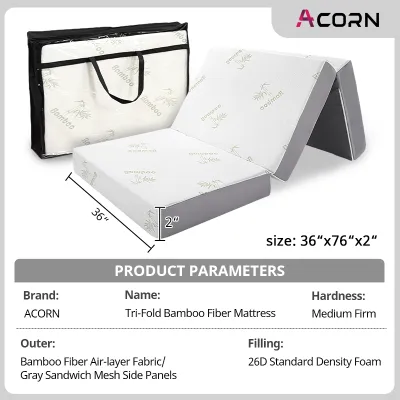


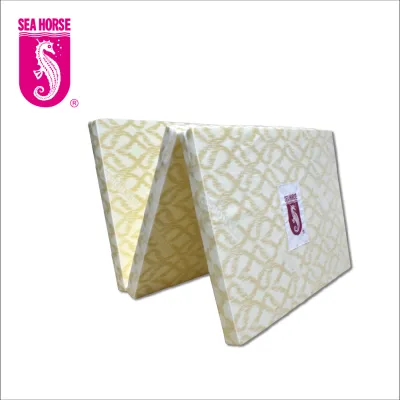

Prices are valid at publication and may change. Please refer to the product page for the latest price.
Furthermore, the physical feel of a foldable mattress is not determined solely by the foam grade inside. The overall firmness is heavily influenced by the surface it rests on and the structural integrity of its folding joints. A soft foam mattress will sag more at the hinge points, whereas a firmer, high-density foam distributes weight more evenly across the seams, preserving the mattress’s supportive shape over time.
Match Your Sleeping Position to the Right Firmness Level
Your sleeping posture dictates where your body requires cushioning and where it demands rigid support. Matching your position to the correct firmness level is essential to keep your spine in a neutral position and prevent muscle tension.

Side Sleepers: Prioritizing Pressure Relief
Side sleepers should generally look for a medium-soft to medium firmness level in a 3 fold mattress. When sleeping on your side, your shoulders and hips protrude deeply into the sleeping surface, bearing the majority of your body weight.
A medium-soft surface allows these prominent joints to sink just enough to keep your spine in a straight, horizontal line. If a side sleeper uses a mattress that is too firm, the shoulder and hip are forced upward, bending the spine laterally and creating intense pressure points. Over time, this restricted circulation can lead to morning joint stiffness and a pins-and-needles sensation.
Back Sleepers: Balancing Support and Contouring
Back sleepers require a medium to medium-firm mattress to maintain healthy spinal alignment. This position distributes body weight more evenly than side sleeping, but it introduces a gap under the lower back that must be supported.
The ideal mattress must offer enough surface contouring to fill the natural curve of your lumbar spine while remaining firm enough to prevent your pelvis from sinking too deeply. If your hips sink too far, it creates a hammock effect that strains the lower back muscles. A 3 fold mattress featuring high-density resilient foam or zoned support layers can provide the necessary upward resistance to keep your hips level with your shoulders.
Stomach Sleepers: Preventing Spinal Sinkage
Stomach sleepers need a medium-firm to firm mattress to protect their lower back from hyperextension. This sleeping position is highly sensitive to mattress sagging.
When you sleep on your stomach, gravity naturally pulls your midsection downward. If the mattress surface is too soft, your pelvis and abdomen will sink deep into the foam, forcing your lower back into an exaggerated, unnatural arch. This continuous hyperextension is a common cause of chronic lower back pain. A firm surface keeps your body flat and aligned, and pairing it with an ultra-thin pillow prevents your neck from being forced backward.
Adjusting Firmness for Your Body Weight and Type
Your body mass fundamentally changes how a mattress feels, as heavier weights compress foam more deeply than lighter weights. Adjusting your firmness selection based on your weight category prevents premature wear and ensures proper spinal support.
- Lightweight Sleepers (Under 60 kg): Individuals in this weight range exert less downward force on the mattress. Consequently, a mattress rated as "medium" may feel quite firm to them. Lightweight sleepers generally need softer surfaces or a thicker 4-inch tri-fold mattress with a plush top layer to achieve adequate contouring and pressure relief.
- Average Weight Sleepers (60 kg to 80 kg): Sleepers in this category can reliably follow standard firmness guidelines. A medium to medium-firm 3 fold mattress will typically provide the intended balance of support and comfort without the risk of bottoming out.
- Heavier Sleepers (Over 80 kg): Heavier individuals compress foam layers significantly. On a thin tri-fold mattress, soft or low-density foams will compress completely, causing the sleeper to bottom out. Heavier sleepers should opt for a firm or extra-firm mattress, prioritizing high-density support foams (such as high-resilience polyurethane or dense natural latex) to ensure structural longevity and consistent support.
- Combination Sleepers: If you frequently rotate between different positions during the night, a versatile medium-firm mattress is highly recommended. This level offers enough surface yield to cushion your shoulders when you roll onto your side, while providing the stable resistance required to support your spine when you turn onto your back or stomach.
How the Base Surface Alters Mattress Firmness
Because a 3 fold mattress is thin, the foundation you place it on plays a major role in how firm it actually feels during use. Understanding this interaction helps you set up your sleeping space for maximum comfort.
Placing a tri-fold mattress directly on a hard floor—such as HDB concrete, tile, or vinyl flooring—makes the mattress feel significantly firmer. Because the floor offers zero deflection or flexibility, the foam is compressed tightly between your body and the rigid ground. If you plan to use your mattress primarily on the floor, side sleepers should consider choosing a slightly softer top layer or a thicker 4-inch model to compensate for this added rigidity.
Conversely, placing the mattress on a flexible slatted bed frame or a traditional tatami mat introduces a slight give. The slats flex under weight, making the mattress feel softer and more responsive.
Additionally, Singapore’s warm and humid tropical climate makes airflow a critical consideration for floor setups. When a mattress is laid directly on a cool floor, body heat can cause condensation to build up underneath. To maintain the integrity of the foam and prevent the growth of mold and mildew, always fold and air out your mattress regularly rather than leaving it flat on the floor for extended periods.
Self-Check: Signs Your Current Mattress Firmness Is Wrong
If you are currently using a 3 fold mattress and waking up tired or sore, your body may be signaling that the firmness level is incorrect. You can diagnose the issue by paying attention to specific physical cues.
- Morning Pain Mapping: Waking up with localized soreness in your shoulders, outer hips, or collarbone typically indicates that your mattress is too firm, creating high-pressure points. Conversely, waking up with a dull, aching sensation in your lower back is a classic sign that the mattress is too soft, allowing your midsection to sag.
- Tactile Feedback: If you can physically feel the hard floor, bed slats, or the folding hinges through the foam when you roll over, your mattress lacks the necessary density or thickness for your body weight.
- Restlessness: Constantly tossing and turning is your body's natural response to restricted blood flow caused by poor pressure distribution. If you feel "stuck" in a deep indentation and find it difficult to turn over, the foam is too soft and lacks sufficient resilience.
If you identify these issues, you can take practical steps to adjust your setup. If the mattress is too firm, adding a 1-to-2-inch memory foam or latex topper can soften the surface. If the mattress is too soft or has degraded over time, placing it on a firmer base can offer temporary relief, but replacing it with a high-density, firmer model is the most effective long-term solution.
Frequently Asked Questions (FAQ)
Can I use a mattress topper to change the firmness of my 3 fold mattress?
Yes, adding a 1-to-2-inch mattress topper is an effective way to adjust the surface feel, making a firm mattress feel softer or adding a layer of contouring memory foam. However, keep in mind that a thick topper will interfere with the mattress’s folding mechanism. You will need to store the topper separately, and using an excessively thick topper can sometimes void the mattress manufacturer’s warranty if it alters the intended support structure.
Is a firm 3 fold mattress always better for back pain?
No, the belief that a firmer mattress is always better for back pain is a common misconception. While stomach sleepers and some back sleepers benefit from a firm surface, a mattress that is too rigid can actually worsen back pain for side sleepers by forcing the spine out of alignment and creating painful pressure points. The ideal firmness is one that keeps your spine in a neutral position based on your specific sleeping posture and body weight.
Community discussion
Share your experience or ask a question. Comments are reviewed before publication.