
Finding the ideal small side safa bed for a Singapore HDB flat requires balancing strict space constraints with daily seating comfort and occasional sleeping utility. In modern Build-To-Order (BTO) and resale flats, living room square footage is highly optimized, making secondary seating areas or study rooms prime candidates for multi-functional furniture. A compact fabric sofa bed serves as an excellent space-saving solution, but not all brands design their pieces with the unique architectural realities of HDB estates in mind. To make a successful purchase, you must evaluate brands based on their dimensional accuracy, material suitability for a tropical climate, mechanical integrity, and delivery logistics.
When shopping for a small side safa bed, the focus should extend beyond aesthetics. The right brand must offer transparent engineering specifications, clear assembly guidelines, and fabrics that can withstand Singapore’s year-round high humidity. By understanding what to look for during your research and showroom visits, you can select a durable, comfortable, and perfectly proportioned fabric sofa bed that seamlessly integrates into your home layout.
Key Criteria for Evaluating Sofa Bed Brands for HDB Living
To identify furniture brands that truly specialize in space-saving solutions, you must look closely at their design philosophy. Brands that prioritize compact urban living do not simply shrink their standard designs; they re-engineer them. Look for manufacturers that provide comprehensive, easy-to-read dimensional schematics for both the folded (sofa) and unfolded (bed) configurations. A brand’s willingness to publish exact depth, width, height, and extended clearance measurements is the first indicator that they understand the constraints of small-space living.
Products mentioned in this guide
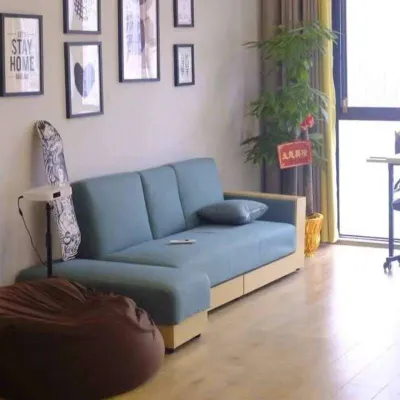
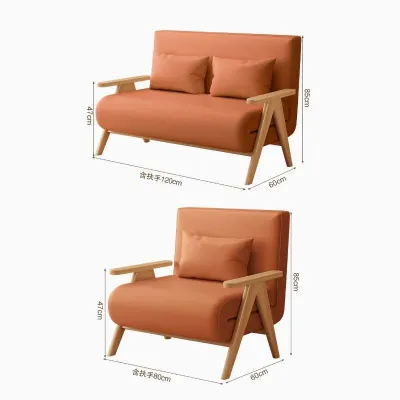
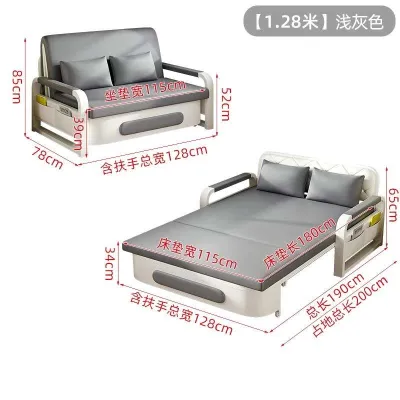
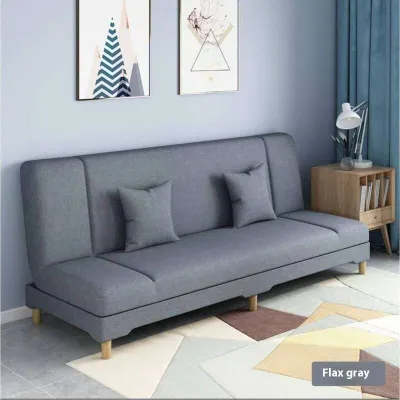
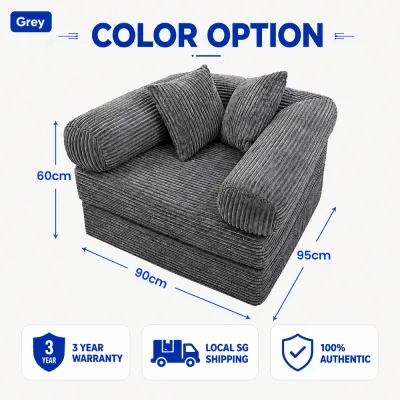
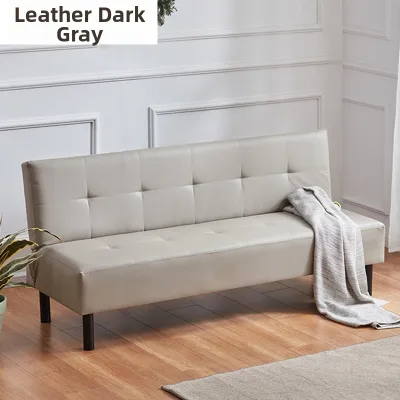
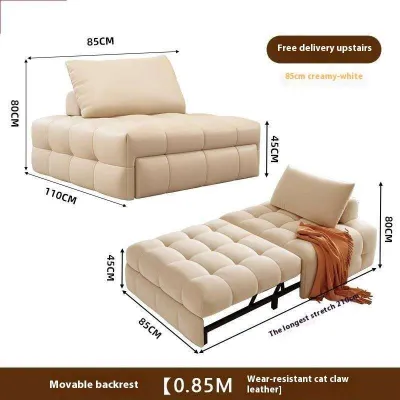
Prices are valid at publication and may change. Please refer to the product page for the latest price.
Beyond dimensions, evaluate the brand’s transparency regarding internal components. A reliable manufacturer will explicitly state the materials used in the frame (such as solid kiln-dried hardwood or powder-coated steel), the type of cushioning (such as high-density polyurethane foam or pocket springs), and the maximum weight capacity of the sleeping surface. Avoid brands that use vague descriptors like “hardwood-style frame” or “comfortable foam” without specifying the actual wood species or foam density ratings.
Finally, assess the brand’s customer service reputation and logistical expertise within Singapore. HDB estates present specific delivery challenges, including narrow lift landings, low-ceiling corridors, and tight turns near front doors. A brand with experienced local delivery teams will proactively ask about your flat’s access points, provide packaged box dimensions, and offer professional on-site assembly to ensure the furniture is installed safely without damaging your walls or the sofa mechanism itself.
Space Planning and Size Verification for Compact Layouts
Before finalizing your choice of a small side safa bed, you must conduct a thorough spatial audit of your room. Many homeowners measure only the wall where the sofa will sit, forgetting that a sofa bed requires a dynamic footprint. To prevent layout mistakes, follow a systematic measurement and verification process.

Measuring the Room and Clearance Zones
First, measure the length of the wall where the sofa will be positioned, keeping in mind any adjacent power outlets, light switches, or air conditioning units. Next, measure the distance from that wall to the opposite side of the room or any stationary furniture, such as a TV console or coffee table.
When the sofa bed is fully extended into its sleeping configuration, you must maintain a minimum walking clearance of 50 to 60 centimeters around the perimeter of the bed. This clearance ensures that guests can get in and out of bed comfortably and that you can still navigate the room without climbing over the mattress. If you plan to place a coffee table in front of the sofa, ensure it is lightweight or equipped with wheels so it can be easily moved when converting the sofa into a bed.
Interpreting Brand Specification Sheets
When reviewing product listings, carefully distinguish between the overall sofa footprint and the actual sleeping surface area. The overall width of the sofa often includes wide armrests, which add to the aesthetic appeal but do not contribute to the sleeping width.
- Overall Width vs. Sleeping Width: A sofa with a total width of 150 centimeters might only offer a 120-centimeter-wide sleeping surface if the armrests are bulky. For tight spaces, look for armless designs or slim-profile armrests (under 10 centimeters wide) to maximize the usable bed area.
- Extended Depth: This is the total distance from the back of the sofa frame to the foot of the bed when fully opened. Ensure this measurement is clearly stated on the spec sheet so you can verify it against your room's available depth.
- Seat Height vs. Sleeping Height: A low-slung sofa might be comfortable for lounging, but if the sleeping surface sits too close to the floor, it may be difficult for older guests to stand up from the bed.
Verifying HDB-Specific Delivery Pathways
Even if a sofa bed fits perfectly in your living room, it must first get there. HDB lifts, corridors, and doorways have standardized but tight dimensions that you must verify against the product’s packaging dimensions.
- HDB Lift Dimensions: Measure the height, width, and diagonal depth of your estate's passenger lift door and interior cabin. Standard HDB lifts often have door widths of 80 to 90 centimeters, which can make long, fully assembled sofa frames difficult to maneuver inside.
- Corridor and Turn Clearance: If your flat is located at the end of a corridor or requires navigating a tight corner from the lift lobby, measure the clearance between the walls. Obstacles like wall-mounted fire extinguishers or neighbors' shoe racks can significantly reduce the usable turning radius.
- Main Door and Gate: Measure the clear opening width of your metal gate and main wooden door. Ensure the brand's packaged box dimensions are at least 5 centimeters smaller than these openings to allow the delivery team to carry the boxes through safely.
Selecting Fabric Types for Singapore's Climate and Daily Use
Singapore’s tropical climate, characterized by high relative humidity and warm temperatures, demands careful consideration when selecting upholstery fabrics. The wrong material can trap heat, absorb moisture, and become a breeding ground for mold, mildew, and musty odors.
Evaluating Fabric Specifications and Breathability
When inspecting fabric tags or online material specifications, prioritize breathability and weave density. Natural fibers like cotton and linen offer excellent air circulation, keeping the seating surface cool. However, pure natural fibers can be prone to wrinkling and wear. A synthetic-natural blend, such as a polyester-linen or polyester-cotton mix, often provides the ideal balance of breathability, structural strength, and resistance to pilling.
Check the fabric’s Martindale rub count if available. For daily residential use, a rub count of 15,000 to 20,000 is acceptable, but for a multi-functional sofa bed that experiences frequent conversion and seating, look for a heavy-duty fabric with a rub count of 25,000 or higher. Avoid heavy velvet, thick faux leather, or dense chenille fabrics in non-air-conditioned HDB rooms, as these materials trap body heat and can feel sticky against the skin.
Removable Covers vs. Fixed Upholstery
One of the most important decisions you will make is choosing between removable, washable fabric covers and fixed upholstery. Each option has distinct functional trade-offs.
- Removable and Washable Covers: These offer unmatched convenience for maintaining hygiene, especially if the sofa bed is used frequently by guests. However, you must strictly follow the manufacturer's care labels. Many removable covers are dry-clean only or must be washed on a cold, gentle cycle. Washing them in hot water or tumble drying them can cause the fabric to shrink, making it nearly impossible to fit the covers back over the foam cushions without distorting the sofa's shape.
- Fixed Upholstery: Fixed covers provide a tighter, cleaner, and more tailored aesthetic that holds its shape over years of use. The downside is that cleaning requires manual spot treatment. If you choose fixed upholstery, look for brands that apply water-resistant or stain-resistant chemical treatments to the fibers during manufacturing, allowing liquid spills to bead up on the surface for easy blotting.
Routine Maintenance in Humid Environments
To prolong the life of your fabric sofa bed in Singapore’s climate, establish a regular cleaning routine based on the manufacturer’s instructions. Vacuum the sofa weekly using an upholstery attachment to remove dust mites, skin flakes, and ambient dust, which can accumulate in the fabric weave and attract moisture.
If a spill occurs, blot it immediately with a clean, dry microfiber cloth; never rub, as rubbing pushes the liquid deeper into the fabric fibers and foam core. Only use cleaning agents explicitly approved by the brand, as harsh household detergents or bleach can strip fabric coatings, discolor the fibers, and weaken the material’s structural integrity.
Inspecting the Fold-Out Mechanism and Structural Stability
The longevity of a compact sofa bed depends heavily on its internal conversion mechanism. Because these pieces of furniture transition between two entirely different structural states, the moving parts are subject to significant mechanical stress.
Common Mechanism Types and Spatial Requirements
Different mechanisms suit different room layouts and usage frequencies. Understanding how they operate will help you choose the right style for your HDB flat.
- Click-Clack Mechanisms: These operate by folding the sofa backrest forward until it clicks, then releasing it backward to lay flat. They are mechanically simple, lightweight, and cost-effective. However, they usually require you to pull the sofa frame away from the wall before converting it, meaning you cannot place the sofa flush against a wall unless you are willing to slide the entire unit forward each time.
- Pull-Out/Drawer Mechanisms: In this design, a sleeping platform rolls out from underneath the main seat cushions, and a secondary mattress section rises to meet the seat height. This style keeps the sofa flush against the wall but requires a large, completely unobstructed floor space directly in front of the sofa to extend the drawer fully.
- Three-Fold/Futon Style: The mattress is folded in three sections within the sofa frame and unfolds forward. This mechanism often features a dedicated, separate mattress, providing a sleeping surface that is highly consistent in support, though the frame itself can be quite heavy and complex to operate.
Conducting a Showroom Inspection
If you are able to visit a brand’s showroom, do not hesitate to physically test the sofa bed multiple times. A high-quality mechanism should operate smoothly and quietly, without requiring excessive physical exertion or producing loud metallic squeaks.
- Test the Transition: Fold and unfold the sofa bed yourself at least three to five times. Pay attention to any resistance, catching, or misalignment in the tracks.
- Check the Locking System: When fully extended into a bed, verify that the locking pins or brackets engage securely. The bed frame should not wobble, tilt, or slide when you apply weight to the edges.
- Examine the Joints: Look at the underside of the frame. High-quality mechanisms feature bolted steel joints with nylon washers to reduce friction, rather than cheap welded joints that can crack under repeated stress.
Evaluating the Cushion Support System
To ensure your guests get a restful night’s sleep and to prevent the sofa from sagging prematurely, inspect the support base beneath the cushions. The most durable support systems use solid wooden slats or heavy-duty steel mesh. Wooden slats should be made of resilient, flexible timber (such as birch) and spaced no more than 7 centimeters apart to provide even weight distribution.
Avoid models that rely solely on thin elastic webbing or low-grade zigzag springs over large spans, as these materials stretch out rapidly over time, causing the center of the bed to sag. For the cushioning itself, high-density polyurethane foam (with a density of 30 kg/m³ or higher) or pocketed spring cores will maintain their resiliency and supportive shape far longer than low-density fiberfill or standard soft foams.
Verifying Warranties, Delivery, and After-Sales Support
Before making your final purchase, protect your investment by thoroughly reviewing the brand’s post-purchase terms, warranty details, and delivery policies. Clear terms indicate a brand’s confidence in its product quality and its commitment to customer satisfaction.
Understanding Warranty Coverage and Limitations
Do not rely on a generic “5-year warranty” claim. Request the detailed warranty document and clarify exactly which components are covered under the policy.
- Structural Frame and Mechanism: High-quality brands typically offer a multi-year warranty (ranging from 3 to 10 years) specifically covering the solid wood or steel frame and the mechanical metal folding joints.
- Cushions and Foam: Foam resilience is often covered under a shorter warranty period (usually 1 to 3 years) against excessive sagging (typically defined as a permanent depression of more than 2 to 3 centimeters).
- Fabric and Upholstery: Fabric covers are rarely covered under long-term warranties, as they are subject to daily wear, friction, and environmental exposure. Warranties on fabric are usually limited to 1 year and cover only manufacturing defects, such as loose stitching or premature unraveling, rather than accidental stains, pilling, or fading caused by direct sunlight.
Clarifying Delivery and Assembly Terms
Because sofa beds are heavy and structurally complex, professional delivery and assembly are highly recommended. Confirm the exact scope of the brand’s delivery service before placing your order.
- On-Site Assembly: Verify if assembly is included in the standard delivery fee or if it requires an additional surcharge. Professional assembly ensures that the delicate alignment of the folding mechanism is calibrated correctly.
- HDB Surcharges: Some logistics providers charge extra fees for deliveries to specific HDB blocks that require long walks from the unloading bay, or for flats that do not have direct lift access (requiring the delivery team to carry heavy boxes up staircases). Always declare your flat's access conditions upfront to avoid unexpected on-site charges.
- Disposal Services: If you are replacing an old sofa, check if the brand offers a disposal service. While some brands provide this for a nominal fee, others do not, meaning you will need to coordinate bulky item removal with your town council in advance.
Reviewing Return and Exchange Policies
Finally, understand the brand’s return policy, particularly regarding customized items. Many brands offer a standard return window (such as 14 to 30 days) for off-the-shelf models in original condition, but this policy rarely applies to customized fabric selections or made-to-order configurations. If you choose a custom fabric color or upgrade the mattress type, the sale is typically final, making precise space planning and showroom testing even more critical before you commit.
Frequently Asked Questions (FAQ)
Can a compact sofa bed comfortably accommodate two adults?
A compact sofa bed can accommodate two adults only if its actual sleeping surface width corresponds to a standard double bed size (at least 120 centimeters wide, though 140 centimeters is highly recommended for comfort) and its length is at least 190 centimeters. Before purchasing, you must check the manufacturer’s specified maximum weight capacity. While a standard small sofa bed may support up to 150 to 200 kilograms, exceeding this limit can strain the folding mechanism, warp the support slats, and compromise safety.
How do I prevent mold or musty odors on a fabric sofa bed in a humid climate?
To prevent mold and musty odors in Singapore’s humid climate, ensure the room has consistent air circulation by using ceiling fans, opening windows during dry days, or running a dehumidifier periodically. Never fold a fabric sofa bed back into its closed position if the fabric or mattress is damp from sweat, spills, or cleaning. Always follow the brand’s specific care instructions for spot cleaning, and allow the materials to air-dry completely in a well-ventilated space before closing the mechanism.
Community discussion
Share your experience or ask a question. Comments are reviewed before publication.