
Quick Answer: Matching Shoe Boxes to Your Collection Size
Finding the right shoe box system in Singapore depends heavily on the size of your collection and the layout of your home. For small collections of under 20 pairs, the priority is maximizing hidden or multi-functional spaces using under-bed bins, storage benches, or basic stackable closet organizers. These solutions keep entryways clear without requiring a major investment in dedicated shelving.
Medium-sized collections of 20 to 50 pairs benefit most from modular, drop-front stackable boxes. These systems allow you to retrieve individual pairs from the bottom of a stack without dismantling the entire setup, balancing easy access with efficient vertical space utilization.
For large collections exceeding 50 pairs, high-density, uniform acrylic or heavy-duty plastic interlocking systems are essential. These setups require strict dimensional planning and structural anchoring to maintain stability, protect your investment, and prevent visual clutter in your living space.
Products mentioned in this guide
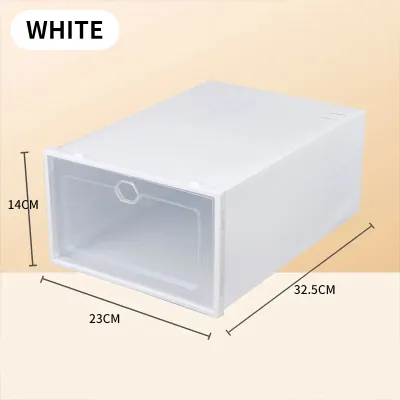
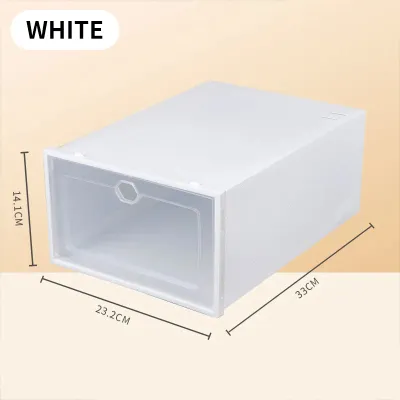
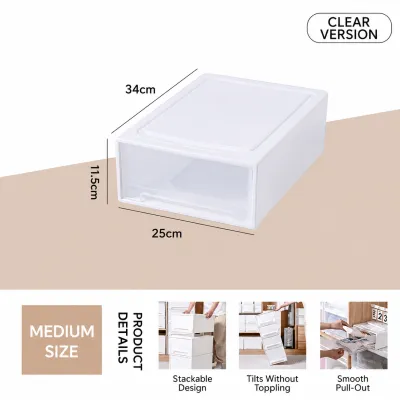
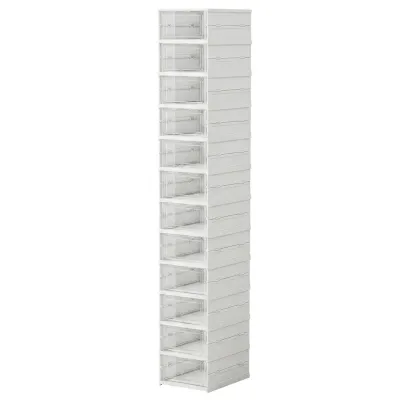
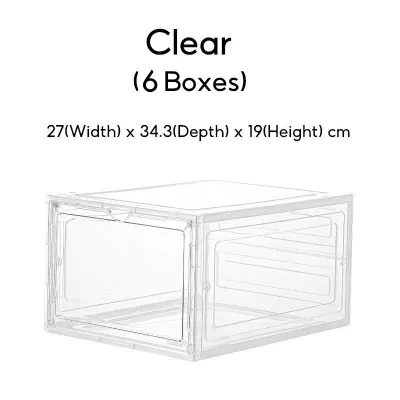
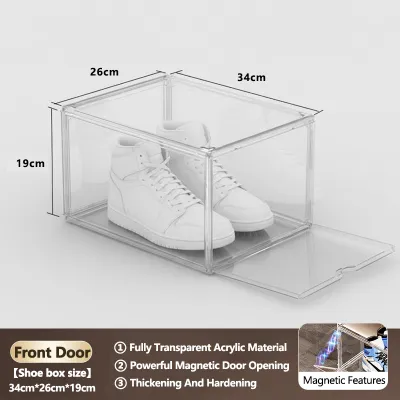
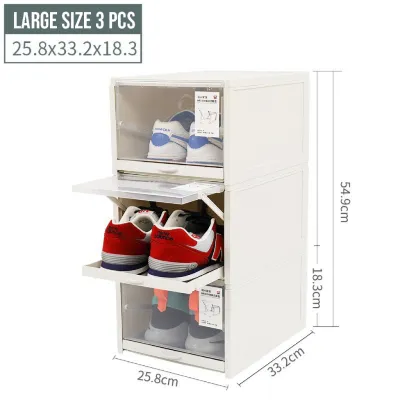
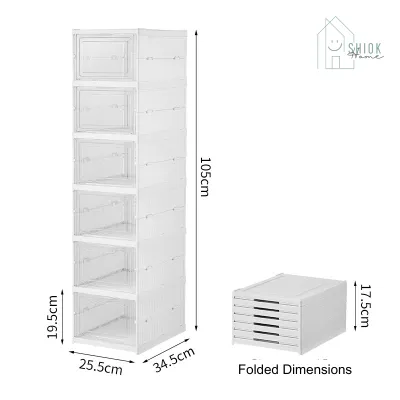
Prices are valid at publication and may change. Please refer to the product page for the latest price.
How to Assess Your Space and Collection Needs
Before purchasing any shoe box system, you must accurately measure your available floor space and vertical clearance. In Singapore apartments, entryways and corridors are often narrow, making every centimeter count. Measure the exact width, depth, and height of your designated storage area, and remember to account for baseboards, light switches, and the swing radius of nearby doors or household shelter grilles.

Vertical space is your most valuable asset when floor space is limited. Stacking upwards is highly efficient, but you must measure the vertical clearance up to any ceiling beams, wall-mounted distribution boards, or decorative fixtures. Ensure that a tall stack of boxes will not block access to essential household utilities or create a safety hazard.
Next, categorize your footwear by type to determine the required internal dimensions of your boxes. High-top sneakers, platform heels, and ankle boots require significantly more vertical clearance than flat sandals, loafers, or slip-ons. Group your shoes by height and width so you can decide whether to buy a single uniform box size or a mix of standard and extra-tall containers.
Finally, plan for future acquisitions to avoid outgrowing your chosen system within a few months. If you are an active collector or share storage with family members, it is wise to plan for a 15% to 20% buffer. Choosing a highly modular system ensures you can purchase matching units later without having to replace your entire setup when your collection expands.
Shoe Box Solutions for Small Collections (Under 20 Pairs)
For homes with minimal footwear, the goal is to utilize dead space and keep shoes out of sight without cluttering the entryway. Under-bed rolling bins are an excellent solution for seasonal footwear or pairs you do not wear daily. Look for bins with smooth-rolling wheels and secure, clear lids that protect your shoes from dust while allowing you to identify the contents at a glance.
Over-door organizers are another highly efficient option for small spaces. Hanging fabric or plastic organizers on the back of a bedroom or closet door can easily hold up to 20 pairs of lightweight shoes like flats, sandals, and canvas sneakers. This keeps your floors completely clear, which is particularly beneficial in narrow hallways or compact studio apartments.
Multi-functional furniture offers a stylish way to conceal shoes in plain sight. A storage bench or ottoman placed in the entryway serves a dual purpose: it provides a comfortable seat for putting on shoes while concealing several pairs within its lower compartments. When selecting a bench, look for models with adjustable shelves or removable dividers to accommodate different shoe heights.
If you prefer storing your shoes inside a closet, basic, lightweight stackable plastic boxes with snap-on lids are highly cost-effective. Because you only have a few pairs, you will not need to stack them more than three tiers high, making the lack of front-access doors manageable. These boxes can be easily rearranged or repurposed as your storage needs change over time.
Shoe Box Solutions for Medium Collections (20 to 50 Pairs)
Once your collection grows past 20 pairs, basic top-opening boxes become impractical because retrieving a pair from the bottom requires unstacking everything above it. For moderate collections, transitioning to modular, drop-front or magnetic-door stackable boxes is the most efficient way to balance display and density.
Drop-front and magnetic-door boxes feature a clear front panel that hinges downward or swings open sideways, secured by magnets or clips. This design allows you to slide shoes in and out effortlessly, even if the box is at the bottom of a six-tier stack. It saves time during busy mornings and encourages you to keep your shoes organized.
With up to 50 pairs, a solid wall of completely clear boxes can look visually busy and cluttered. To maintain a clean aesthetic, consider balancing opaque and clear materials. Use clear-front boxes to display your favorite, most colorful, or prized pairs, and use semi-opaque or solid-colored boxes to hide everyday wear, beaters, or older shoes.
As you stack boxes higher, base stability becomes a critical safety factor. Always check the manufacturer’s weight limits and stacking recommendations before building your setup. Most medium-duty plastic boxes are safe up to four or five levels, provided they are placed on a perfectly level surface to prevent the stack from leaning or warping under the weight.
Shoe Box Solutions for Large Collections (Over 50 Pairs)
For serious collectors with over 50 pairs, shoe storage becomes a major design element in the home. Creating a dedicated storage wall requires uniform, interlocking boxes made from rigid acrylic or heavy-duty polycarbonate. These materials offer the structural integrity needed to support massive stacks without buckling.
Standardizing on one specific box model is crucial for managing visual clutter and maintaining stability. Mixing different brands or sizes of boxes in a large collection creates uneven gaps, reduces structural alignment, and looks chaotic. A uniform system ensures that interlocking tabs or grooves align perfectly, creating a cohesive, monolithic structure that maximizes every centimeter of wall space.
Large collections often sit in storage longer, making dust and environmental protection a priority. Choose boxes with tight-fitting doors and minimal gaps to keep dust out. If your storage wall is located near a window or in a bright room, look for materials that offer UV resistance to prevent the midsoles of your sneakers or the leather of your shoes from yellowing and degrading over time.
Structural safety is paramount when building high-density storage walls. A stack of 10 acrylic boxes can weigh over 15 kilograms even when empty, and significantly more when filled with heavy leather boots or high-top sneakers. For safety, especially in households with active pets or young children, any stack exceeding 1.5 meters in height should be securely anchored to the wall using anti-tip straps or brackets.
Key Features to Check Before Buying
When shopping for shoe boxes, always verify the internal dimensions rather than relying solely on the external measurements. A box might look large from the outside, but thick plastic walls or internal frame supports can reduce the usable space. Ensure the internal length accommodates your largest shoe size (including the outsole length), and the height fits your tallest heels or high-tops standing upright.
Singapore’s tropical climate is highly humid, creating a prime environment for mold and mildew. Look for shoe boxes with integrated ventilation holes or mesh panels. These openings allow air to circulate, preventing stale air and moisture from getting trapped inside the box, which can ruin leather and canvas over time.
Evaluate the stacking mechanism carefully before making a purchase. Flat-topped boxes rely purely on friction and can easily slide off if bumped. Look for boxes with deep interlocking grooves, peg-and-hole systems, or sliding tracks that lock the units together horizontally and vertically, ensuring the stack remains stable even if accidentally nudged.
Finally, consider the door clearance and operation style. Drop-front doors require space in front of the box to swing downward. If your storage is located in a narrow corridor or behind a bedroom door, a side-swinging door or a sliding drawer mechanism might be more practical to avoid blocking the walkway when retrieving your shoes.
Frequently Asked Questions (FAQ)
How do I prevent mold inside clear plastic shoe boxes?
Mold thrives on moisture and organic matter, making prevention essential in humid climates. Before storing any shoes, ensure they are completely clean and dry. Wipe away any dirt, sweat, or rainwater, and let them air out in a well-ventilated room for at least 24 hours before placing them inside the boxes.
Place a silica gel packet or a small, rechargeable moisture absorber inside each box to actively draw moisture out of the air. Remember to check and replace or reactivate these absorbers regularly, especially during the monsoon seasons when indoor humidity levels spike.
Avoid placing your shoe boxes in direct sunlight or in unventilated corners of your home, such as deep inside a closed wardrobe or right next to a damp bathroom wall. Direct sunlight can create a greenhouse effect inside clear plastic boxes, raising the temperature and trapping moisture, which accelerates mold growth and degrades materials.
Can I stack shoe boxes on top of a freestanding shoe rack?
Combining systems is a great way to expand storage, but you must first verify the load capacity of your freestanding shoe rack. Check the manufacturer’s manual to ensure the top shelf can support the cumulative weight of multiple loaded shoe boxes without bowing, cracking, or collapsing.
The top surface of the rack must be completely flat, level, and wide enough to fully support the footprint of the bottom shoe box. If the box overhangs the edges or sits on an uneven slatted surface, the stack will be unstable and prone to tipping.
To prevent tipping hazards, secure the freestanding shoe rack to the wall using L-brackets or safety straps. This is particularly important if you stack the shoe boxes more than two tiers high on top of the rack, as the elevated center of gravity makes the entire assembly much easier to knock over, posing a risk to children and pets.
Community discussion
Share your experience or ask a question. Comments are reviewed before publication.