
Finding a safe partition bed for your child in Singapore involves looking beyond aesthetics and space-saving designs. Because partition beds—which often combine elevated sleeping platforms with integrated room dividers, shelving, or study desks—are structurally complex, they must meet rigorous international safety standards to prevent falls, entrapment, and structural failures. To secure a safe sleeping environment in Singapore’s compact apartments, you must verify specific structural certifications, material safety ratings, and physical design details before making a purchase.
When selecting these multi-functional furniture pieces, parents must balance space optimization with structural integrity. A partition bed does double duty as both a sleeping area and a spatial divider, meaning it is subjected to different physical stresses than a standard single bed. Understanding how to evaluate these products ensures you invest in a setup that remains secure throughout your child’s developmental years.
Understanding Child Safety Standards for Partition Beds
To ensure a partition bed is safe for daily use, you must look for recognized international safety certifications. The most prominent standard for elevated beds is the European standard EN 747, which specifies requirements for the safety, strength, and durability of bunk beds and high beds. Alternatively, the American ASTM F1427 standard provides similar rigorous guidelines. These certifications ensure that the bed frame can withstand dynamic loads, such as a child climbing or shifting during sleep, without risk of structural failure.
Products mentioned in this guide
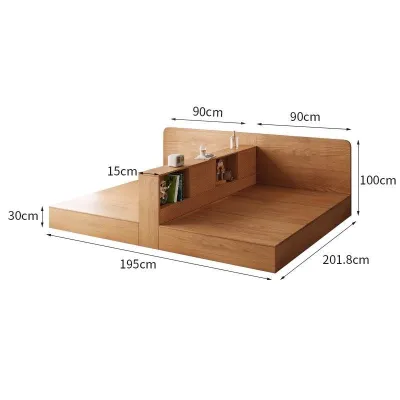
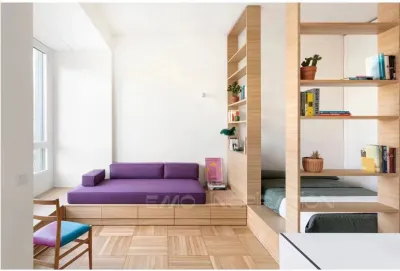
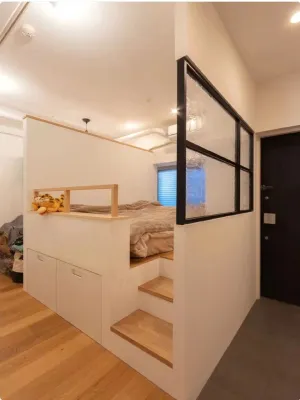
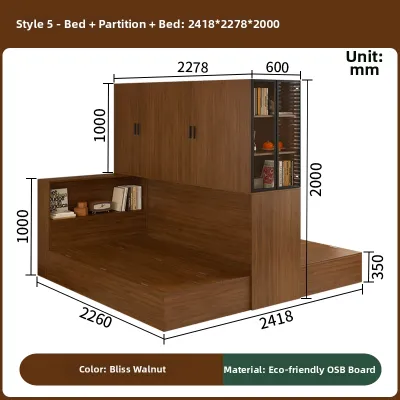
Prices are valid at publication and may change. Please refer to the product page for the latest price.
During the certification process, beds undergo rigorous testing to simulate years of active use. This includes impact tests on the guardrails, load tests on the ladder steps, and durability tests on the frame joints. Choosing a brand that complies with these standards ensures the bed has been proven to resist wobbling, warping, and joint separation under pressure.
Beyond structural integrity, material safety is a critical concern for children’s furniture. Wooden partition beds often use engineered woods or adhesives that can off-gas volatile organic compounds (VOCs). Look for materials certified to meet low-formaldehyde emission limits, such as the European E1 or E0 standards, or the California Air Resources Board (CARB) Phase 2 compliance.
Additionally, any paint, varnish, or protective finish applied to the bed must be non-toxic and lead-free. This is often indicated by compliance with standards like EN 71-3, which regulates the migration of chemical elements in children’s products. Ensuring these material standards are met protects your child from inhaling or ingesting harmful chemical residues.
Verifying these safety claims requires active diligence before you finalize a purchase. Do not rely on vague marketing terms like “eco-friendly” or “child-safe” without supporting evidence. Request official test reports or certificates of conformity from the retailer or manufacturer. When visiting physical showrooms in Singapore, ask sales representatives to show you the product’s compliance labels or the safety section in the user manual. If you are purchasing online, look for downloadable specification sheets or contact customer support to verify these documents.
Key Physical Safety Features to Inspect Before Buying
Evaluating the physical design of a partition bed is essential to prevent common childhood injuries such as falls, entrapment, and pinches. The guardrails on the elevated sleeping platform must be continuous and robust. To prevent a child from rolling over the edge, the top of the guardrail must extend at least 160 mm above the top of the mattress. Inspect the gaps between the guardrail slats; these openings must be strictly controlled, typically measuring between 60 mm and 75 mm, to ensure a child’s head, torso, or limbs cannot become trapped.

Ladder safety is another critical aspect of physical design. The ladder must be securely attached to the bed frame and feature wide, slip-resistant treads rather than narrow, rounded rungs. Ensure there are no sharp edges, exposed bolt heads, or rough surfaces along the ladder or the bed frame that could cause cuts or snag clothing.
Because partition beds often feature integrated wardrobes, shelving units, or study desks that act as room dividers, their high vertical profile makes them susceptible to tipping. You must inspect the overall stability of the unit and verify the manufacturer’s recommended anchoring methods. A safe partition bed should include dedicated wall-anchoring brackets.
In Singapore’s residential layouts, securing these tall structures to concrete walls or reinforced drywall partitions is a critical step to prevent tip-over accidents, especially if children attempt to climb the shelving units. Ensure the anchoring hardware provided is compatible with the specific wall type in your home.
Before purchasing, you must also consider the finished dimensions of the bed in relation to your child’s room. Measure the available floor space and ceiling height carefully, ensuring there is adequate clearance between the top of the bed and any ceiling fans, light fixtures, or air conditioning units. Additionally, verify the manufacturer-specified weight capacity limits to ensure the frame can safely support your child, the mattress, and any bedding.
The mattress must fit snugly within the frame, with no gap wider than 30 mm between the mattress edge and the bed frame. This tight fit eliminates entrapment hazards where a child’s foot or hand could become wedged in the space. Always check the manufacturer’s recommended mattress dimensions before buying a separate mattress.
Building a Shortlist of Trustworthy Partition Bed Brands
When compiling a shortlist of potential partition bed brands, prioritize manufacturers that demonstrate complete transparency in their production processes. Trustworthy brands readily provide detailed information about their material sourcing, manufacturing origins, and warranty terms. Look for companies that offer comprehensive warranties covering structural defects, which indicates confidence in the durability of their joints, hardware, and frame materials.
To avoid safety risks, purchase partition beds exclusively through authorized local retailers or official brand stores in Singapore. While parallel imports or unbranded options on online marketplaces may appear financially attractive, they often bypass local safety compliance checks. These products may arrive with missing parts, lack English assembly instructions, or fail to meet international safety standards.
Buying from an authorized local source ensures you receive genuine products, reliable customer service, and access to professional installation teams who understand local building structures. It also simplifies the process of claiming warranty support or resolving any delivery issues that may arise.
Additionally, research the brand’s history regarding product safety and customer satisfaction. Check for any past product recalls or widespread complaints regarding structural instability or premature wear. Reliable brands maintain a consistent supply of replacement hardware, such as specialized bolts, brackets, and safety pins. This availability is crucial if you need to disassemble and reassemble the bed during a home relocation, as using non-standard hardware can severely compromise the bed’s structural integrity.
Ensuring Ongoing Safety Through Proper Installation and Care
The safety of a partition bed relies heavily on correct assembly and installation conditions. Always follow the manufacturer’s step-by-step instructions precisely, ensuring every screw, bolt, and bracket is installed in its designated location. Before beginning assembly, verify that your doorways, hallways, and lift access are wide enough to transport the flat-packed panels into the room without causing structural damage.
Assemble the bed on a flat, level surface to prevent built-in structural tension, which can weaken joints over time. When anchoring the bed to the wall, use the appropriate wall plugs for your specific wall type. For example, use expansion plugs for concrete walls in HDB flats, or heavy-duty toggle bolts for drywall partitions in newer condominiums. If you are unsure of your DIY skills, hire a qualified professional assembly service to ensure the installation is secure.
Once the bed is assembled, establish a routine maintenance schedule to ensure its ongoing safety. Every six months, conduct a thorough inspection of the entire structure. Tighten any loose bolts or screws, check that the wall anchors remain firmly secured, and inspect the wooden or metal joints for signs of wear, cracking, or splitting.
Daily use, jumping, and climbing can cause hardware to loosen gradually, making regular checks essential to prevent sudden structural failures. Keep the assembly manual in a safe place so you can refer to the original torque specifications and hardware diagrams during these routine checks.
If you discover any significant damage during your routine inspections, such as cracked load-bearing beams, bent metal brackets, or stripped screw holes that prevent secure tightening, stop using the bed immediately. Do not attempt temporary fixes with adhesive tape, glue, or non-standard hardware. Keep your child off the bed and contact the manufacturer or a qualified professional furniture repair service to assess the damage and perform necessary repairs with authorized parts.
Frequently Asked Questions (FAQ)
Do partition beds require specific mattress thicknesses for safety?
Yes, partition beds require strict adherence to maximum mattress thickness guidelines to maintain the effectiveness of the guardrails. If a mattress is too thick, it reduces the effective height of the safety barrier, increasing the risk of a child falling over the edge. Always measure from the mattress support base to the top of the guardrail, ensuring that the remaining safety barrier is at least 160 mm high after the mattress is in place. Refer to the manufacturer’s specifications to identify the exact maximum mattress height allowed for your specific bed model.
Is it safe to buy a second-hand partition bed for a child?
Buying a second-hand partition bed carries inherent safety risks and is generally not recommended unless you can verify its complete history and structural integrity. If you choose to buy pre-owned, you must ensure the seller provides the original assembly manual and all original hardware, as substituting screws can compromise the bed’s stability. Thoroughly inspect the frame for hairline cracks, stripped screw holes, and bent brackets. Additionally, verify that the specific model has not been recalled and still complies with current international safety standards before allowing your child to use it.

Community discussion
Share your experience or ask a question. Comments are reviewed before publication.