
Loft beds with storage are excellent space-saving solutions for Singapore’s compact bedrooms, but safety must always be the primary consideration when choosing one for your child. Finding a model that meets rigorous safety standards requires looking beyond aesthetics and storage capacity. Parents must evaluate structural certifications, precise physical dimensions, material safety, and room compatibility—especially concerning ceiling heights and ceiling fan placement. By understanding what makes an elevated bed structurally sound, you can create a secure, functional, and comfortable space for your child to sleep, study, and play.
Key Safety Standards for Children's Loft Beds
When shopping for a loft bed with storage, the first step is to verify that the product complies with recognized international safety standards. In Singapore, Enterprise Singapore monitors consumer product safety, and children’s high beds are expected to meet stringent structural requirements. The two most widely accepted international benchmarks are the European standard (EN 747) and the American standard (ASTM F1427). These standards dictate everything from material strength and stability to the maximum allowable gaps in the bed frame.
Guardrails are the most critical safety feature on any elevated bed, as they prevent accidental falls during sleep. Under standard safety guidelines, guardrails must be present on all four sides of the loft bed, even if the bed is placed directly against a wall. The top of the guardrail must stand at least 160 mm above the top surface of the mattress. This means you must carefully check the manufacturer’s recommended mattress thickness; choosing a mattress that is too thick will compromise the effective height of the guardrail and increase the risk of falls.
Products mentioned in this guide
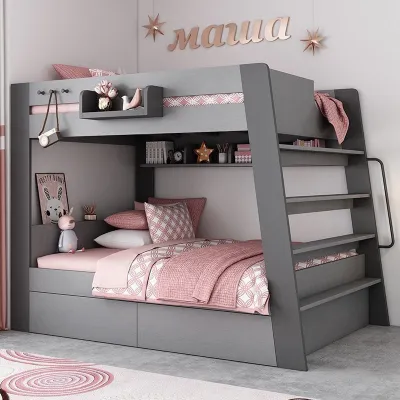
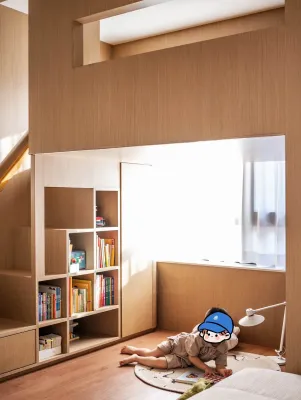

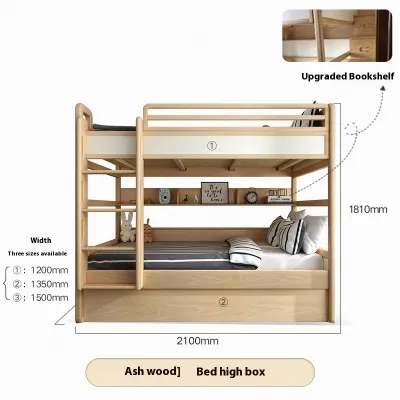



Prices are valid at publication and may change. Please refer to the product page for the latest price.
Entrapment is another major hazard that safety standards aim to eliminate. Gaps in the guardrails, headboard, footboard, and bed base must be strictly controlled. Generally, any gap must be either smaller than 25 mm or between 60 mm and 75 mm. Gaps within these ranges prevent a child’s head, neck, or limbs from becoming trapped while they are sleeping or playing. Before purchasing, ask the retailer for the exact measurements of these openings or bring a measuring tape to the showroom to verify them yourself.
The ladder or staircase of the loft bed must also meet strict structural integrity requirements. Steps should be securely attached to the main frame to prevent shifting or detaching under weight. Safety standards specify that ladder rungs must have a minimum width and depth to provide a secure foothold, and the distance between rungs must be uniform to prevent tripping. For beds with integrated storage stairs, each step must be engineered to support the weight of an adult, ensuring that parents can safely climb up to change bedsheets or comfort a child.
Evaluating Storage Features for Child Safety
Integrating storage into a loft bed is a brilliant way to maximize floor space, but these features must be carefully evaluated to ensure they do not introduce new hazards. Drawers, wardrobes, and shelving units built into or under the bed frame can present risks such as finger pinching, tipping, or entrapment if they are not designed with children in mind.

Drawer mechanisms require close inspection. Look for drawers equipped with soft-close slides or anti-pinch gaps that prevent the drawer from slamming shut on small fingers. Additionally, drawers must have built-in safety stops to prevent them from being pulled completely out of their tracks, which could cause them to fall onto a child’s feet. If the storage drawers are integrated into the steps of a staircase, ensure the drawer fronts sit completely flush when closed so they do not create a tripping hazard for a child climbing the stairs.
Tipping is a significant risk for any furniture piece that combines height with pull-out storage. When multiple drawers are pulled out simultaneously, or if a child attempts to climb on open drawers, the center of gravity shifts forward. To prevent catastrophic tip-over accidents, any loft bed with tall, integrated storage units—such as wardrobes or high shelving—must be securely anchored to the wall. Check if the manufacturer provides heavy-duty wall-anchoring hardware and instructions, and verify that your bedroom wall material can support these anchors.
Weight distribution plays a vital role in the overall stability of a loft bed. Storage components built into the lower base of the bed or within a wide staircase help lower the overall center of gravity, making the entire structure more stable and less prone to wobbling. However, if the storage is modular or can be rearranged, you must follow the manufacturer’s guidelines regarding weight placement. Avoid overloading upper shelves or hanging heavy items from the guardrails, as this can make the bed top-heavy and compromise its structural balance.
Finally, consider ventilation and material safety within enclosed under-bed storage spaces. In Singapore’s hot and humid climate, enclosed spaces like built-in wardrobes or under-bed play cabins can trap moisture, leading to mold growth and poor air quality. Ensure that any enclosed storage features adequate ventilation slots or open back panels to promote airflow. Furthermore, because children spend hours sleeping near these materials, verify that the engineered wood or finishes used in the bed’s construction meet low-formaldehyde emission standards, such as E1 or E0 ratings, to protect indoor air quality.
Room Measurement and Installation Checks
A loft bed that is safe in a showroom can become hazardous if it does not fit your child’s bedroom properly. Before making a purchase, you must take precise measurements of the room’s dimensions and plan the layout to ensure there is adequate clearance for safe daily use.
Calculating safe ceiling clearance is the most critical step in this process. In Singapore, standard HDB flat ceilings typically measure around 2.6 meters in height. To allow your child to sit up comfortably in bed without hitting their head, you need a minimum clearance of 75 cm to 1 meter between the top of the mattress and the ceiling. If your ceiling is lower, or if you choose an exceptionally tall loft bed, your child may be forced to crouch, increasing the risk of bumps and making it difficult to get in and out of bed safely.
Ceiling fans present a severe safety hazard when paired with elevated beds. You must ensure that the loft bed is positioned far away from the sweep path of any ceiling fan. A child sitting up, stretching, or climbing the ladder must never be within reach of the fan blades. If your child’s bedroom has a ceiling fan, it is highly recommended to either replace it with a wall-mounted fan or a bladeless ceiling fan, or position the bed in a completely different part of the room where there is no physical possibility of contact.
Floor space requirements must also account for the footprint of the ladder or stairs and the clearance needed for storage features. A slanted ladder requires more floor space than a vertical one but offers an easier climb. If the bed features built-in stairs with storage drawers, you must measure the space to ensure the drawers can be fully extended without blocking walkways or hitting other furniture. Ensure there is a clear, unobstructed path around the base of the bed so your child can navigate the room safely, even in the dark.
Proper installation is fundamental to the safety of a loft bed. Due to the complexity of these structures, professional assembly is highly recommended over DIY installation. Professional installers have the tools and experience to ensure all joints are tightened correctly, wall anchors are securely fastened, and the frame is perfectly level. An uneven floor can cause a loft bed to wobble, putting unnecessary stress on the joints and compromising its structural integrity over time. If your floor is slightly uneven, installers can use leveling shims to stabilize the frame.
How to Verify Product Claims Before Buying
With numerous options available in local showrooms and online marketplaces, parents must know how to cut through marketing claims and verify the actual safety of a loft bed before committing to a purchase. Do not rely solely on product descriptions that claim a bed is “safe” or “certified” without asking for proof.
When shopping, ask the retailer to provide official third-party test reports or compliance certificates. Reputable manufacturers subject their products to independent testing laboratories to verify compliance with EN 747 or ASTM F1427 standards. These reports confirm that the bed has undergone rigorous load-bearing, impact, and stability tests. If a retailer cannot or will not provide these documents, it is best to look for another option where safety compliance is transparently documented.
If you are visiting a physical showroom, take the opportunity to conduct a hands-on inspection of the display model. Shake the bed frame gently to check for any wobble or sway; a high-quality loft bed should feel solid and rigid. Inspect the joints and hardware—look for heavy-duty steel bolts and brackets rather than simple wood screws. Run your hands along the edges and corners of the wood or metal frame to ensure they are smoothly finished and rounded, with no sharp edges, splinters, or exposed hardware that could cause scratches or cuts.
It is also wise to check for active product recalls or known structural issues associated with the specific design or brand you are considering. You can search online consumer safety databases or check with local regulatory bodies for any safety alerts. Sometimes, specific designs are recalled due to unforeseen hazards, such as ladder rungs detaching or guardrails failing. Staying informed about these recalls helps you avoid purchasing a potentially dangerous product.
Finally, carefully review the warranty terms provided by the manufacturer or retailer. A robust warranty that covers structural failures, joint stability, and hardware replacement is a good indicator of the manufacturer’s confidence in their product’s durability. Understand what is excluded from the warranty, such as damage caused by improper assembly or exceeding the maximum weight limit. Knowing the warranty terms gives you peace of mind and ensures you have recourse if any structural issues arise during normal use.
Frequently Asked Questions (FAQ)
At what age is it safe for a child to sleep on the top bunk of a loft bed?
Most international safety guidelines, including those from pediatric associations and consumer safety boards, recommend that children be at least 6 years old before sleeping on the top bunk of a loft bed. Before this age, children often lack the coordination, balance, and spatial awareness required to climb ladders safely, especially when waking up disoriented in the middle of the night.
Beyond chronological age, you should also assess your child’s behavioral readiness. Consider whether your child can reliably follow safety rules, such as not playing or jumping on the top bunk, and whether they can navigate the ladder or stairs confidently in the dark. If your child is a restless sleeper or prone to sleepwalking, it may be safer to wait until they are older before transitioning them to an elevated bed.
Do loft beds with built-in stairs offer better safety than those with ladders?
Loft beds with built-in stairs generally offer a higher level of safety and stability compared to traditional vertical or slanted ladders. Stairs provide a wider, flat surface for the child’s feet, reducing the risk of slipping, and they often come with integrated handrails that offer extra support during climbs. This makes stairs an excellent option for younger children who are transitioning to a loft bed.
However, stairs require a significantly larger floor footprint than ladders, which can be a major drawback in smaller Singapore bedrooms. If you choose a ladder to save space, look for a model with wide, flat rungs rather than thin, round bars, as flat rungs are much gentler on feet and provide better traction. Adding anti-slip grip tape to ladder rungs or stair treads is an easy and effective way to further enhance safety.
Community discussion
Share your experience or ask a question. Comments are reviewed before publication.