
Maximising floor space in Singapore’s compact HDB flats and condominiums requires strategic furniture choices. When floor area is limited, vertical storage becomes essential. However, finding a reliable thin shelf rack involves more than just picking an attractive design from an online catalog. Because narrow furniture has a higher risk of instability, buyers must look beyond brand names to evaluate dimensional accuracy, load capacity, and structural safety. This guide provides a practical framework to help you assess brands, verify product specifications, and select a slim shelving unit that is both functional and safe for your home.
Measure Your Space and Define Storage Loads
Before you begin browsing different furniture brands, it is crucial to establish the exact physical boundaries of your room. In tight corridors, entryways, or bomb shelters, even a few millimeters can block a door or restrict movement. Start by measuring the depth, width, and height of the designated area. Do not forget to account for skirting boards or baseboards along the wall, as these can prevent a tall, narrow rack from sitting completely flush against the wall, effectively reducing your available walkway space.
Ensure there is at least 60 to 80 cm of clear walkway space in front of the rack to allow for comfortable movement. If the rack is going behind a door, measure the door’s swing radius to prevent collisions. Additionally, check for wall-mounted obstacles such as light switches, electrical outlets, intercom units, or air conditioning conduits that might block the installation of a tall, narrow shelving unit.
Products mentioned in this guide
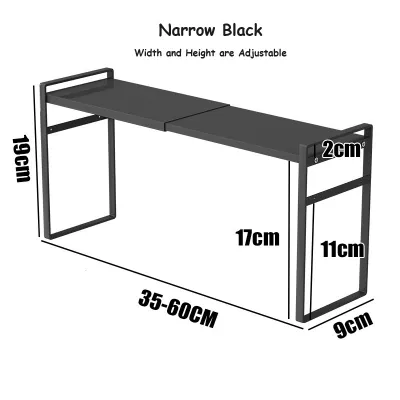
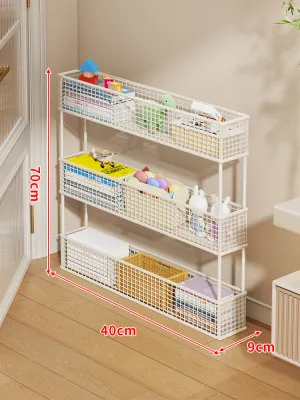
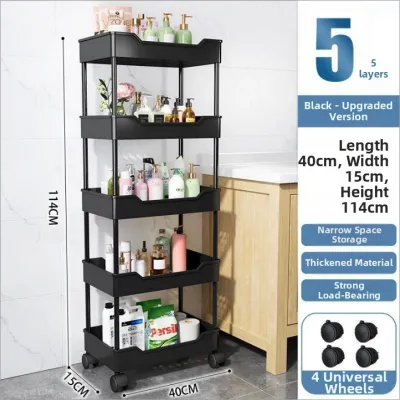
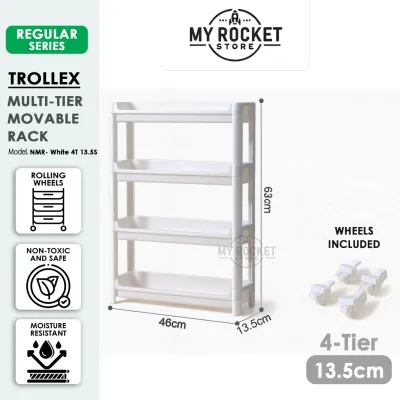
Prices are valid at publication and may change. Please refer to the product page for the latest price.
Next, identify the types of items you plan to store. Lightweight items, such as decorative plants, photo frames, or toiletries, can easily be accommodated by lightweight frames. However, heavy items like cookbooks, kitchen appliances, or pantry staples require a rack with reinforced shelves and a lower center of gravity. Misjudging your storage needs can lead to sagging shelves or structural failure, so it is vital to categorize your items before shopping.
Finally, do not overlook the logistics of delivery. Check the dimensions of your building’s elevator, corridors, and front door to ensure the package can reach your home. Flat-pack boxes are generally easier to transport through tight HDB lifts, but if you are purchasing a fully assembled unit, you must confirm that the delivery route can accommodate its height and width without causing damage to the walls or the furniture itself.
Evaluate Brand Reliability and Design Specs
When evaluating different furniture brands, look for those that prioritize technical transparency over marketing buzzwords. Reliable brands will provide precise, detailed technical drawings and exact measurements rather than just general dimensions. A difference of 5 mm can prevent a rack from fitting into a tight niche, so accurate specifications are essential for a successful installation.

Weight capacity ratings are another critical indicator of brand reliability. A trustworthy manufacturer will clearly state the maximum load capacity per shelf and for the entire unit, often distinguishing between static load (stationary items) and dynamic load (items frequently moved). Be skeptical of brands that use vague terms like “heavy-duty” without providing numerical limits. A reliable thin shelf rack should have a certified weight rating, typically ranging from 10 kg to 30 kg per shelf, depending on the materials used.
Warranty terms and local after-sales support are also vital. A warranty of at least 12 months indicates confidence in material quality and manufacturing standards. Verify if the brand has a local customer service office or showroom in Singapore where you can resolve issues, request replacement parts, or purchase extra shelf pins and wall anchors. Brands that offer readily available replacement parts are highly preferable, as they extend the lifespan of your furniture.
Lastly, look for transparency in material sourcing and independent load-testing disclosures. Brands that invest in third-party safety testing or use certified sustainable materials (such as FSC-certified wood or low-emission engineered wood) demonstrate a commitment to quality that cheaper, unbranded alternatives often lack. This transparency gives you peace of mind regarding both structural safety and indoor air quality.
Verify Material Quality and Structural Stability
Singapore’s tropical climate, characterized by high humidity, can take a toll on furniture. Therefore, understanding material characteristics is essential when choosing a brand. Engineered wood, such as MDF or particle board, is common in budget-friendly racks, but it must have high-quality edge banding and moisture-resistant laminates to prevent swelling and warping over time. If the edges are exposed, humidity will quickly penetrate the core, causing the shelf to sag.
Solid wood, such as teak, oak, or rubberwood, offers excellent durability and natural beauty. However, it must be properly sealed with a moisture-resistant finish to withstand humidity. For high-moisture areas like service yards, kitchens, or bathrooms, powder-coated steel or aluminum is highly recommended. These materials resist rust, are incredibly easy to clean, and maintain their structural integrity even in damp environments.
Inspect the joint connections and structural design of the rack. Cam-lock systems are standard in flat-pack furniture, but welded joints or heavy-duty bolts offer superior stability for metal racks. Look for brands that include cross-bracing (such as an X-brace) or a solid back panel, as these features significantly reduce lateral sway. A thin shelf rack without proper bracing is highly susceptible to wobbling, which compromises safety.
Avoid racks with structural red flags, such as excessive wobble when lightly shaken, unsupported shelf overhangs, or thin, flimsy backboards that bend under pressure. Before making a purchase, request assembly manuals or detailed specification sheets online to inspect the construction method. Checking the thickness of the metal frames (ideally 1.0 mm to 1.5 mm for steel) or the density of the wood panels will help ensure the unit is built to last.
Source and Validate Brands Locally and Online
To find the best thin shelf rack, combine online research with physical inspection. Whenever possible, visit physical furniture showrooms in Singapore, particularly those located in industrial hubs like Ubi, Toh Guan, or Tai Seng. This allows you to physically test the rack’s stability, feel the finish, and verify the actual dimensions before committing to a purchase. Testing a floor model in person is the most reliable way to assess structural integrity.
When navigating e-commerce platforms, look beyond the promotional photos. Check verified buyer reviews, specifically looking for photos of the assembled product in real Singapore homes. Pay attention to complaints about missing hardware, misaligned screw holes, or shipping damage, as these are common issues with lower-quality brands. Reviews that mention the ease of assembly and the helpfulness of customer service are highly valuable.
Always differentiate between direct brand official stores and third-party resellers. Purchasing from official brand stores on e-commerce platforms ensures you receive authentic products, valid local warranties, and reliable customer support. Third-party parallel importers may offer lower prices, but they often lack proper after-sales service, leaving you without recourse if a part is missing or damaged.
Compare price ranges in S$ while factoring in delivery and assembly fees. A cheap S$50 rack might end up costing S$120 once delivery and assembly are added, making a higher-end S$150 rack with free delivery and professional installation a more cost-effective and hassle-free choice. Additionally, check the brand’s return policy for flat-pack furniture, as some brands do not accept returns once the box has been opened or assembly has commenced.
Ensure Safe Installation and Anti-Tip Anchoring
Safety is paramount when installing tall, narrow furniture. Because thin shelf racks have a narrow footprint, they are inherently prone to tipping, especially if placed on uneven flooring or subjected to accidental bumps. This risk increases significantly if you have pets or young children in the home.
Always read the manufacturer’s instructions to identify mandatory wall-anchoring requirements. Reliable brands will include wall-anchoring hardware, such as L-brackets, safety straps, or wall screws, in the box. Do not skip this step, as it is the most effective way to prevent tipping hazards. If the included hardware does not match your wall type, purchase compatible heavy-duty anchors from a local hardware store.
Identify your wall type to select the appropriate anchors. Singapore homes typically have concrete or masonry walls (common in HDB flats) or drywall partitions (common in some newer condominiums). Use plastic wall plugs or masonry anchors for concrete, and toggle bolts or hollow-wall anchors for drywall. If you are unsure about your wall conditions or lack the necessary tools, stop and consult a professional handyman to handle the installation.
Distribute weight correctly by placing the heaviest items, such as books, storage boxes, or small appliances, on the bottom shelves. This lowers the center of gravity and significantly reduces the risk of tipping. Keep lighter items, like decor or small plants, on the upper shelves. Never overload the top shelves, as this makes the rack top-heavy and highly unstable.
Finally, perform regular stability checks. Tighten screws and wall anchors every six months, as daily use and vibrations can loosen hardware over time. Checking the alignment of the rack and ensuring it remains flush against the wall will keep your thin shelf rack safe and reliable for years to come.
Frequently Asked Questions (FAQ)
Can thin shelf racks safely hold heavy books?
Yes, but you must verify the manufacturer’s weight limits first. Standard books can weigh up to 1 kg per volume, so a shelf holding 15 books needs a capacity of at least 15 kg. Look for racks with solid wood or steel shelves, and ensure they have cross-bracing or a solid back panel to prevent lateral bowing. Avoid long, unsupported spans of thin engineered wood, which will sag over time under the weight of heavy books.
How do I prevent a narrow shelf from tipping over?
The most effective method is to secure the rack to the wall using the manufacturer-provided anti-tip kit. Ensure you use the correct wall plugs for your wall type (concrete plugs for HDB walls, toggle bolts for drywall). Additionally, always load the heaviest items on the bottom shelves to maintain a low center of gravity, and avoid placing the rack on uneven surfaces or thick rugs that compromise its base stability.
Community discussion
Share your experience or ask a question. Comments are reviewed before publication.